Does Coffee Count Towards Your Water Intake?
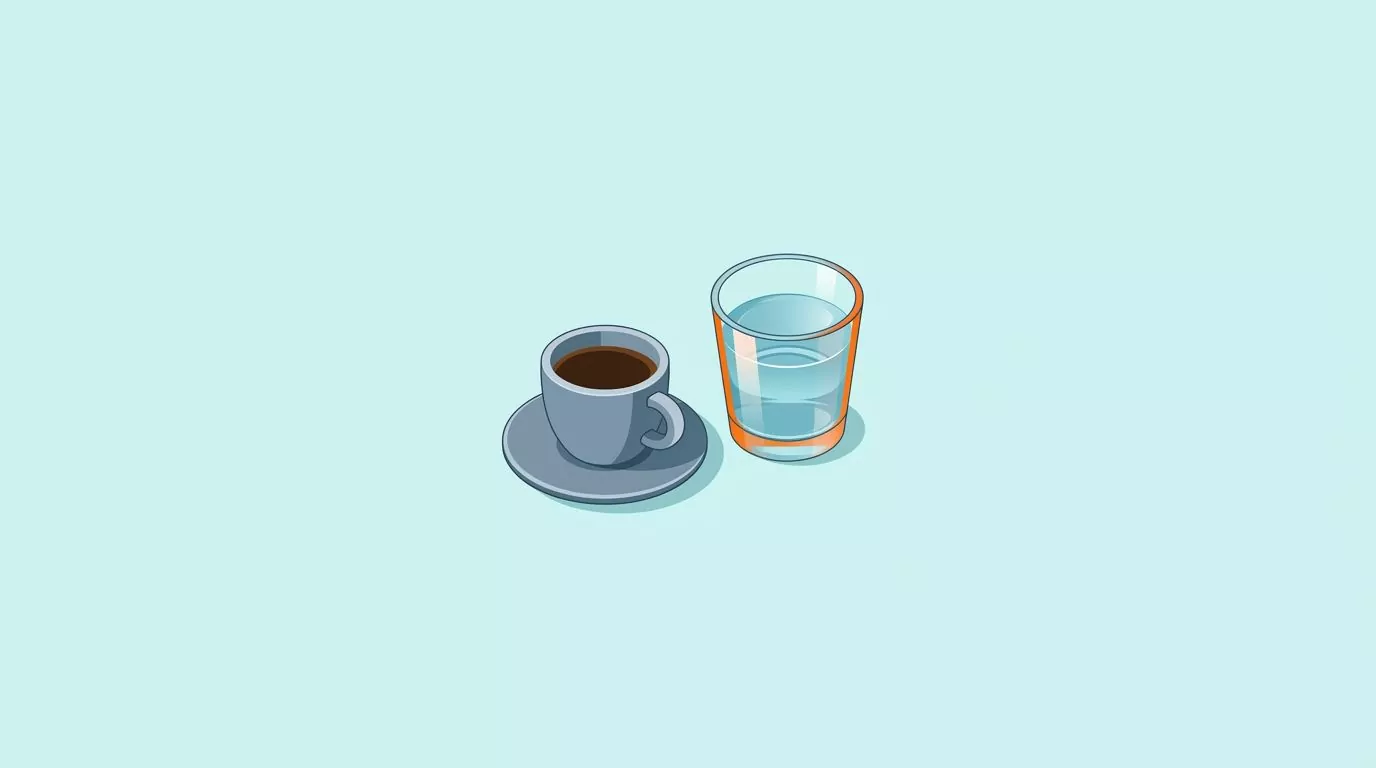
Yes. Coffee counts towards your daily fluid intake. A standard cup of brewed coffee is roughly 98 percent water, and at the amounts most people drink, the caffeine does not undo that. Two or three cups leave you ahead on fluid for the day, not behind. You do not owe yourself an extra glass of water for each one.
Does coffee count towards water intake? The short answer
It counts. The NHS lists tea and coffee alongside water and lower fat milk as drinks that go towards your daily fluid, and it puts the rough daily figure at 6 to 8 cups or glasses.
So a mug of filter coffee is a mug of fluid. The caffeine in it does have a mild effect on your kidneys. That effect is far smaller than the volume of liquid you just swallowed.
The confusion comes from a real bit of biology that got stretched into a rule. It is worth unpicking.
The diuretic myth, and what is true underneath it
Caffeine is a mild diuretic. That much is true. It nudges your kidneys to pass a little more urine than they otherwise would.
The part people skip is the size of that nudge. A big dose of caffeine, in someone who never touches the stuff, produces a small and short lived bump in urine output. A mug of coffee in a regular drinker is nowhere near that.
Habit matters too. If you drink coffee most days, your body largely stops reacting to the caffeine that way within a few days.
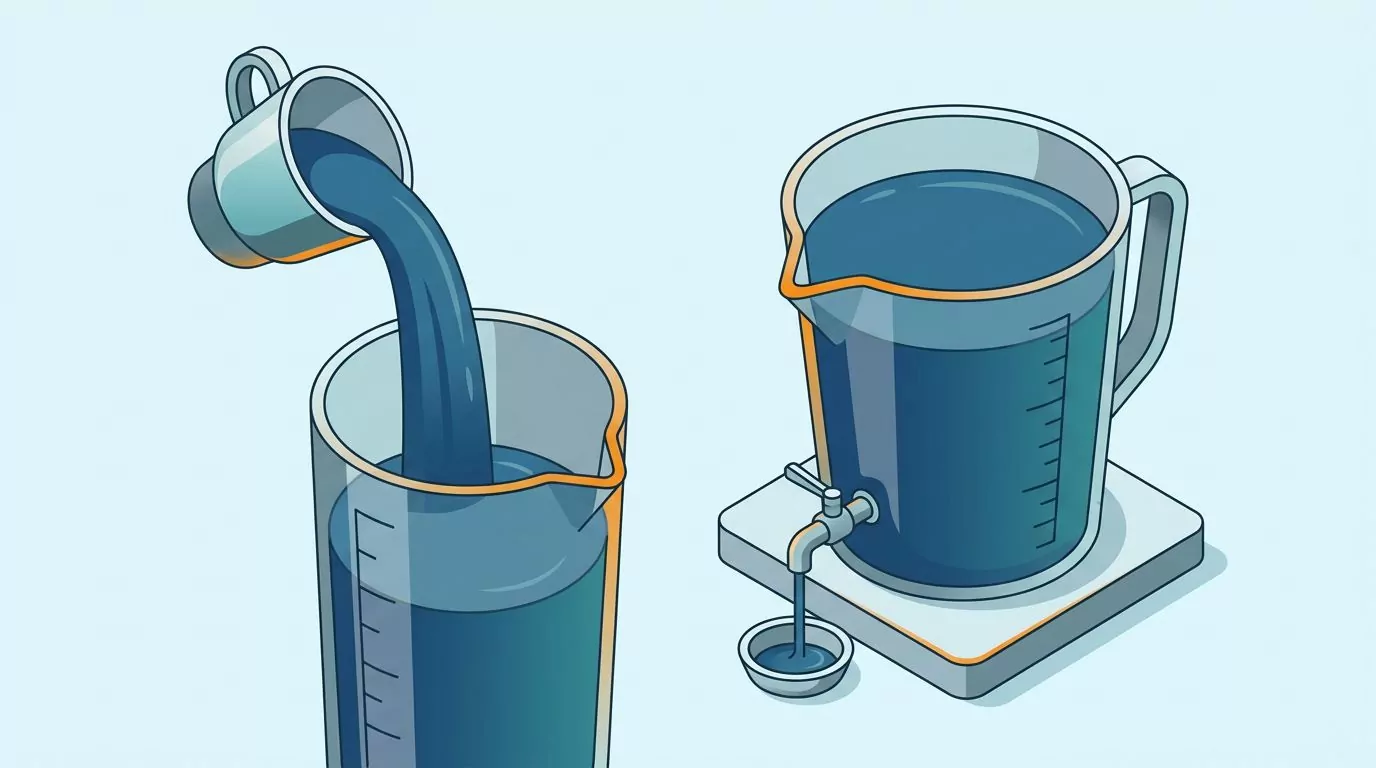
A 2014 trial tested this properly. Fifty habitual coffee drinkers spent three days on 800 ml of black coffee a day, then three days on the same volume of plain water, with food and activity held steady.
The two sets of numbers came out flat. Total body water sat at 51.5 kg on coffee and 51.4 kg on water. Daily urine volume was 2409 ml on coffee against 2428 ml on water, a gap far smaller than normal day to day noise.
On the coffee days the group actually passed slightly less urine. The researchers concluded that for habitual drinkers, coffee in moderation hydrates much like water does.
Where the honest limit is
There is a real edge case, and it is narrower than the internet suggests. A large single dose of caffeine, in a person with no tolerance to it, can lift urine output for a while.
Large here means somewhere north of 250 to 300 mg in one sitting, which is two strong cups at once. No tolerance means genuinely no regular caffeine, not one cup a day.
Even then the effect is modest, and it fades as tolerance builds. It is a footnote, not a reason to stop counting your coffee.
On caffeine itself, the FDA points to 400 mg a day as an amount not generally linked with negative effects in healthy adults. That is about two to three 12-fluid-ounce cups of coffee. Note that this is a caffeine ceiling, not a hydration one.
Sensitivity varies a lot between people. If you are pregnant, on medication, or have been told to keep an eye on caffeine, that is a question for a healthcare professional rather than a blog post.
Espresso, filter, latte and iced coffee: check the volume, not the kick
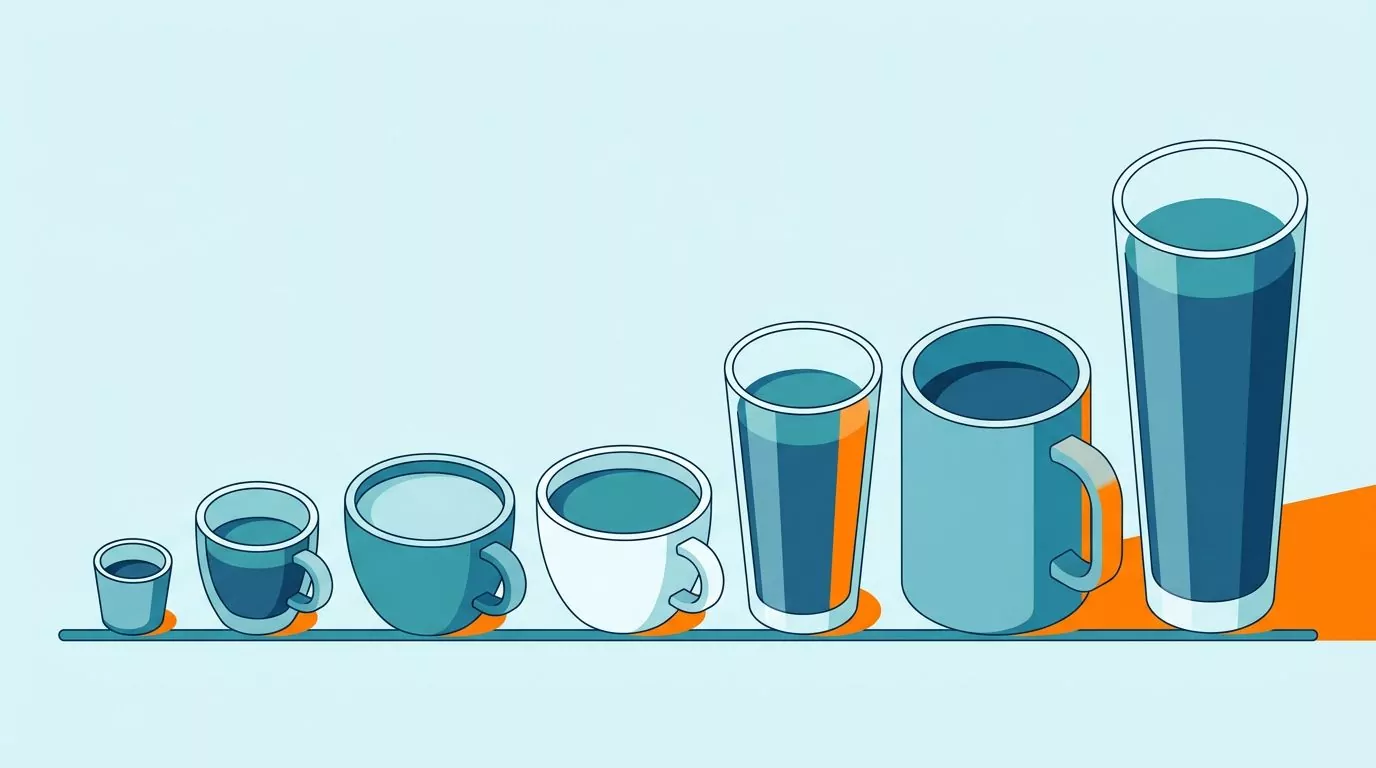
Here is the thing almost every article on this skips. "A coffee" is not one amount of liquid. It runs from a single mouthful to most of a pint.
A double espresso hits hard and delivers about 60 ml of fluid. A large filter mug is gentler per sip and delivers nearly six times as much. If you are counting fluid, strength is a distraction and volume is the answer.
| Drink | Rough volume | Rough caffeine | Counts as fluid? |
|---|---|---|---|
| Single espresso | 30 ml (1 fl oz) | about 65 mg | Yes, but it is one mouthful |
| Double espresso (doppio) | 60 ml (2 fl oz) | about 125 mg | Yes, still only a few sips |
| Flat white | 160 ml (5.5 fl oz) | about 125 mg | Yes, mostly milk by volume |
| Cappuccino | 180 ml (6 fl oz) | about 75 to 125 mg | Yes |
| Americano | 240 ml (8 fl oz) | about 125 mg | Yes, mostly hot water |
| Filter coffee, standard mug | 240 ml (8 fl oz) | about 95 mg | Yes |
| Filter coffee, large mug | 350 ml (12 fl oz) | about 140 mg | Yes |
| Iced coffee with milk | 350 ml (12 fl oz) | about 95 to 165 mg | Yes, and the ice adds a little as it melts |
| Cold brew | 350 ml (12 fl oz) | about 150 to 200 mg | Yes, though the caffeine runs high |
| Decaf, standard mug | 240 ml (8 fl oz) | about 2 to 15 mg | Yes |
Two things are worth taking from that table. First, the drinks that feel strongest are often the smallest, so an espresso habit adds much less fluid than it feels like it should.
Second, milk is fluid. A flat white is mostly steamed milk by volume, and the NHS counts lower fat milk towards your daily total.
When most of your fluid intake is coffee
Some people genuinely run on coffee. Three flat whites and nothing else before three in the afternoon is a normal pattern at a desk.
That is not a disaster, and it is not a debt to repay. Those three flat whites are roughly 480 ml of fluid, and it all counts.
The honest issue is a different one. 480 ml is simply not much liquid for most of a working day, whatever it happens to be made of.
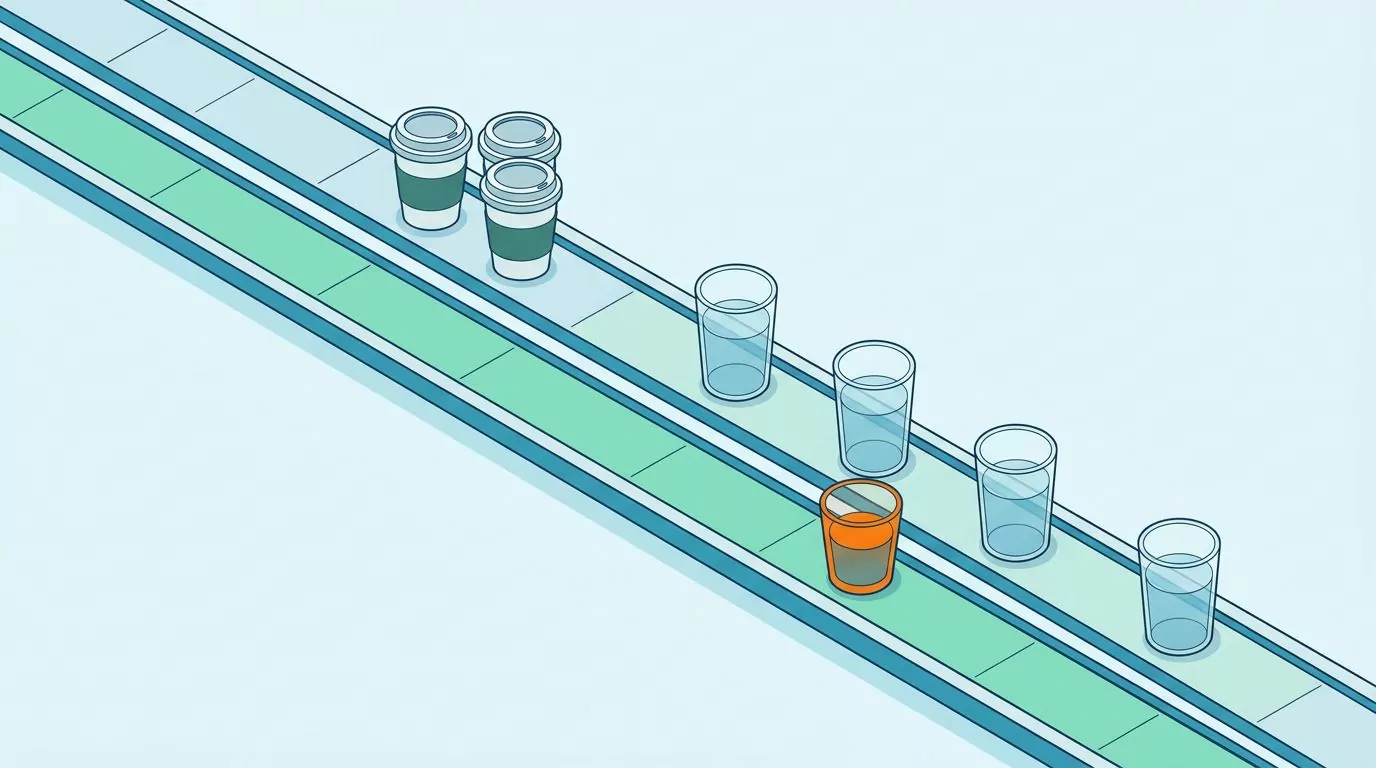
So the fix is not to cut the coffee. It is to put water next to it.
- Keep a glass on the desk and refill it every time you make a coffee.
- Drink the water first, while the coffee is still too hot. It costs you no extra time.
- Treat the afternoon as the water half of the day, especially if caffeine reaches your sleep.
- Have a big glass with lunch, which is the easiest one to remember.
None of that asks you to give anything up. It is a volume problem, and volume is easy to add.
Decaf sits in the same column as water
Decaf coffee holds only about 2 to 15 mg of caffeine per 8 fl oz cup. The diuretic question barely applies to it at all.
It is still about 98 percent water, so it counts as fluid in exactly the same way a caffeinated cup does. For anyone who likes the ritual more than the kick, it is the simplest swap available.
A decaf after two in the afternoon suits people whose sleep is sensitive to caffeine but who still want something warm on the desk.
What this means for a normal morning
Take an ordinary start to the day: a filter coffee at home, a flat white on the way in, and a glass of water once you sit down.
That is roughly 240 ml, plus 160 ml, plus 250 ml. Call it 650 ml of fluid before ten in the morning, all of it real, none of it needing an adjustment downward.
Against a rough daily goal of two litres, you are already a third of the way there. The mistake would be writing off the first two drinks and deciding you had done nothing yet.
Counting coffee out is what makes daily totals look far worse than they are. It is also why people quit tracking in week one.
How to log coffee without doing any maths
Log the cup. That is the entire method.
Do not subtract a penalty, do not multiply by some hydration factor you read about, and do not enter 60 percent of an espresso. The evidence does not support that arithmetic, and the arithmetic is exactly why people give up on tracking.
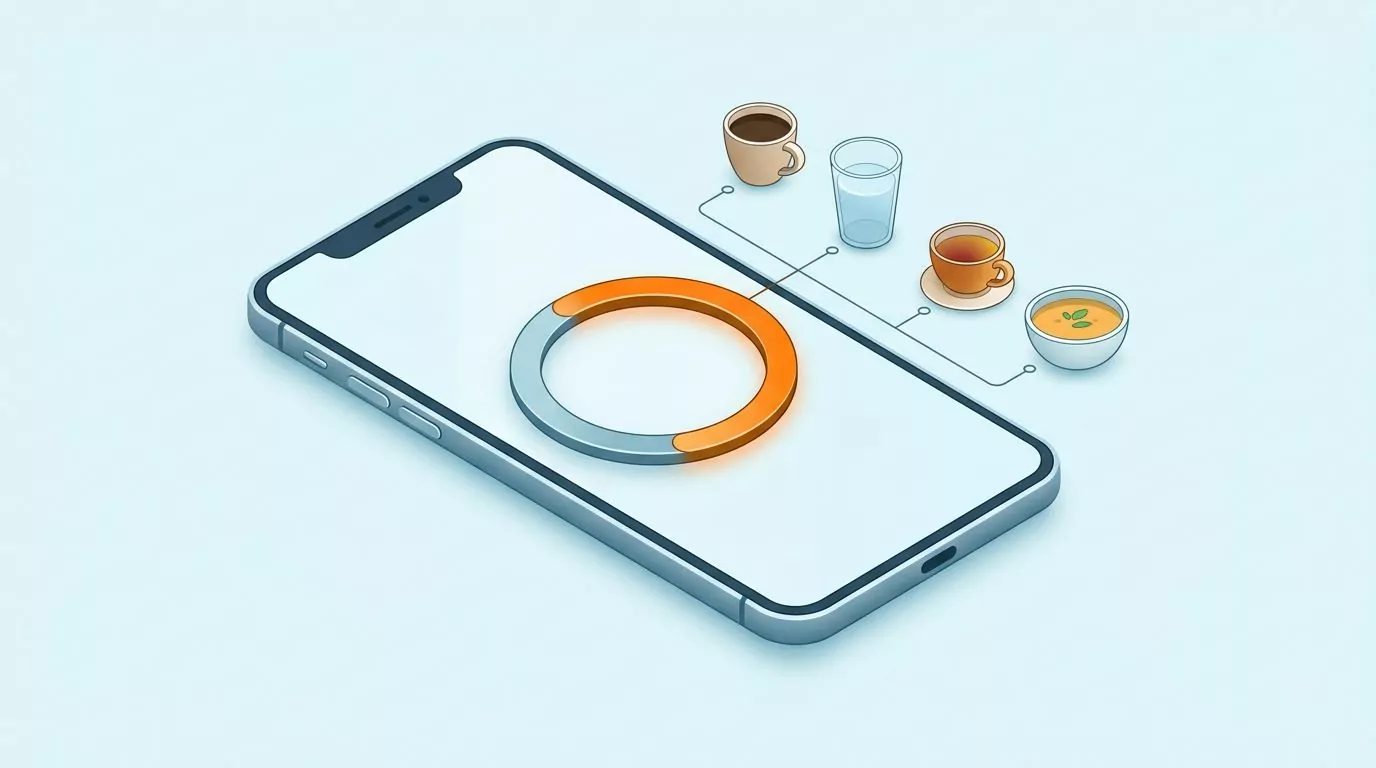
Water Goose has a Coffee drink type for this reason. You tap Coffee, pick the amount, and confirm. The cup lands in your daily total at face value.
The same goes for tea, smoothies, juice, milk, sparkling drinks and soup. Water counts, coffee counts, and soup is invited too.
Water Goose is a hydration tracker for iPhone and Android that keeps your history on the device, in a plain calendar view of daily totals and how often you hit your goal. No dashboards, no lectures, no hydration theatre. It is out now on the App Store and Google Play, and if a calmer way to keep track sounds useful, it is worth a look.
Frequently Asked Questions
Does coffee dehydrate you?
No, not at the amounts most people drink. Caffeine is a mild diuretic, but the water in the cup more than covers what it costs you. In a controlled trial, habitual drinkers on 800 ml of coffee a day held the same total body water as they did on plain water.
Does espresso count as water intake?
Yes, but be realistic about the size of it. A single espresso is about 30 ml and a double is about 60 ml. It counts as fluid, just a very small amount of it next to a filter mug.
How many cups of coffee is too many?
The usual reference point is caffeine rather than fluid. The FDA cites 400 mg a day as an amount not generally associated with negative effects in healthy adults, which is about two to three 12-fluid-ounce cups of coffee. Sensitivity varies, so if coffee leaves you jittery or wrecks your sleep, treat that as your own signal whatever the number says.
Does decaf count towards water intake?
Yes, and it counts just as fully. Decaf is about 98 percent water with only a trace of caffeine left in it, so there is no diuretic effect worth weighing at all.
Does coffee with milk count?
Yes, and the milk counts too. A latte or a flat white is mostly milk by volume, and the NHS lists lower fat milk among the drinks that go towards your daily fluid. Log the full drink rather than the shot inside it.
Is coffee dehydrating on an empty stomach?
No. An empty stomach changes how quickly caffeine reaches you, not whether the liquid counts. You may feel the kick sooner and harder, but the fluid going in is the same fluid.