How to Remember to Drink Water When You Are Deep in Work
Forgetting to drink water is a cue problem, not a willpower problem. Deep focus quiets the thirst signal you were counting on. The fix is to put a drink where your eyes already land, and to attach the first sip to something you already do every day, like a meeting or a coffee run.
This guide covers how to remember to drink water on a normal working day. It looks at the cues that hold up under pressure, the hydration reminders that quietly stop working, and what to try if your attention works differently.
Why you forget to drink water when you are focused
Thirst is a quiet signal. It does not flash, buzz, or land in your inbox. When you are deep in a task, your attention narrows to whatever that task needs, and quiet signals are the first thing to get filtered out.
So the hours you forget are almost never the boring ones. They are the good ones. You look up at four in the afternoon, the glass beside you is still full, and you have no memory of deciding to ignore it.
Thirst also tends to arrive late. By the time you notice it, you have usually gone a long stretch without a drink. That makes it a poor alarm clock for a working day.
Coffee muddies things further. The mug sits in the exact spot a water glass would go, and it feels like you are drinking plenty. You are drinking something. The glass just never gets its turn.
The room plays a part too. Dry heated air in winter and air conditioning in summer both push a drink further down the list. None of this is a character flaw. It is a setup problem, and setups are far easier to change than character.
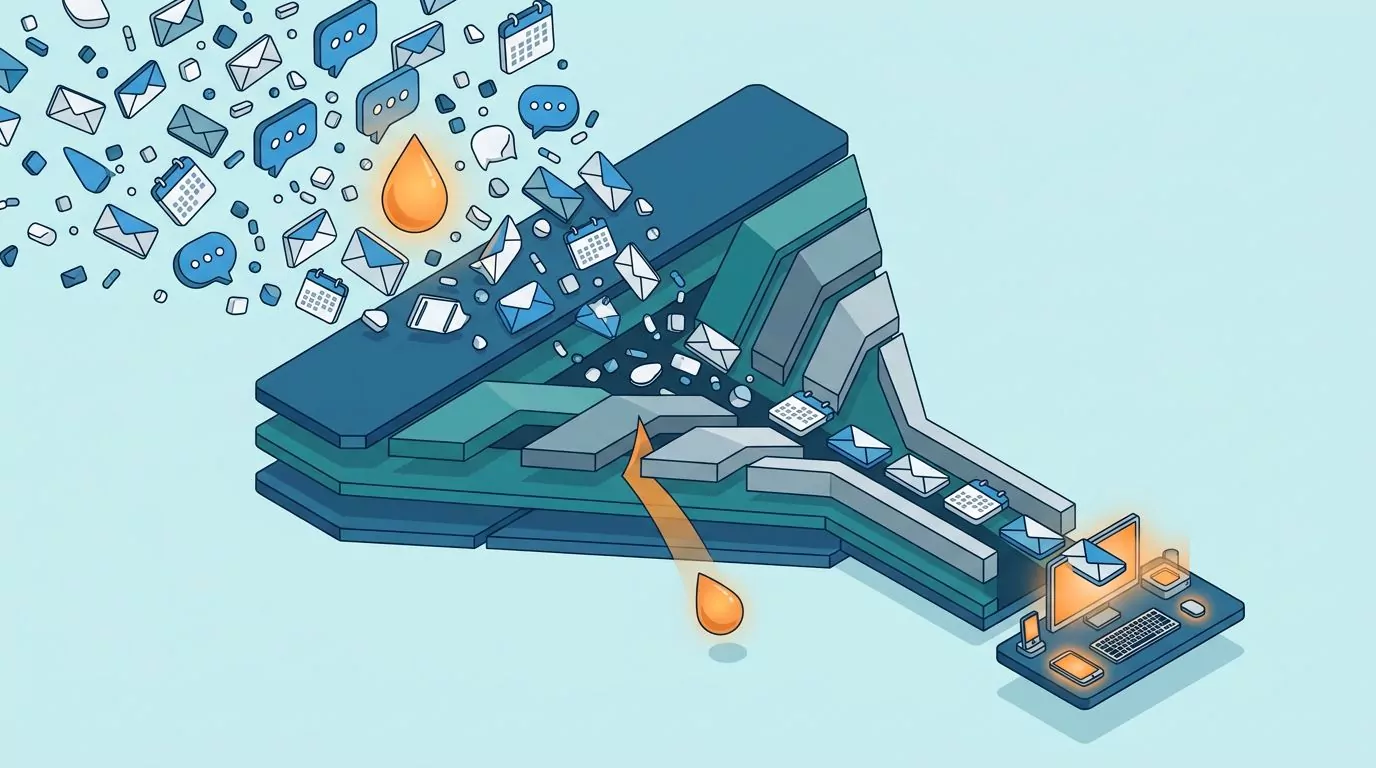
Cues that survive a busy day
A good cue does the remembering for you. The best way to remind yourself to drink water is to build something you cannot miss and do not have to schedule. These four hold up on the days when everything else slips.
Put the drink in your line of sight
Most people keep the bottle off to one side, behind the monitor, or still in a bag. Move it into the space you already stare at all day. Seeing it is the reminder, and it takes ten seconds to set up.
A clear bottle beats an opaque one: you can see how much is left at a glance. That turns a vague plan into a visible fact.
Stack the sip onto something you already do
Habit stacking means bolting a new action onto an old one. Pick something that happens on its own schedule: a call starting, the kettle boiling, a build running, opening your laptop in the morning.
The rule stays simple. Before the call starts, take a drink. You are not adding a new event to your day. You are borrowing one that was already there.
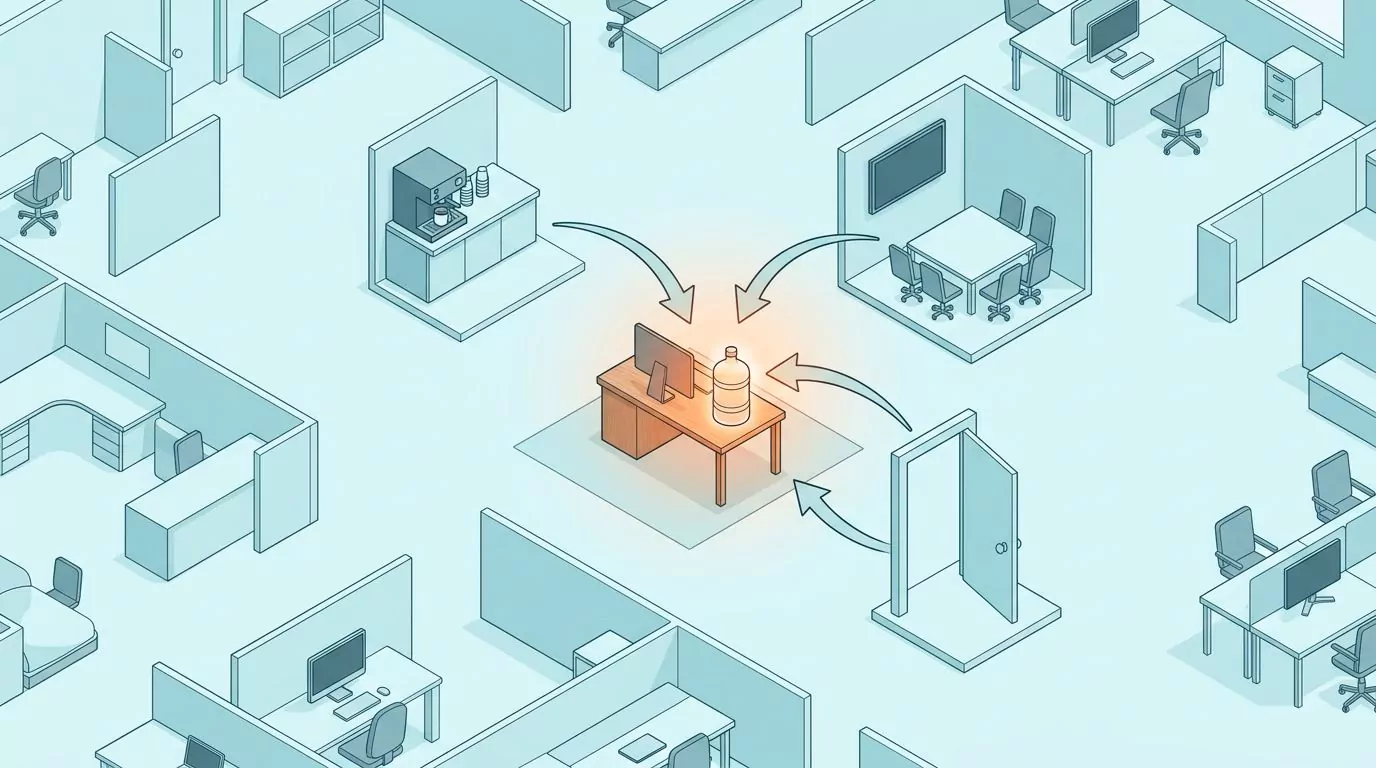
Refill on the way back from anywhere
Every trip you make has a return leg. Getting up for coffee, walking to the printer, answering the door. Fill the bottle on the way back and you never have to plan a special water trip.
It is quietly the strongest cue here: it rides on movement you already make.
Remove the small frictions
A lid you have to unscrew, a bottle that leaks in your bag, a kitchen two floors down: each one hands you a reason to skip it. A straw lid, a bottle that sits steady on a crowded desk, and a filter jug within reach all take that reason away.
Flavour is a friction fix too. If plain water bores you, a slice of lemon or unsweetened sparkling water is a fine answer. The coaches at Teladoc suggest the same in their short list of hydration tips.
| Cue | What sets it off | Why it holds up | Where it breaks |
|---|---|---|---|
| Bottle in your sight line | Looking at your screen | Needs no memory at all | You move desks, or it drifts behind the monitor |
| Sip at the top of a meeting | The call starting | Rides on something already booked | Light meeting days |
| Refill on the return trip | Walking back to your desk | Uses a walk you were making anyway | Days you never leave the chair |
| Hourly phone alert | A timer | Useful in the first week | Dismissing it becomes automatic |
Why generic hourly reminders fail
Here is the awkward part for anyone in the hydration app business. A repeating hourly alert works beautifully for about four days, and then it stops working almost completely.
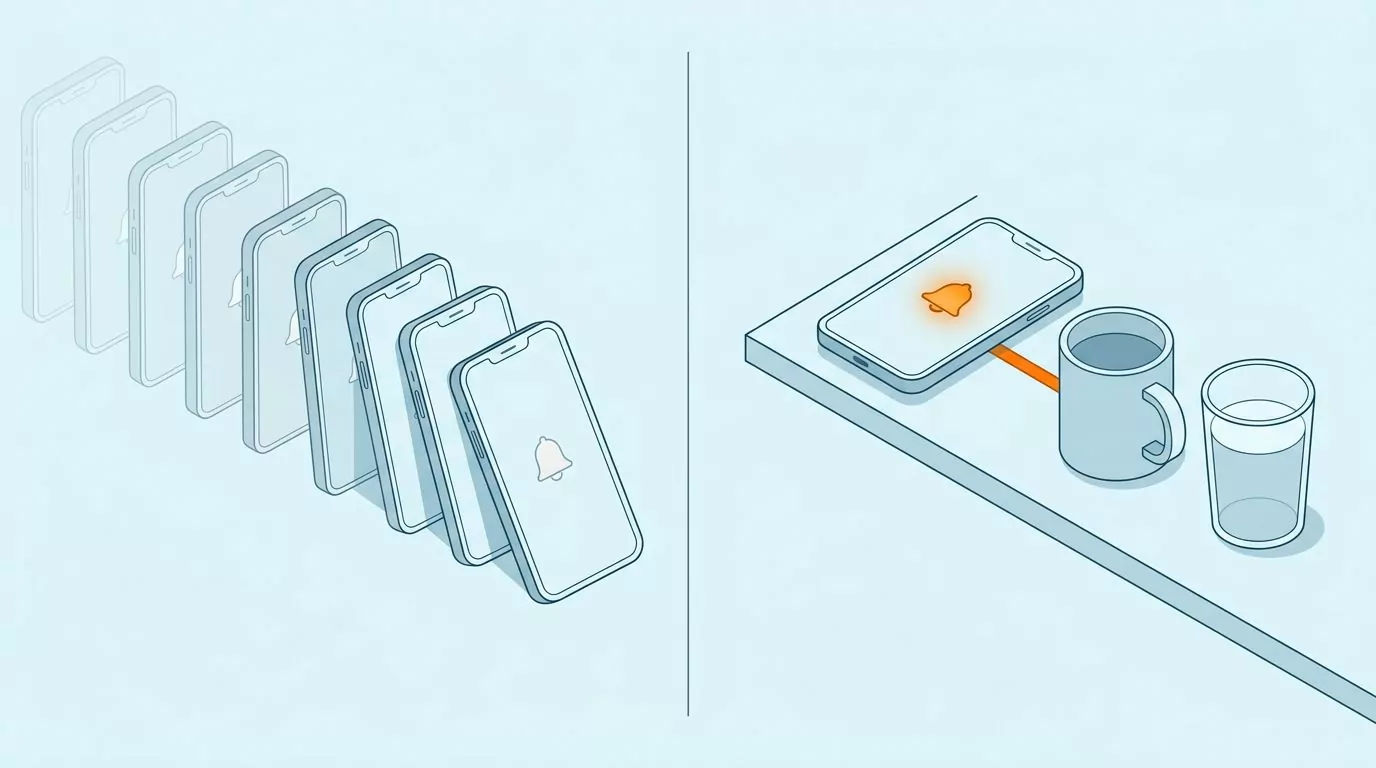
The reason is dismissal. An alert that says the same thing at the same time every hour stops carrying any information. Your thumb learns to clear it before your brain reads it. Within a week or two the notification is wallpaper.
There is a second problem. A timer has no idea what you are doing. It fires mid sentence, so you swipe it away to protect your train of thought. That is a sensible choice, and you will make it every time.
None of this means alerts are useless. They are good at one narrow job: teaching you a new anchor in the first week. Once the bottle is in the right place and the sip is tied to your first meeting, the alert can go.
So if you keep reminders, use fewer of them and tie them to real moments rather than to the clock. Two nudges, one in the morning and one after lunch, will outlast eight spaced an hour apart. Better still, let the bottle on your desk do the reminding.
If your attention works differently
Plenty of people find that internal reminders simply do not land. The intention vanishes the moment something more interesting appears. If you find external cues work better for you, lean on them and stop asking your memory to do the job.
- One bottle per location. Desk, kitchen, bedside, car. There is no gap between wanting a drink and having one.
- Make it loud to look at. A bright bottle in a plain workspace is easier to spot than a clear one that blends into the desk.
- Anchor to a routine you never skip. Brushing your teeth, the first email of the day, the walk back from the school run.
- Let missed days go. A long run of decent days does more for the habit than one perfect week you cannot repeat.
Nutrition Ally makes the same point from the attention side in its guide to hydration hacks for people with ADHD who forget to drink water: visual prominence and habit pairing beat willpower. If you are worried about how much you drink, or about symptoms that will not settle, a healthcare professional is the right person to ask.
Logging as the cue, not the chore
Tracking has a bad reputation, and some of it is earned. Nobody needs a dashboard for a glass of water. But a log does one job no reminder can do: it shows you the real shape of a normal week.
The trick is to log after the fact rather than before. You drink, then you tap. Nothing has to be decided in advance, and nothing is owed to a plan you made this morning. That is what makes a record easy to keep for months rather than days: the small effort sits after the drink, where it costs you almost nothing, instead of in front of it.
Water Goose is a hydration log for iPhone, built around that after the fact tap. It asks for a few basics, age, gender, height and weight, then suggests a starting daily target you can adjust. Logging takes a couple of taps: pick the drink, swipe to the amount, confirm.
It covers far more than water, which matters on a real working day. Coffee, tea, juice, milk, smoothies, sparkling drinks and even soup all count toward the daily total, so the record matches what you actually drank.
The daily view is one filling ring: today's total against your target, with quick add buttons beside it. The history is a plain calendar of daily totals, completion and consistency, plus streaks if you find those motivating. No hydration theatre, no wall of charts, and it all stays on your device.
Being straight about the limits: no app can make you drink, and Water Goose does not pretend otherwise. It is a general wellness tool, not medical advice. What it can do is make the pattern visible.
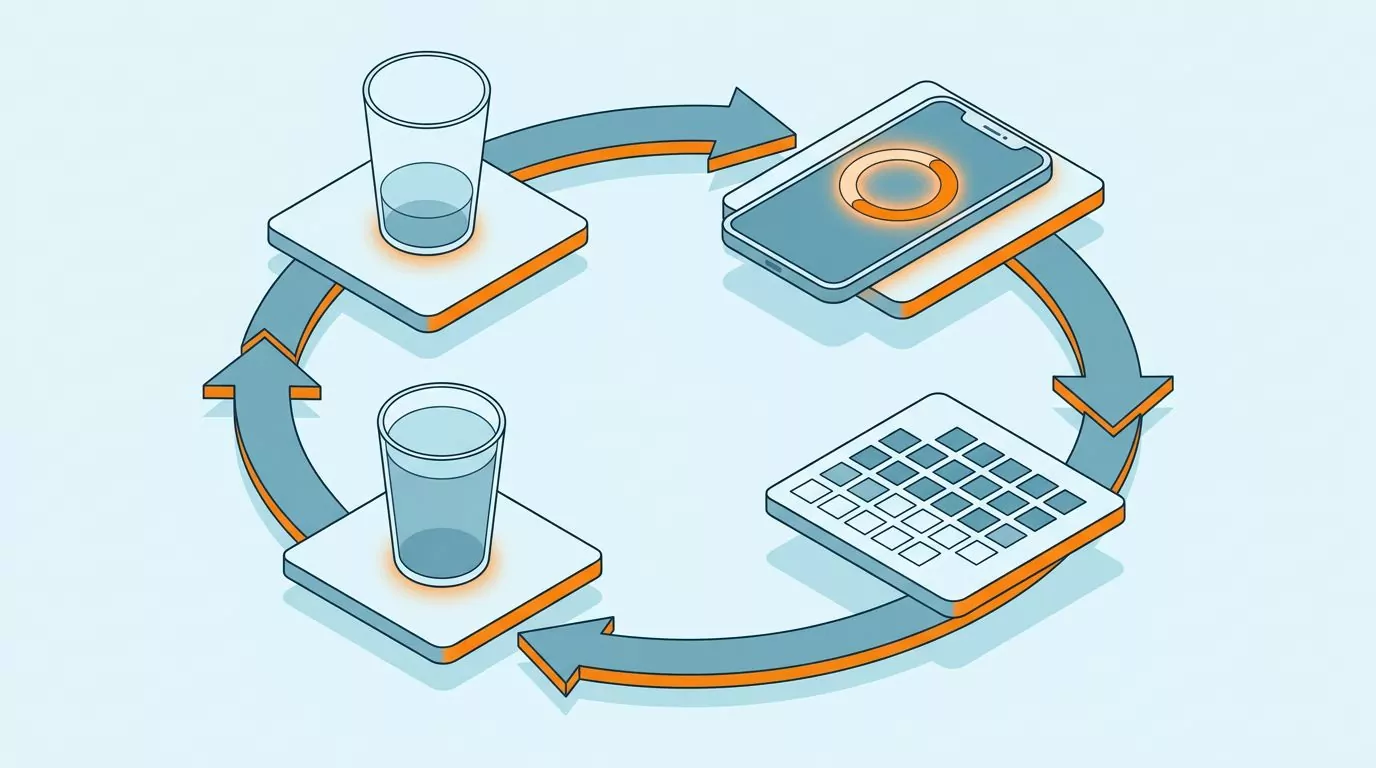
How to remember to drink water across one workday
If you want a starting shape rather than a rulebook, here is a version that survives contact with a busy calendar. Adjust it to your day and drop anything that does not fit.
- Before you open the laptop. One glass while the machine wakes up. It is the easiest drink of the day and it sets the tone.
- Alongside the first coffee. Pour a glass of water next to it. Two drinks, one trip to the kitchen.
- At the top of your first meeting. Meetings are already scheduled, which makes them free cues.
- On the way back from lunch. Refill the bottle before you sit down, not after.
- As you close things down. A last glass at the end of the working day, and a quick look at where the day landed.
Five anchors, none of which needs a timer. On a chaotic day you will hit three, and three is fine.
Frequently Asked Questions
Why do I never feel thirsty?
Thirst is a low volume signal, and focused work turns that volume down further. Cool rooms, a packed calendar, and a habit of reaching for coffee all make it quieter still. If it never shows up at all, ask a healthcare professional rather than a blog.
Do water reminder apps actually work?
They work best as a record and worst as an alarm. Repeating alerts get dismissed on reflex within a week or two. A quick log after you drink lasts longer, because it never interrupts you and it leaves you something honest to look at later.
How often should you drink water during the workday?
Needs vary a lot from one person to the next, so there is no single number worth repeating. Healthline notes that the familiar eight glasses rule is not based on research in its guide to simple ways to drink more water. Spread drinks across the natural breaks in your day rather than aim at a fixed schedule.
Does a bigger bottle help?
Sometimes. A large bottle means fewer refill trips, which suits people who rarely leave the desk. It is also heavier and easier to leave behind. If you already forget the small one, a bigger one will not fix that on its own. Placement will.
The short version
Remembering to drink water is mostly a design job. Put the drink where you already look, tie the first sip to something already in your day, and let a quick log keep the count so you are not carrying it in your head all afternoon.
Water Goose is coming to iPhone, so if a calm, on device record of what you actually drank sounds useful, you can take a look at what it does and hear when it lands.