How to Hydrate Faster When You Have Let It Slide
The fastest way to rehydrate is to drink steadily rather than all at once, add a little sodium, and eat something with water in it. Most people feel better within an hour and are close to normal within a few hours. Learning how to hydrate faster is mostly about pacing, not volume.
The short answer on how to hydrate faster
You cannot force water into your body faster than your gut will take it. What you can do is stop wasting the water you drink.
Three things move the needle:
- Pace it. Several small glasses over an hour beat one big one.
- Salt it. A pinch of sodium helps your body hold on to the fluid.
- Eat. Food carries water, and it carries salt with it.
That is the whole method. The rest of this piece explains why each part works, so you can adapt it to a hot day, a long flight, or a workout you misjudged.
How long does it take to rehydrate?
Water starts moving out of your stomach within a few minutes. From there it passes into the small intestine, which is where most of it actually crosses into your blood.
So the clock is shorter than people think, but the finish line is further away than the first sip suggests. Absorbing fluid is quick. Feeling normal again is slower, because your body has to redistribute that water into cells and tissue.
For an ordinary dry day, expect to feel better inside an hour, and settled after two or three. Chasing a faster number than that mostly produces trips to the bathroom.
If you feel dizzy, confused, or stop passing urine, that is not a pacing problem and this article is not the right tool. The Merck Manual entry on dehydration covers the warning signs, and anything in that territory is worth a call to a healthcare professional.
Why chugging a liter works worse than it feels like it should
Drinking a full bottle in one go feels productive. Your kidneys read it differently.
A large volume arriving at once briefly dilutes your blood. Your body treats that dilution as a surplus and starts clearing it. A good share of that heroic liter leaves as urine within the hour instead of staying where you wanted it.
Spread the same liter across an hour or two and far more of it sticks. Harvard Health makes the same point in plainer terms, advising people to drink fluids gradually throughout the day rather than in bursts.
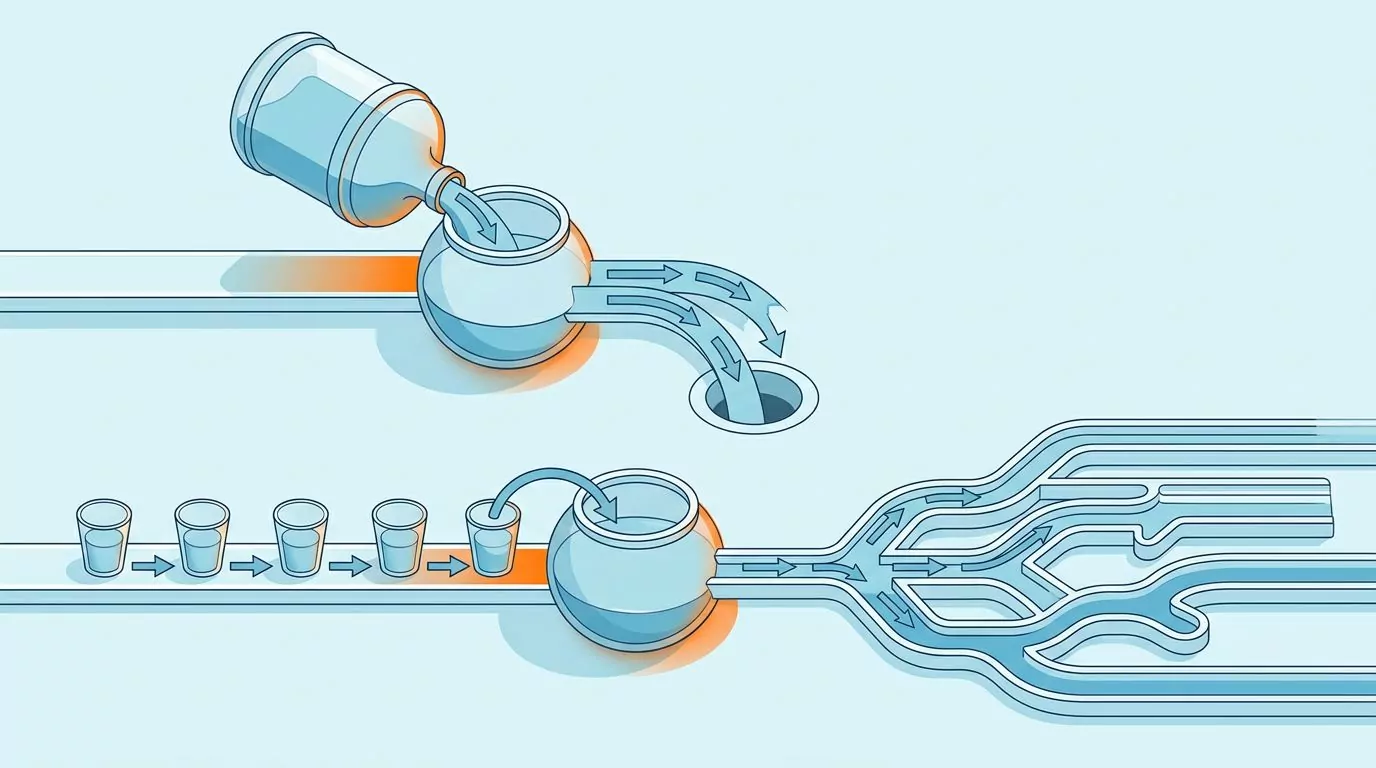
The practical version: a glass every fifteen or twenty minutes, not a bottle every two hours.
What electrolytes for hydration actually do
Sodium is the reason oral rehydration solutions exist. It is not a wellness garnish.
Your gut moves sodium and glucose across its wall together, and water follows them. That pairing is the mechanism behind every rehydration sachet on the shelf. Plain water has no sodium and no sugar, so it has less to hitch a ride on.
This matters more when you have lost salt as well as water. Sweat is salty, so a long hot session or a day of heavy sweating carries off sodium along with the fluid, and replacing only the fluid leaves half the job done. Fluid losses that come from being unwell are a separate question, and one for a healthcare professional rather than a blog post.
For a normal desk day where you simply forgot to drink, water and lunch will do. You have not lost much salt, so there is nothing much to replace.
The best drinks to rehydrate, ranked by what stays put
Researchers have actually measured this. A controlled trial published in the American Journal of Clinical Nutrition gave people a liter of various drinks and tracked how much fluid left the body over the next four hours.
Milk and an oral rehydration solution held on to noticeably more than plain water did. The beverage hydration index study found a sports drink was not clearly better than water, which surprises people who buy them for exactly that reason.
| Drink | How well it stays put | When it makes sense |
|---|---|---|
| Milk | Better than water | After sweating, or when you want the fluid to last |
| Oral rehydration solution | Better than water | Real fluid losses, not an ordinary dry afternoon |
| Water | The baseline | Almost always, and it is free |
| Sports drink | About the same as water | Fine if you like it, not a shortcut |
| Coffee or tea | Counts toward your total | Normal daily drinking |
| Soup or broth | Water plus salt in one bowl | Cold days, or when you do not feel like drinking |
| Alcohol | Still adds water, on balance | Not your rehydration plan |
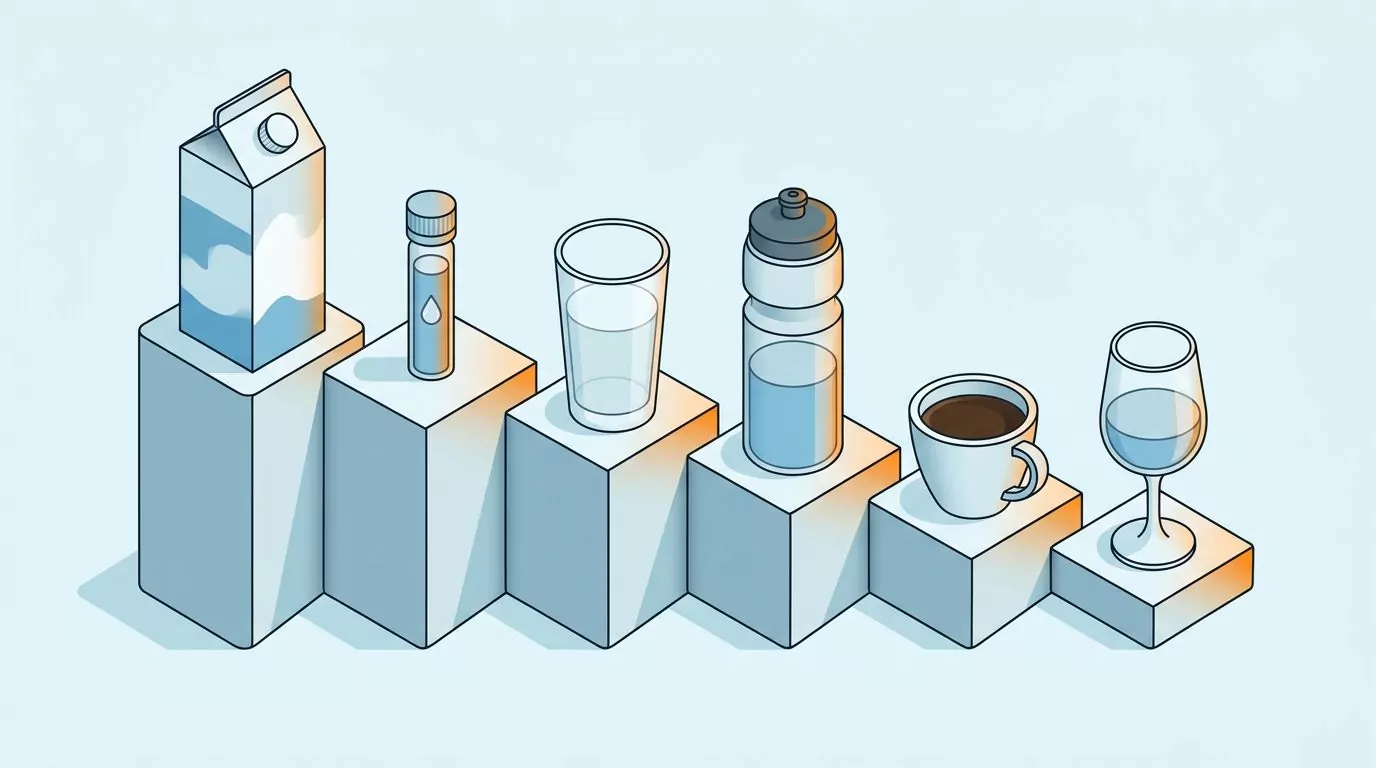
On coffee: it counts. Harvard's Nutrition Source is clear that caffeinated drinks contribute to your daily water intake, and that the old idea of coffee actively drying you out does not hold up at normal amounts. Your morning flat white is not working against you.
About a fifth of your fluid arrives as food
This is the part most rehydration advice skips, and it changes the arithmetic.
Roughly 20 percent of total water intake comes from food rather than drinks, according to Harvard's Nutrition Source. Lettuce, cucumber, melon, berries, leafy greens and summer squash are mostly water by weight.
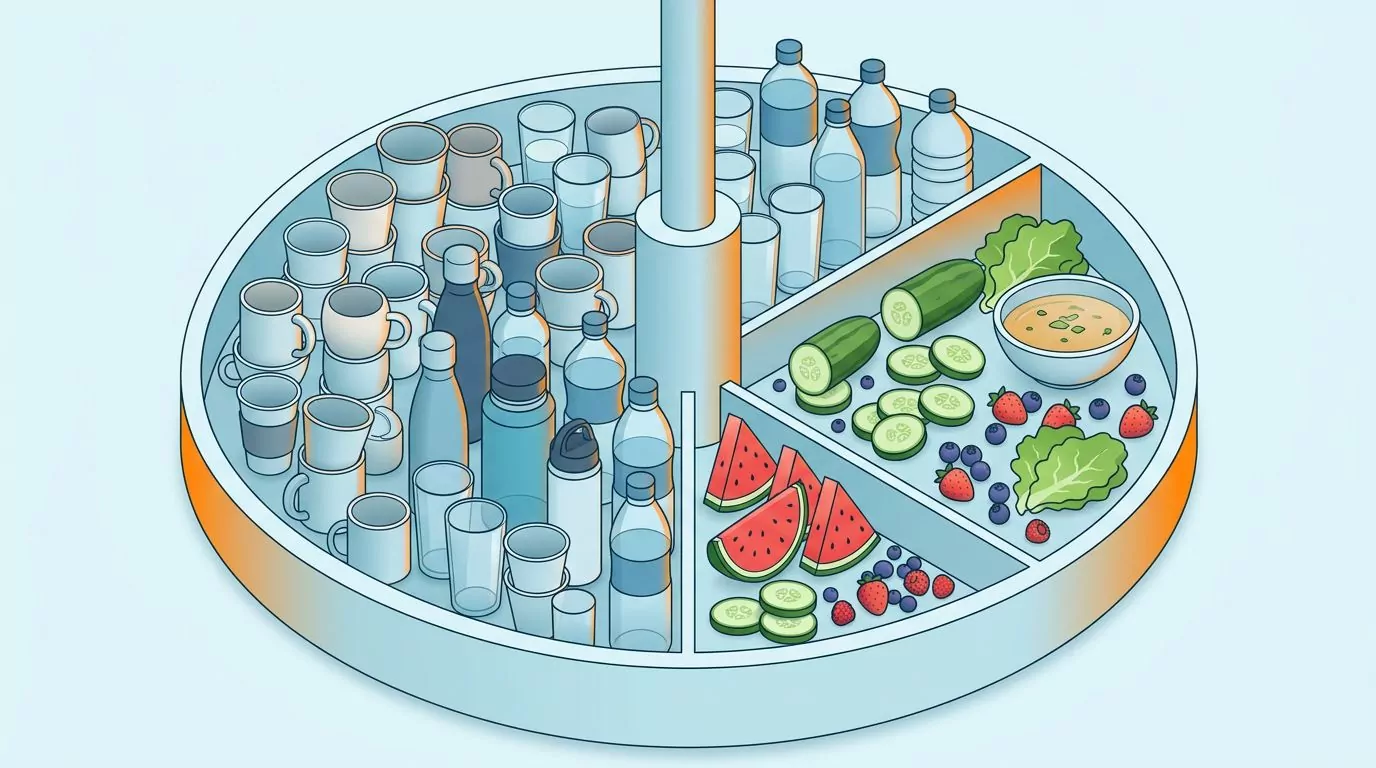
So if you are trying to catch up, a meal is not a delay. It is part of the plan. A bowl of soup delivers water and sodium at the same time, which is close to what a rehydration sachet is doing, only tastier.
This is also why skipping lunch on a busy day quietly costs you more fluid than you would guess.
Rehydrating after a workout you underestimated
When you sweat, you lose water and salt together. Replacing only the water leaves half the job done, which is why people can drink plenty after training and still feel flat.
A simple approach for general comfort:
- Have a glass or two when you finish, not a whole bottle.
- Keep drinking steadily over the next two or three hours.
- Eat a proper meal, or something salty, within that window.
- Let thirst guide the rest of the evening.
Milk does well here for the reason above: it brings fluid, sodium and protein in one glass. A chocolate milk after a hard session is not a gimmick, it is just a convenient package.
None of this is about training outcomes. It is about not spending your evening with a headache because you replaced water and forgot salt.
Flights, hot days, and the morning after
Three situations catch people out, and each has its own quirk.
Flights. Cabin air is very dry, and you lose water steadily through breathing without noticing. The fix is unglamorous: accept the drinks trolley every time it passes, and fill a bottle after security.
Hot days. Sweat losses can be large and salty. Water alone can leave you feeling washed out, so pair it with a meal or a salty snack rather than drinking gallons of plain water.
After drinking alcohol. Alcohol makes you pass more urine, so you tend to end the night behind. Usefully, Harvard Health points out that alcoholic drinks still make a net positive contribution of water over the day. The catch up still works the same way: steady fluids, food, and time. No drink undoes it faster.
A pace that works on an ordinary day
Most people do not need a protocol. They need a default that survives a busy afternoon.
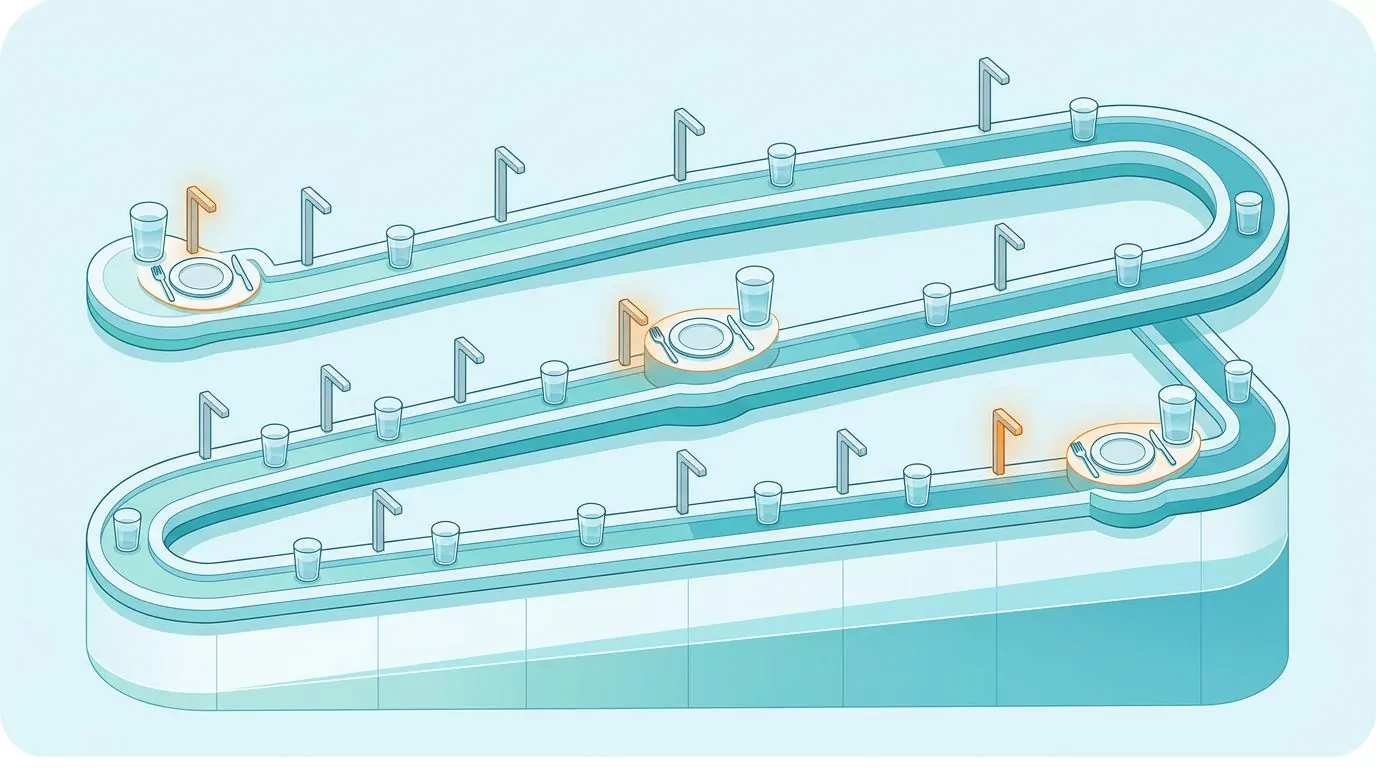
Anchor drinks to things you already do. A glass with each meal, one when you sit down at your desk, one when you get up from it. Harvard Health suggests exactly this: attach fluids to meals and routines instead of trying to remember in the abstract.
If you are catching up rather than keeping up, the same shape applies, just compressed. Small glasses, twenty minutes apart, with something to eat in the middle.
What does not help is treating a daily target as a score to beat. Hitting a sensible goal means you can stop, not that you should keep going.
How to tell whether it worked
You do not need a gadget for this. Urine color is the everyday check, and most people already half know it.
Pale straw is the usual sign that you are keeping up. Harvard Health lists dark yellow urine among the signals that you are running short, alongside weakness and dizziness. Clear and colorless every single time is not a gold star, though. It usually just means you are drinking more than you currently need.
Thirst is a fair guide too, with one caveat. The signal fades with age, so older adults are more likely to be short on fluid without feeling thirsty about it.
When faster is not the right goal
There is a point where drinking more stops adding anything. Your body can only take up so much at a time, and the excess simply passes through.
A few situations sit outside general wellness advice entirely. Fluid losses from illness, drinking during long endurance events, and any medication or condition that affects fluid balance all belong with a clinician rather than a blog post. If you are in one of those categories, ask a healthcare professional what is right for you.
For everyone else, the honest version is reassuring. You are not in a race. You are just topping up.
Letting something else keep track of the pacing
The hard part of steady drinking is not knowing you should. It is noticing you have not.
Water Goose is a hydration tracker for iPhone and Android built around that gap. It sets a daily goal from a few basic details like age, height and weight, and you can adjust it if the suggestion does not suit you. Logging takes a few taps, and it handles the drinks that actually make up a day: water, coffee, tea, milk, smoothies, juice, sparkling drinks, sports drinks and soup all count toward the total.
The history view is a plain calendar of daily totals and how often you hit your goal, and it lives on your device rather than in an account somewhere. No feed, no leaderboard, no one else looking at your water intake. Water Goose is a general wellness tool, not medical advice, and it does not pretend otherwise.
Frequently Asked Questions
What is the fastest way to hydrate?
Steady sips rather than one large drink, with some sodium alongside. A glass every fifteen to twenty minutes plus a meal or a salty snack will do more in an hour than a liter swallowed at once, because more of it stays in you.
How long does it take to rehydrate after a workout?
Most people feel noticeably better within an hour and settled after two or three, provided they keep drinking gently across that window and eat something. Trying to finish the job in ten minutes mostly produces bathroom trips.
Do I need electrolytes, or is water enough?
For an ordinary day where you simply forgot to drink, water and food are enough. Electrolytes for hydration earn their place when you have lost salt as well as water, such as after heavy sweating. Anything beyond everyday wellness is a question for a healthcare professional.
Does coffee count when I am trying to rehydrate?
Yes. Harvard's Nutrition Source notes that coffee and tea contribute to your daily water intake, and moderate caffeine does not dehydrate you. Drink it and count it.
How do I rehydrate after drinking alcohol?
The same way you rehydrate after anything else: steady fluids across a few hours, plus food. Alcohol increases urine output, so you often start the morning behind. There is no drink that speeds this up beyond ordinary catching up.
Is it possible to drink too much water too fast?
Your body has a limit on how much it can process at once, and ordinary daily drinking is nowhere near it. Very large volumes in a short time are a genuine concern in specific situations such as endurance events. If that applies to you, ask a healthcare professional rather than guessing.
The quiet version of hydrating faster
Pace it, salt it, eat something, and give it a couple of hours. That is the entire skill, and it works whether you are recovering from a flight, a heatwave, or a day that got away from you.
If the part you keep losing is the noticing, a tracker helps more than willpower does. Water Goose is on the App Store for iPhone and on Google Play for Android.