Drinking Water at Night Without Wrecking Your Sleep
Drinking water at night is not the problem most people think it is. Small amounts close to bed are fine for most healthy adults. What wakes you at 3am is usually a large drink in the last hour, on top of a day where you barely drank anything until dinner. Fix the shape of the day and the night mostly fixes itself.
The short answer on drinking water at night
If you are thirsty at bedtime, drink. A few sips, or even a small glass, will not ruin your night.
The trouble starts when the glass is large and the timing is late. Your kidneys keep working while you sleep. A tall glass at 11pm has to go somewhere, and it tends to go somewhere around 2am.
Most general guidance lands on roughly the same number. Cleveland Clinic suggests stopping the real drinking about two hours before bed, and keeping anything after that to less than a glass, taken in small sips.
That is easy advice to follow if you are already close to your daily target by dinner. It is almost impossible if you are four glasses behind. That gap is what this article is actually about.
Why the last two hours before bed matter most
Your body slows urine production overnight. That slowdown is what lets most people sleep several hours in a row without a bathroom trip.
A big drink late works against it. The fluid arrives while your body is trying to power down, and your bladder fills on a schedule you did not pick.
The cost is bigger than the two minutes you spend awake. Falling back asleep takes time, and one interruption often turns into a shallow, restless second half of the night.
None of this makes evening hydration a bad idea. It makes late volume the thing to watch. Half a glass at 10pm behaves nothing like three glasses at 10pm.
The real problem is the shape of your day, not the glass at bedtime
Almost nobody drinks a litre of water at 10:30pm on purpose. They drink it because the day got away from them.
A back-loaded day looks like this. Coffee at 8am. Nothing until lunch. One glass in the afternoon. Then a scramble in the evening once you notice how little you have had.
That scramble is the whole problem. The exact same total, spread across the day, would not have touched your sleep at all.
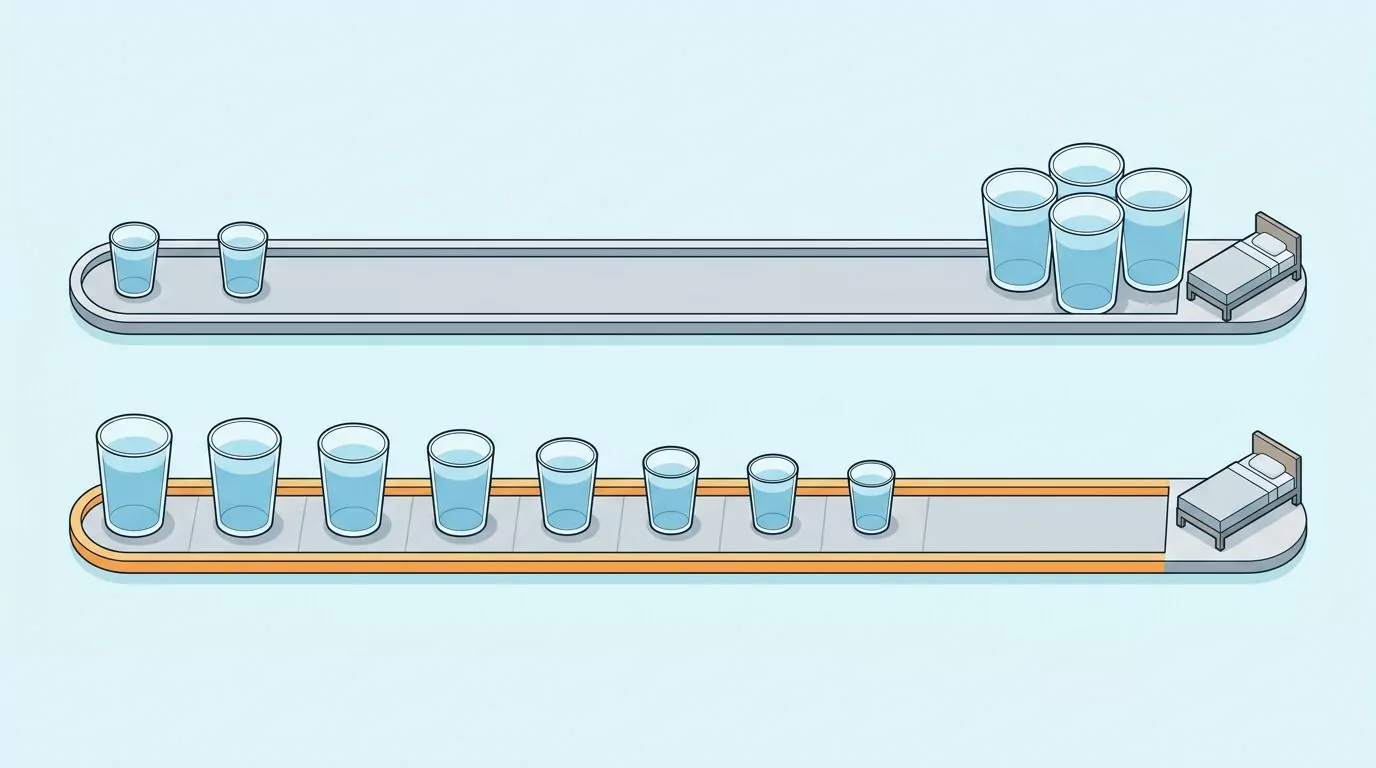
Harvard Health makes the same point without ever mentioning sleep. It suggests drinking fluids gradually through the day, and ties it to something you already do anyway: a drink at every meal.
Spreading it out is not a clever hack. It is simply the version of the day where nothing has to be made up at 10pm.
How to close the gap earlier instead of at 10pm
If you keep ending the day short, the fix belongs in the morning and afternoon. Five habits do most of the work.
- Drink one glass before your first coffee. It is the easiest glass of the day to remember, because it is attached to something you already never skip.
- Attach a drink to every meal. Three meals is three glasses without making a single decision.
- Check where you stand mid-afternoon. At 3pm a shortfall is a small, calm fix. At 10pm it is a choice between your goal and your sleep.
- Keep water within arm's reach. Distance is the main reason people skip drinks. A bottle on the desk beats a jug in the kitchen.
- Treat the evening as a taper, not a top-up. The last few hours are for finishing, not for catching up.
None of these require an alarm or a rule. They just move your drinking to the hours where it costs you nothing.
A realistic evening taper that still gets you there
Here is what the back half of a normal day can look like when you are not fighting your own bladder at midnight. Adjust the clock times to your own bedtime.
| When | A sensible amount | Why it works |
|---|---|---|
| Late afternoon, around 4pm | A full glass, plus a mug of something if you want one | There are still hours of processing time before bed |
| With dinner, around 7pm | Half a glass to a full glass | Food and drink together, so it is hard to forget |
| Two hours out, around 9pm | Your last real drink of the day | This is the cutoff most general guidance settles on |
| Last hour, around 10pm | Small sips only, well under a glass | Enough for a dry mouth, not enough to fill the bladder |
| Bedside | A glass you can sip if you wake up | Insurance, not a glass to finish before lights out |
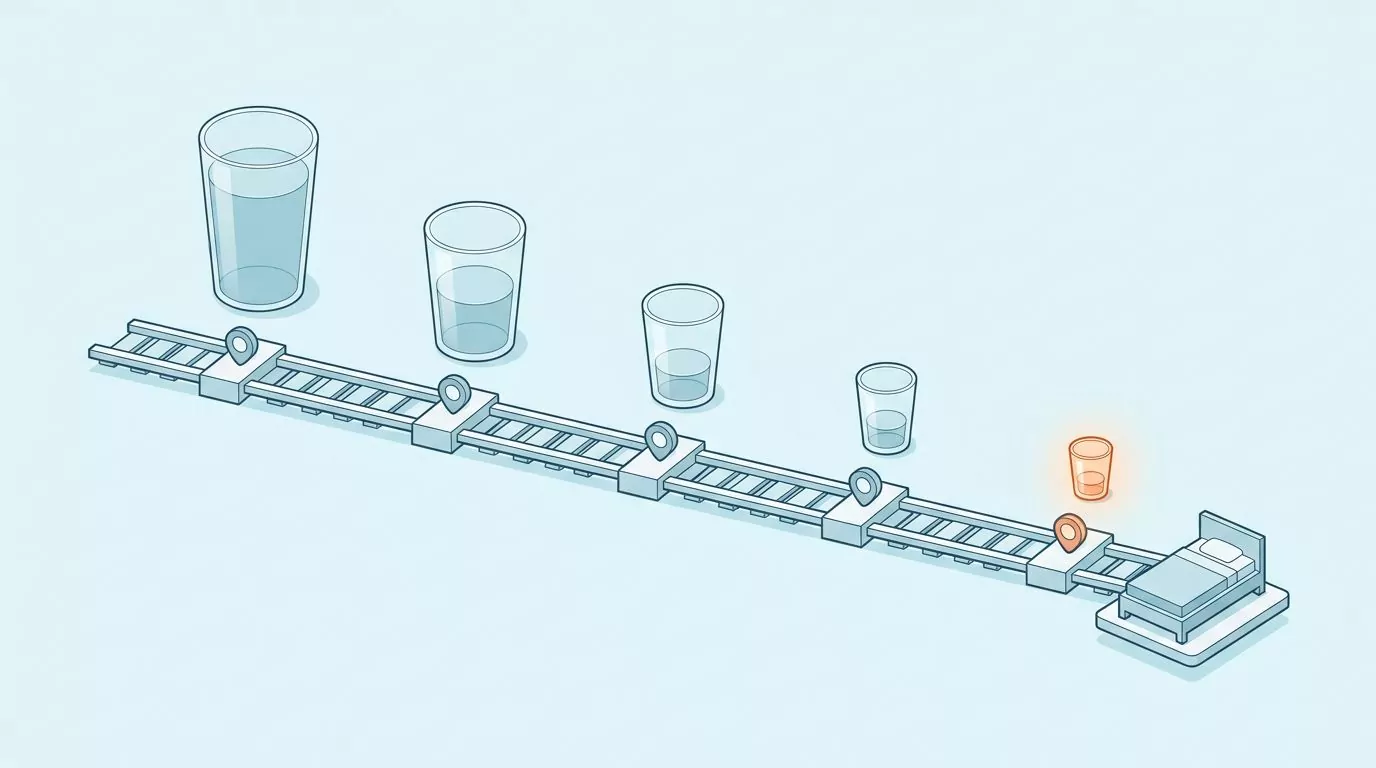
Two hours is a starting point, not a law. Some people are fine with a glass at 11pm. Others notice a difference at three hours out. Move your own cutoff until the nights get quieter, then leave it there.
How to find your own cutoff in about a week
You do not have to guess at this. A week of small adjustments will tell you more than any general rule can.
- Start at two hours for three nights. Each morning, note one thing only: whether you got up, and roughly when.
- If you woke up, push the cutoff back by an hour. Keep the rest of the day the same, so the cutoff is the only thing that changed.
- If you slept through, pull it in by half an hour. There is no prize for stopping earlier than you need to.
Most people land somewhere between one and three hours. Where you land depends on your age, your bladder and what you drank earlier in the day, and it can shift a little with the seasons.
Once you have a number that works, stop testing. The whole point is to end up with a cutoff you never think about again.
How much of your fluid already comes from food
This is the part most bedtime advice skips entirely. You are not only drinking your fluid. You are eating a decent share of it.
Harvard's Nutrition Source puts it at about 20 percent of total water intake coming from food rather than drinks, mostly from water-rich fruit and vegetables.
Soup, salad, melon, cucumber, yoghurt, oranges and grapes all quietly count. A dinner built around those is already doing some of the work you were about to do with a glass.
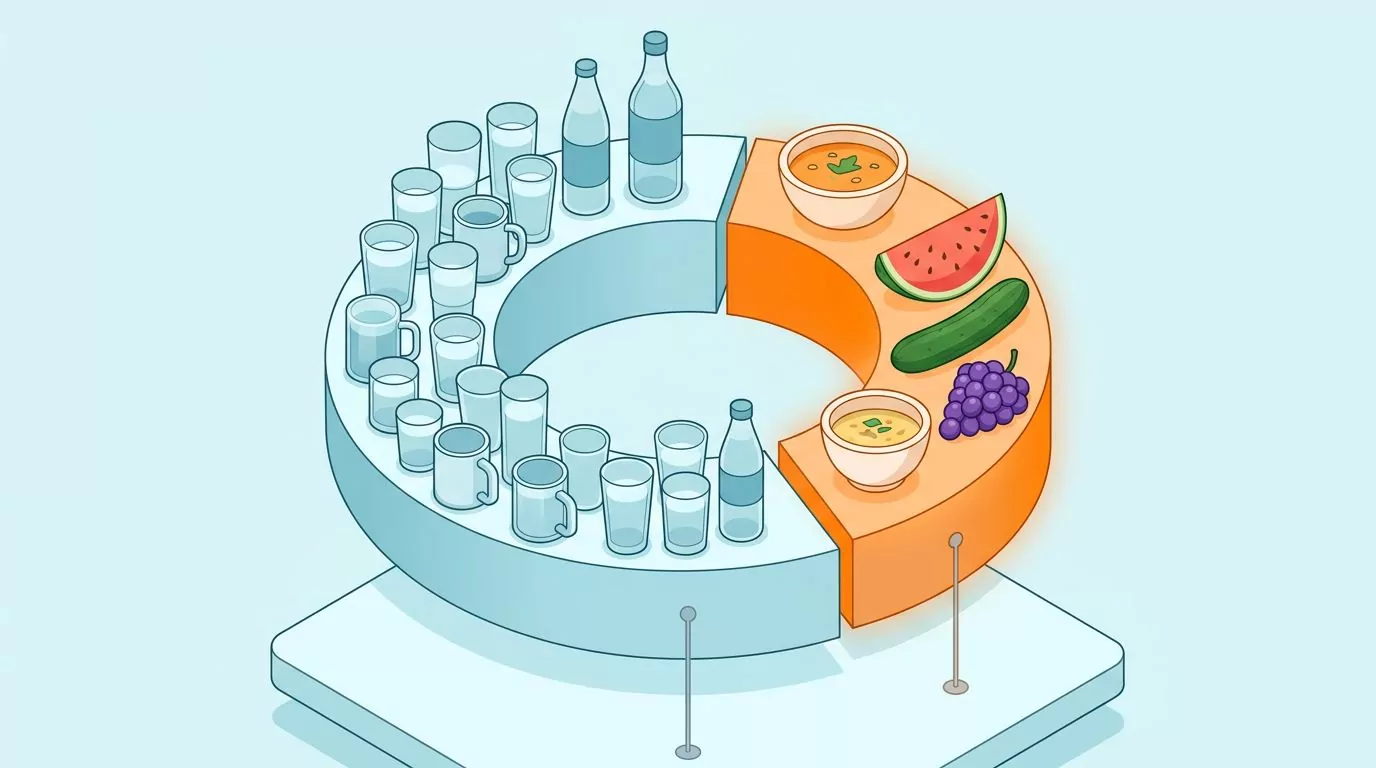
That matters at bedtime for one practical reason. If dinner was a bowl of soup and a big salad, you are closer to your real intake than any tracker will show you.
Water Goose can log soup, because soup is a drink by any honest measure. A cucumber is not going to make it into any app. So if your number looks slightly short after a very wet dinner, it probably is not as short as it looks.
Evening drinks that cost you more sleep than water does
Water takes the blame for a lot of nights it did not cause. If you are cutting something from your evening, these are better candidates.
- Alcohol. It is a diuretic, and it tends to break up the second half of the night even when it helps you fall asleep quickly.
- Caffeine after mid-afternoon. Coffee and strong tea count toward your fluid, but they can keep working for hours after the mug is empty.
- Very large mugs of herbal tea. No caffeine, but a big mug is still 400ml of fluid landing at 10pm. Volume is volume.
- A very salty dinner. Salt makes you thirsty later, so you end up drinking more, later, exactly when you did not want to.
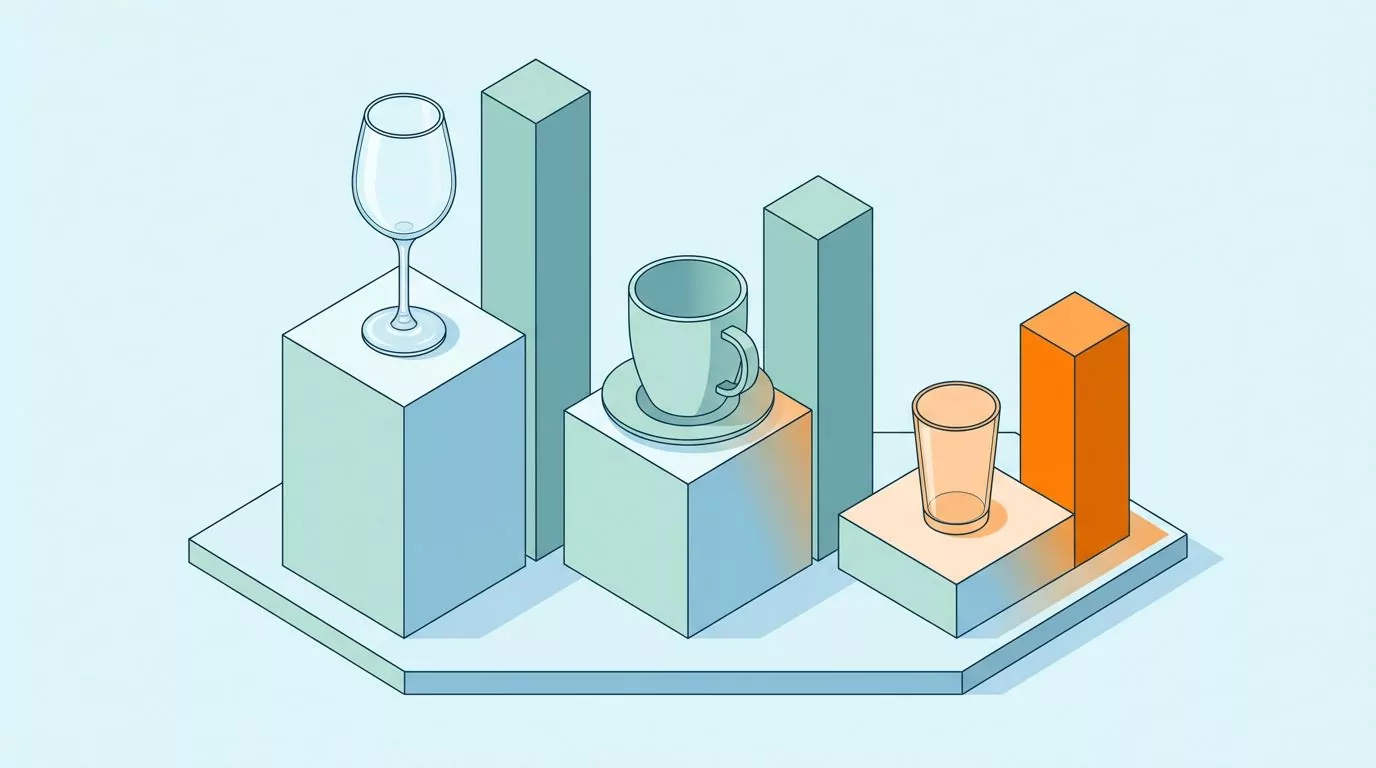
Swapping a late glass of wine for a small glass of water is usually a net win for your sleep, even though the water is the thing that goes through you faster.
What to do when you are genuinely thirsty at bedtime
Drink. Real thirst at bedtime is worth listening to, and going to bed thirsty to protect your sleep tends to backfire anyway.
Waking up parched at 4am is its own interruption, and it usually ends with a bigger drink than the one you skipped.
Three small things make it easier:
- Sip rather than drain. Half a glass answers thirst just as well as a full one.
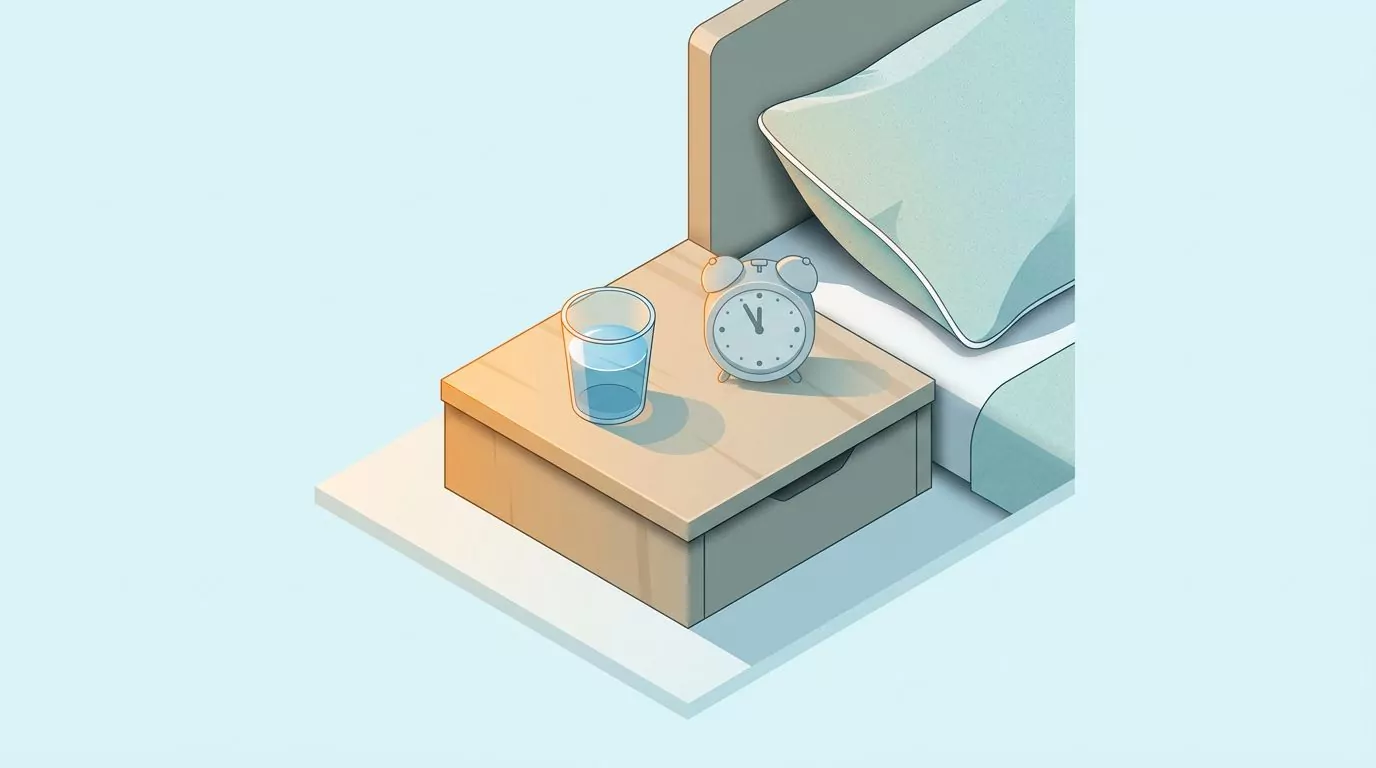
- Keep a glass on the bedside table. Waking thirsty should not mean a trip to the kitchen and a bright light in your eyes.
- Tell dry mouth apart from thirst. If it is dry mouth, a rinse or one sip is usually all it takes.
The goal is not a perfectly dry evening. It is an evening where you are not drinking to hit a number.
When nighttime urination is not about your water bottle
Sometimes the timing changes nothing. If you are waking more than once most nights, and moving your last drink earlier makes no difference, then the water was probably never the cause.
Waking to use the bathroom at night is common, and the Sleep Foundation notes it becomes considerably more common with age. It can also relate to medications or to existing health conditions.
That is the point to stop adjusting your bedtime routine and talk to a doctor or another healthcare professional instead. The National Institute of Diabetes and Digestive and Kidney Diseases is a reasonable place to read up first.
This article is general wellness reading, not medical advice, and Water Goose is a general wellness app rather than a medical one.
If you track, watch the shape of the day and not just the total
A daily target is genuinely useful, right up to the moment it turns into a 10pm deadline.
Water Goose sets a starting goal from your age, gender, height and weight, and you can adjust it if it does not suit you. The daily view shows today's total against that goal with a filling ring, so a shortfall shows up in the afternoon while you can still fix it calmly.
Logging is a tap for the drink, a swipe for the amount, and one button to confirm. It covers water plus coffee, tea, juice, milk, smoothies, sparkling drinks and soup, because all of them count toward your day.
Your hydration history stays on your device. There is no feed, no leaderboard, and nobody else's numbers to measure yourself against. Hitting your goal is a signal to stop, not a score to beat.
Water Goose is on the App Store for iPhone and on Google Play for Android. If hydration tracking that stays quiet and out of your way sounds useful, you can download it from the App Store or Google Play and see how the daily view, the drink list and the on-device history fit together.
Frequently Asked Questions
How long before bed should you stop drinking water?
About two hours is the usual starting point, and it is the cutoff Cleveland Clinic suggests. After that, keep it to small sips rather than a full glass. If you still wake up most nights, try moving the cutoff to three hours and see whether it helps.
Does drinking water at night affect sleep?
Only when the amount is large and the timing is late. A few sips will not register. A tall glass in the last hour often shows up as a bathroom trip a few hours later, and that interruption is the part that costs you.
Should you drink water before sleep at all?
Yes, if you are thirsty. Ignoring real thirst to protect your sleep usually backfires, because waking up dry at 4am wakes you just as thoroughly. Drink a small amount and keep a glass within reach.
What are the benefits of drinking water before bed?
The honest ones are modest and practical. You are less likely to wake up with a dry mouth, less likely to start the morning already behind, and less likely to raid the fridge at 3am. It is not a detox and it is not a health upgrade.
Why do I still wake up to pee even when I stop drinking early?
Because fluid timing is only one of many possible reasons. Age, medications and existing health conditions all play a part. If cutting evening fluid changes nothing, that is a good reason to raise it with a healthcare professional rather than to keep drinking less.
Does water I drink at night still count toward my daily goal?
Yes. Your body does not care what time the glass arrives, and neither does your daily total. The only thing that changes with the clock is how likely that glass is to wake you up.