Drinking Water in the Morning: What It Does and What It Does Not
Drinking water in the morning works for a dull reason: you lose fluid overnight through breathing and sweating, and you replace none of it while you sleep. A glass when you wake up tops that back up and gives the habit a fixed starting point. That is the real benefit. The rest is mostly folklore.
Why a morning glass of water helps
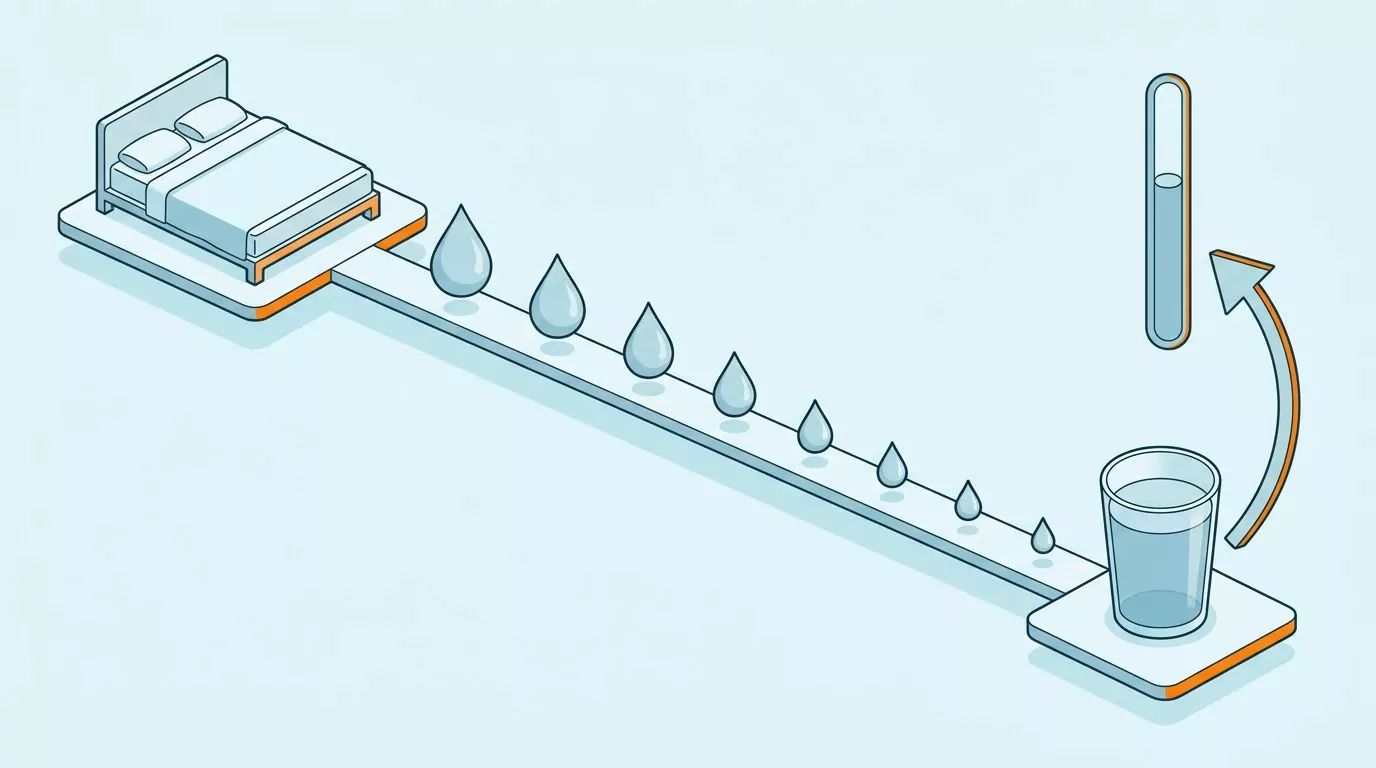
Sleep is the longest stretch of your day with no fluid going in. You keep breathing, you sweat a little, and your kidneys keep working. Nothing gets replaced for seven or eight hours.
Cleveland Clinic puts the overnight loss at roughly 300 to 400 cc across an eight hour sleep. That is somewhere between one and two glasses. It is a mild gap, not an emergency.
So you wake up slightly down on fluid, and a glass of water closes most of that gap in about twenty seconds. That is the whole mechanism. It is also enough.
The second reason has nothing to do with biology. Morning is already when people reach for plain water: an analysis of US national diet survey data found plain water was mostly consumed between 06:00 and 12:00. A morning glass goes with the grain of what you do anyway.
Habits need an anchor, and the first hour of the day is full of them. That is why water first thing in the morning tends to stick when a vague plan to drink more water does not.
What drinking water in the morning does not do
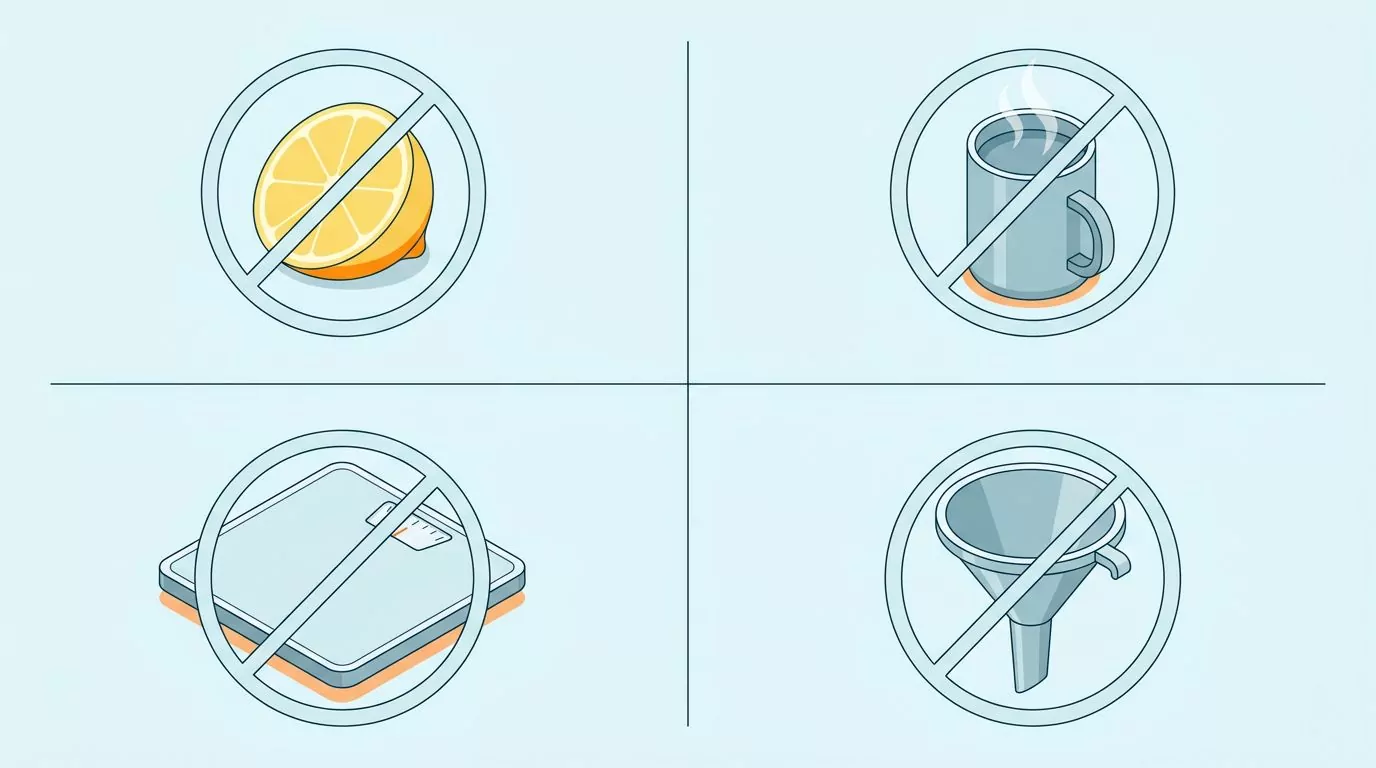
Search for the benefits of drinking water in the morning and things get strange fast. The same plain glass gets credited with flushing toxins, resetting your metabolism, clearing your skin and fixing your digestion. It does none of that.
Here is the short version, with the detail underneath.
| The popular claim | What the evidence supports |
|---|---|
| It flushes toxins out of your body | Your liver and kidneys do that. Water lets them do their normal job, nothing more. |
| It boosts your metabolism by 30 percent | That figure comes from one small 2003 study. A careful retest found under 3 percent, no better than a fake drink. |
| Warm water in the morning beats cold | Very little evidence either way. Temperature is a comfort preference. |
| Lemon water adds real benefits | Lemon adds flavour and a trace of vitamin C. That is the list. |
| It has to be on an empty stomach | Nothing special happens because your stomach is empty. It is just an easy time to remember. |
It does not detox you
You already own a detox system. Your liver breaks waste products down, your kidneys filter them out, and this runs whether or not you drank a glass of water at 7am.
UVA Health makes the same point when it works through the warm water claims. Water helps that machinery by being available. It does not add a rinse cycle.
It does not meaningfully boost your metabolism
The famous 30 percent number traces back to a single small study from 2003. It has been repeated so often that it now reads like settled fact.
It is not. When researchers went back and tested it with proper controls, drinking 500 ml of water lifted resting energy use by less than 3 percent, which was not distinguishable from a sham drink.
So treat the morning glass as a hydration habit. It is a glass of water, not a lever on your body weight.
Warm water is not better than cold water
UVA Health is blunt about this one: "There is limited scientific evidence comparing warm water to cool water." Everything built on top of that comparison inherits the same problem.
Warm water does not scrub you out on the way down, and it does not change how much you absorb. Water reaches body temperature quickly either way. Drink the version you will actually finish.
Lemon is a flavour preference
Lemon makes water taste like something. For plenty of people that is the difference between drinking the glass and forgetting it, which is a genuine benefit. It is just not a chemical one.
What lemon does not do is detox you, change your body's acidity, or move the needle on your vitamin intake. Use it if you like it. Plain water performs the same job.
How much water when you wake up, roughly
A glass. Cleveland Clinic suggests at least a cup on waking, and most sensible guidance lands somewhere around 250 to 500 ml.
Resist making this precise. Nobody measured your overnight losses, and you are not running a deficit that needs matching to the millilitre.
- One normal glass is fine. A litre before breakfast is not more virtuous, only more trips to the bathroom.
- Sip it if you prefer. There is no prize for finishing fast.
- Hot weather, a warm bedroom, a hard session the night before or a couple of drinks: you will notice, and a bit more water is reasonable.
- If you are genuinely not thirsty, the glass can wait an hour. The habit matters more than the clock.
One plain note: this is general wellness information, not medical advice. If you have a health condition or take medication that changes how much you should drink, ask a healthcare professional rather than a blog.
Water before or after coffee
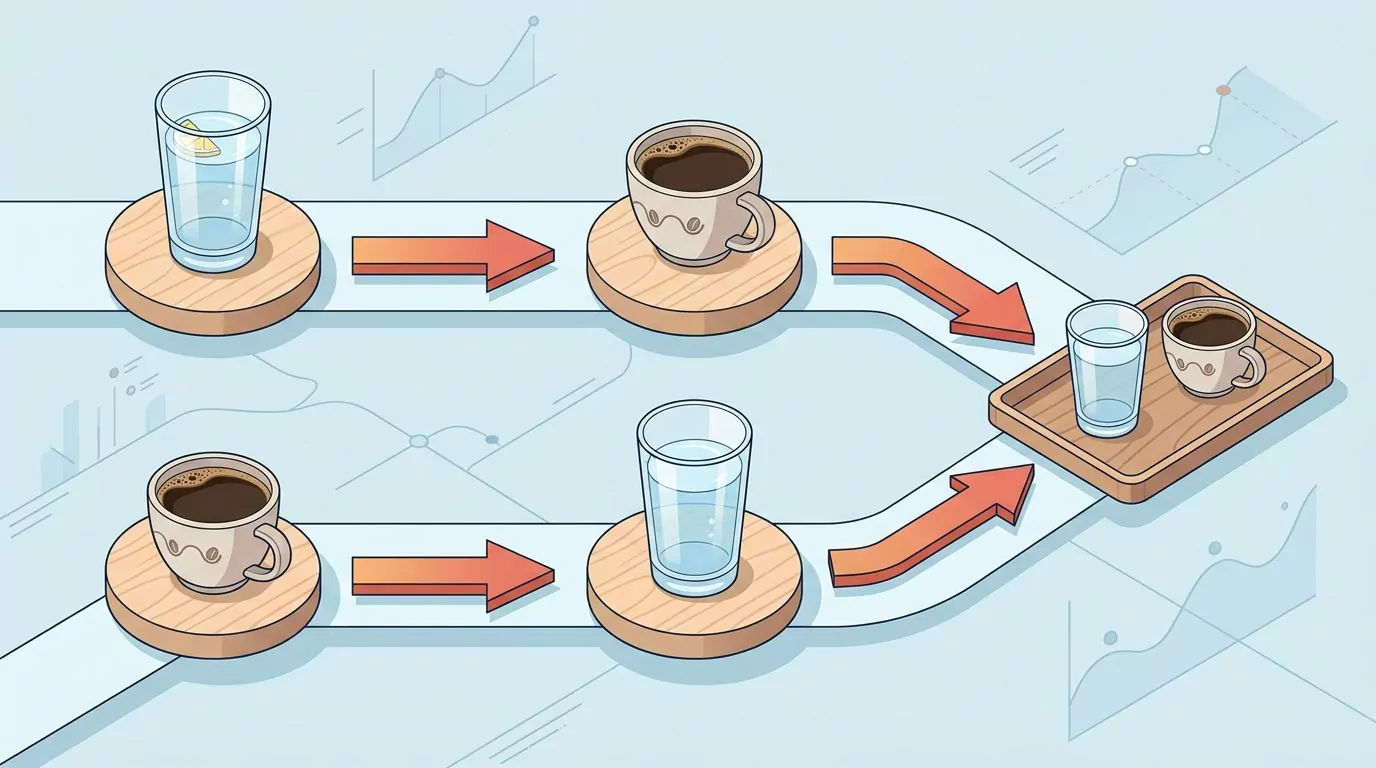
Either. This question gets far more debate than it earns.
The case for water before coffee is purely practical. The kettle or the machine needs a minute anyway, and a glass fits neatly into that gap. It also gets the habit done before your phone takes over your attention.
The case for coffee first is that some people are not really present until they have had one. If water first means the water never happens, put it second and leave the glass next to the mug.
Worth clearing up: coffee still counts toward your fluids. Caffeine has a mild diuretic effect, which is why Cleveland Clinic points to water rather than something heavily caffeinated as the first thing you reach for. A normal cup of coffee is still mostly water.
The order matters much less than whether both happen. Pick the sequence you will repeat tomorrow morning without thinking about it.
Making your morning hydration routine stick
Drinking the glass is easy. Remembering it every day for a month is the actual task.
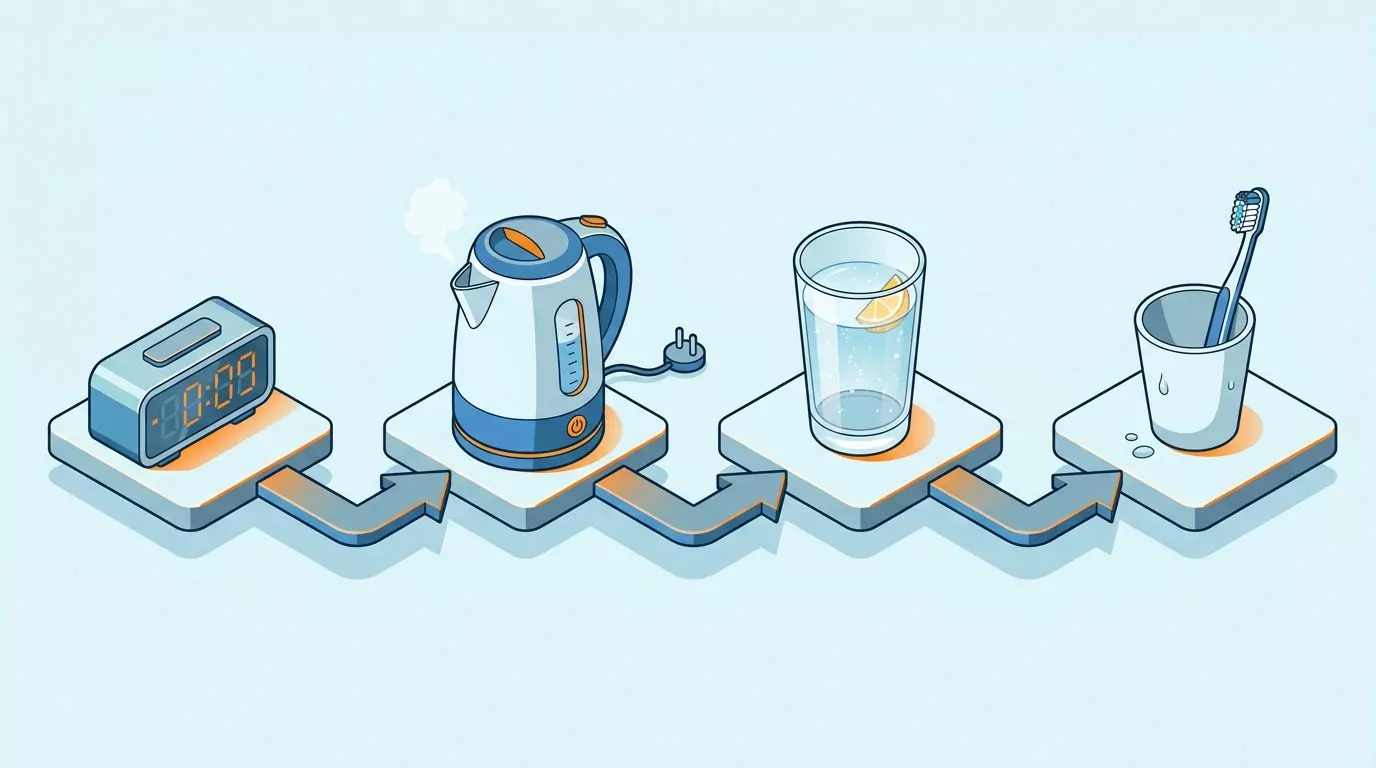
The trick is not willpower. It is attaching the new habit to something you already do on autopilot, so the old action becomes the reminder.
- The kettle or the coffee machine. Press the button, pour a glass, drink it while you wait.
- The bathroom. Keep a glass by the sink and drink it while your toothbrush does its two minutes.
- Your alarm. Fill a glass the night before and leave it on the bedside table. The decision gets made by someone who is not half asleep.
- The shower. Glass first, then get in. The habit is done before the day starts making demands.
Two rules stop this becoming another thing to feel bad about. Keep the bar low: one glass, not a target. And when you miss a morning, start again the next one without ceremony.
A streak is useful right up to the moment you start defending it. If a missed day feels like failure, the habit has stopped working for you.
Where a hydration tracker helps
Logging that first glass is the cheapest win of the day. It takes a couple of seconds, it happens before anything has gone wrong, and it sets the tone without any pressure.
There is a quieter benefit too. Most people either overestimate what they drink or have no idea at all, and a week of honest logging settles that faster than any calculator.
Water Goose is a hydration tracker for iPhone built for exactly this kind of low effort logging. Pick the drink, swipe the amount, confirm, and the morning glass is in. It suggests a starting daily goal from a few basic details, and you can move that goal wherever you like.
Coffee, tea, juice and the rest are in there as well, because pretending only plain water counts gives you a useless picture of your day. The history view is a simple calendar of daily totals and completions, and it stays on your device.
The limits, plainly: it is a general wellness tool, not medical advice, and it is not trying to be a health dashboard. No leaderboards, no feed, no charts to decode. iPhone only.
If you want the morning glass to become automatic without turning hydration into a project, have a look at Water Goose for iPhone and see whether simple tracking suits how you actually live.
Frequently Asked Questions
Should you drink water before or after coffee?
Either works. Water before coffee is convenient because the coffee takes a minute to make anyway, and it gets the glass in early. If you need coffee to function first, drink it and keep a glass of water beside the mug.
Is warm water better than cold in the morning?
No. There is very little evidence comparing the two, and warm water in the morning does not detox you, speed up digestion or change your metabolism. Temperature is a comfort preference, so drink whichever one you will finish.
How much water should you drink when you wake up?
Roughly one glass, or about 250 to 500 ml. Cleveland Clinic suggests at least a cup on waking. There is no need for precision here, and a litre before breakfast mostly buys you extra trips to the bathroom.
Does lemon water do anything?
It makes water taste better, which for some people is the difference between drinking it and forgetting it. Beyond flavour and a trace of vitamin C, lemon water does not detox you or add anything plain water lacks.
Does empty stomach water matter?
Not in any special way. The empty stomach detail is popular in wellness writing, but nothing meaningful depends on it. Morning water is useful because it is easy to remember, not because of what is or is not in your stomach.