The 8 Glasses of Water a Day Rule Is Not a Rule
There is no strong evidence behind the 8 glasses of water a day rule. It was never a research finding. It is a round number that turned out to be easy to repeat. A target shaped by your own size, diet and climate is more useful than one number handed to everyone.
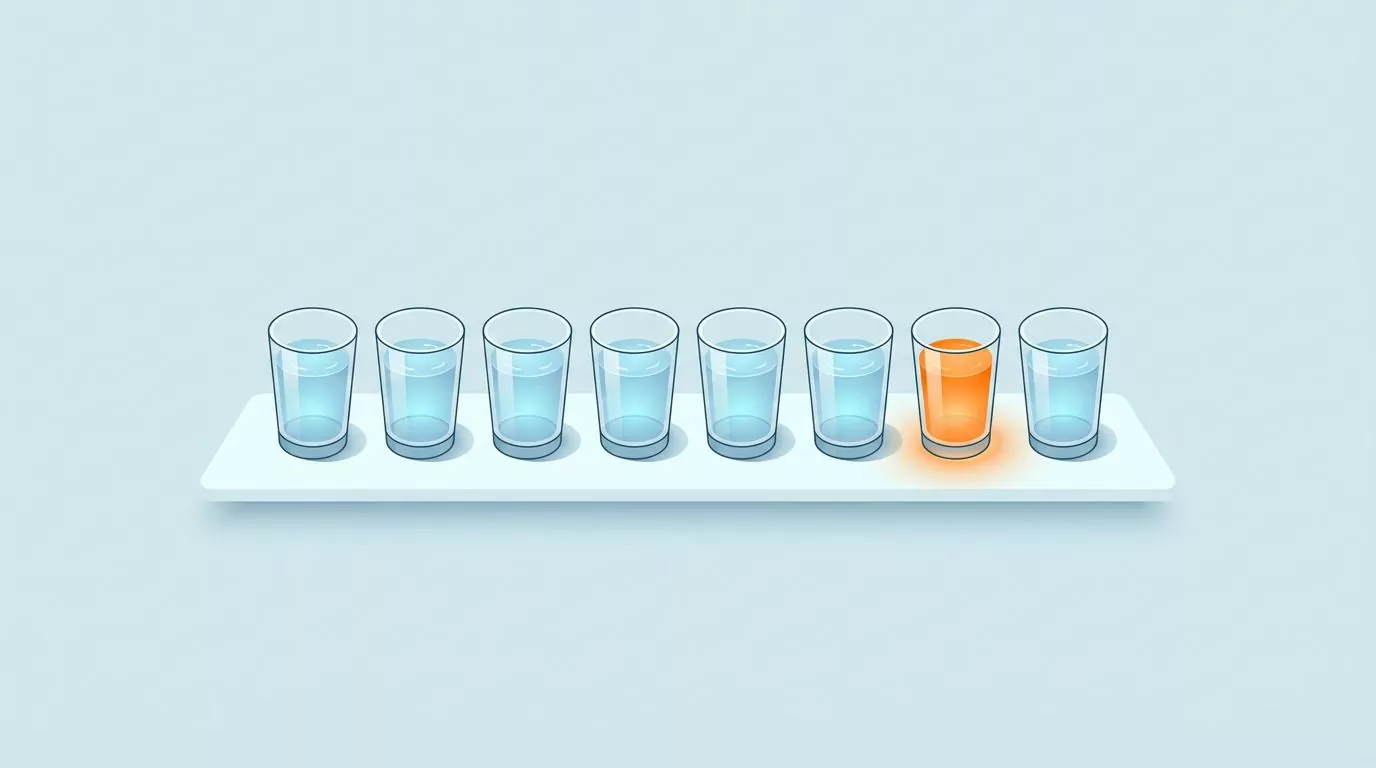
Where the 8 glasses of water a day rule came from
The trail goes back to 1945. That year the Food and Nutrition Board published a set of suggested daily allowances, and one line covered water. It said a suitable allowance for adults is about 2.5 litres a day in most cases.
The very next sentence is the one that matters. It said most of that amount is already contained in prepared foods. So the recommendation was never "drink 2.5 litres." It was "your body takes in about 2.5 litres, and a lot of it arrives on your plate."
Only the first half travelled. The number got repeated, rounded, converted into glasses, and stripped of the part that made it sensible. That is the whole story of the 8x8 rule in two sentences.
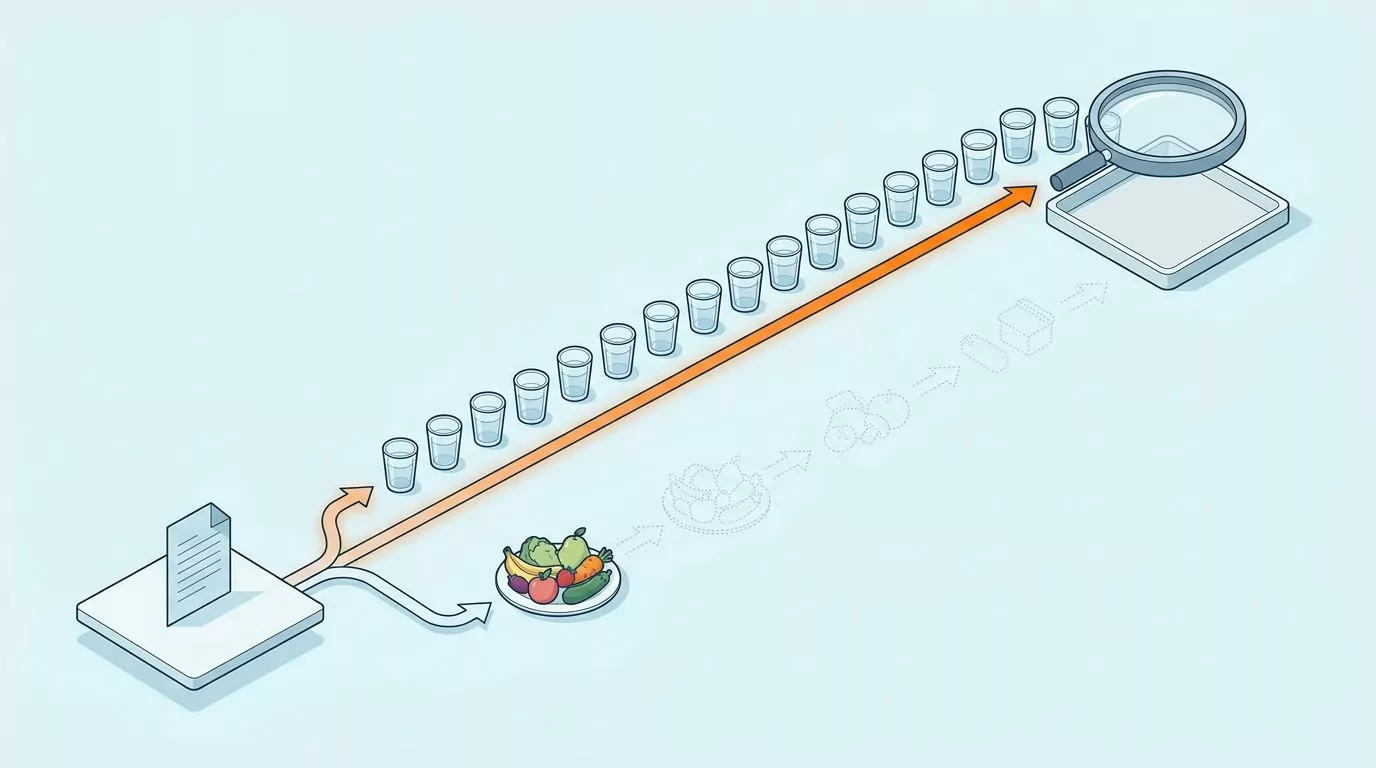
In 2002, a physiologist named Heinz Valtin decided to go and find the evidence. He searched the literature and published a review in the American Journal of Physiology asking a blunt question: is there scientific evidence for 8x8? His answer was no. He found no studies supporting it for healthy adults in a temperate climate.
Valtin also went looking for the origin and could not pin one down. Harvard Health lists two other candidates: wartime estimates of the bare minimum a soldier needs, and a calculation of the fluid that goes with a 2,000 calorie diet. AARP points back to that 1945 board as well, noting the figure was not built on data in the first place.
So where did 8 glasses of water come from? The honest answer is that nobody can name the moment. It has no birth certificate.
Why the 8x8 rule stuck anyway
A number with no evidence behind it should have faded. This one did the opposite, and the reason is not mysterious.
- It is memorable. Eight of a thing. You can hold that in your head while doing something else.
- It is countable. You can tell whether you hit it. Most real health advice does not offer that.
- It travels well. Round numbers repeat cleanly. Qualifications get trimmed off in the retelling, exactly as the food sentence was.
- It feels like an achievement. Eight gives you a scoreboard, and scoreboards are satisfying.
That last one is the problem hiding inside the appeal. A scoreboard turns a normal day into a pass or a fail. Seven glasses becomes a small failure, which is a strange thing to feel about water.
This is the daily water recommendation myth in miniature. The advice that spreads is not the advice with the best support. It is the advice that fits in a sentence.
What the evidence actually supports
Every serious body that has looked at this publishes a range, not a number. They also disagree with each other, which is the useful part. Here is what they actually say.
| Source | What it actually says |
|---|---|
| U.S. National Academies, 2004 | About 3.7 litres of total water a day for men and 2.7 litres for women, counting every drink plus food |
| Harvard Nutrition Source | Around 13 cups of fluid a day for men and 9 for women, offered as general guidance rather than a target |
| EFSA, 2010 | 2.5 litres of total water a day for men and 2.0 litres for women, at moderate temperature and activity |
| NHS, United Kingdom | 6 to 8 cups or glasses of fluid a day, counting water, lower fat milk, sugar free drinks, tea and coffee |
| Valtin review, 2002 | No studies found supporting 8x8 for healthy adults in a temperate climate |
Look at the spread. One source says 2.0 litres and another says 3.7. That is not sloppiness. They are counting different things.
The National Academies figure is total water, which includes the moisture in your food. The NHS figure counts drinks only. Compare them without noticing that and you will think the experts are arguing. They are not.
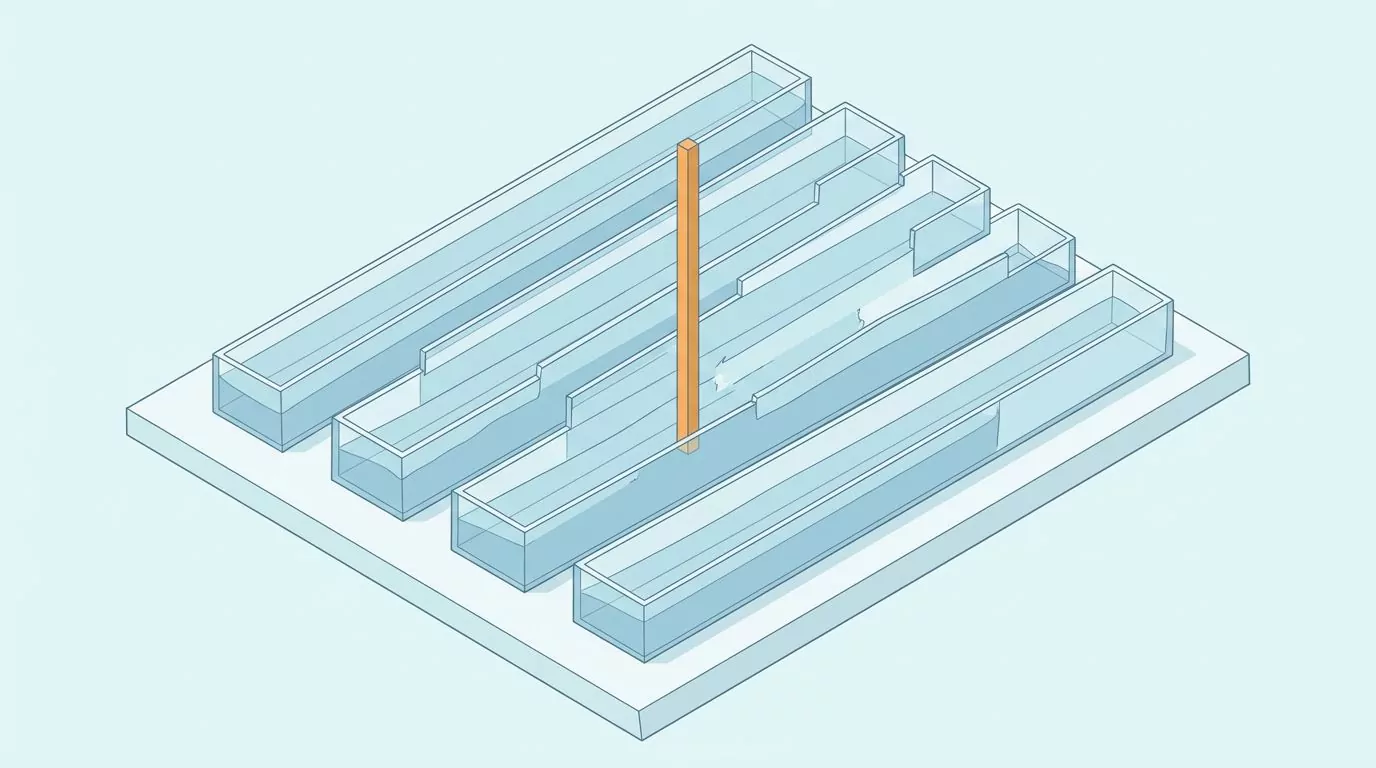
Two other findings matter as much as the numbers. The National Academies estimate that about 20 percent of total water intake comes from food rather than drinks. Fruit, vegetables, soup and yoghurt all carry real amounts of water.
And other drinks count. Valtin found that caffeinated drinks contribute to daily fluid, and the NHS lists tea and coffee in its own total. The idea that only plain water counts is a second myth that grew on top of the first.
Then there is the part nobody prints on a bottle: your own body is doing this already. As the National Academies panel put it, most people meet their needs by drinking at meals and letting thirst guide them.
What to use instead of a fixed number
Debunking is the easy half. Most articles stop here and leave you with nothing to do on Monday morning. So here is the replacement.
Do not swap one rule for another rule. Use a starting estimate that you are allowed to change. Four steps, and the fourth is the one people skip.
- Start from a sensible estimate. Base it on your own body rather than a round number. Your size, your usual day, your climate. Any of the ranges above is a reasonable place to begin.
- Watch one normal week. Change nothing. Just log what you already drink, including tea, coffee and everything else. One ordinary week tells you more than a perfect one.
- Adjust once. Move the target up or down to fit what that week actually looked like. Once. Not every evening.
- Then leave it alone. A goal you keep tuning is a hobby, not a habit. Set it, forget the arithmetic, and get on with your day.
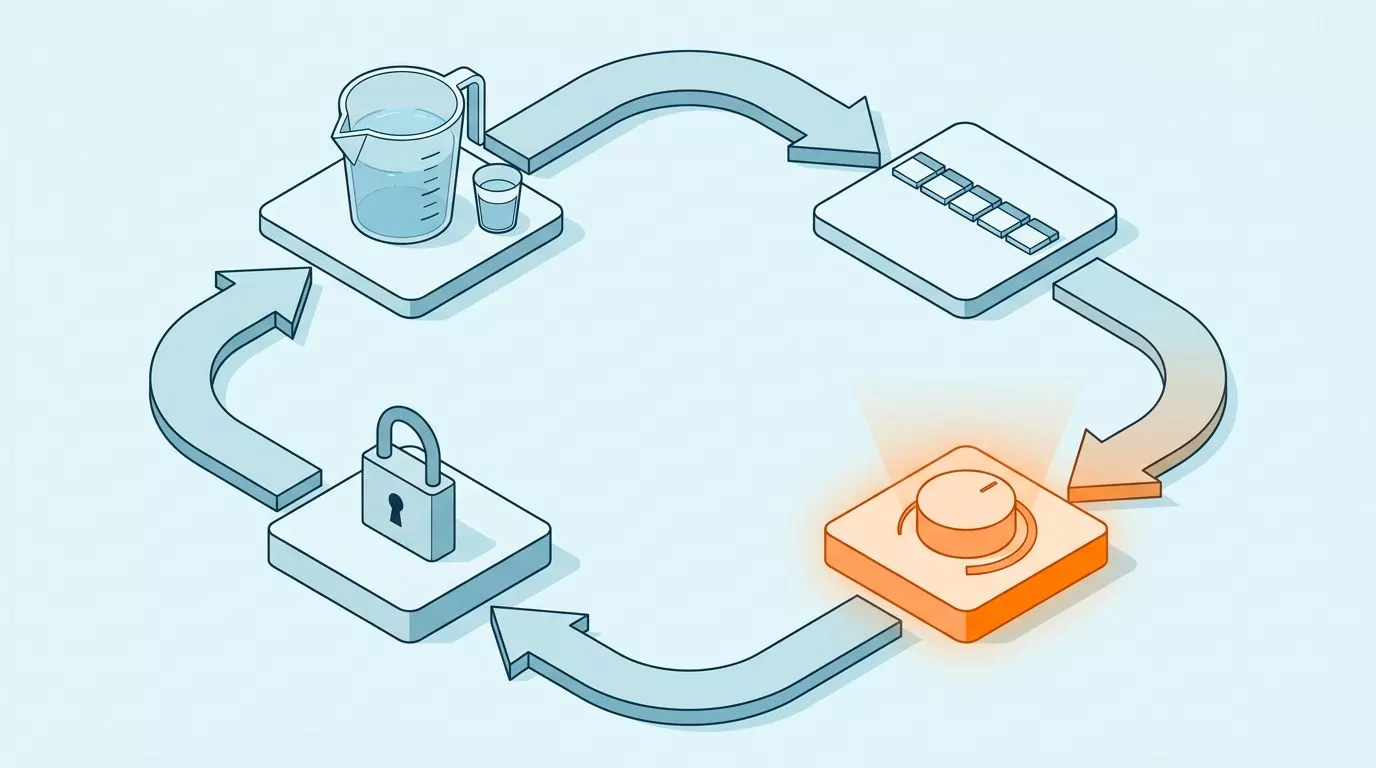
Notice what this method does not contain. There is no streak to protect and no verdict at the end of the day. A number you missed by a glass is information, not a grade.
If you are ever unsure what is right for your own circumstances, ask a healthcare professional. That is a better use of five minutes than another article.
Why having a goal still helps
Here is the honest counterpoint, and it cuts against the tidy myth-busting story. Arbitrary rules are bad. Having no target at all is also weak.
Without a reference point, there is nothing to notice. You cannot tell a light day from a heavy one, because every day just feels like a day. A rough target gives your week a shape you can see.
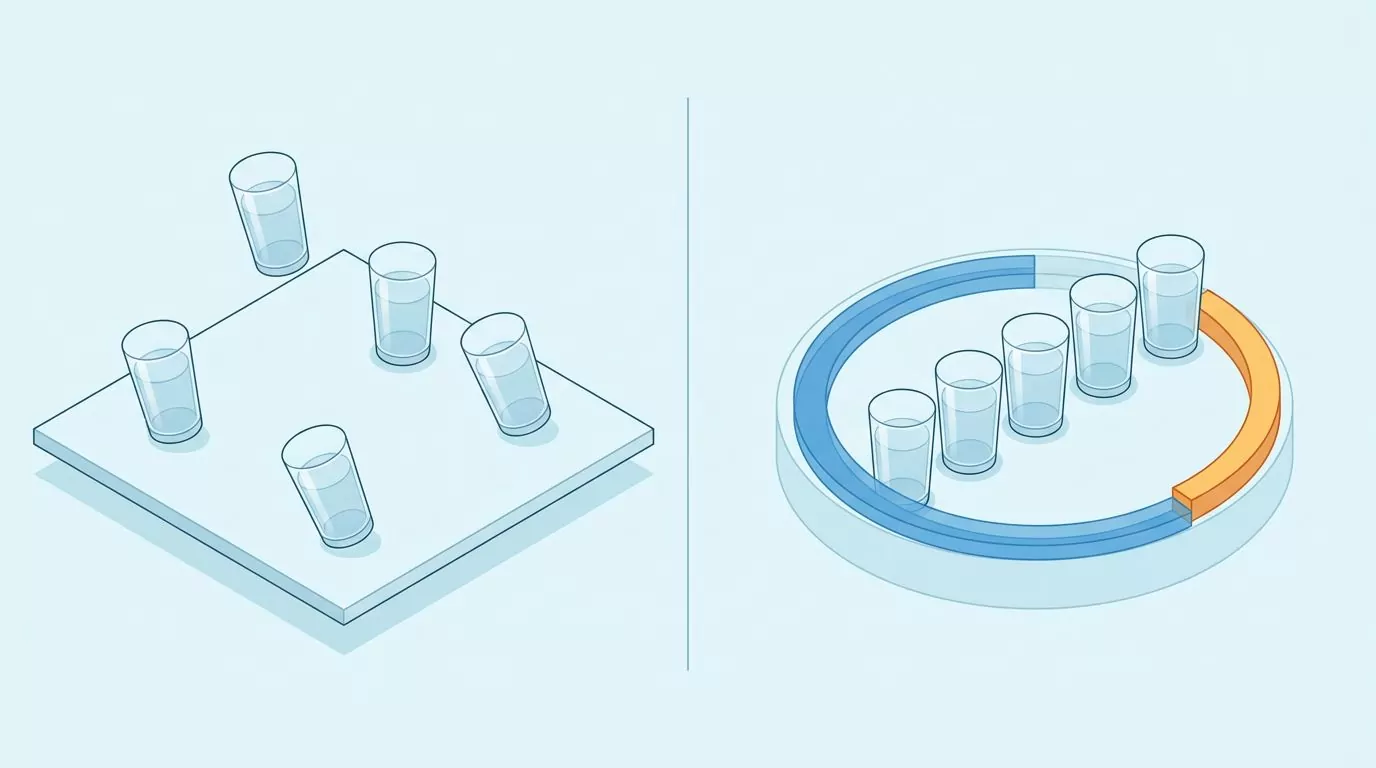
The difference is what the target is for. A rule exists to be obeyed. A reference point exists to be compared against, and then adjusted when the comparison says something.
That is the practical version of this whole argument, and it is how Water Goose sets things up. It takes your age, gender, height and weight and suggests a starting daily goal, then lets you change it to whatever suits you. The suggestion is a beginning, not a verdict.
Logging a drink takes a couple of taps, and the list covers coffee, tea, juice, milk, smoothies and soup alongside plain water, which matches how hydration actually works. The history view is a calendar of daily totals, so you can see the shape of a normal week without a chart to interpret. That history stays on your iPhone.
Water Goose is for general wellness. It is not medical advice, and it does not try to be.
Frequently Asked Questions
Is 8 glasses of water a day enough?
For many healthy adults it is a reasonable amount, but it is not a threshold you have to clear. Official ranges run from roughly 6 glasses of fluid a day up to 13 cups, depending on the body doing the counting and whether food is included. Your size, climate and activity move the answer.
Where did the 8 glasses rule come from?
The most commonly cited ancestor is a 1945 Food and Nutrition Board note suggesting about 2.5 litres of water a day, immediately followed by a line saying most of that comes from prepared foods. The second sentence dropped out of the retelling. Heinz Valtin searched for a firmer source in 2002 and could not find one.
How many glasses of water a day do I actually need?
There is no single number that fits everyone, which is why the ranges are so wide. Start from a sensible estimate based on your own body, watch a normal week, and adjust once. Thirst is a good guide for most healthy adults, and it does not need an app to work.
Does food count toward water intake?
Yes, and by more than most people expect. The U.S. National Academies estimate that about 20 percent of total water intake comes from food. Fruit, vegetables, soup and yoghurt all carry a meaningful amount, which is exactly the point the 1945 note was making.
Do other drinks count toward the 8 glasses?
They do. Valtin's review found that caffeinated drinks contribute to daily fluid, and the NHS counts tea, coffee, lower fat milk and sugar free drinks in its own total. Plain water is convenient and cheap, but it holds no special status in the arithmetic.
Is it bad to drink less than 8 glasses?
Missing an invented number is not a health event. If you drink when you are thirsty, eat normally and feel well, you are probably fine. If something feels genuinely off, that is a question for a healthcare professional rather than a target on a screen.
A calmer way to think about it
The 8 glasses of water a day rule was never a rule. It was a number that outlived its footnote. Do I need 8 glasses of water? Only if that happens to be roughly right for you.
A personal water goal you picked, glanced at, and quietly adjusted once is worth more than a famous number you either beat or missed. If you would like something small to keep that goal visible, Water Goose is coming to iPhone. No lectures, and no scoreboard.