Is Distilled Water Good for Drinking? Safe, Flat, and Low in Minerals
Is distilled water good for drinking? Yes, it is safe and hydrates like any other water, though it tastes flat because distilling removes the dissolved minerals that tap and spring water carry. A WHO report does not consider low-mineral water ideal for regular drinking, but food supplies most of your calcium and magnesium, so occasional or partial use is fine.
What distilled water actually is
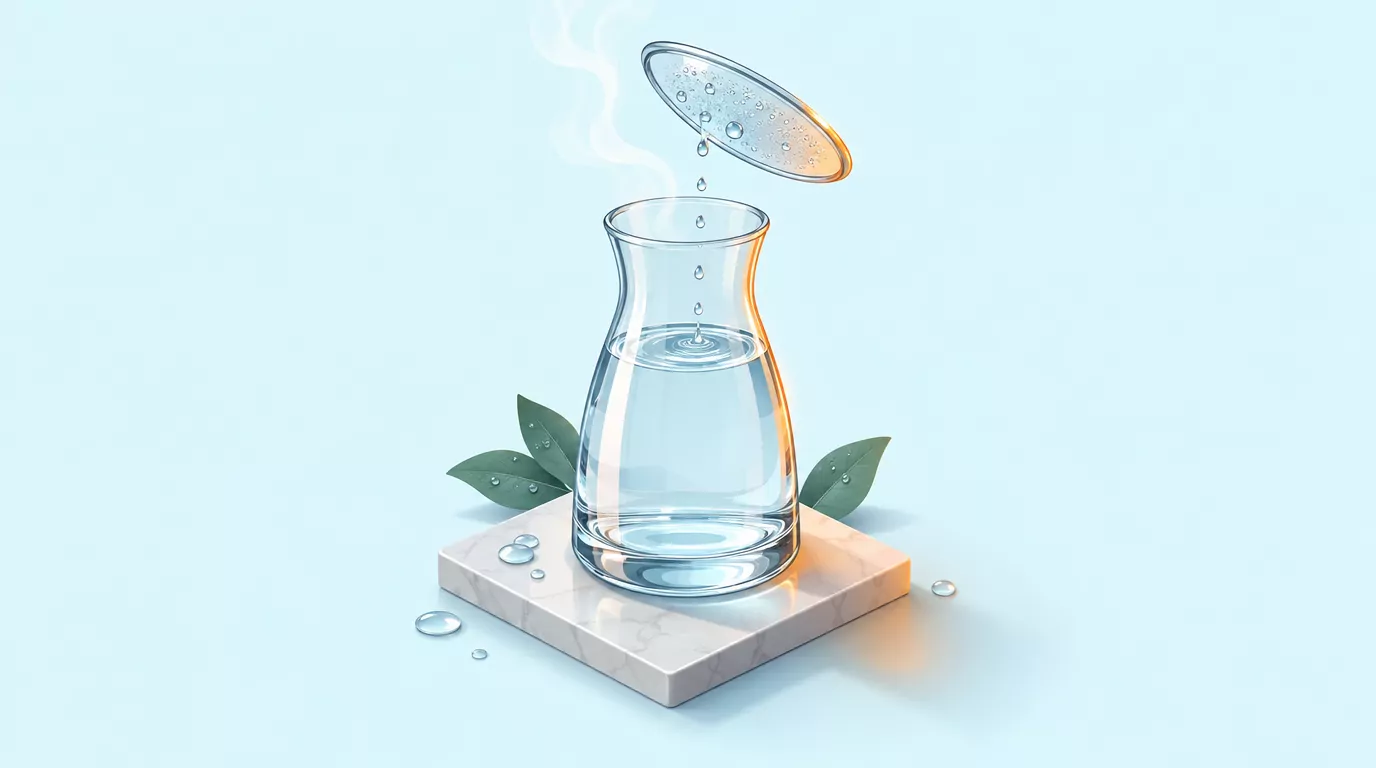
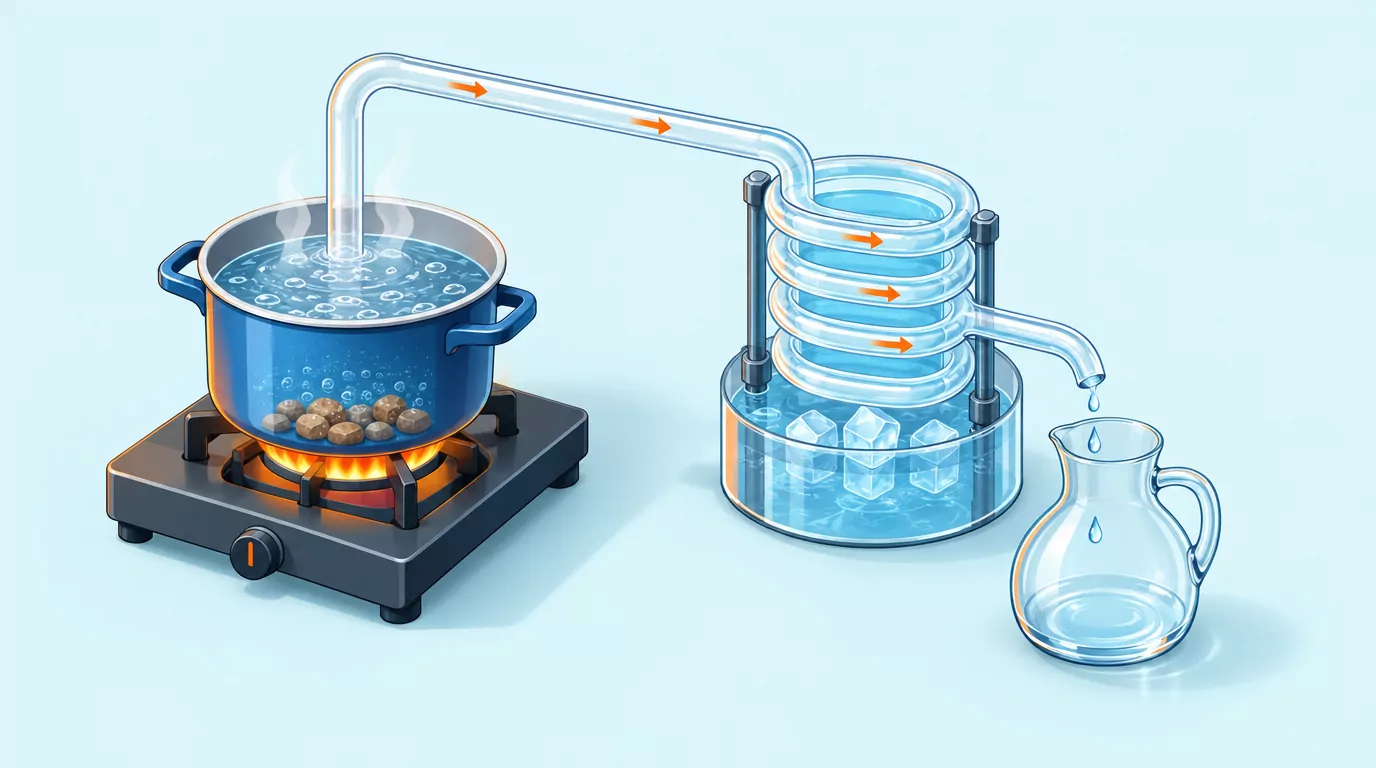
Distilled water is water that has been boiled into steam and cooled back into liquid in a separate container. Minerals and salts do not travel with the steam, so they stay behind. What comes out is close to plain H2O.
FEMA's Ready.gov water guide says distilling removes germs, heavy metals, salts and most other chemicals. The CDC's page on home water treatment adds the honest exception: some volatile organic compounds, solvents and pesticides can get through.
Is distilled water safe to drink?
Yes, distilled water is safe to drink, and it counts toward your daily fluid like any other water. Your body does not check the label. To see how other drinks and foods compare, Hydration: What Drinks and Foods Actually Hydrate You collects measured hydration data for everyday drinks and foods.
Drinking too much water too fast is a separate issue of volume, not distilling. How much water is too much covers where that limit sits for any water.
The caveat comes from a 2005 World Health Organization report, Nutrients in drinking-water. It has a chapter on water with its minerals removed by distilling or other methods.
The chapter concludes that demineralised water without minerals added back, and other low-mineral water, is "not considered ideal drinking water". The reason is that drinking it regularly may not supply enough of some useful nutrients.
The chapter lists levels researchers have suggested for drinking water: at least 20 mg of calcium and 10 mg of magnesium per litre.
It also notes that most of the lab and volunteer evidence on this water comes from older studies. It adds that those findings should not be dismissed. Newer research has tended to support them.
Elsewhere, the report says these minerals are mainly expected to come from food. Water may provide up to 20 percent of daily calcium and magnesium needs.
So the concern is about regular use and missing nutrients, not a glass here and there.
What about drinking distilled water every day?
It depends on what else you drink. If distilled water is one of several waters in your week, there is nothing to worry about.
If it is your only drinking water, day after day, that is the regular use the WHO chapter talks about. Then mix in some tap, spring or mineral water. If you follow a prescribed diet or have a health condition, ask your clinician which water suits you.
Distilled water minerals, kept in proportion
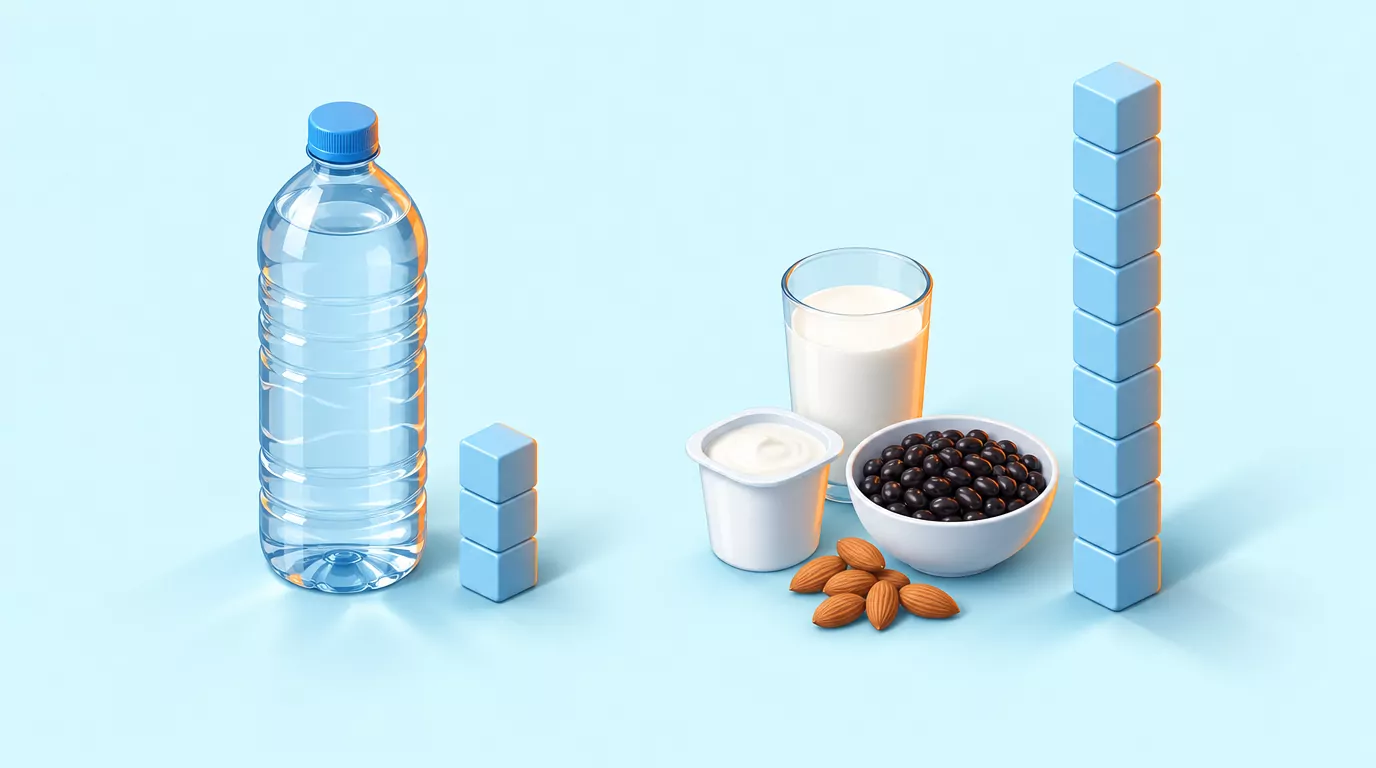
The table sets a litre of water beside a few servings of food. Water figures come from the WHO report, including a very soft supply from one study and a 1980s survey of US groundwater systems. Food figures come from USDA FoodData Central.
| Source | Calcium | Magnesium |
|---|---|---|
| 1 litre of distilled water | About 0 mg | About 0 mg |
| 1 litre of very soft water | 3 mg | 2.4 mg |
| 1 litre of average US groundwater | 49 mg | 16 mg |
| 1 litre of harder US groundwater (90th percentile) | 97 mg | 36 mg |
| 1 cup of 1% milk | 305 mg | 27 mg |
| 6 oz plain low-fat yogurt | 311 mg | 29 mg |
| 1 cup of cooked black beans | 46 mg | 120 mg |
| 1 oz of almonds | 76 mg | 77 mg |
| The four foods together | 738 mg | 253 mg |
Two litres of average US groundwater supply about 98 mg of calcium and 32 mg of magnesium. Switching to distilled water takes that away.
For scale, the Daily Values on US food labels are 1,300 mg of calcium and 420 mg of magnesium. In distilled water vs tap water terms, the mineral gap is real but modest. Its size depends on how hard your local water is.
Food does most of the mineral work, and water adds a smaller share that varies. If you eat little dairy, beans or nuts, your water carries a bit more of the load.
Why distilled water tastes flat
Much of water's taste comes from the minerals in it. Take them out and there is little left to taste. The WHO chapter says distilled and other very low-mineral water tastes poor, though people may get used to it.
It also reports that such water feels less thirst quenching. That matters, because a drink you dislike is a drink you skip. If the flat taste puts you off, how to make water taste better has practical fixes.
Distilled, purified, tap, spring and mineral water, side by side
Under the FDA's bottled water rule, 21 CFR 165.110, purified water can be made by distilling, deionising, reverse osmosis or another suitable process. It must meet the US Pharmacopeia standard. Water made by distilling may be labelled "distilled water".
So in the distilled vs purified water debate, distilled is one kind of purified water. The FDA regulates bottled water as a food. Tap water from public systems falls under the EPA, as the FDA's guide to bottled water safety explains.
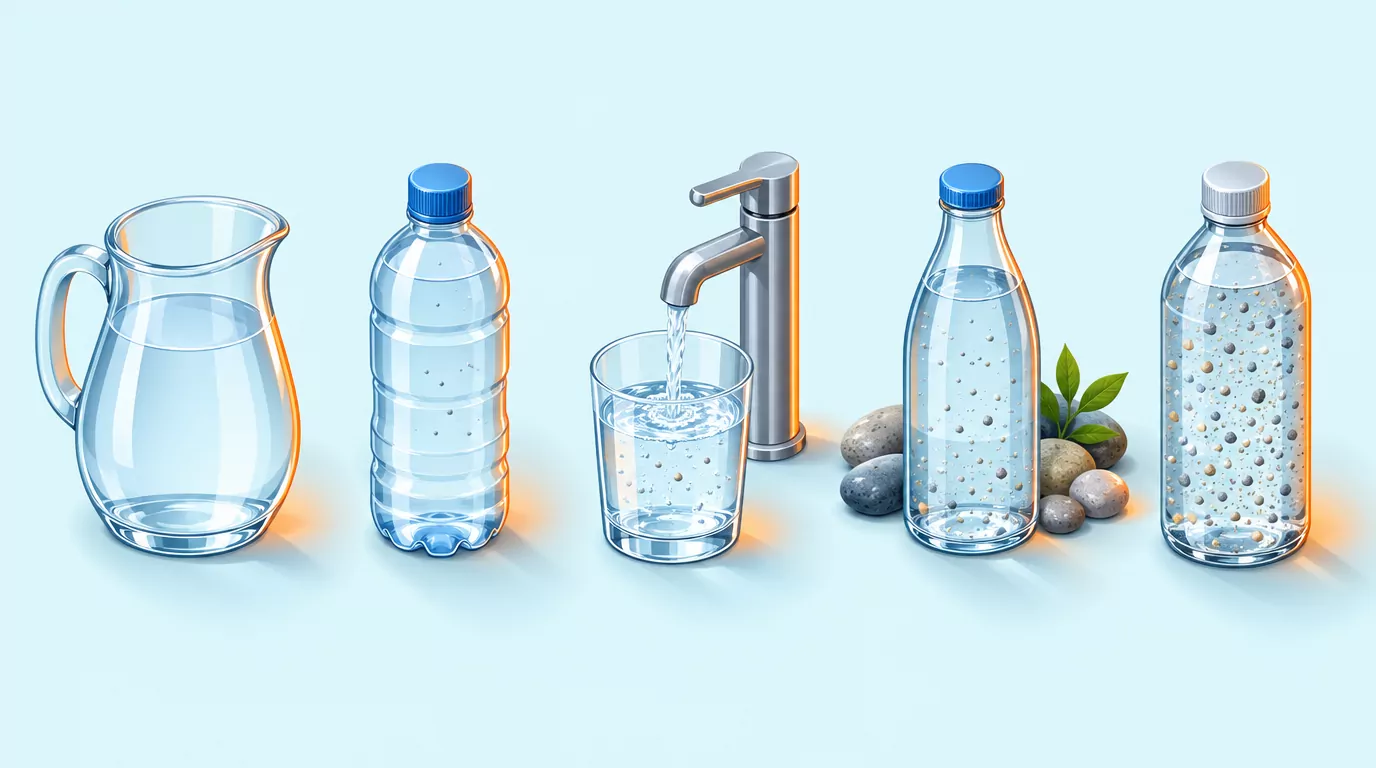
| Water | What the US label means | Minerals | Taste | Overseen by |
|---|---|---|---|---|
| Distilled | Purified water made by boiling and condensing the steam | Almost none | Flat | FDA |
| Purified | Distilled, deionised or reverse osmosis water that meets the US Pharmacopeia standard | Very low, unless some are added back | Flat to neutral | FDA |
| Tap | Water from a public water system | Varies from soft to hard | Varies by town | EPA |
| Spring | From an underground source that flows naturally to the surface | Whatever the source holds | Varies by source | FDA |
| Mineral | From a protected underground source, at least 250 ppm dissolved solids, no minerals added | At least 250 ppm by definition, usually the most | Noticeably mineral | FDA |
Spring water vs distilled water comes down to that minerals column. If your mineral water has bubbles, does sparkling water hydrate you covers the fizz.
Where distilled water earns its place
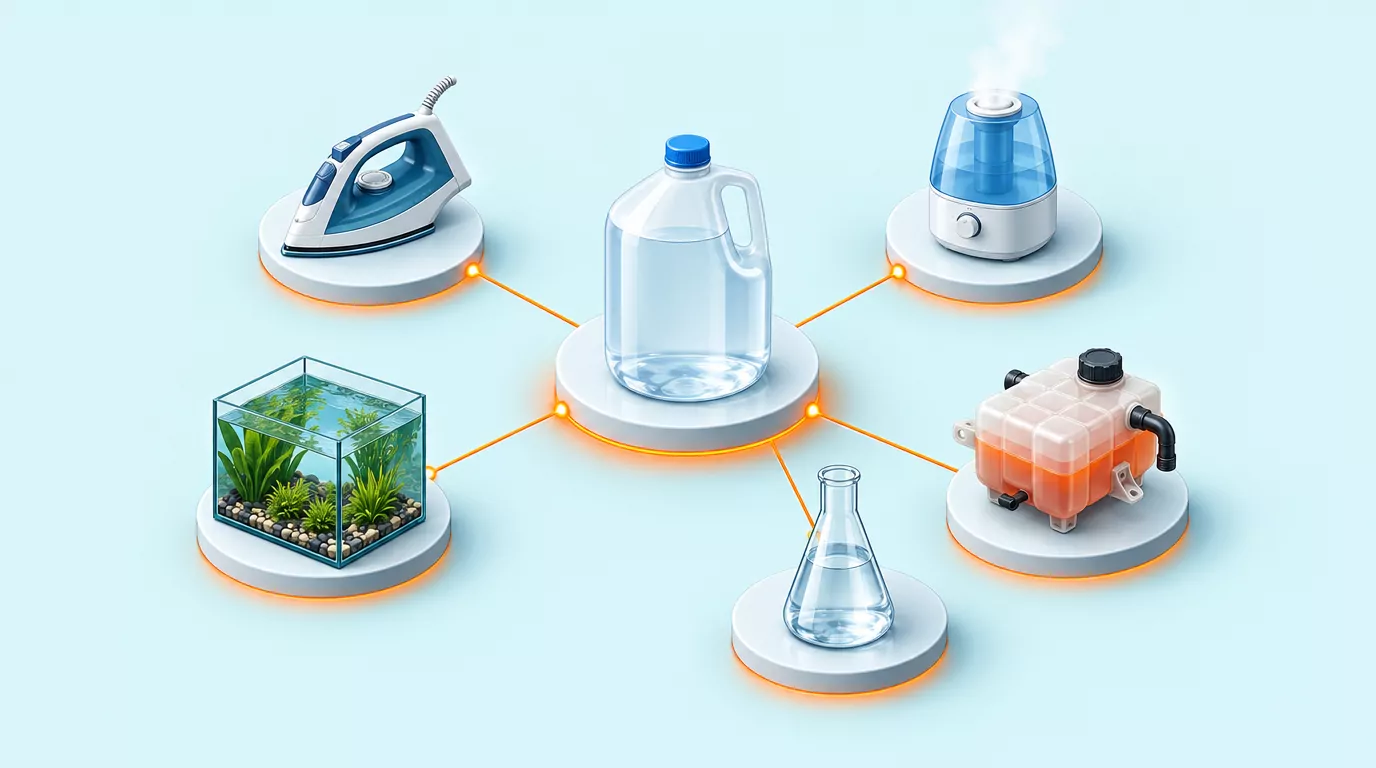
Having no minerals is a feature wherever minerals leave white crust behind. That makes distilled water a common pick for:
- Steam irons, when the maker recommends it, to keep the vents clear.
- Humidifiers, to cut down on white mineral dust.
- Car cooling systems, where coolant is often mixed with it.
- Aquariums, as a clean base that keepers adjust for their fish.
- Labs, where dissolved substances would skew the result.
Medical devices and infant formula are different. Follow the device label or your clinician on which water to use.
How to choose your everyday water
For most people the answer is pleasantly dull: safe tap water you like is fine. If your home is on a community water system, it must send you a Consumer Confidence Report each year, due by July 1. It lists where your water comes from and which regulated contaminants were found, and the EPA explains how to find yours.
If you dislike your tap water's taste, filtered or spring water are fair swaps. The best water is the one you will drink, and these realistic tips to drink more water help if that is the hard part.
Logging it in Water Goose
Water Goose does not ask where your water came from. Distilled, filtered, tap and spring all log as water, and sparkling water has its own preset. The app tracks how much you drink, not what is in it.
Onboarding suggests a starting daily goal from a few basics, and you can change it. For a second opinion, the Water Intake Calculator: How Much Water Should You Drink a Day? gives a daily target.
If you refill the same jug each day, save it as a custom amount in ml or fl oz, then pick the drink, choose the amount and confirm.
The calendar history shows daily totals and goal completion, entries stay on your device, and there is no account. More on the habit in how to track water intake.
Frequently Asked Questions
Is distilled water the same as purified water?
All distilled water is purified, but not all purified water is distilled. Under FDA rules, purified water can come from distilling, deionising, reverse osmosis or another suitable process, as long as it meets the US Pharmacopeia standard. Distilled is the version made by boiling and condensing, and both are very low in minerals.
Is boiled water the same as distilled water?
No. Boiling kills bacteria, viruses and parasites, but the EPA's emergency water guide notes it does not remove heavy metals, salts and most other chemicals. Distilling goes a step further: it collects the steam in a separate container and leaves most of that behind.
Can you make distilled water at home?
Yes, with a countertop distiller or a covered pot. Ready.gov describes an emergency method that catches condensed steam as it drips from an upturned pot lid. Either way it is slow: the CDC says distilling uses more energy and takes longer than other home systems, and that some volatile chemicals can carry over.
Can I drink distilled water bought for the iron or humidifier?
Check the label. The FDA's bottled water rules cover water meant for people to drink, so a jug sold as drinking water is fine. If the label says it is for lab, battery or appliance use only, it was not sold for drinking, so keep it for that job.
Is bottled water better than tap water?
Not by default. Both are regulated in the US, and the FDA keeps its bottled water standards in line with the EPA's tap water rules. For most people with a safe supply, bottled water vs tap water comes down to taste, cost and convenience.
So, is distilled water good for drinking?
Yes, as one water among several. It is safe, it hydrates, and it tastes flat because the minerals are gone. If it is your only drinking water, mix in some tap, spring or mineral water and let food carry the minerals.
This article is general wellness information, not medical advice. If you would like a calm way to see how much you drink, whatever the source, Water Goose is on the App Store for iPhone and on Google Play for Android.