Drinking Warm Water Benefits, and Whether Cold Water Is Any Worse
Warm water hydrates you just as well as cold water, because your body brings any drink to its own temperature. Its real benefits are modest: many people find a warm mug comforting, easier to sip on a cold morning, and a handy cue to start drinking. The bigger claims about toxins, fat and circulation do not hold up.
So the honest list of drinking warm water benefits is short, and that is fine. This guide covers what warm water does well, which claims fall flat, and when a cold glass is simply the easier pick.
The short answer: temperature changes how water feels
Temperature changes the experience of a drink, not what the water does once it is inside you. A dietitian at MD Anderson puts it plainly: the temperature of the water you drink is mostly insignificant. What it does change is comfort, and how readily you keep sipping.
That second part matters more than it sounds. UVA Health notes that if you prefer warm water to cold, choosing it may help you drink the amount you need each day.
So if you have been asking whether it is better to drink warm or cold water, or whether cold water hydrates better, the answer is that both count the same, as the guide to hydration in cold weather explains.
Drinking warm water benefits: what it genuinely offers
The real upsides are small and personal. None of them will change your health on their own, but each one can make drinking water feel easier.
Comfort, especially when it is cold
A warm mug in cold hands is pleasant. On a chilly morning or in a cold office, many people simply prefer something warm to something icy.
It is the same reason people reach for a hot drink after a cold walk home. It feels good, and that is a fair reason to choose it.
Some people also find a warm drink calming. MD Anderson's dietitian says that may be true for some people, but not for everyone, so treat it as a preference rather than a promise.
Easier drinking if cold water puts you off
Some people find cold water hard to drink in large amounts, especially first thing or in winter. If that is you, warm water is a perfectly good swap, and UVA Health says the temperature you prefer may help you drink what you need.
Room temperature is a middle ground too, if cold feels harsh and hot feels like a chore. The goal is the water you will actually finish. For more ways to make that happen, see these tips on how to drink more water.
A ritual that cues the first drink
Putting the kettle on is a ready-made habit trigger. If you already boil water for tea or coffee, pour a mug of plain warm water at the same moment, and the first drink of the day is sorted.
Pour it before you check your phone, and sip it while breakfast gets going. This works because it links a new habit to one you already have, not because the warmth does anything special. The guide to drinking water in the morning has more ideas for building that first glass into your routine.
Warm water claims that do not hold up
UVA Health and MD Anderson have both checked the popular claims, and the verdict is short: none of the big four is backed by good evidence.
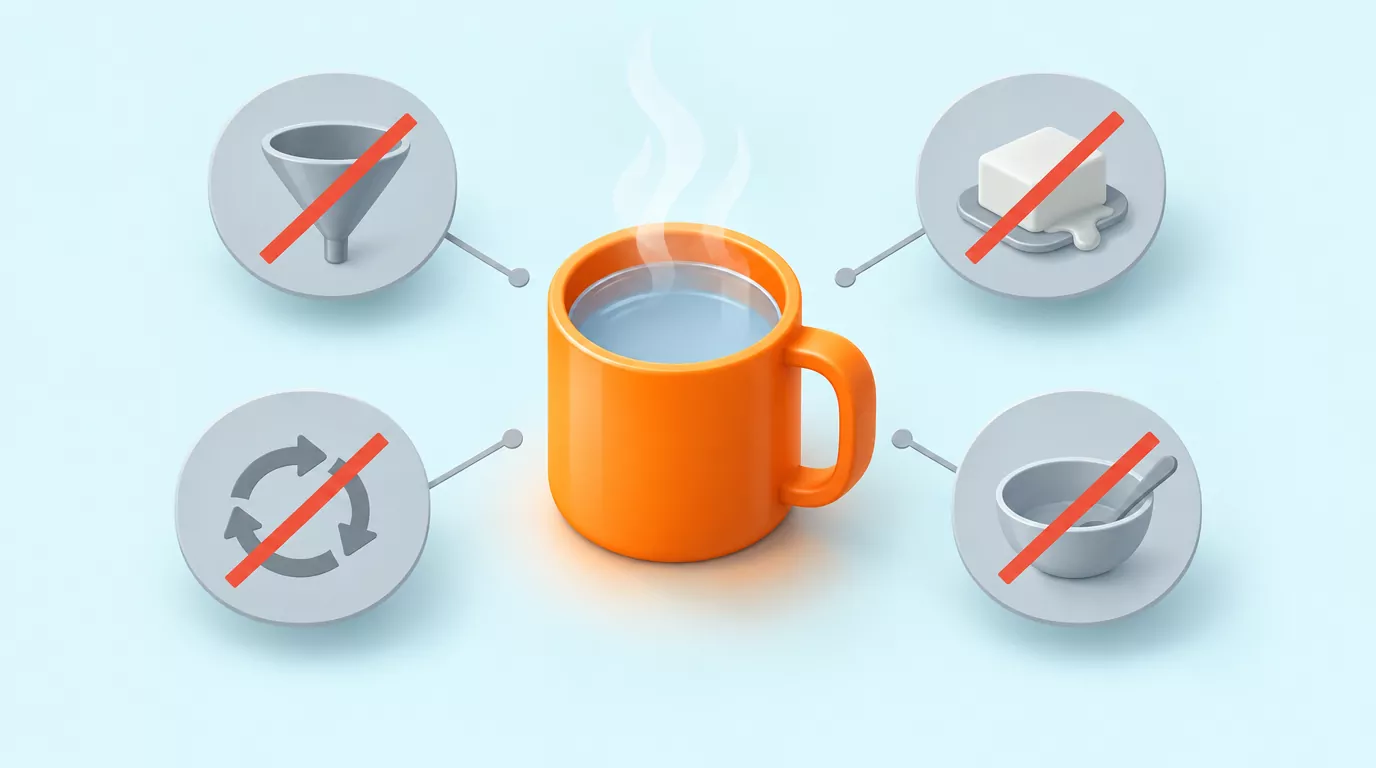
Most lists of the benefits of drinking hot water lean on these same four claims. They travel well on social media and on product pages, which is part of why they stick.
"It clears toxins"
It does not. UVA Health calls this one definitely a myth, because water temperature changes nothing about how your body clears waste. The guide to water in the morning covers the toxins claim in more detail, and the answer is the same at any temperature.
"It melts fat"
No. UVA Health also rates this a myth: drinking hot water has no effect on your metabolism.
"It boosts circulation"
This claim borrows from heat packs. A heat pack on your shoulders warms that spot from the outside, and the blood vessels there widen.
A hot drink is different, because your body quickly cools whatever you swallow to its own core temperature. MD Anderson's dietitian is direct about it: drinking hot water will not widen your blood vessels or improve circulation through your body.
"It fixes digestion"
The evidence here is thin. UVA Health says today's science neither fully confirms nor rejects the idea, and MD Anderson's dietitian says there is not much evidence for it. What matters more for digestion is the boring stuff: enough fluid, enough fiber and regular movement.
Cold water vs warm water at a glance
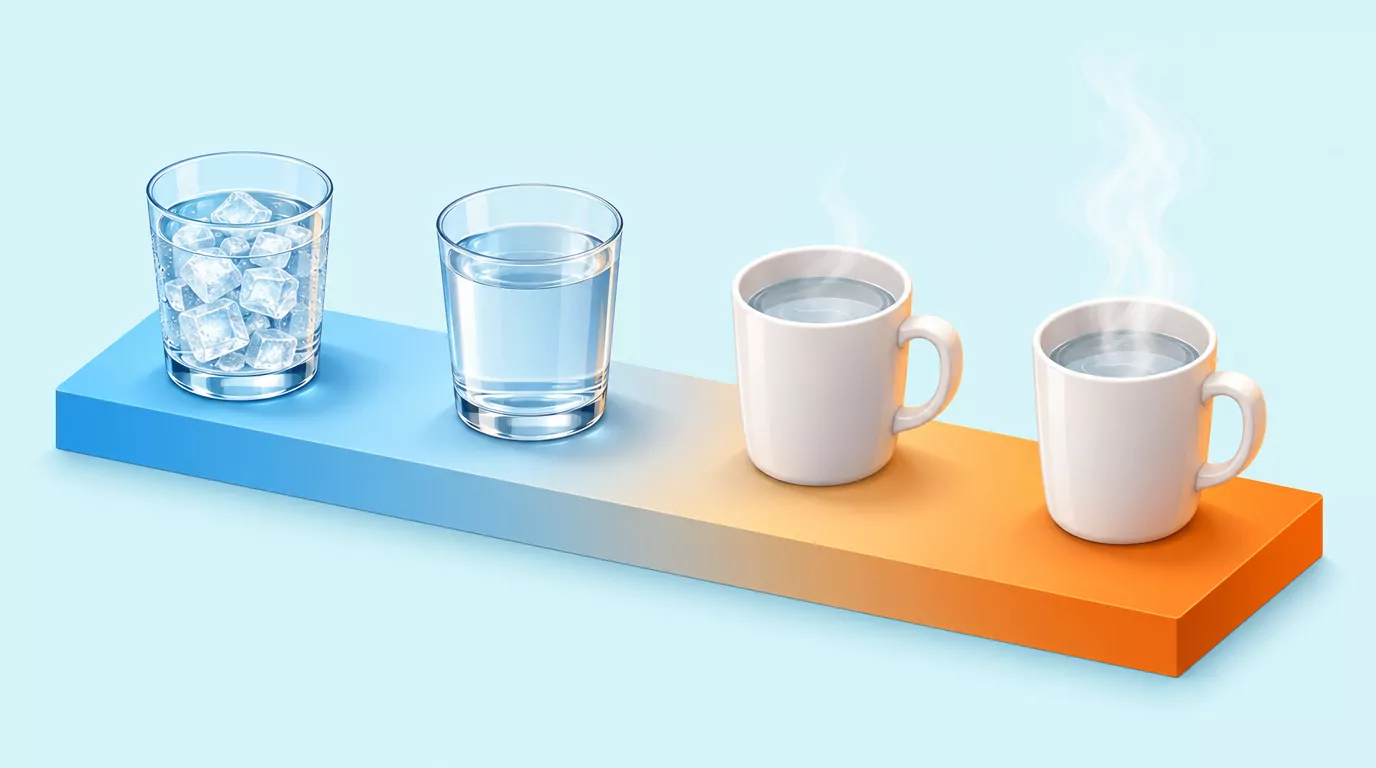
There is no best temperature, only the one that suits the moment. Here is how each band tends to feel, and when people reach for it.
| Temperature | How it feels | When people reach for it |
|---|---|---|
| Fridge-cold | Crisp and refreshing. Easy to gulp when you are hot. | During or after exercise and on hot days. In studies, people who were exercising preferred drinks under 22 °C (about 72 °F). |
| Room temperature | Neutral. Nothing icy, nothing to wait for. | At a desk or bedside, or when a bottle has been sitting out all day. |
| Warm | Soft and soothing. Easy to sip slowly. | Cold mornings, winter commutes and quiet evenings. |
| Hot but sippable | Cozy, but you have to take it slowly. | As a tea-like ritual. Let it cool to no more than 150 °F (65.6 °C) first. |
When cool water is the easier pick
If you are hot or working hard, cool water is usually easier to drink. A 2012 systematic review found that people who were exercising preferred drinks under 22 °C (about 72 °F), and drank about 50% more of them than warmer drinks.
That finding is about how much people drink, not about cold water being better for you. Cool water simply tastes better to most people when they are exercising or hot. On a hot day, the guide to hydration in hot weather covers what else helps.
To keep cool water within reach, keep a bottle in the fridge, or drop a few ice cubes into an insulated bottle before a walk or a workout. A cold bottle you can see is easier to drink from than a tap you have to remember.
When warm water is the easier pick
On cold days, warm drinks are often the ones people actually finish, as the guide to staying hydrated in cold weather explains. If plain warm water feels dull, herbal tea is the obvious warm swap, and yes, tea counts toward your water intake.
How to drink warm water without scalding yourself
The only real risk with warm water is making it too hot. A few simple habits take care of that.
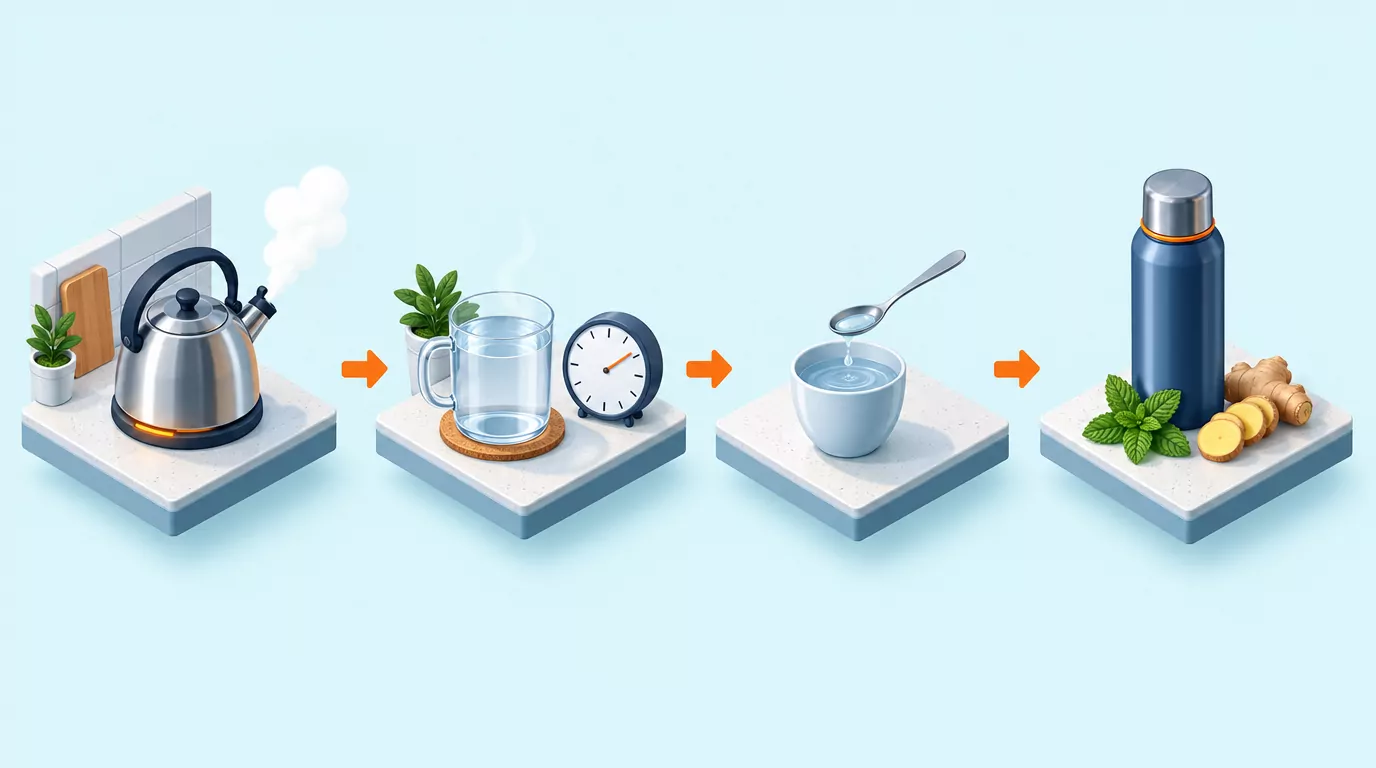
- Let boiled water stand. Give it a few minutes once it has boiled. MD Anderson suggests letting it cool to a comfortable temperature, no more than 150 °F (65.6 °C).
- Test with a small sip. If it stings your lips or tongue, wait a little longer.
- Top up with cold. A splash of cold water brings a too-hot mug down in seconds.
- Keep a flask at your desk. A good flask keeps water warm for hours, so you can sip through the morning. Flasks hold heat well, so the water can be hotter than you expect: pour a little and test it first.
- Add ginger or mint. A slice of fresh ginger or a few mint leaves make warm water more interesting. There are more ideas in this guide on how to make water taste better.
Logging warm water and tea in Water Goose
A mug of warm water logs like a cold glass in Water Goose: pick water, choose the amount, confirm. Temperature is not logged, and the goose has never missed it.
If you use the same mug every day, save it as a custom amount in ml or fl oz, so the next log is quicker. Herbal tea goes under the tea preset. The history shows your daily totals, goal completion and streaks, so you can see whether your warm-water habit is sticking.
If you drink warm water in winter and cold water in summer, nothing changes in the app. Each mug or glass adds to the same daily total.
Reminders are optional. You choose your active hours and how often you want a nudge, and they are scheduled locally on your device. Your entries stay on your phone, and you do not need an account.
If you are still choosing a daily goal, the Water Intake Calculator gives you a personal starting point. And for how other drinks compare, see The Most Hydrating Drinks, Ranked: What Beats Water?
Frequently Asked Questions
Is it bad to drink cold water?
No, for most people it is not. MD Anderson says cold water is simply another way to hydrate. If very cold water feels uncomfortable, try it a little warmer, and if the discomfort keeps coming back, mention it to a dentist or doctor.
Is room temperature water better than warm or cold?
No single temperature wins. UVA Health's view is that the temperature you prefer may help you drink enough. Whether you are weighing room temperature water vs cold water, or warm water vs room temperature water, it comes down to taste and the moment.
Is it fine to drink warm water every day?
Yes, for most people. If you have wondered whether drinking hot water is good for you, MD Anderson's answer is that if you enjoy it, it is safe to give it a try, as long as it is not too hot for you. Let it cool before you sip, and it can be a normal part of any day.
Where does the idea that warm water is healthier come from?
MD Anderson notes that drinking plain hot water has roots in traditional Chinese medicine. UVA Health says the belief that warm water helps digestion originated in certain Eastern traditional medicine practices. The habit is popular online today, but modern research has not found clear benefits beyond comfort and hydration.
The bottom line
Warm water is a comfortable, sensible way to drink water, and cold water is too. The best temperature is the one you will keep drinking. For general guidance on how much fluid to aim for, the NHS suggests 6 to 8 cups or glasses a day and counts tea and coffee too.
This is general wellness information, not medical advice.
If you want to see your warm mugs and cold glasses add up in one place, Water Goose is on the App Store for iPhone and on Google Play for Android. Log the mug, keep the streak, and let the goose stay unreasonably calm about the temperature.