Hydration in Cold Weather: Why Thirst Goes Quiet and What Still Counts
Hydration in cold weather still matters, because you keep losing water in winter through your breath, dry heated air, sweat under your layers and extra bathroom trips. The catch is that thirst goes quiet in the cold, so people drink less without noticing. Warm drinks count, and a simple routine works better than willpower.
Most winter advice is written for athletes and outdoor workers. This one is for frosty bus stops and heated lecture halls, and it pairs with the guide to hydration in hot weather.
Hydration in cold weather: why thirst goes quiet
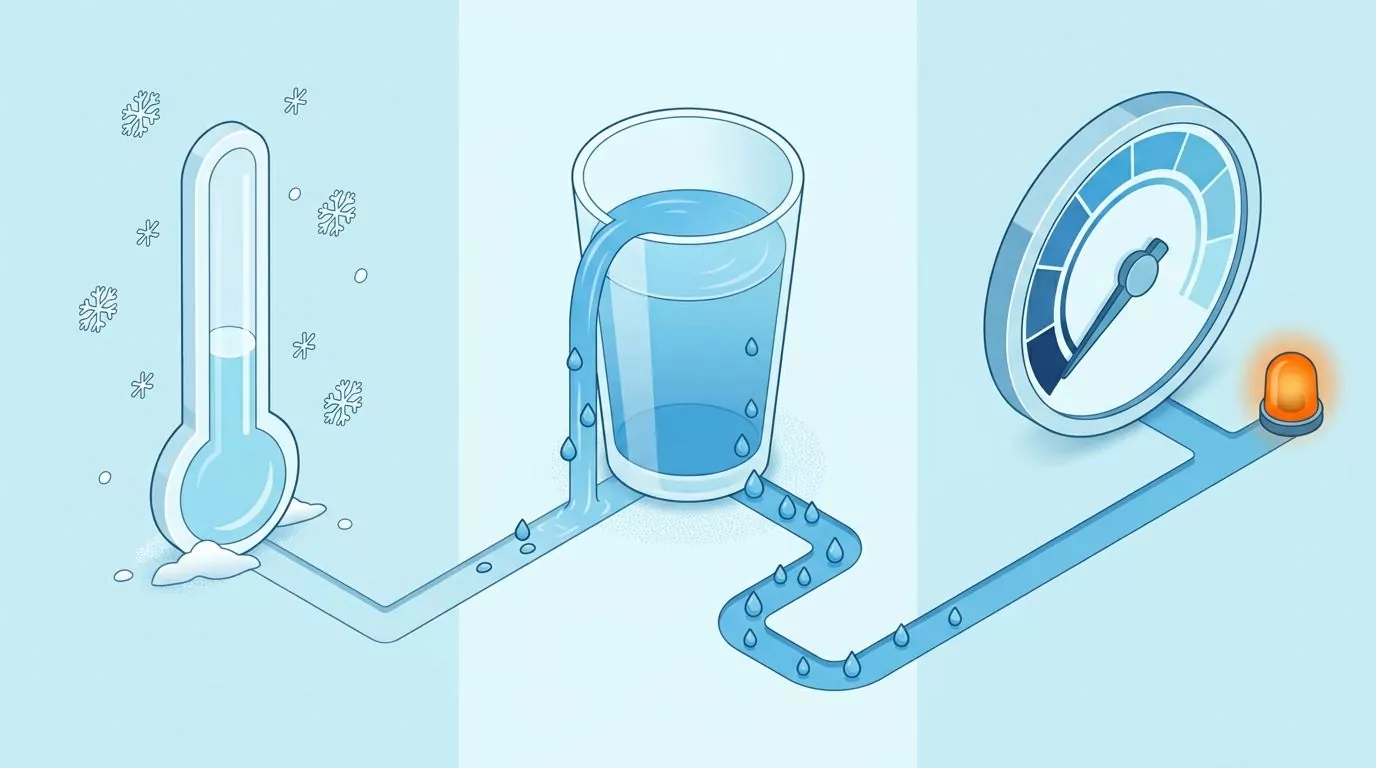
When you get cold, the blood vessels near your skin narrow to hold heat in, and more blood stays in your core. A National Academies chapter on cold stress and fluid balance links that shift, probably, to a familiar effect: you pee more in the cold. It also suggests that cold skin may turn the thirst signal down.
In subarctic survival experiments, people who were clearly dehydrated did not mention thirst until they were brought inside and warmed up. Your commute is far milder, so any effect is likely smaller, but it is one reason thirst is not a reliable nudge on a cold day.
Where the water goes on an ordinary winter day
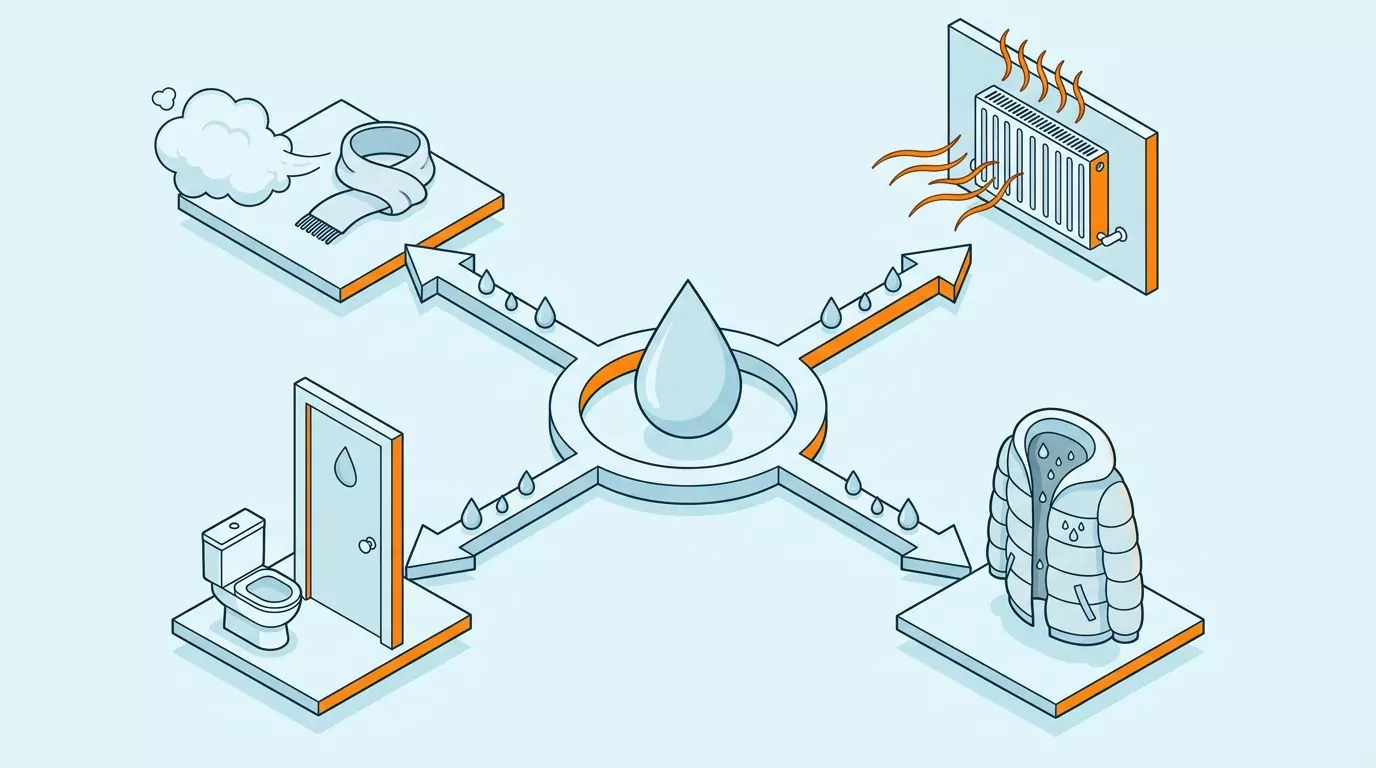
Four quiet routes do most of the work, and each one lives somewhere familiar.
| Loss route | Where it happens | What to do about it |
|---|---|---|
| Your breath | The cold commute. The cloud you breathe out is water leaving your body. | Have a warm drink before you leave. |
| Dry heated air | The office, the flat, the lecture hall. Dry air takes a little more moisture from breath and skin. | Keep a bottle or mug in view and refill it at breaks. |
| Sweat under layers | A brisk walk or a packed train in a heavy coat. You can sweat a little and not feel it. | Open your coat indoors and drink when the layers come off. |
| More bathroom trips | Anywhere cold. Cold tends to make you pee more. | Do not cut drinks to dodge the bathroom. Spread them out. |
For scale, the chapter models a full 24 hours of rest, moderate activity and strenuous work and estimates breathing losses of about 1.02 litres at minus 20°C against 0.68 litres at 25°C. The authors call that 0.34 litre difference a relatively minor part of dehydration in cold field conditions. It is several small leaks, not one big one.
Why people tend to drink less in winter
The other half of the story is habit. Penn State Extension notes that when temperatures drop, people may feel they need less fluid, because they sweat less and feel less thirsty.
- Cold water is unappealing. A glass of chilled water on a grey January morning gets skipped.
- The bottle stays in the bag. It hides under a scarf and a laptop and comes home full.
- Coffee replaces water instead of adding to it. A hot drink feels like the job is done.
- Bathroom trips feel like a chore. The National Academies chapter notes that people in cold climates often drink less late in the day to avoid getting up at night.
The season nudges you one way, so a small nudge back is enough.
Warm drinks count: tea, coffee, soup and the rest
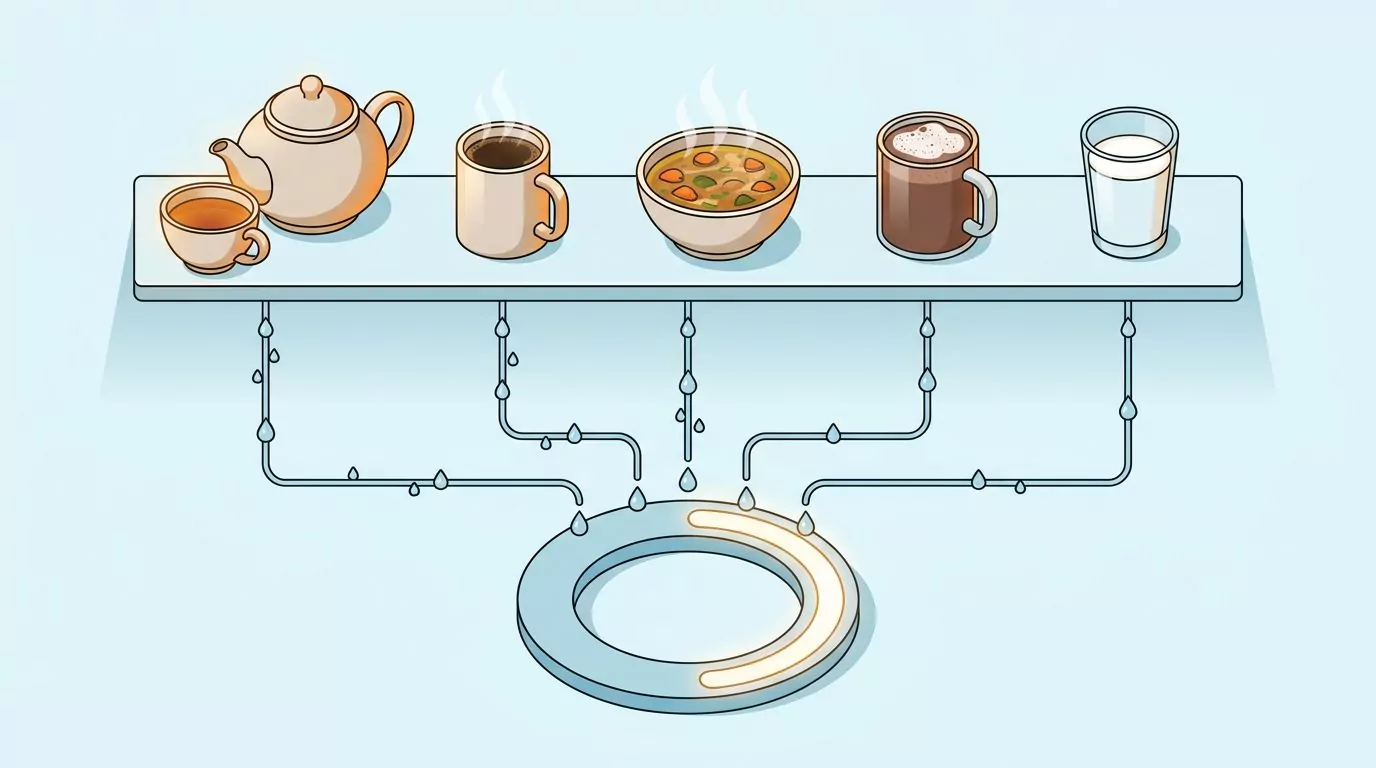
Good news for hot drink fans: hot water hydrates you just like cold water, because heating water does not change the water. If a warm mug is what you will finish, the warm mug wins.
| Warm drink | How it counts |
|---|---|
| Tea | Counts, whether black, green or herbal. More in does tea count as water intake. |
| Coffee | Counts in normal amounts. To keep an eye on caffeine, see the Caffeine Calculator page. |
| Broth and soup | Mostly water, so they count toward the day. |
| Hot chocolate | The milk or water in it counts. The sugar makes it a treat, not a top up. |
| Warm milk | Counts, and makes a calm evening drink. |
Moderate caffeine is fine for most people. A review of caffeine and fluid balance found no evidence that normal servings of tea and coffee make you lose more fluid than you drink, which is why coffee counts towards water intake.
Alcohol is different: Penn State Extension says it may work against hydration and should not be counted toward your daily fluids, so a mulled wine is not a hydration strategy. For how common drinks compare with water, see the Hydration: Drinks page.
Should your daily goal change in winter?
A daily goal is an estimate, not a contract for the whole year. The European Food Safety Authority's reference values for water set adequate total intakes of 2.0 litres a day for women and 2.5 litres for men. Those totals include water from food, and they assume moderate temperatures and activity.
A big summer number you now miss every day does not help. A lower goal you actually hit is the better target, and round rules like 8 glasses of water a day are only a rough guide.
For a starting point, try the Water Intake Calculator page, then check yourself against the Urine Colour Chart page. Pale yellow through the day is a simple everyday check alongside any number.
A winter routine for commuters, students and desk workers
How to drink more water in winter mostly comes down to where the drinks sit in your day. Attach them to things you already do.
Before you leave the house
Have a warm drink with breakfast, so you start the commute topped up. Then fill a bottle with room temperature water, not ice cold, so you will want it later.
At your desk or in the lecture hall
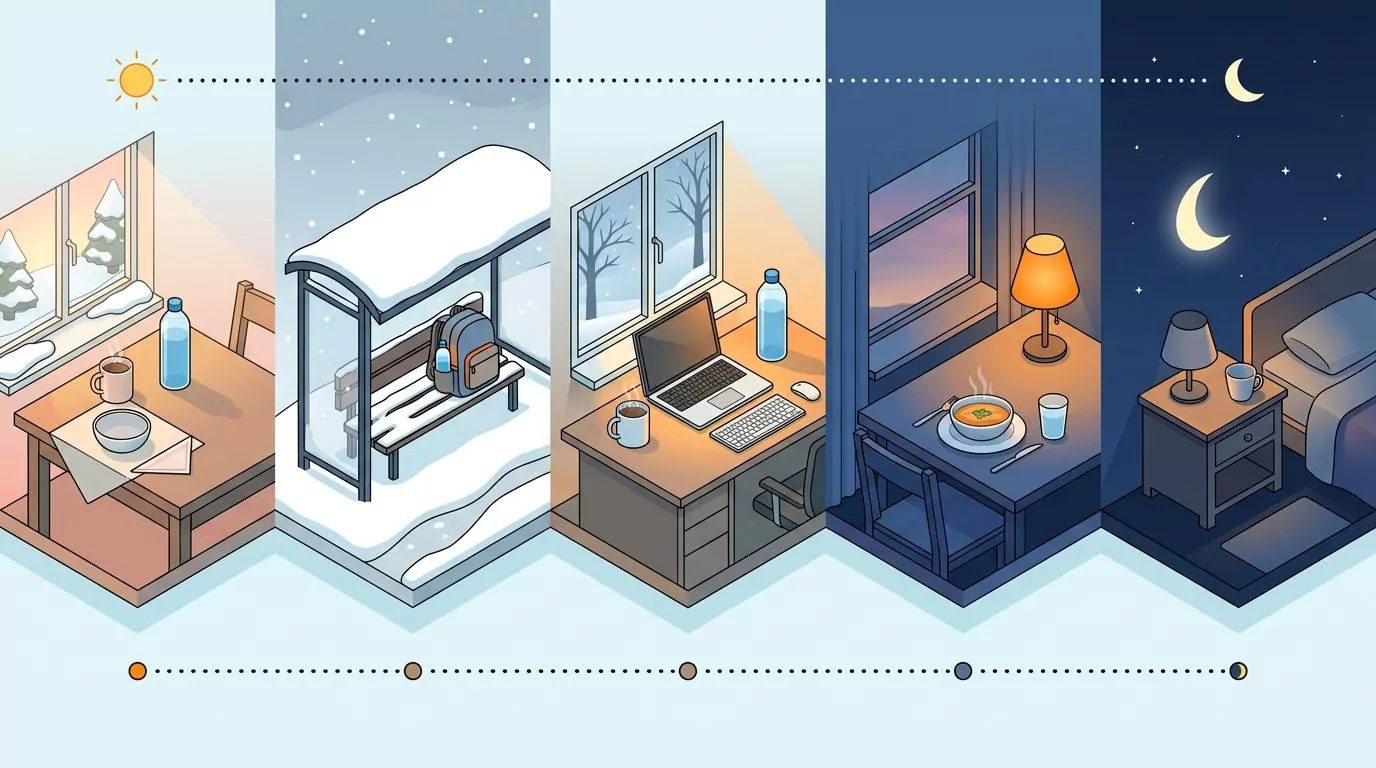
Here is a worked example for one heated room day. Arrive at 9 and put the bottle on the desk, not in your bag. Make a mug of tea at the first break around 11.
At lunch, have soup or a drink with your meal and refill the bottle. Mid afternoon, have a second mug. By the time you pack up, you have had two warm drinks, a soup and most of a bottle without forcing it.
If breaks slip past during a long study session, the Water Reminder page is worth a look. There are more ideas on how to remember to drink water.
Evenings
A bowl of soup at dinner counts. Have your last warm drink an hour or two before bed, and see drinking water at night for more on timing.
How Water Goose fits a winter routine
Water Goose is a calm hydration tracker for iPhone. Tea, coffee and soup each have their own preset, so the winter mug counts instead of vanishing from the day. Pick the tea, coffee or soup preset, choose the amount, and confirm.
The suggested goal, from your age, height, weight and gender, is a general wellness starting point you can change, and a realistic winter target beats an ambitious one. Reminders are optional: you pick your active hours and frequency, they are scheduled locally on your device, and you can set a lighter frequency for winter.
History stays on your device with no account needed, and shows totals, goal completion and streaks without a lecture.
Frequently Asked Questions
Do you drink less water in winter?
People can, without noticing: Penn State Extension points out that in cooler weather we sweat less and feel less thirsty, so it can seem like we need less fluid. A warm drink at set points in the day is the simplest fix.
Does hot water hydrate you as well as cold water?
Yes, water counts the same toward your day whatever its temperature, so warm water does not hydrate you better or worse. The real difference is behaviour, because people drink more of whatever feels good at the time. If hot water or tea is what you will finish, pick that.
Does indoor heating dehydrate you?
It can add a little, and it makes the loss easy to miss, because heating dries the air and dry air takes a little more moisture from your breath and skin. Penn State Extension notes that dry heated air raises your need for water even if you do not notice. Because you feel warm and comfortable, nothing reminds you to drink, so keep a mug in sight.
How do I stay hydrated in winter?
Tie drinks to things you already do: a warm drink with breakfast, and a bottle that is not ice cold, kept on your desk and refilled at breaks. Count your tea, coffee and soup, and check your urine colour now and then, aiming for pale yellow. If your summer goal feels unrealistic, set a lower one.
Do broth and soup count on a cold day?
Yes, broth and most soups are mostly water, so a bowl at lunch or dinner adds to your total just like a drink does. On a day when a glass of cold water sounds grim, a warm bowl of soup is one of the easiest ways to get fluid in. For water content figures by food, see the Hydration: Foods page.
Is thirst a good guide when it is cold?
Not always, because thirst can lag in the cold. A simpler everyday check is your pee: the NHS suggests drinking enough through the day that it stays a pale colour, and the Urine Colour Chart page shows the shades. If you feel unwell, talk to a doctor or pharmacist.
Staying hydrated through the cold months
Thirst goes quiet in winter, heated air takes a little water all day, and a warm mug counts as much as a cold glass.
This article is general wellness information, not medical advice, so talk to a healthcare professional if you have concerns about how much to drink.
If you want to see your winter mugs add up, Water Goose is on the App Store for iPhone. Log a tea in a few taps and let the goose stay unreasonably calm about the rest.