How to Clean a Water Bottle, Including the Lid, Straw and Seal
To clean a water bottle, take it apart and wash the bottle, lid, straw and seal in warm soapy water with a bottle brush. Rinse well and let every part air-dry with the lid off, every day. Once a week, soak the parts in vinegar or baking soda, scrub, rinse and dry.
That is how to clean a water bottle in one paragraph. Most desk bottles get refilled all day and washed when someone remembers. That is normal.
The fix is a small routine, not a scrubbing marathon: a quick daily wash, a slightly longer weekly soak, and knowing which parts hide the residue. A bottle you trust is also one of the simplest ways to drink more water, so the routine earns its keep.
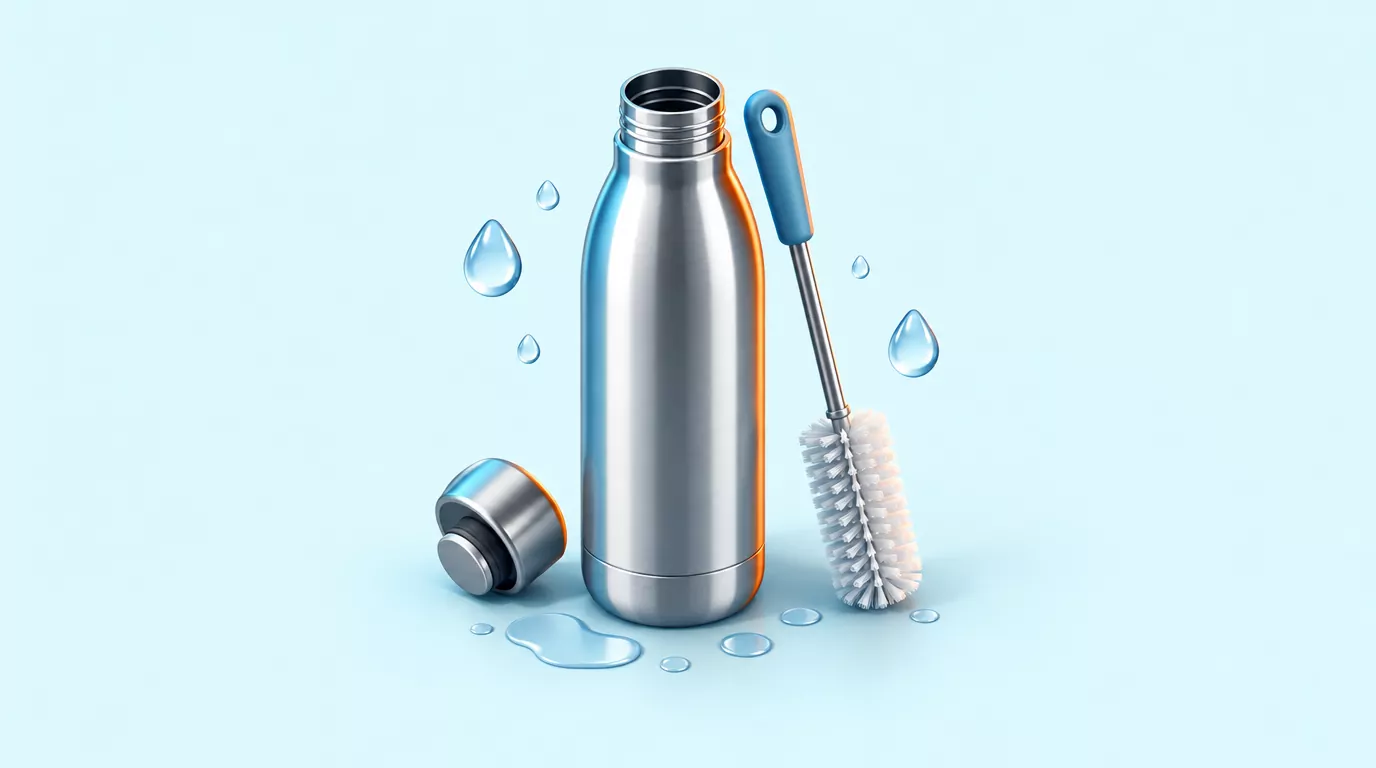
The short version: daily, weekly, and when you see mold
The whole routine at a glance. The times are rough hands-on estimates, not rules.
| When | What to do | Rough hands-on time |
|---|---|---|
| Daily (and the same day after anything but water) | Take it apart, wash every part in warm soapy water with a brush, rinse, air-dry apart | A couple of minutes |
| Weekly | Soak the parts in a vinegar or baking soda solution, scrub, rinse, air-dry | About ten minutes of work, plus soak time |
| When you see mold or slimy film | Take it apart, scrub, soak, rinse, dry fully; replace any part that will not come clean | As long as it takes, or a new part |
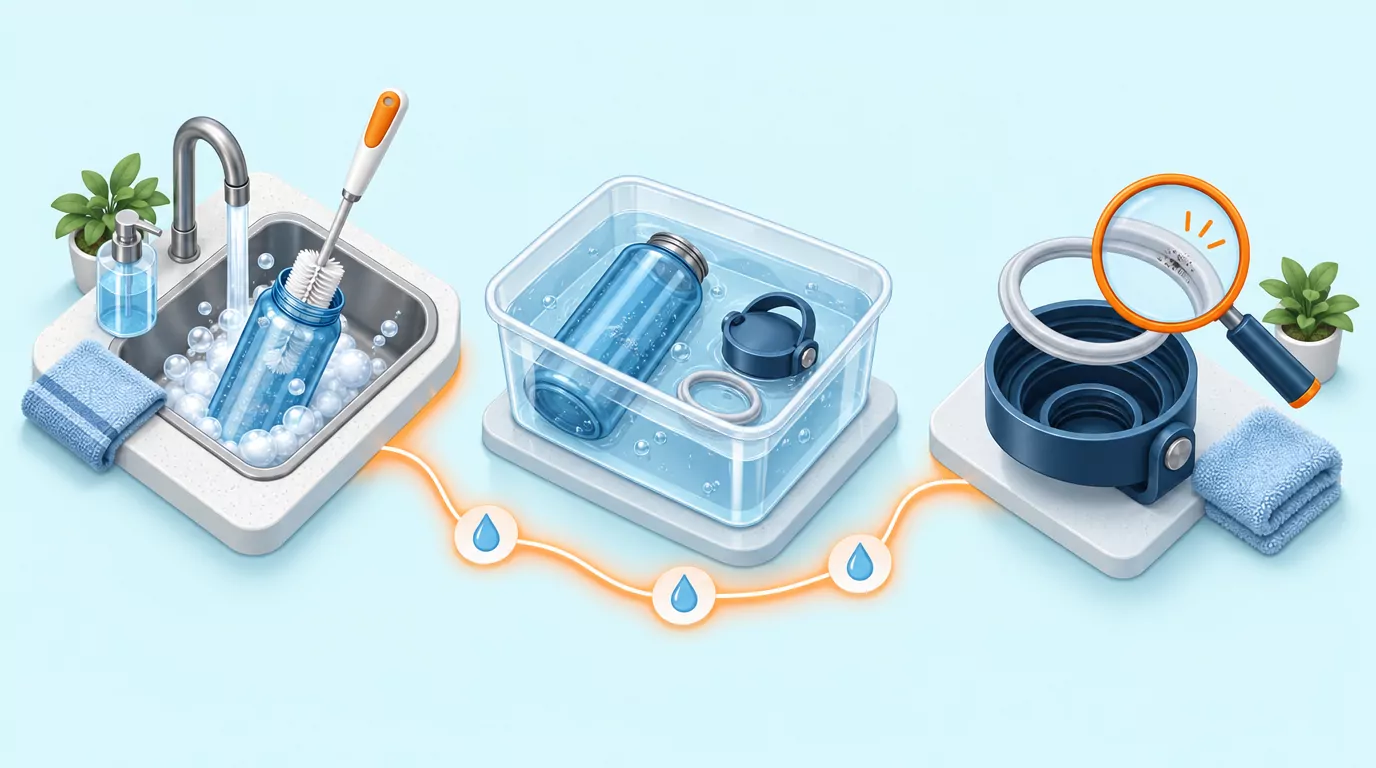
What you need
You probably own most of this already.
- Dish soap, the same one you use for plates.
- A long bottle brush that reaches the bottom of your bottle.
- A thin straw brush for straws, spouts and valves.
- White vinegar and baking soda for the weekly soak.
- A drying rack or a clean towel, so parts dry apart and open.
Rinse the brushes after use and let them dry too, so they stay clean.
The daily wash: how to clean a water bottle step by step
This habit does most of the work, and it takes about as long as washing a mug.
- Wash your hands. Clean hands keep the clean bottle clean.
- Empty it. Pour out what is left, even if it is only water.
- Take it apart. Lid, straw, bite valve and any seal that comes out.
- Fill a basin or the bottle with warm soapy water. Warm water lifts residue better than cold.
- Brush the inside and the threads. Get the bottom corners and the neck, where a film builds first.
- Wash the lid and small parts. Use the straw brush on spouts and channels.
- Rinse well. Keep going until no soap taste or smell is left.
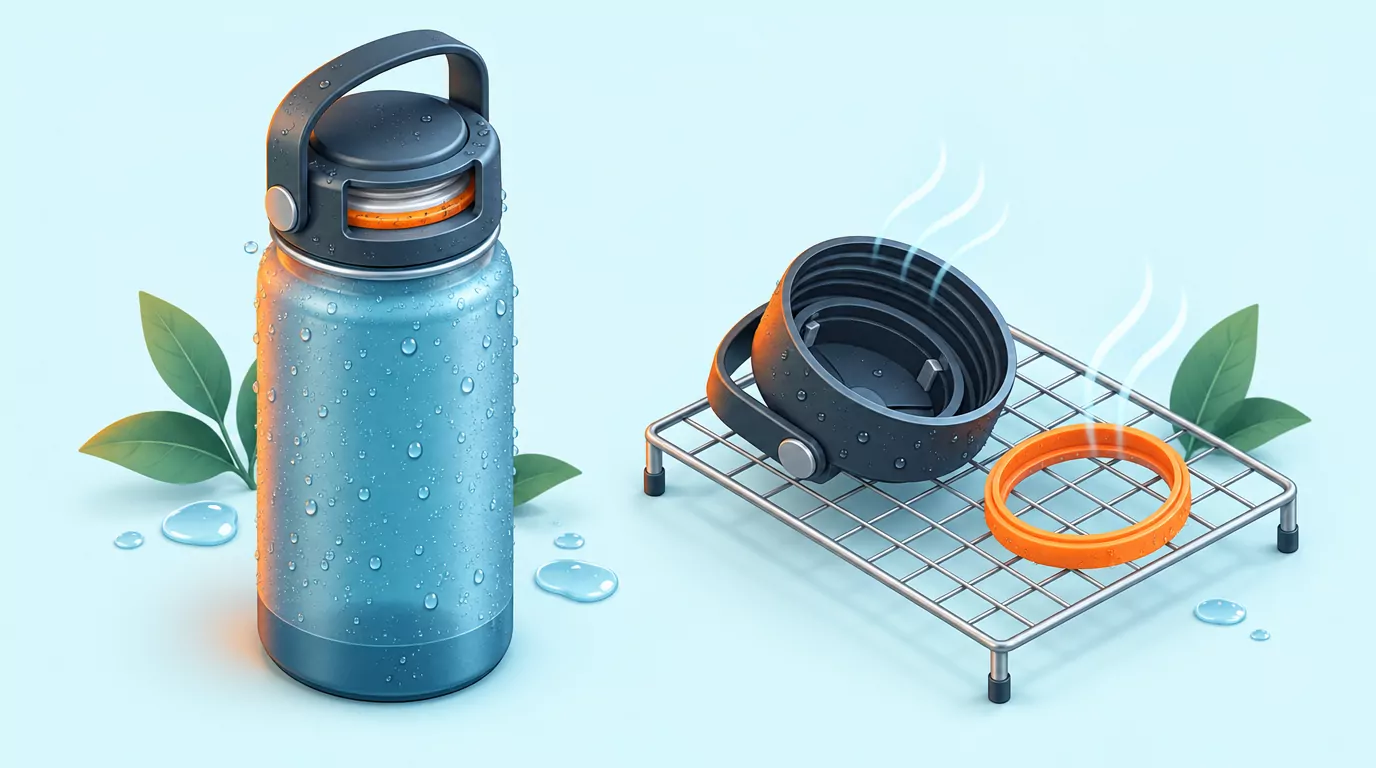
- Air-dry everything apart. Stand the bottle upside down on a rack and leave the lid off until it is fully dry.
The CDC's steps for cleaning baby bottles follow the same pattern: separate the parts, scrub with hot soapy water and a brush, and let every piece air-dry thoroughly before you put it away.
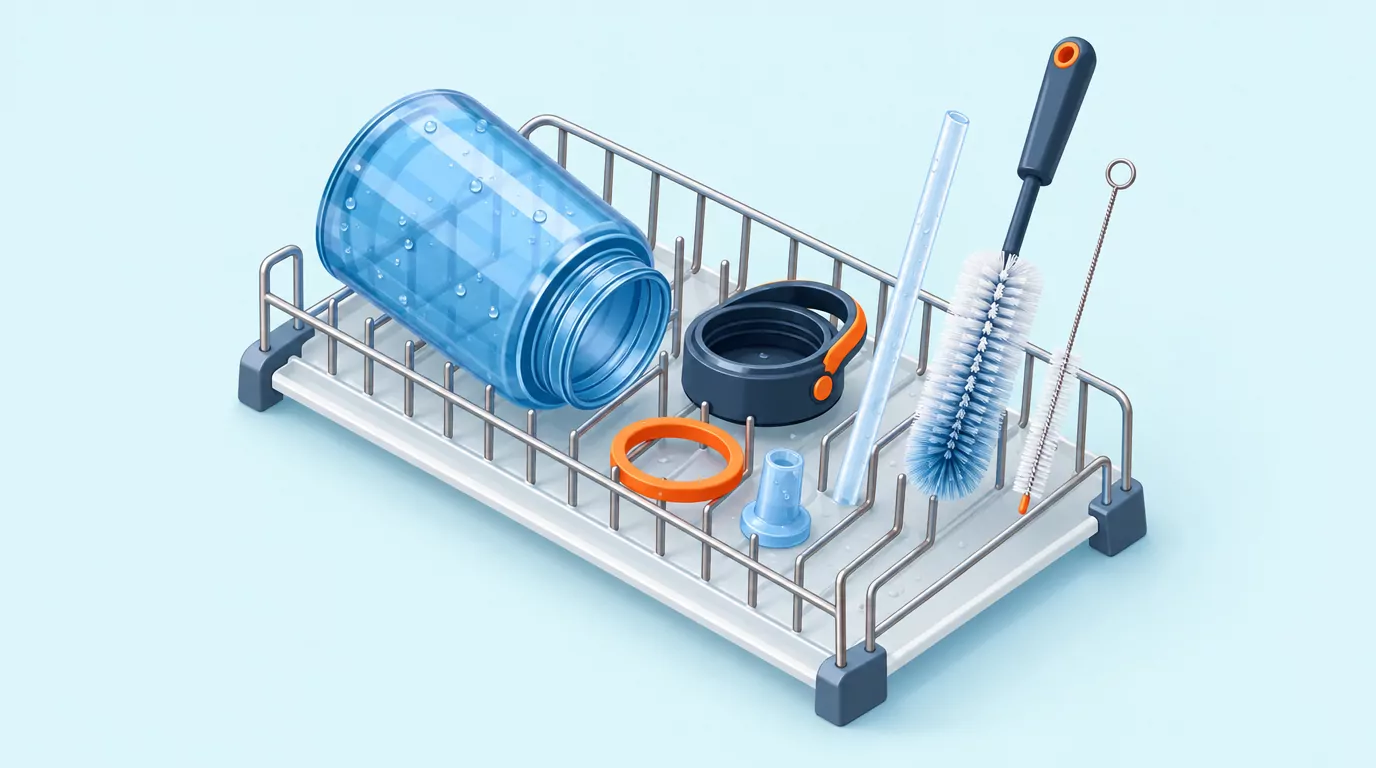
Anything but water means a same-day wash
Coffee, tea, juice, smoothies and protein shakes leave sugar, milk or oils behind. Wash the bottle the same day rather than topping it up with water. For how those drinks compare as fluids, The Most Hydrating Drinks, Ranked has the data; this guide only cares about what they leave in the bottle.
Research backs the idea that what goes in matters. A Purdue University study of bottles in daily use named the type of drink and the owner's cleaning habits among the factors that affect how dirty a bottle gets.
The weekly deep clean
Once a week, give the bottle a soak. Pick one method per session and rinse well afterward, rather than stacking cleaners.
Vinegar soak
This is how to clean a water bottle with vinegar: mix equal parts white vinegar and warm water, fill the bottle, and drop the small parts into a bowl of the same mix. Let it all sit for a while, then scrub, rinse well and air-dry.
Vinegar is good at mineral scale, cloudy film and stale smells. Household vinegar is a cleaner, though, not a registered disinfectant, and the EPA does not review household ingredients like vinegar for how well they kill germs.
Baking soda soak or paste
Stir a generous spoonful of baking soda into a bottle of warm water, shake, and let it sit. For seal grooves and stubborn spots, mix a little baking soda with a few drops of water into a paste and scrub it in with the small brush.
Baking soda is gently gritty and good at smells. Rinse until the water runs clear, since leftover powder tastes chalky.
Sanitizing, if you want it
Most weeks, soap and a soak are enough. If you want to sanitize, use the USDA's kitchen sanitizing solution: 1 tablespoon of unscented liquid chlorine bleach per gallon of water. Let it stand for several minutes, pour it out, rinse well and air-dry.
Never mix bleach with vinegar, ammonia or any other cleaner; the CDC warns that mixing them can release a poisonous gas.
Keep bleach contact short in stainless steel and rinse it out promptly, because chlorine can pit steel over time. Many bottle makers advise against bleach entirely, so check your care label first.
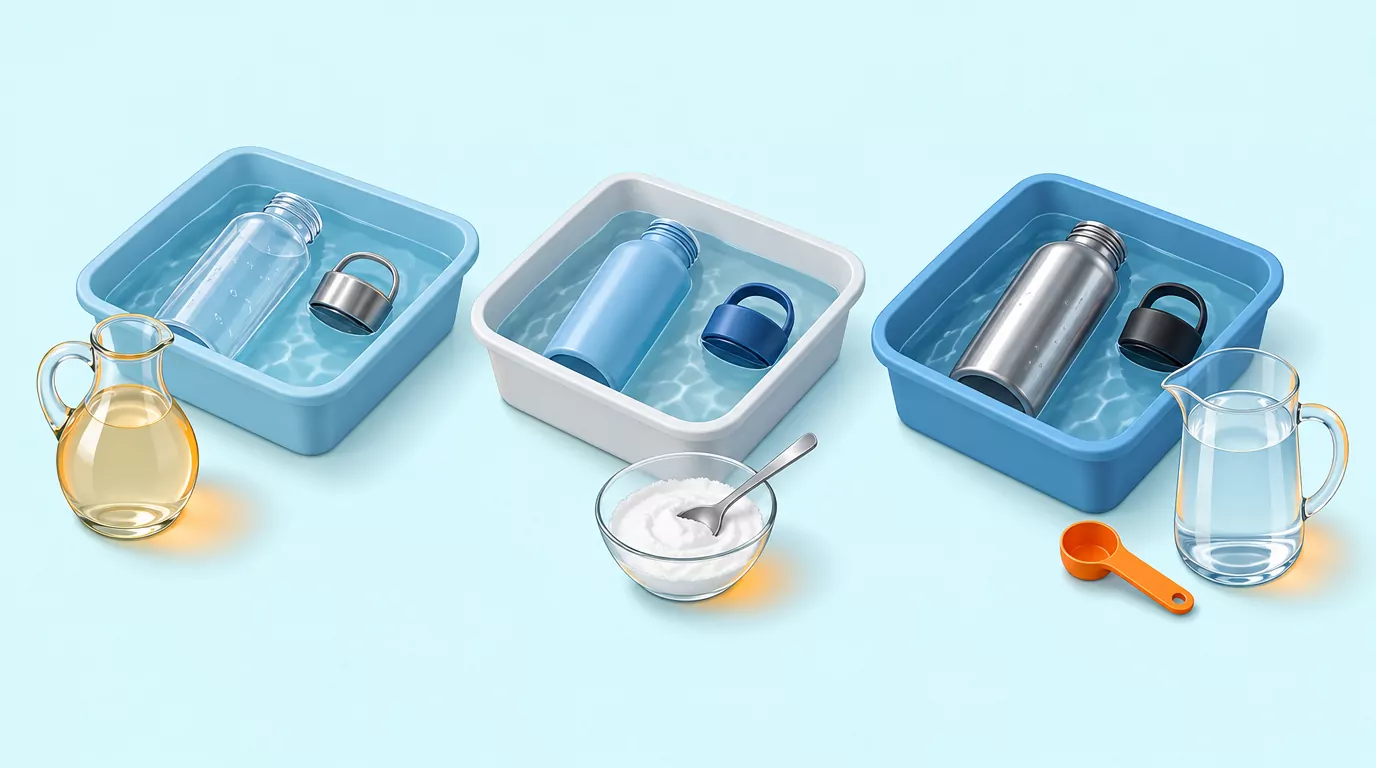
The lid, straw and seal: where residue hides
The bottle body is easy to see and easy to brush. The trouble usually lives in the parts people skip, because they are small, damp and closed most of the day. Knowing how to clean a water bottle lid and straw is most of the battle.
Silicone seals and gaskets
Many screw lids have a silicone ring sitting in a groove. Ease it out with a blunt tool, like the back of a teaspoon, so you do not tear it. Scrub the ring and the groove, then let both dry completely before you refit the seal.
Straws and bite valves
Push the straw brush through from both ends, since most brushes do not reach all the way. Soak straws and valves with the other parts each week. Replace a straw or valve once it stays stained, cracks or tears.
Flip tops and valves that do not come apart
Some lids are sealed units. Open the valve, run warm soapy water through it several times, and work the straw brush into every opening you can reach. Rinse the same way and leave it to dry with the valve open.
Cleaning notes by material
The routine works for every bottle, but the details change a little by material. Your care label always wins.
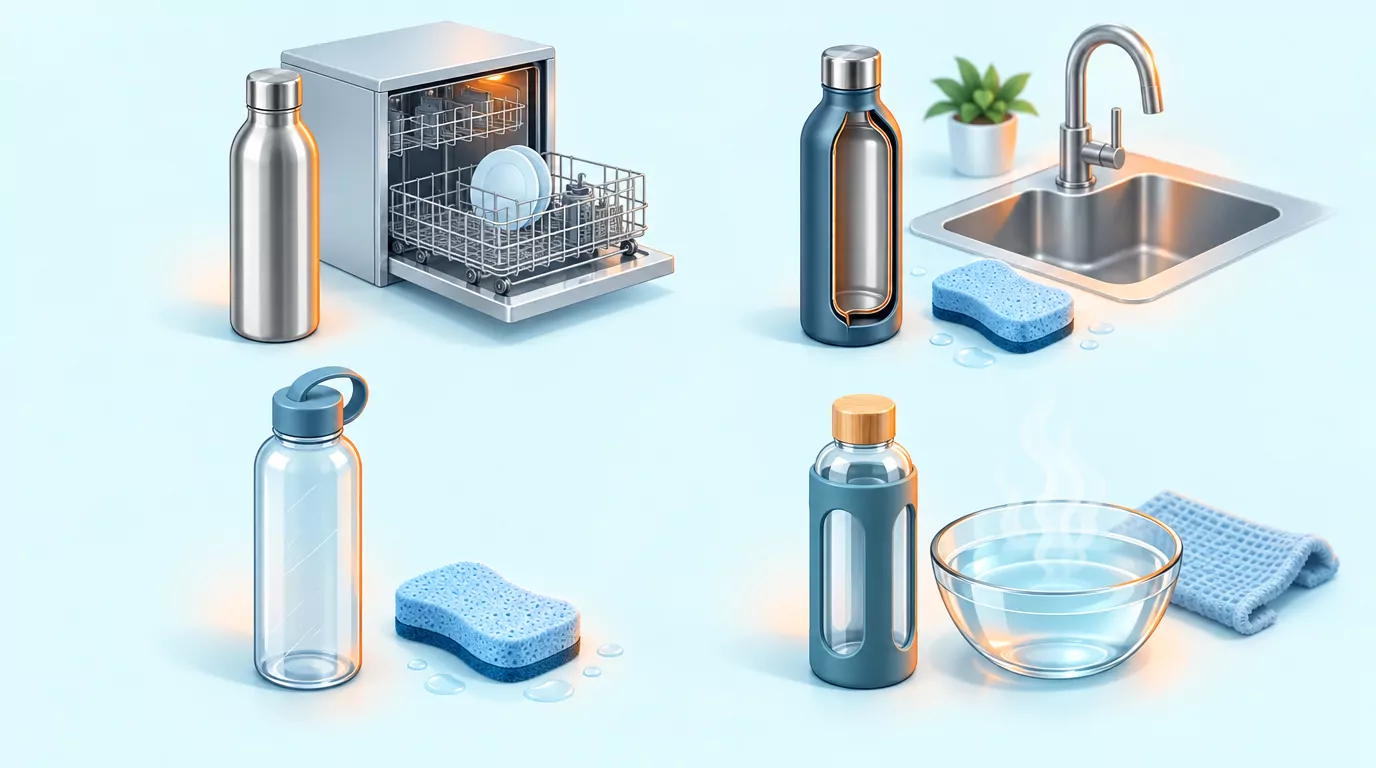
| Material | What works | What to avoid | Dishwasher? |
|---|---|---|---|
| Stainless steel (plain) | Soap and a brush daily; vinegar or baking soda weekly | Steel wool, scouring pads, long bleach soaks | Only if the maker says so |
| Insulated steel | Same as plain steel, by hand | Abrasive pads and long bleach soaks, as for plain steel | Often hand wash only; heat can harm the insulation or the outer coating |
| Plastic | Soap, a soft brush, baking soda for smells | Abrasive scrubbers; a scratched or cloudy bottle (retire it) | Only if labeled dishwasher safe, usually top rack |
| Glass | Soap and a brush; vinegar for cloudy film | Sudden temperature changes, like cold water into a hot bottle | Only if the maker says so |
| Silicone parts (seals, straws, valves) | Remove, scrub, soak weekly, dry fully | Sharp tools that nick or tear them | Follow the lid's label; hand washing lasts longer |
Scratches matter more than they look. Fine grooves in plastic are hard to brush clean, so retire a plastic bottle once it is scratched or cloudy inside.
What to do about mold in a water bottle
Mold in a water bottle usually shows up in the places that stay damp: dark spots in the seal groove, under a valve, or inside a straw. A slimy film or a musty smell is an early sign too.
Pink or red slime is a different thing. It is usually not mold but a common bacterium, Serratia marcescens, the same pink film NDSU Extension describes in showers and sinks. It gets the same treatment.
- Stop using the bottle until it is clean.
- Take every part apart, including the seal.
- Scrub with hot soapy water and the right brush for each part.
- Soak with one method from the weekly section, then rinse well.
- Dry every part fully before you put it back together.
If the spots come back, or they sit deep in silicone you cannot reach, replace that part or the whole bottle.
Drying is what stops a repeat. The EPA's guide to mold and moisture puts it simply: the key to mold control is moisture control. A bottle stored wet with the lid screwed on is the perfect spot for it.
How often should you wash your water bottle?
How often to clean a water bottle comes down to how you use it. If you use it every day, wash it every day. Wash it the same day after anything but water, and give it a deep clean once a week.
Expert advice ranges from washing after every use to washing daily, and no large study has set a firm rule. Daily is a practical middle: frequent enough to stop a film from building, and easy enough to keep doing.
Making the routine stick
Hook the routine onto things you already do:
- Pair it with evening dishes. The bottle joins the last load of the day, then dries overnight.
- Pick a weekly soak slot. Sunday evening, or whenever you change the bedsheets.
- Keep a spare bottle. On soak days, the spare goes to work, so your refill habit and any hydration streak do not stall.
- Store it open. Leave the lid off until it is dry, then keep the bottle where you will see it, as in how to remember to drink water.
A clean bottle also tastes better, since stale smells end up in your water. For more ways to enjoy what is in it, see how to make water taste better.
Counting refills without measuring every time
A bottle you like gets refilled, and every refill counts toward the day's total. In Water Goose, you can save your bottle's volume as a custom amount in ml or fl oz. Logging a refill is then pick the drink, choose that amount, confirm, with no measuring.
Not sure what your bottle holds? Measure it once with a jug, as in how many oz in a glass of water, or use How Many Water Bottles Are in a Gallon? to convert common bottle sizes.
On soak day, log the glass or the spare bottle instead, and the daily total still adds up. For the bigger picture on methods, from marks on a bottle to apps, see how to track water intake. Your entries and custom amounts stay on your device, and no account is needed.
Frequently Asked Questions
Is rinsing a water bottle enough?
Not on its own. Rinsing moves loose water around, but it does not lift the thin film that builds on the walls and in the lid. Use soap and a brush daily, and rinse between refills if you like.
Can I clean a water bottle with just vinegar?
Vinegar is a good weekly soak for scale, cloudy film and smells. It does not replace a daily wash with soap and a brush, and it is not a registered disinfectant.
Is it bad to reuse plastic water bottles?
Single-use plastic bottles are not designed to be washed and reused. Their narrow necks and thin walls are hard to brush clean, and they scratch and crumple easily. A bottle built for reuse, with a wide mouth and parts that come apart, is much easier to keep clean.
Can a water bottle go in the dishwasher?
Only if the maker says so. Many plain steel, glass and plastic bottles are dishwasher safe, often on the top rack only. Insulated bottles are often hand wash only, since heat can harm the insulation or coating.
How do I get rid of a smell in my water bottle?
A water bottle smell usually lives in the seal groove, so take the lid apart and check there first. Soak the parts in baking soda and warm water, scrub, rinse and dry fully with the lid off. If the smell stays, try a vinegar soak on another day, and replace the seal if it still smells after that.
When should I replace a reusable water bottle?
Replace it when it will not come clean: mold that returns, a smell that stays after a deep clean, or cracks you cannot reach with a brush. Retire scratched or cloudy plastic, and swap out torn seals, straws and valves as they wear. Often a new part is all you need.
A clean bottle, kept simple
A two-minute wash each day, a soak each week and a bottle that dries open are enough for most people. This is general information about keeping a bottle clean, not medical advice.
If a clean bottle has you refilling more, Water Goose will keep count, and it is on the App Store for iPhone and on Google Play for Android. The goose does not judge the state of your lid.