Don't Break the Chain: A Calmer Way to Keep a Hydration Streak
Don't break the chain is a simple habit method. Pick one small daily action, mark a calendar on every day you do it, and try to keep the row of marks unbroken. The idea is credited to comedian Jerry Seinfeld, and it works well for a habit like drinking enough water, where each day's mark takes seconds.
The trouble starts on day 13, when an exam or a late shift snaps the chain. This guide covers why the method works, how to set up a hydration streak that survives a busy month, and how to read a broken chain without giving up. If your problem is remembering to drink at all, start with how to remember to drink water.
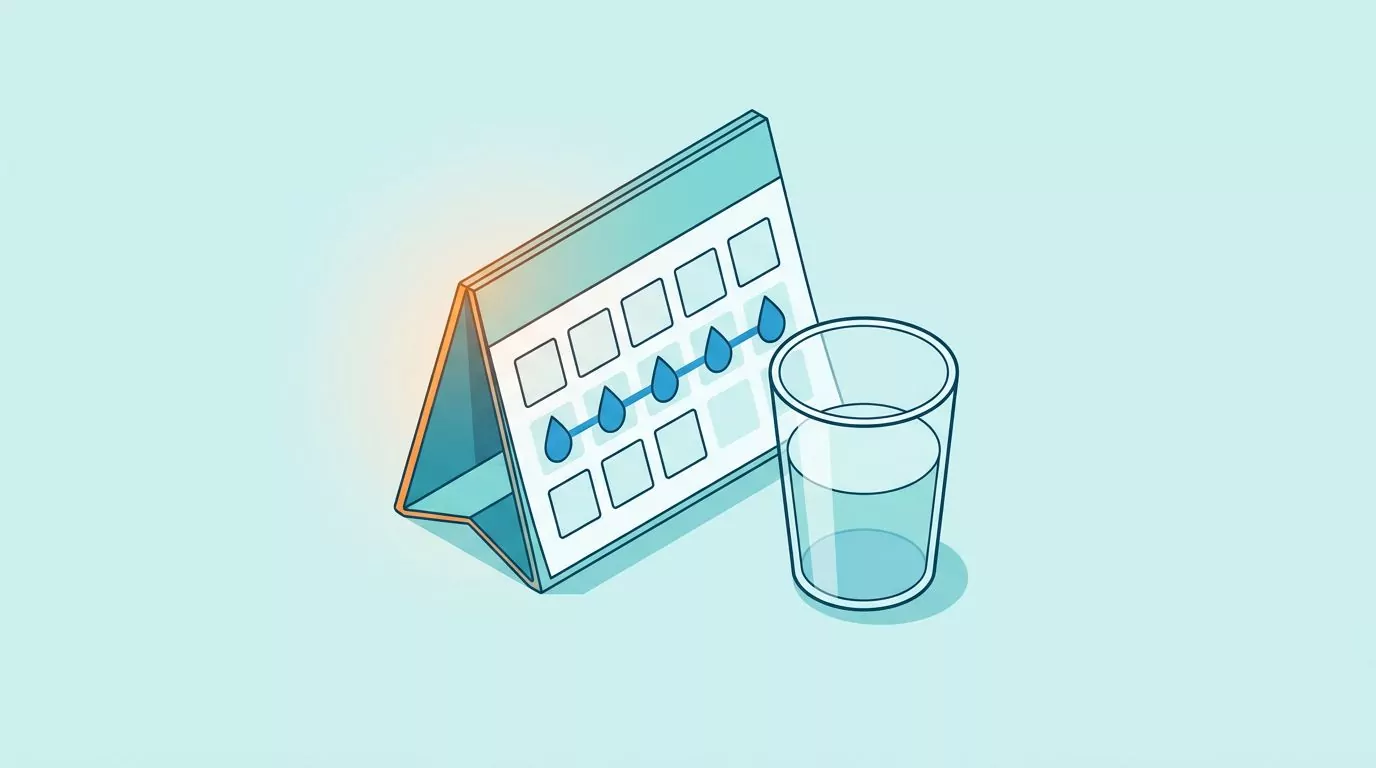
What "don't break the chain" actually is
The method has three steps, and none of them needs an app.
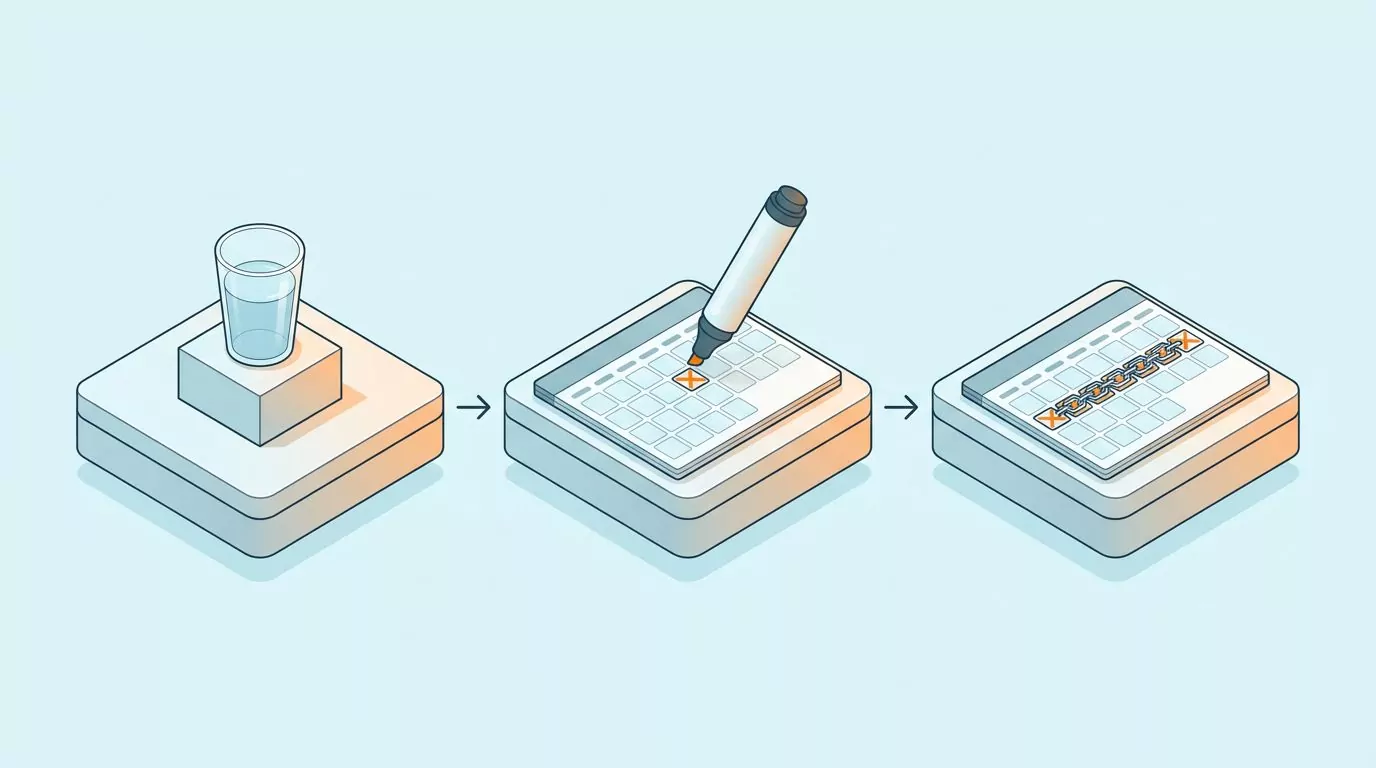
- Pick one daily action. Keep it small and easy to check, like writing one page or reaching your water goal.
- Mark each day you do it. Use a calendar you see every day, and draw a big X on the square.
- Keep the chain going. After a few days the Xs join into a chain. Your only job is not to break it.
The story comes from Brad Isaac, a software developer and young stand-up comic. He met Jerry Seinfeld at a club back when the Seinfeld show was new and asked for advice. Seinfeld told him to write jokes every day, hang a one-page calendar of the whole year on the wall, and cross off each writing day with a red marker.
After a few days you have a chain, and you will not want to break it. Isaac shared the tip on Lifehacker in 2007, and Lifehacker's write-up of the story still retells it. One honest footnote: Seinfeld later downplayed the idea, saying it was not really his method.
Why a visible chain helps a habit stick
A chain on the wall does three quiet jobs. None of them is magic, and all of them are useful.
- It makes progress visible. Habits grow slowly, and most days feel the same. A row of marks turns a vague sense of doing well into something you can see.
- It removes a daily decision. You stop asking whether you feel like it. The only question left is whether today has its mark.
- It hands you a small win. Crossing off a square is a tiny reward that arrives tonight, not in three months.
Habit research explains why the daily repeat matters. In a study by Lally and colleagues in the European Journal of Social Psychology in 2010, 96 volunteers picked an eating, drinking or activity habit and set out to do it daily in the same setting for 12 weeks. On average the action took 66 days to feel automatic, with a wide spread of 18 to 254 days between people.
So the chain does not build the habit. Repetition does, and the chain keeps you repeating long enough for it to happen, which is far longer than the popular 21 days.
Why drinking enough water is a good first chain
A daily run needs shoes, time and a dry evening. Drinking enough water needs almost nothing. It is cheap, it happens every day anyway, and a missed day carries very low stakes.
It is also quick to record. Ticking a paper square or logging a glass takes seconds, and a habit tracker streak that is a chore to update is the first thing to go in a busy week.
A paper in the British Journal of General Practice by Gardner, Lally and Wardle notes that simple actions, such as drinking water, became automatic faster than bigger routines like doing 50 sit-ups. It also suggests a daily tick-sheet while a habit forms, which is a chain calendar in all but name.
There is one twist. Water is a quantity habit, not a yes-or-no one, and the right amount differs from person to person. That is why the 8 glasses a day rule is not a real rule, and why the setup below matters.
Setting up a hydration chain in five steps
A good hydration streak is mostly decided before day one, so make these five choices first.
Pick a goal you can hit on a bad day
Set the goal for your worst normal day, not your best one. The Water Intake Calculator gives you a sensible starting point, and if that number feels like a stretch, start a little below it.
A goal you hit 25 days a month feels like a habit that works. A goal you hit 12 days a month feels like failure, even if you drink more than before. Run it for two weeks, then raise it slightly if it feels easy.
Decide what counts as a link
This is the choice most guides skip, and it matters most for a quantity habit. You have two good options.
- Goal met. The day counts only if you reached your daily total. It is stricter, and it tells you more.
- Logged something. The day counts if you tracked any drink at all. It is gentler, and it protects the habit of paying attention.
Either works, as long as you choose before day one rather than on a tired night when you are slightly short. Decide which drinks count too: the Water Goose Drinks page and this look at whether coffee counts towards water intake will help.
Decide where the chain lives
The chain only works if you see it, so pick one home for the month.
- A wall calendar near your desk or bed, the classic Seinfeld setup.
- A printable page, such as the Printable Water Tracker, taped where you look every day.
- A web page, such as the 30-Day Water Challenge on the Water Goose website.
- An app's history calendar, if you already log drinks on your phone.
Paper is harder to ignore, and a phone is harder to leave at home. Choose whichever fits your day.
Mark it at the same moment every day
Here is the part that catches people out: the mark, not the drink, is what gets forgotten. Plenty of chains break on days when someone drank perfectly well and never crossed off the square.
So tie the mark to something that already happens every evening, such as your last drink of the day. If that drink is water, keep it small, for the reasons in drinking water at night. If you log drinks as you go, the log is the mark.
Review weekly, not hourly
Checking the chain every hour turns a calm habit into a scoreboard. Look at the month once a week instead.
Count the links, not the gaps. If a week shows several misses, do not try harder: lower the goal or move the marking moment. A setup that fails often is a design problem, not a character flaw.
When streaks backfire
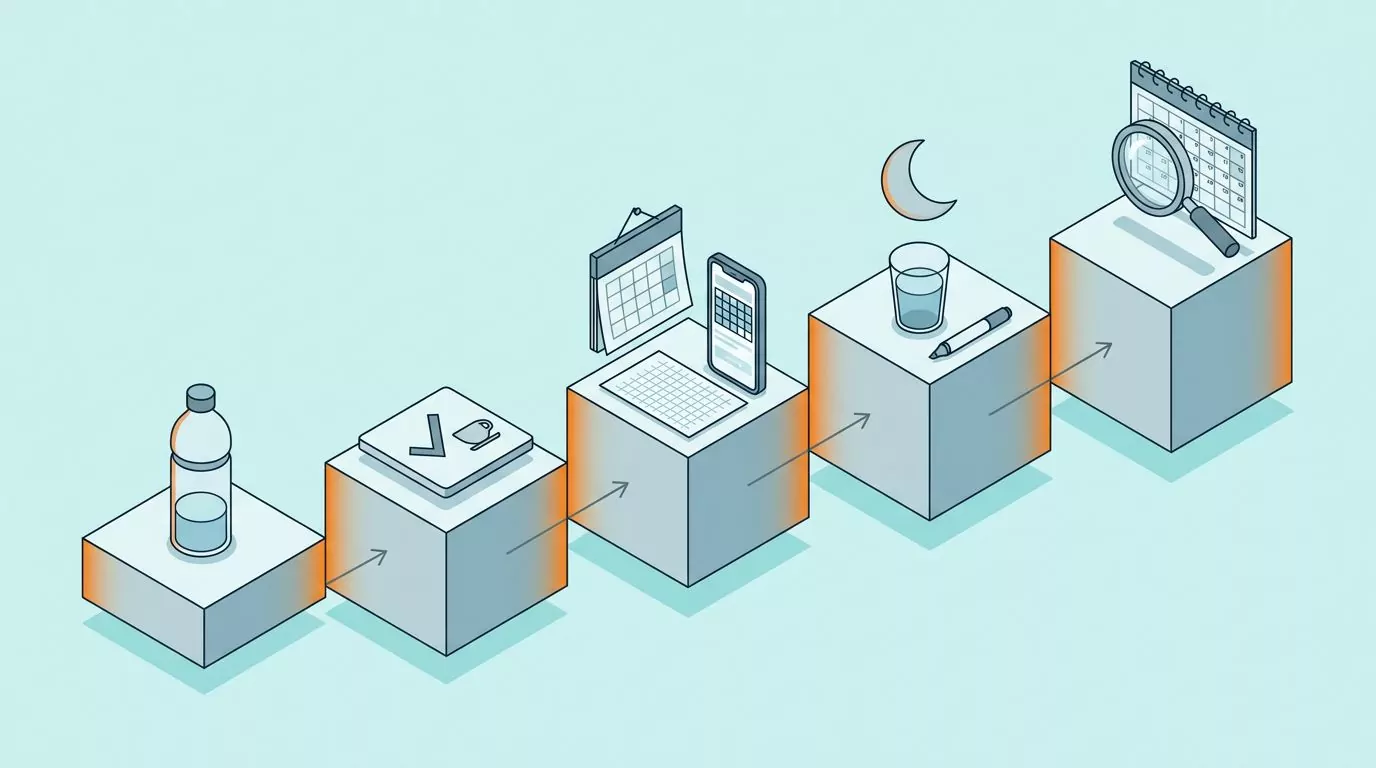
Any tool can be held the wrong way. These are the common ways a streak starts working against the habit it was meant to build.
- All-or-nothing thinking. One miss and the whole month feels ruined, when 29 good days out of 30 is a great month.
- Chasing the number. The streak count becomes the goal. You end up protecting a number instead of looking after yourself.
- Streak anxiety. A long chain starts to feel fragile, and every busy day brings a small knot of dread.
- Quitting after one miss. The chain breaks, the calendar looks spoiled, and the whole plan quietly goes in a drawer.
- Chugging water at 11 pm to rescue a day. Never do this. A big bottle before bed is likely to wake you for a bathroom trip and teaches the wrong habit, and how much water is too much explains why large amounts in a short time are worth avoiding.
Each of these has the same root: the chain has started to matter more than the habit behind it. The next rule is the fix.
The never miss twice rule
James Clear gives the best answer to what to do when you break a streak. In his guide to habit tracking, he puts it simply: "Missing once is an accident. Missing twice is the start of a new habit."
The research backs up the first half. In the Lally study, missing one day did not seriously set back habit formation, and progress soon picked up again. The second half is a rule of thumb: one gap is a data point, while two in a row can start a pattern.
For hydration, the fix is the next drink, not tomorrow. If you notice at 3 pm that you are well behind, a normal glass now and a few steady drinks through the afternoon can still save the day. How to hydrate faster covers sensible ways to catch up, and if the day is truly gone by bedtime, let it go.
Planned breaks need a rule too. A day you know you will not track, like a long travel day, is not a miss. Mark it with a different symbol, such as an R, and decide in advance.
How to read a streak calmly
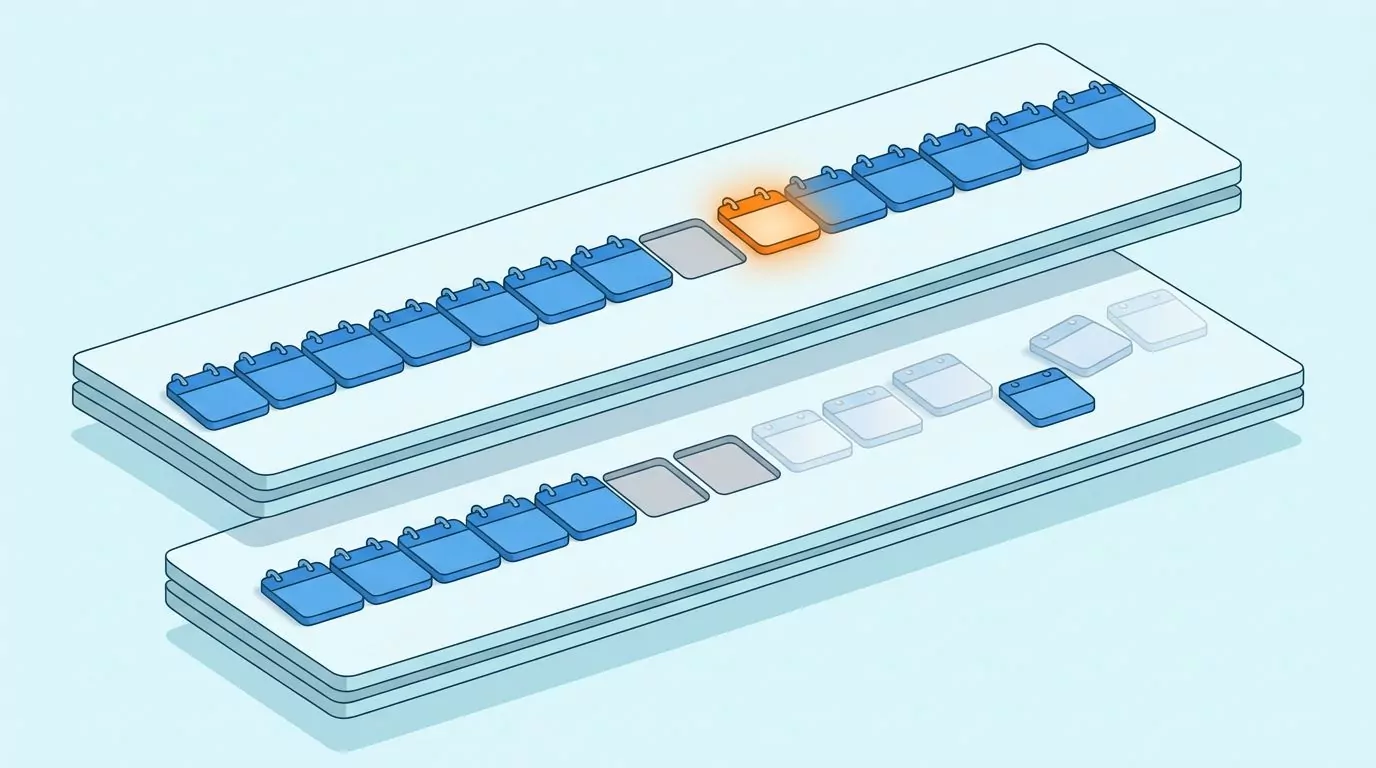
Trackers often show more than one number, and each answers a different question.
- Streak length is how many days in a row you have kept the chain. It drops to zero after a single miss.
- Completion rate is the share of days you met your link rule. Hitting 22 of 30 days is 73 percent, wherever the gaps fell.
- Spread is how evenly the links fall across the month. Links in every week beat the same number crammed into three weeks.
Streak length is the most fragile of the three and the least useful for judging a habit. Here is how to read the patterns you are most likely to see.
| What the calendar shows | What it means | What to do |
|---|---|---|
| 22 of 30 goal days (73 percent) | A good month. The habit works on most days. | Keep the goal. Check which days the gaps land on. |
| A 12-day chain, then one miss | Nothing is lost. Twelve days of practice still count. | Mark the next day. Never miss twice. |
| Links on 80 percent of days, but no long chain | The habit is likely taking hold, with regular small gaps. | Judge the month by the rate, not the longest streak. |
| A long chain built on late catch-up drinks | The number is winning over the habit. | Spread drinks through the day, even if the chain breaks. |
| A month of misses | The goal is too high, or the mark has no anchor. | Lower the goal or move the marking moment, then start fresh. |
A worked example: one month, two broken chains
Maya is a student heading into exam season. She sets a goal a little below what a calculator suggested, picks "goal met" as her link rule, and marks a paper calendar by her bed after her last drink of the evening.
Week 1. Seven marks out of seven. It feels easy, which is the point, so she does not raise the goal.
Week 2. On day 9 she spends all day in the library for a mock exam, forgets her bottle and misses her goal, so the chain breaks at eight days. On day 10 she drinks a glass with breakfast, carries her bottle and marks the square that night.
Week 3. Her weekly review shows one gap in two weeks, so the goal stays. On day 17 she revises at a friend's flat until late, leaves her bottle at home, and at 11 pm she is short. She skips the big bottle, goes to bed, and makes day 18 the restart.
Week 4. No misses. Both breaks came on days she was away from her desk without a bottle, so she now packs one the night before any long day out.
By day 30 her calendar shows 28 marks, a completion rate of 93 percent, and a longest chain of 13 days. By streak alone, the month holds two failures. By completion rate, it is her best month yet, and the misses taught her the one fix she needed.
Keeping the chain in Water Goose
If drawing Xs is not your style, a log can keep the chain for you. Water Goose is a hydration tracker for iPhone with a calendar-like history of your daily totals, goal completion, consistency and streaks, without complex charts. There are no leaderboards, challenges or social features, so the chain stays private.
The app uses your age, height, weight and gender to suggest a general wellness starting goal, and you can choose your own instead. Logging means picking the drink, choosing the amount and confirming, in ml or fl oz. You can log water and everyday drinks like coffee, tea, juice or milk, and non-water drinks can add to your total.
Reminders are optional: you choose your active hours and how often, allow notifications, and they are scheduled locally on your device. Your history stays on your phone with no account, which also means no sync. No app can do the drinking for you, but a log draws the chain as you go, so the marking step is much harder to forget.
Frequently Asked Questions
What is the don't break the chain method?
It is a habit method credited to Jerry Seinfeld. You choose one small daily action, mark a calendar every day you do it, and try to keep the row of marks unbroken. The growing chain gives you visible progress and a small daily win. It suits simple actions you can repeat every day, like writing, stretching or reaching a water goal.
What should I do when I break a streak?
Do the habit again as soon as you can, ideally later that day or the next morning. Follow the never miss twice rule: one miss is an accident, but two in a row starts a new pattern. Never drink a large amount late at night to save a hydration streak, and check whether the miss points to a setup problem, like a goal set too high.
Does missing one day undo a habit?
No. In a 2010 study of how habits form, missing a single day did not seriously slow progress, and gains soon picked up again. Habits build over many weeks, around 66 days on average in that study, so one gap is a small dent in a long curve. What matters more is whether one miss turns into several in a row, so make the next day count.
Can I use don't break the chain for more than one habit?
You can, but start with one. Each chain needs its own goal, rule and marking moment, and several at once can make a bad week feel like a total collapse. Once the first habit feels automatic, which often takes two months or more, add a second chain, ideally one that sits next to it, like drinking water in the morning before your first coffee.
Can I use don't break the chain for a habit like drinking water?
Yes, and it is one of the easiest places to start, because drinking water is cheap, daily and quick to record. Since it is a quantity habit, decide before day one what counts as a link: meeting your daily goal, or simply logging something. Set a goal you can hit on a busy day, and never chase a streak by drinking a lot at once.
Do I need an app for don't break the chain?
No. A wall calendar and a marker are the original setup, and they still work well. An app helps if your phone is always with you or you tend to forget the marking step, because logging a drink can mark the day for you. Pick whichever you will actually look at, since a chain you never see cannot keep you going.
The short version
Don't break the chain works because it makes a small daily habit visible. For hydration, set a goal you can hit on a bad day, decide what counts before you start, and treat a single miss as information rather than failure. Never miss twice, and never rescue a streak with a late-night bottle.
This guide is general wellness information, not medical advice, so talk to a healthcare professional if you have questions about how much you should drink. If you would like the chain drawn for you as you log, Water Goose is available on the App Store for iPhone.