Can You Bring a Water Bottle on a Plane? Yes, if It Is Empty at Security
Yes. TSA lists empty water bottles as allowed in carry-on bags, and its page sets no size limit. The limit applies to what is inside: liquids must be in containers of 3.4 ounces (100 ml) or less, all in one quart-size bag. So empty a bigger bottle before the checkpoint and refill it once you are through security.
So can you bring a water bottle on a plane? Yes, as long as it is empty when it reaches the bin. The rest of this guide covers the cases that trip people up: bottle sizes, metal and glass bottles, frozen water, connections and the reported PreCheck change.
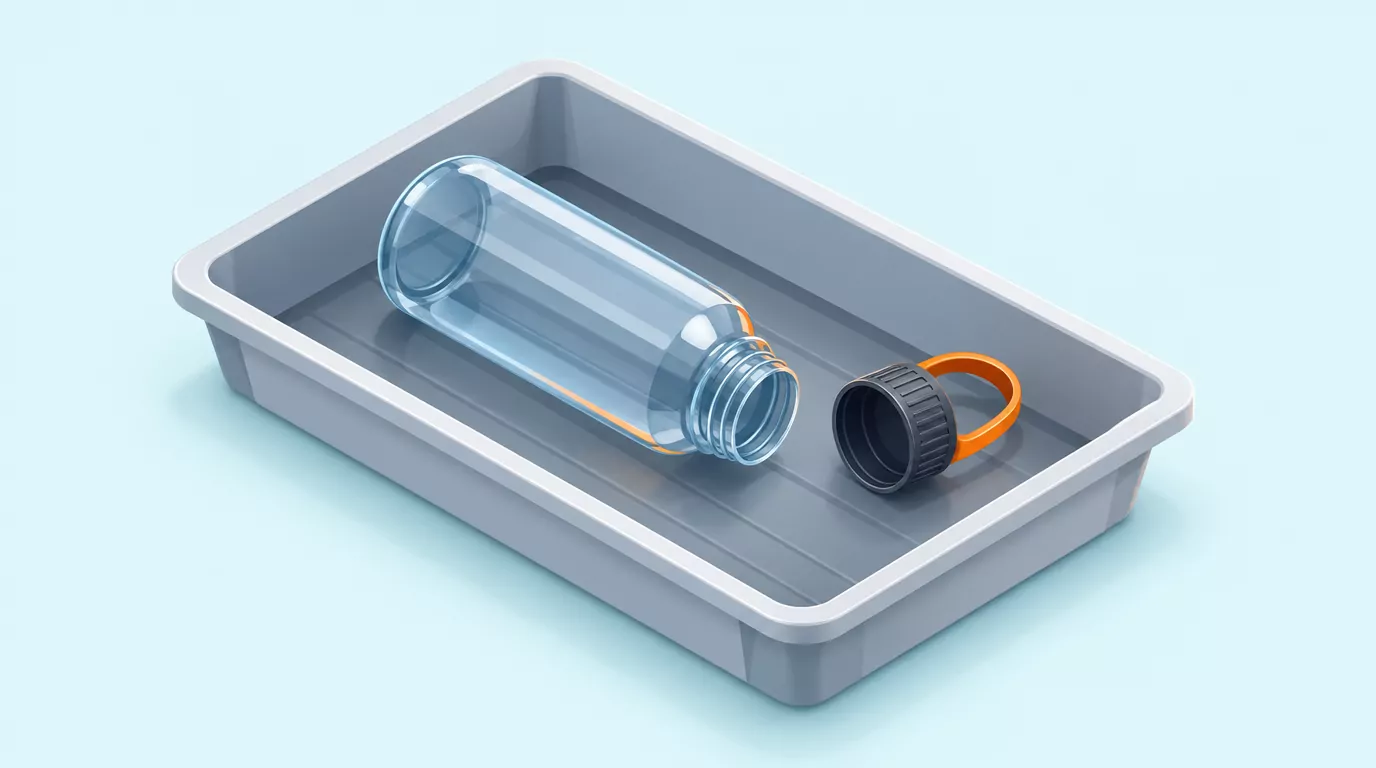
Can you bring a water bottle on a plane? The bottle is fine, the water is the problem
TSA screens liquids, not containers. An empty bottle holds no liquid, so there is nothing for the rule to limit. TSA's Empty Water Bottle page lists Carry On Bags: Yes and Checked Bags: Yes, and says nothing about size or material.
So if you are asking "can I bring a water bottle on a plane?", the answer is yes, as long as there is no water in it. Most people know these TSA water bottle rules as 3-1-1: containers of 3.4 ounces or less, 1 quart-size bag, 1 bag per passenger.
On tsa.gov the page is now titled the Liquids, Aerosols, and Gels Rule, but it is the same rule. TSA's item pages add one caveat: the final decision rests with the TSA officer on whether an item is allowed through the checkpoint.
How many ounces can you take on a plane?
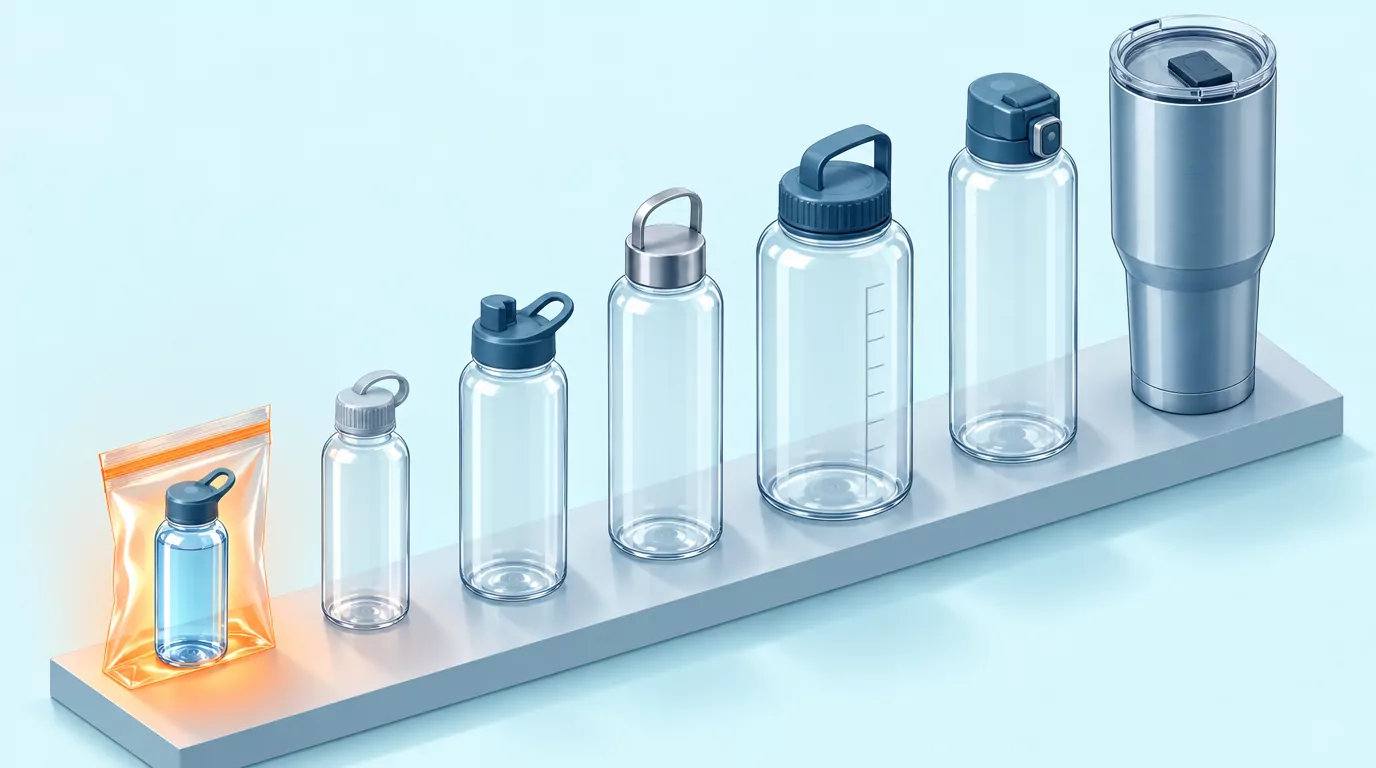
Each liquid container in your carry-on can hold 3.4 ounces (100 ml) or less, and all of them must fit in one quart-size bag. That also answers how many liquids you can bring: as many small containers as fit in that one bag. Anything in a larger container goes in checked baggage.
TSA publishes no separate total-ounce figure, so there is no hidden maximum beyond the bag itself. One note on units: the 3.4 here is fluid ounces, a measure of volume, the same as 100 ml.
What the limit means for common bottle sizes
| Bottle size | Full or part full at the checkpoint | Empty at the checkpoint |
|---|---|---|
| 3.4 oz (100 ml) travel bottle | Allowed, inside the quart bag | Allowed |
| 8 oz (237 ml) mini bottle | Not allowed | Allowed |
| 16.9 oz (500 ml) standard bottled water | Not allowed | Allowed |
| 20 oz (591 ml) | Not allowed | Allowed |
| 24 oz (710 ml) | Not allowed | Allowed |
| 32 oz (946 ml) | Not allowed | Allowed |
| 40 oz (1,183 ml) tumbler | Not allowed | Allowed |
Part full does not help, because the limit is the size of the container, not how much is left in it. TSA's Bottled Water page puts it briefly: carry-on yes, at 3.4 oz (100 ml) or less, and checked bags yes. For UK airports, gov.uk says it in so many words: the 100 ml limit still applies if the container is only part full.
If you count your day in standard 16.9 oz (500 ml) bottles, this guide to how many water bottles you should drink a day does that math by bottle size.
Medications and medically necessary liquids are the exception
If you need to bring water through TSA for medical reasons, start with the exemptions. TSA's Medications (Liquid) page allows larger amounts of medically necessary liquids in reasonable quantities for your trip. You must declare them to TSA officers at the checkpoint for inspection.
Infant and child nourishment is exempt too (see the FAQ). The medications page does not name plain water, so ask AskTSA before you rely on it.
Can you bring an empty water bottle through TSA?
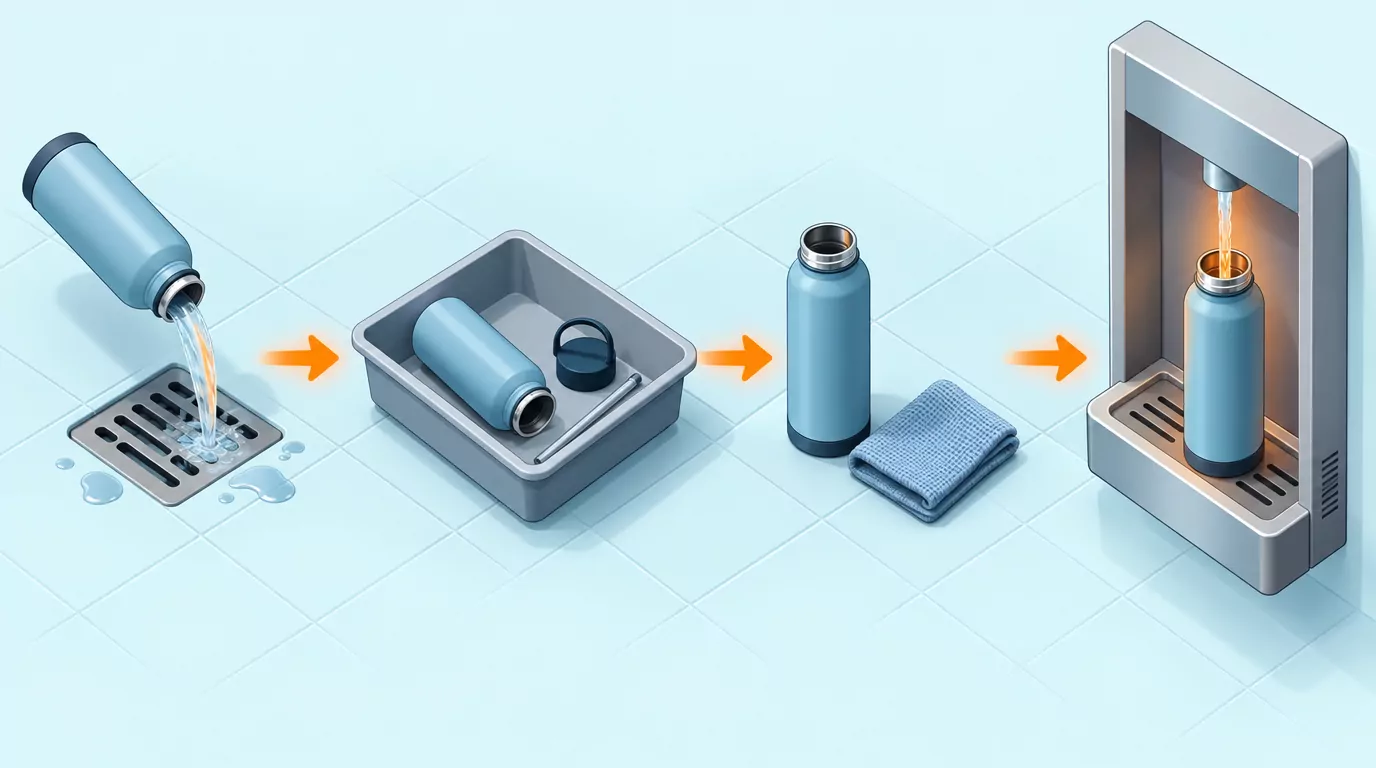
Yes. TSA's Empty Water Bottle page allows it in carry-on bags and sets no size limit. That also settles whether you can bring a reusable water bottle on a plane: yes, empty. A short routine keeps the checkpoint uneventful.
- Empty it before the line. Drink it or pour it out, including what hides in the lid, spout or straw.
- Show that it is empty. Carry it lid off, or open it at the bin, so an officer can see inside. Double-walled metal bottles are opaque, so this can save a second look; it is a practical habit, not a TSA rule.
- Pack it clean and dry. This guide on how to clean a water bottle covers the lid, straw and seal.
- Fill it after the checkpoint. The refill section below covers where.
What water bottles are allowed on a plane? TSA rules by bottle type
Every type follows the same rule: empty at screening. The differences between them are practical, not legal.
Metal and insulated bottles, including Hydro Flask and Stanley
Can you bring a metal water bottle on a plane? Yes, empty, in your carry-on, under TSA's Empty Water Bottle listing, which makes no distinction by material. The same goes if you are asking whether you can bring a Hydro Flask on a plane.
The usual snag is the lid. Straw lids and spout lids hold a few drops long after the bottle looks empty, so drain the straw, shake out the lid and keep it off until the bin.
Collapsible and soft bottles
Same rule. They fold flat for a small bag and stand up again once filled.
Glass bottles
TSA's Glass page lists carry-on: yes and checked: yes. Glass is heavier and can break, so wrap it in clothing.
The plastic bottle you bought on the way
Finish it before the line, keep the empty and refill it airside.
Can you bring frozen water through TSA?
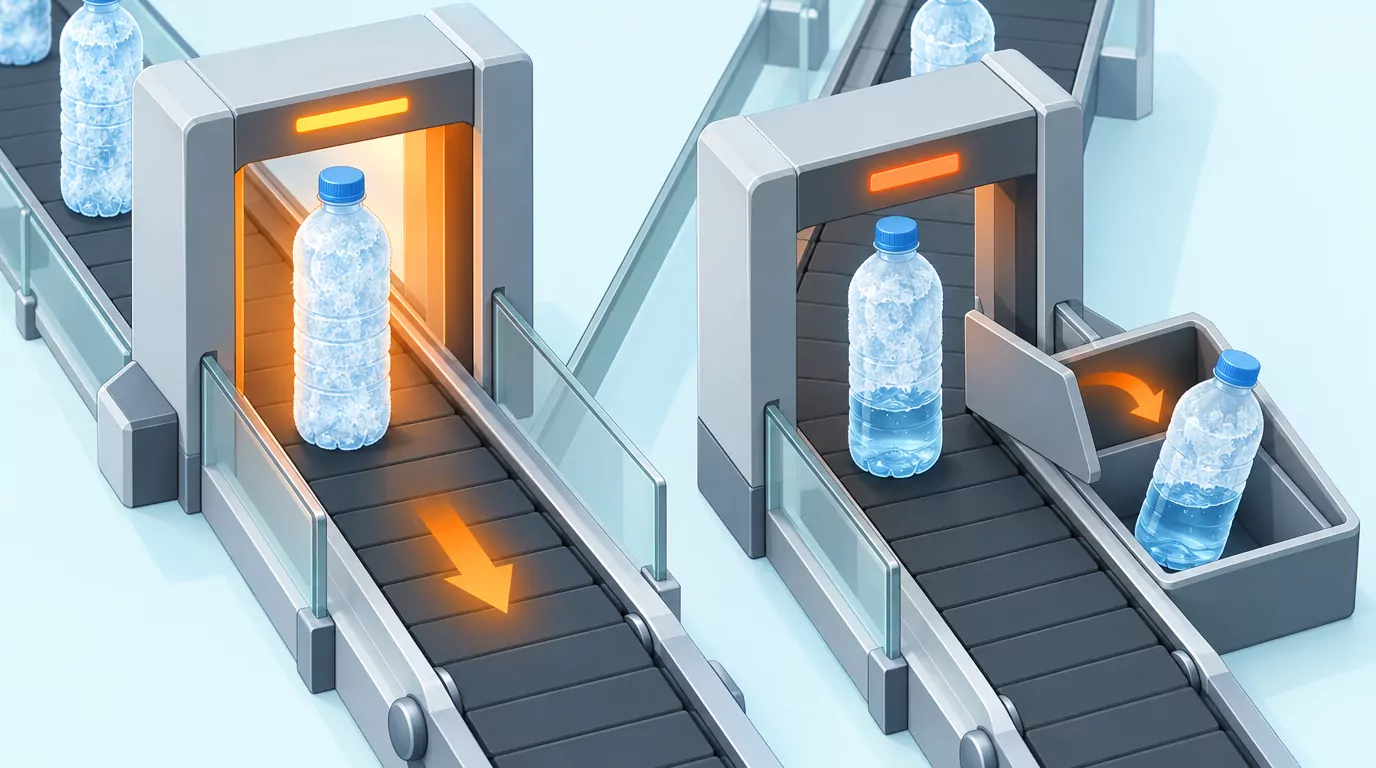
Yes, if it is still frozen solid. TSA's Ice page says: "Frozen liquid items are allowed through the checkpoint as long as they are frozen solid when presented for screening." If they are partially melted, slushy, or have any liquid at the bottom of the container, they must meet the 3-1-1 rule.
That is why it often fails. A bottle melts from the outside in during the drive and the wait in line, and a little liquid at the bottom is enough to put it back under the 3.4 oz limit.
If you want to try it, freeze the bottle solid overnight and leave some room at the top, because water expands as it freezes. Expect to tip it out if it has started to melt by the bin.
This is a US rule. In the UK, gov.uk says you cannot carry frozen liquids in your hand luggage at all.
Can you bring water on an international flight? Connections and rescreening
Yes, the same way: empty at every screening, refilled after the last one. The catch is that an international trip can include more than one screening.
Arriving in the US and connecting. You clear customs and then, in most cases, go through TSA screening again before the onward flight. Seattle-Tacoma International Airport, for example, says all connecting passengers must go through TSA screening. So water you filled abroad has to be emptied again.
TSA's duty-free exception does not help here. It covers liquids bought internationally within 48 hours, sealed by the retailer in a secure, tamper-evident bag with the original receipt, and those are still screened. Your refilled bottle is none of those things.
Connecting elsewhere. Each airport screens to its own rules, so check every airport on the route, including the way home; gov.uk gives the same advice. Also check whether your airport or airline mentions extra screening at the boarding gate. If yours does, fill up after it or ask the crew on board.
The rule of thumb fits on a luggage tag: fill up after the last screening on your route.
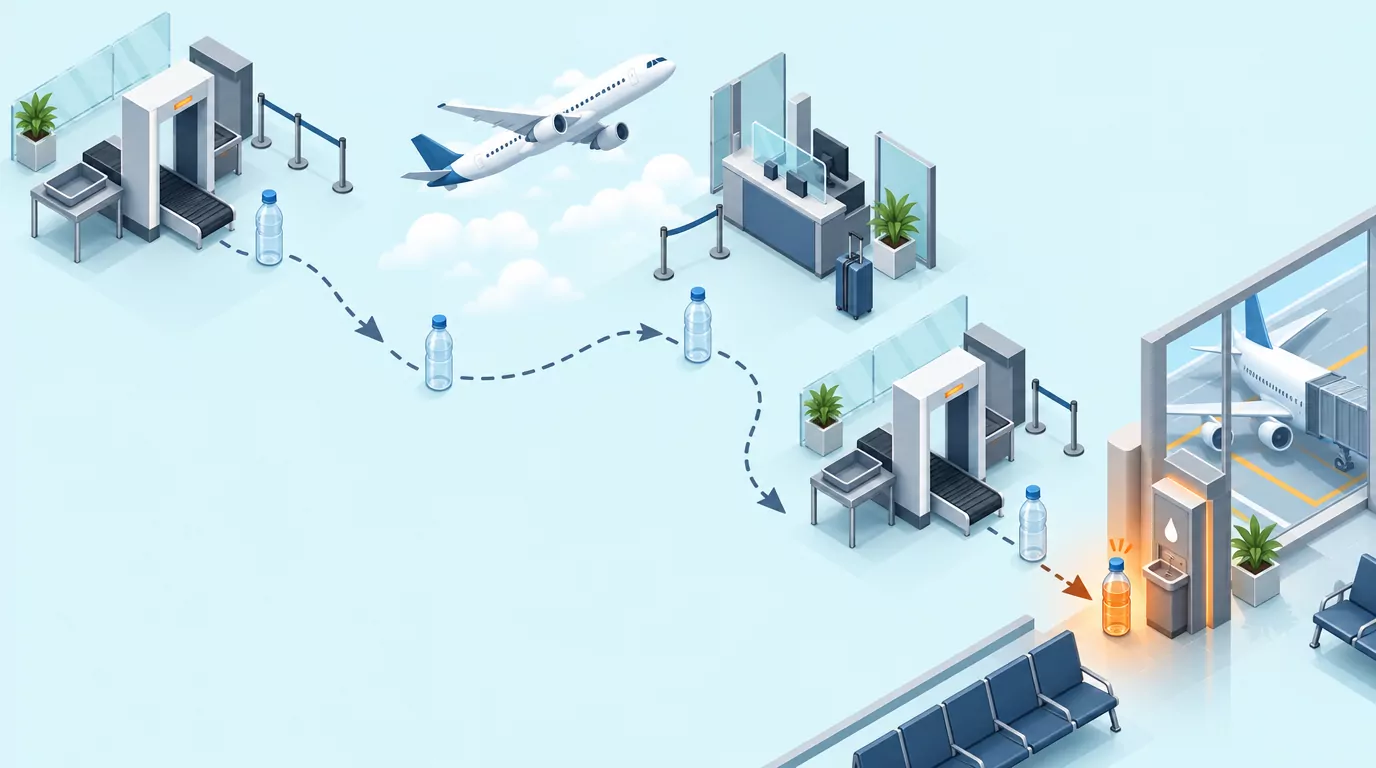
Where to refill after security
Once you are airside, you have a few options, though availability varies by airport:
- Bottle-filling stations and drinking fountains, which many airports mark on their terminal maps.
- Cafes and restaurants, many of which will fill a bottle if you ask.
- The cabin crew, once you are on board.
Water you buy or fill after the checkpoint can come on board, because it is already past screening. The exception is a route with a gate check (see the connections section).
Fixed points you pass anyway, like reaching the gate, make good refill cues, the same idea as in this guide on how to remember to drink water.
Air sealed in the bottle on the ground expands as cabin pressure drops after the climb, so open the lid slowly and point it away from you, especially with a straw or spout lid. If you open it in the air and close it again, a plastic bottle may crumple a little on descent as cabin pressure rises.
How much to drink once you are in the air is its own question, covered in this guide on whether flying dehydrates you. If you want a daily baseline before a travel day, the water intake calculator gives a personal starting target.
Will TSA PreCheck let you bring a full water bottle?
Not yet: a TSA PreCheck water bottle follows the same rule as everyone else's. As of October 24, 2026, tsa.gov has announced no change, and its PreCheck page still mentions 3-1-1 liquids.
On September 9, 2026, CBS News, citing senior administration officials, reported that TSA is actively considering letting PreCheck passengers bring water bottles through security at a select number of airports. It would start at airports with newer CT scanners that can tell water from other liquids, and no airports were named. CBS added that the 3-1-1 rule is still in effect and that TSA does not have those scanners at the scale needed nationwide.
USA Today reported the plan as under consideration two days later. So it is reported, not in effect. Until tsa.gov says otherwise, standard lanes, PreCheck lanes and every other liquid stay under the quart-bag rule, and the empty-bottle routine works everywhere.
Frequently Asked Questions
Can you bring a sealed water bottle through TSA?
No, not if it holds more than 3.4 oz. A factory seal changes nothing, so a sealed 16.9 oz (500 ml) bottle is still too big; TSA's Bottled Water page allows bottled water in carry-on bags only at 3.4 oz (100 ml) or less. Drink it before the line or buy one after security.
Did TSA change liquid rules in 2026?
No. As of October 24, 2026, tsa.gov still sets containers of 3.4 oz (100 ml) or less in one quart-size bag. The reported PreCheck water bottle plan, covered above, is not in effect.
Can you bring water on a plane for a baby?
TSA's traveling with children page treats formula, breast milk, toddler drinks and baby or toddler food over 3.4 oz as medically necessary liquids. They are allowed in carry-on bags and do not need to fit in the quart bag; tell the officer at the start of screening, and they may be tested. Plain water for mixing formula is not named on that page, so ask AskTSA before you rely on it.
Is a water bottle allowed in hand luggage?
Empty, yes in the US, under TSA's Empty Water Bottle listing. In the UK, gov.uk counts all drinks, including water, as liquids: most UK airports refuse containers over 100 ml even if only part full, some allow containers up to 2 litres, and frozen liquids are not allowed in hand luggage. Check the airport you fly from and every airport you pass through, including the return, and for EU airports, check the departure airport's own page.
Can you put water bottles in checked luggage?
Yes. TSA's Empty Water Bottle and Bottled Water pages both list Checked Bags: Yes, and TSA sends liquids over 3.4 oz there. Close the lid tightly and bag it in case of leaks, though water is heavy and easy to refill on arrival.
Fill up after the last screening, then count the bottle
If you track what you drink, two small habits keep a travel day honest. First, log each fill when you finish it, not when you fill it, so water poured out at a second screening never counts.
Second, save the bottle's size as a custom quick-add amount in ml or fl oz, so each refill is quick to log. In Water Goose, logging is three steps: choose a drink, swipe to the amount, then tap one clear button.
Water Goose is free to download and look around; saving drinks, editing your history, and changing your goal, units, or quick-add amounts need Water Goose Plus, sold as a monthly subscription or a one-time purchase. For the habit itself, this guide on how to track water intake keeps it simple.
This article is general wellness and travel information, not medical advice. TSA rules can change, so check tsa.gov before you fly.
If you would rather not keep a running total in your head on a travel day, Water Goose is on the App Store for iPhone and on Google Play for Android.