Does Flying Dehydrate You? Yes, and Here Is What Actually Helps
Does flying dehydrate you? Yes, it can, and dry air is a big part of it: at cruising altitude, cabin air is held at about 10 to 20 percent relative humidity, so each breath carries off more water than it would at home. Coffee if you are not a regular, alcohol, and the drinks you skip to avoid the aisle all add to it.
Does flying dehydrate you? Yes, it can, and dry air is a big part of it
Cabin air is dry on purpose. A 2020 review in the journal Nutrients explains that at cruise, moisture is removed from the air and humidity is held at about 10 to 20 percent, partly to protect the aircraft itself.
Your body warms and wets every breath before it reaches your lungs, and dry air needs more water for that job, so you lose a little more with every breath and a little more through your skin.
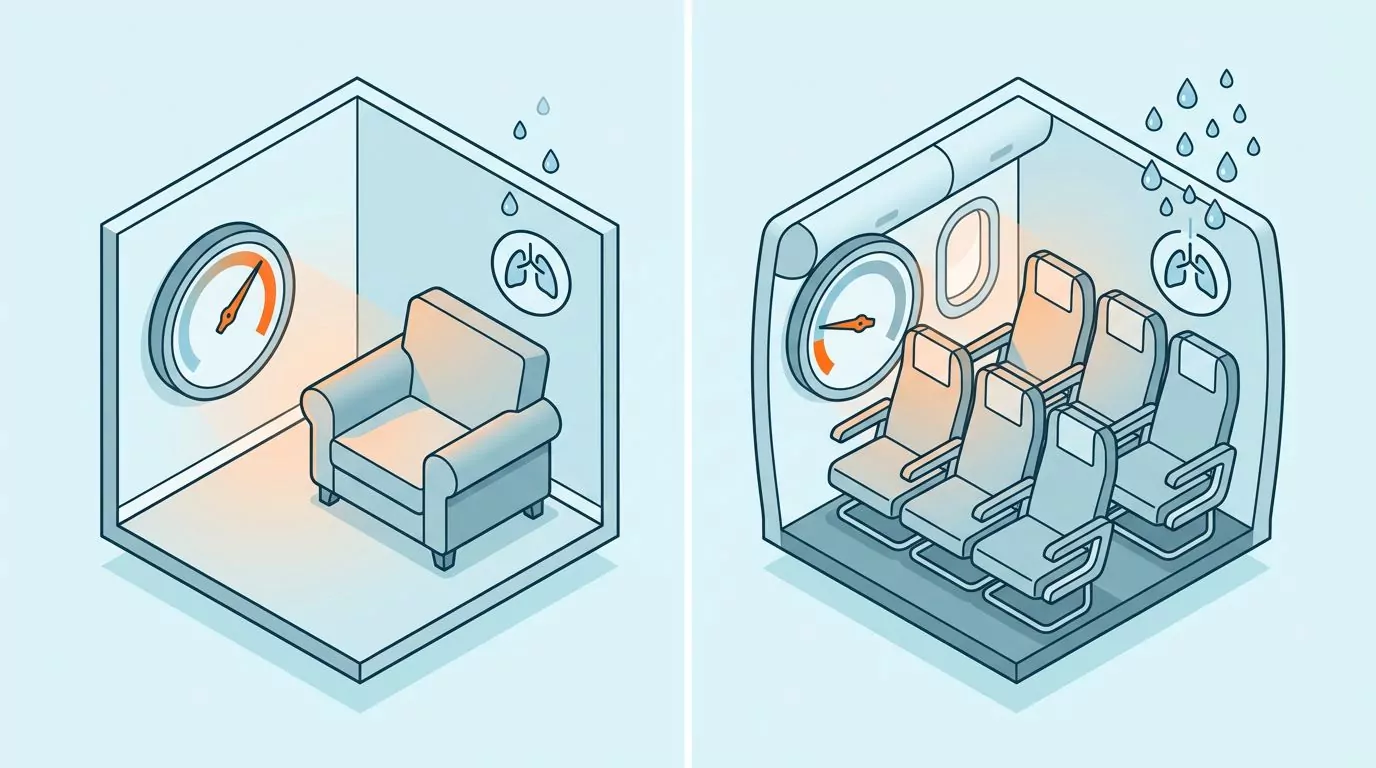
Lower cabin pressure and hours of sitting still play a part, but for hydration they are side notes. It is a stronger version of the dry indoor air covered in the guide to hydration in hot weather, and you cannot change it from seat 23C.
Why you land feeling wrung out
Dry air is only part of the story. The rest happens on the tray table, or does not happen at all.
- Dry air. You lose water through your breath and skin all flight, and you rarely notice it.
- Drinks that do not help much. Wine and spirits make you pass more urine. Coffee can too, if you do not usually drink it.
- Drinks you skip. Plenty of people turn down the cart so they will not have to climb over a stranger later. That is fair, and an aisle seat fixes it.
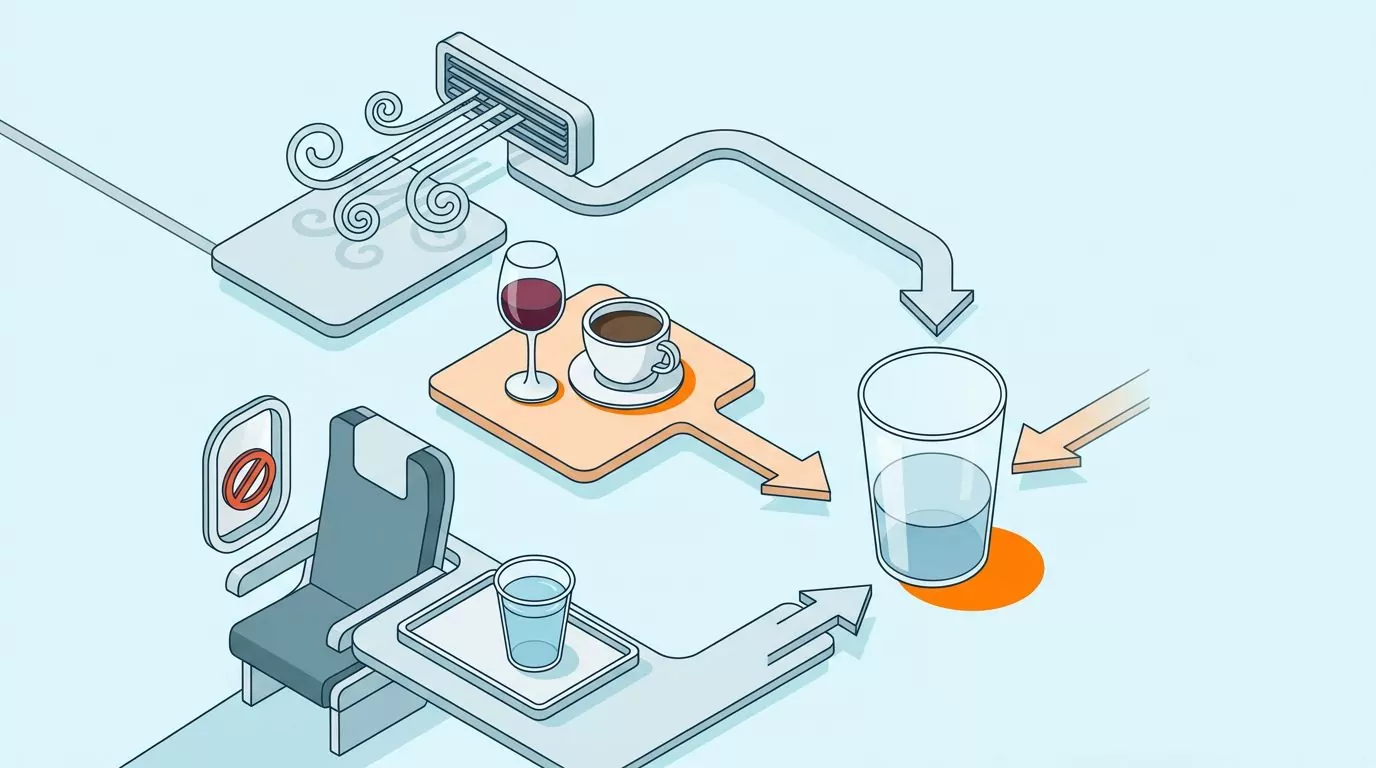
Skipped drinks are the easiest leak to fix. The habit tricks from how to remember to drink water work just as well at the gate as at a desk.
The result is usually mild: a dry mouth, a dull headache, and a tiredness that is hard to separate from the early start. The NHS page on dehydration lists the wider signs if you want the full picture.
How much to drink on a plane: realistic ranges
No single number fits every passenger, and it is worth saying why. The Nutrients review notes a lack of controlled trials on hydration and flying, so its advice rests on estimated losses and early findings. In plain terms, the evidence base is thin.
With that caveat, two figures are useful. The review suggests 100 to 300 mL per hour on long flights, counting fluid from food. The Aerospace Medical Association's travel health tips say to drink about 8 oz of water each hour, which is roughly 240 mL and sits near the top of that range.
For scale, 100 to 300 mL an hour over a 12 hour flight such as London to Tokyo comes to about 1.2 to 3.6 liters, food included. Most trips are shorter, so here is how the hourly range works out by flight length.
| Flight length | Example | Across the flight (mL) | Across the flight (US fl oz) |
|---|---|---|---|
| Under 3 hours | 2 hour hop | 200 to 600 | 7 to 20 |
| 3 to 6 hours | 4 hour afternoon flight | 400 to 1,200 | 14 to 41 |
| 6 hours plus | 8 hour day flight | 800 to 2,400 | 27 to 81 |
| Overnight | 9 hour flight with sleep | 900 to 2,700, mostly before and after you sleep | 30 to 91 |
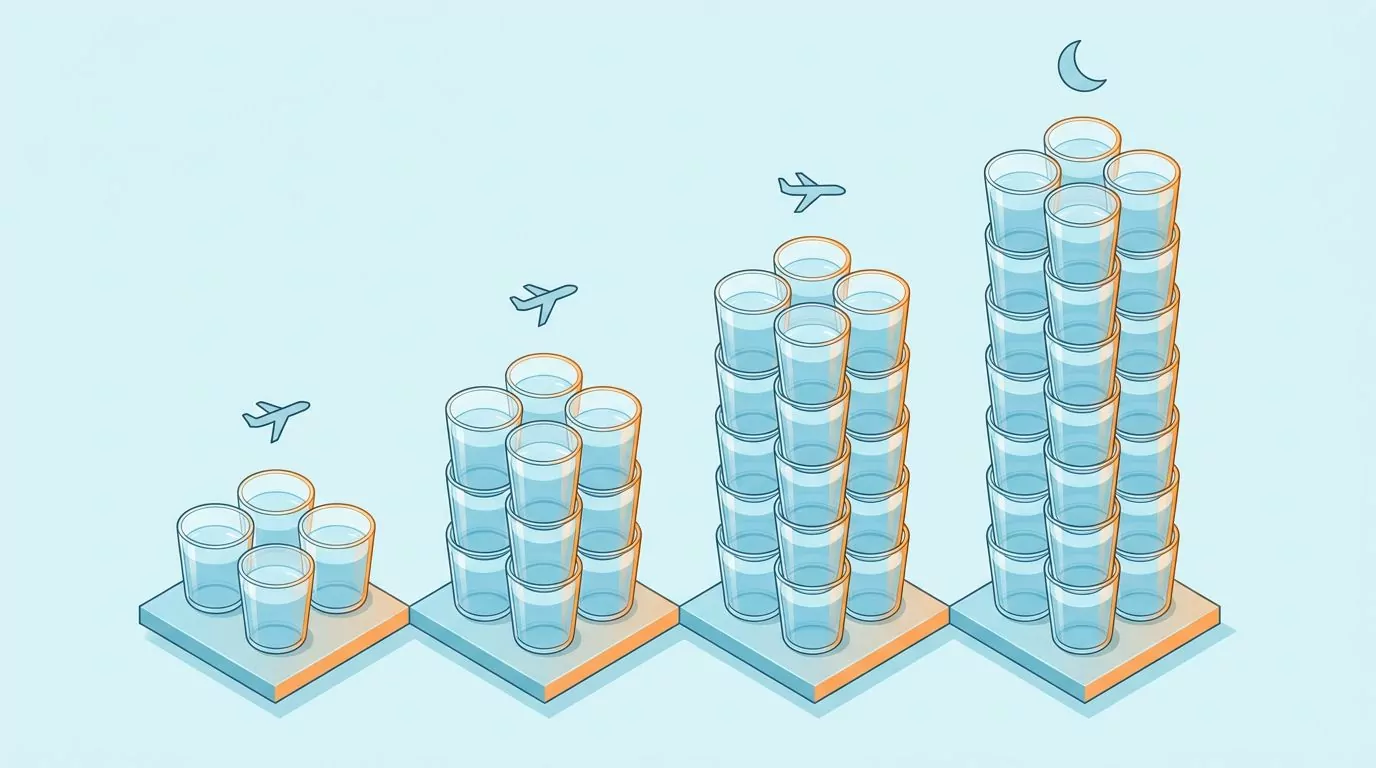
These totals include water from meals and snacks. Treat them as a sensible band, not a score, much like the 8 glasses a day rule is a rough guide rather than a law. The top of the band is plenty, and how much water is too much explains why more is not better.
For a baseline on an ordinary day at home, the water intake calculator is a better starting point than any in-flight rule.
A before, during and after plan that does not need a spreadsheet
This plan works for short hops and long hauls alike. Only the middle part gets longer.
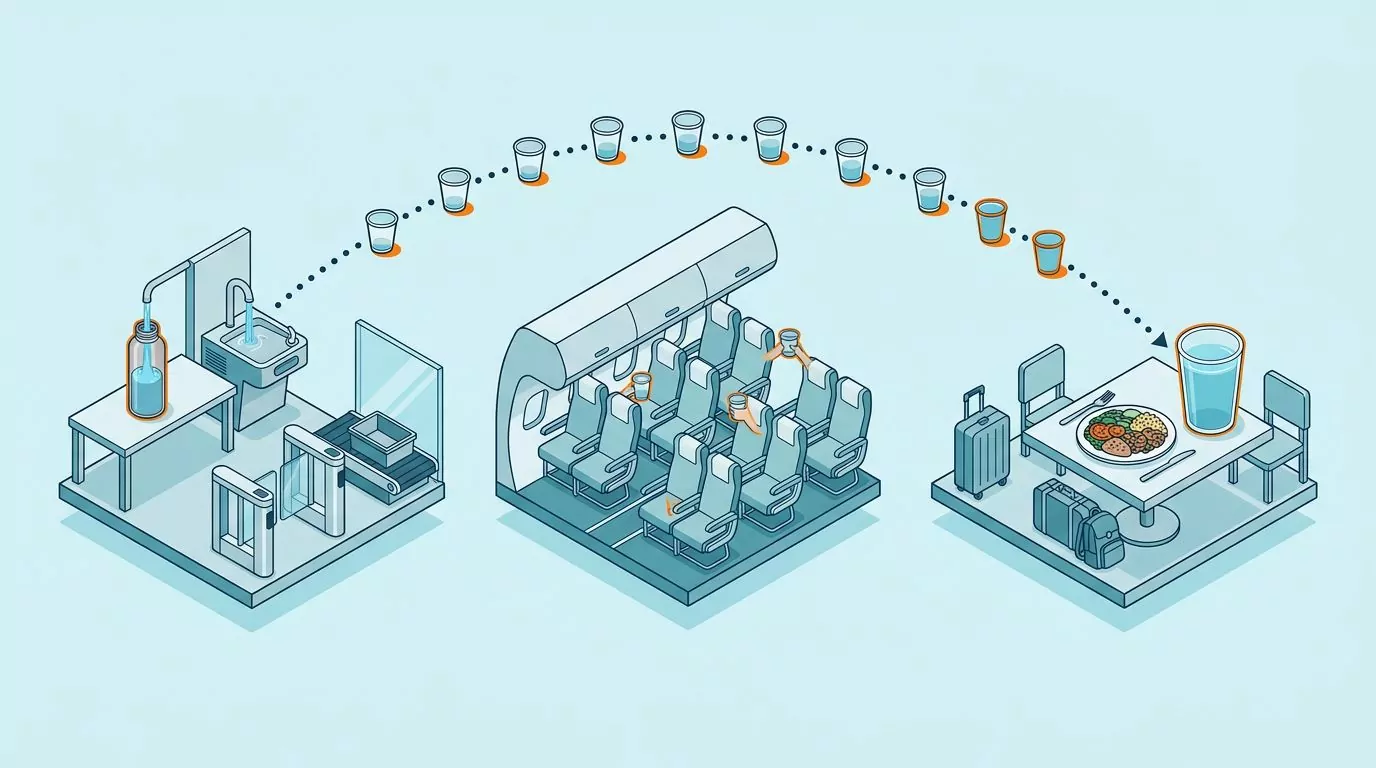
Before: start topped up, not flooded
Drink normally the day before and on the morning of the flight. There is no prize for downing a liter at the gate. Much of it leaves again, usually right as boarding starts.
Carry an empty bottle through security and fill it on the other side. That one habit does more than any clever trick.
Worked example, a 2 hour hop. Have your usual morning drinks, fill a 500 mL bottle after security, and aim to finish about half of it by landing. Add a cart drink if one comes, and you land inside the 200 to 600 mL band without thinking about it.
During: sip on a rhythm you can keep
Sipping beats chugging. Small amounts spread out are easier on your bladder and fit around the seatbelt sign. Take a drink every time the cart passes, plus one refill on longer flights.
When the cart comes, ask for the whole can or bottle instead of a small cup. It rarely hurts to ask, and it saves waiting for the next round.
Overnight flights need a tradeoff. The review recommends timing your drinks so they do not wreck your sleep, so front-load before you settle down and pick it up again when you wake. The same logic as drinking water at night applies at 35,000 feet.
Worked example, a 9 hour overnight. Sip steadily through boarding and the meal, roughly 250 mL an hour for the first two or three hours. Stop topping up about an hour before you plan to sleep.
When you wake, have a full drink with breakfast and keep sipping until landing. That puts you at roughly a liter or a little more, at the lower end of the band, with fewer trips down the aisle in the dark.
After landing: the first two hours
Have one proper drink when you land, then eat a meal. Food brings water and a little salt with it, which helps the fluid stay put. After that, get on with a normal day.
If you landed well behind, pace it rather than chase it. The guide to how to hydrate faster explains why steady sips beat one big bottle. For a quick check, the urine color chart beats guessing.
What to drink and what to go easy on
Most drinks count. Water, sparkling water, tea, juice, milk and soup all add to your fluid for the day. The hydration data for 13 drinks shows how close most of them sit to plain water.
Coffee counts if you drink it daily. The Nutrients review notes that for travelers used to caffeine, a total of 300 mg or less had minimal adverse effects. If you are not a regular, it suggests skipping it, since caffeine may make you pass more urine and disturb your sleep.
The everyday version is in does coffee count towards water intake.
Go easy on alcohol. A glass of wine with dinner will not ruin anything. Several drinks in dry air, followed by patchy sleep, is how people land feeling rough.
Electrolytes are optional. On an ordinary flight, water plus the meal covers it. A drink with some salt can make sense after a long travel day with little food, but you do not need any product or powder.
Logging drinks on a travel day
Travel days break routines, which is when a simple log helps most. Water Goose keeps a daily total against a daily target, shown as a filling ring, plus a calendar-like history of daily totals, goal completion and streaks. It all lives on your device, with no account needed.
On a flight day, the rule is short: log each drink as you have it, in the matching preset. Water, sparkling water, coffee, tea, juice and soup each have one.
Do not edit your history or change your goal to make a flight "count". If a streak breaks, that is fine. The goose has seen worse.
Worked example, a 4 hour afternoon flight. Log the coffee at lunch, the bottle you fill after security, and the juice from the cart as each one happens. By landing, the ring shows roughly where you are, and dinner fills in the rest.
Reminders are optional. You choose your active hours and how often they come, allow notifications, and they are scheduled locally on the device.
Frequently Asked Questions
Why do you get dehydrated on a plane?
Mostly because cabin air at cruise is very dry, about 10 to 20 percent humidity, so you lose more water with each breath. Skipping drinks to avoid the aisle and having alcohol, or coffee you are not used to, adds to it. Lower pressure and sitting still play a smaller part.
How much water should you drink on a plane?
A sensible band is 100 to 300 mL per hour including food, which the 2020 Nutrients review gives for long flights, or about 8 oz an hour for any flight from the Aerospace Medical Association. For a 4 hour flight, that is roughly 400 to 1,200 mL. The research behind both numbers is limited, so treat them as a guide.
Does coffee dehydrate you on a plane?
Not much if you drink coffee every day: for regular drinkers, the review notes that 300 mg of caffeine or less in total had minimal adverse effects. If you are not a regular, skip it, especially before you sleep, and go easy on alcohol too. The caffeine calculator can help you time your last cup.
Do electrolytes really help on long flights?
They can, but you do not need them on most flights. On the ground, research on sports drinks versus water found almost no gap in people at rest. Two small flight studies in the Nutrients review found electrolyte and carbohydrate drinks held on to fluid a little better than water, so one can make sense on a very long flight, but water plus the meal covers most trips.
What are the symptoms of dehydration after flying?
The usual ones are a dry mouth, a headache, and feeling more tired than the trip explains. They tend to ease once you drink and eat normally. If you feel properly unwell, speak to a healthcare professional.
How do you stay hydrated on a long flight?
Drink normally before you fly, fill a bottle after security, and sip on a steady rhythm instead of chugging. Take every cart drink and ask for the whole can. On overnight flights, drink more before you sleep and after you wake, then eat a proper meal once you land.
The goose's one-line takeaway
Fill a bottle past security, sip steadily, eat when you land, and let a broken streak be a broken streak.
This article is general wellness information, not medical advice, so if you have a health condition or take medication that affects your fluids, ask a healthcare professional what suits you.
If you want a calm way to see what you actually drank on a travel day, Water Goose is available for iPhone on the App Store. It keeps your log on your device and skips the lecture.