How Many Water Bottles Should I Drink a Day? It Depends on the Bottle
How many water bottles should I drink a day? The answer depends on two separate things: how much fluid you are aiming for, and how much your bottle holds. Most advice only tackles the first, so this guide handles the second and turns a daily target into a count of fills for the bottle you actually own.
How many water bottles should I drink a day? The short answer
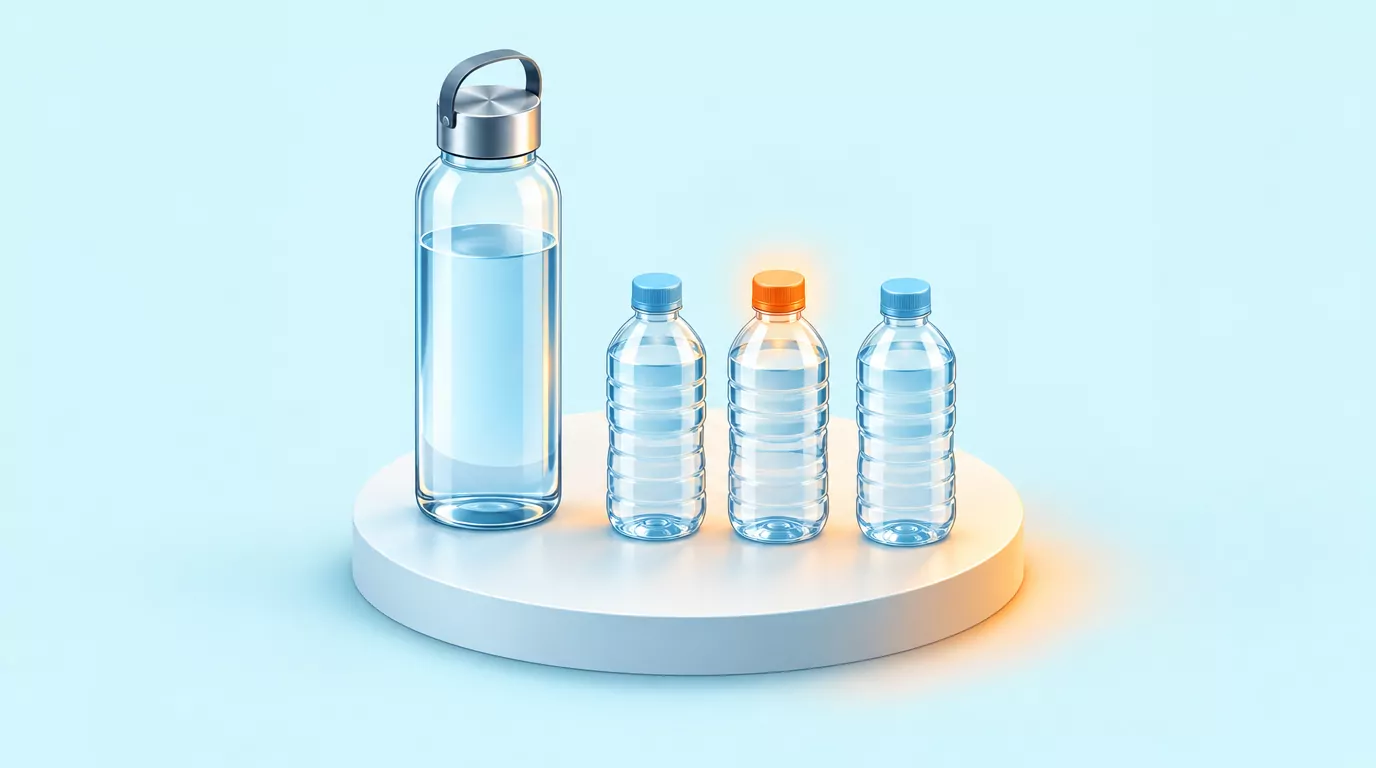
There is no single number, but a common general figure is about 3 litres (13 cups) a day from drinks for adult men and about 2.2 litres (9 cups) for adult women. That is about 6 and 4.4 standard 16.9 oz (500 ml) bottles. Coffee, tea, milk and soup count toward it.
Those figures trace back to the US National Academies, whose headline numbers are bigger. The National Academies water report puts adequate total water at about 3.7 litres (125 oz) a day for men and 2.7 litres (91 oz) for women. But "total water" includes the water in food, which the same report puts at about 20 percent.
Take that food share out and you reach the drinks figure. The Harvard Nutrition Source gives it as about 13 cups a day for men and 9 cups for women, or roughly 104 and 72 oz. Every bottle count in this guide uses that drinks figure, so food is already set aside.
You will see bigger counts elsewhere. Pages that divide the full 3.7 and 2.7 litre totals by a 16.9 oz bottle reach 7 to 8 bottles for men and 5 to 6 for women. The maths is fine, but it counts the water in your dinner as if you had to drink it.
These are general figures for healthy adults, not a daily exam. The same report notes that most healthy people meet their needs by letting thirst be their guide.
Measure the bottle you actually own
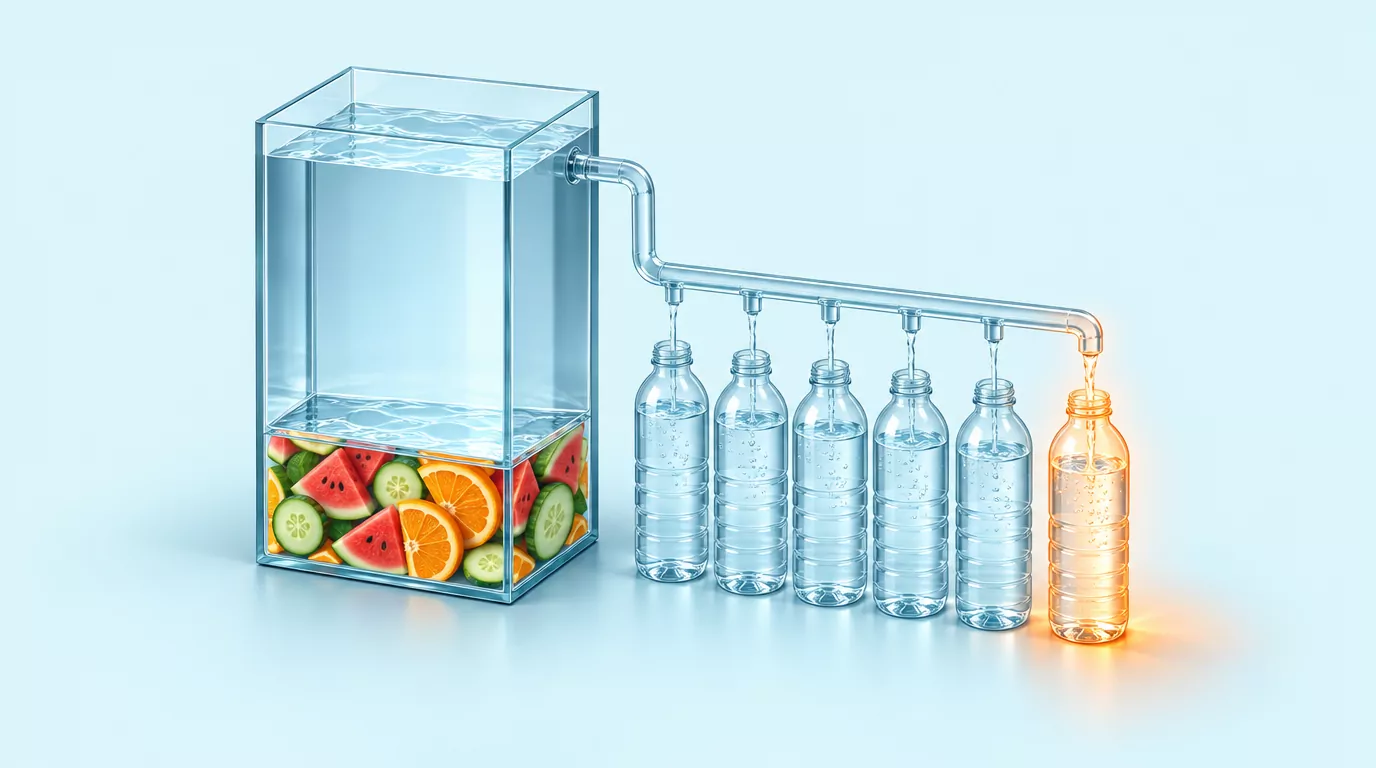
Before any table can help, you need one number: what your bottle holds. Check the label or the base first. Many single-serve bottles in US stores are 16.9 oz, which is 500 ml, but reusable bottles vary far more.
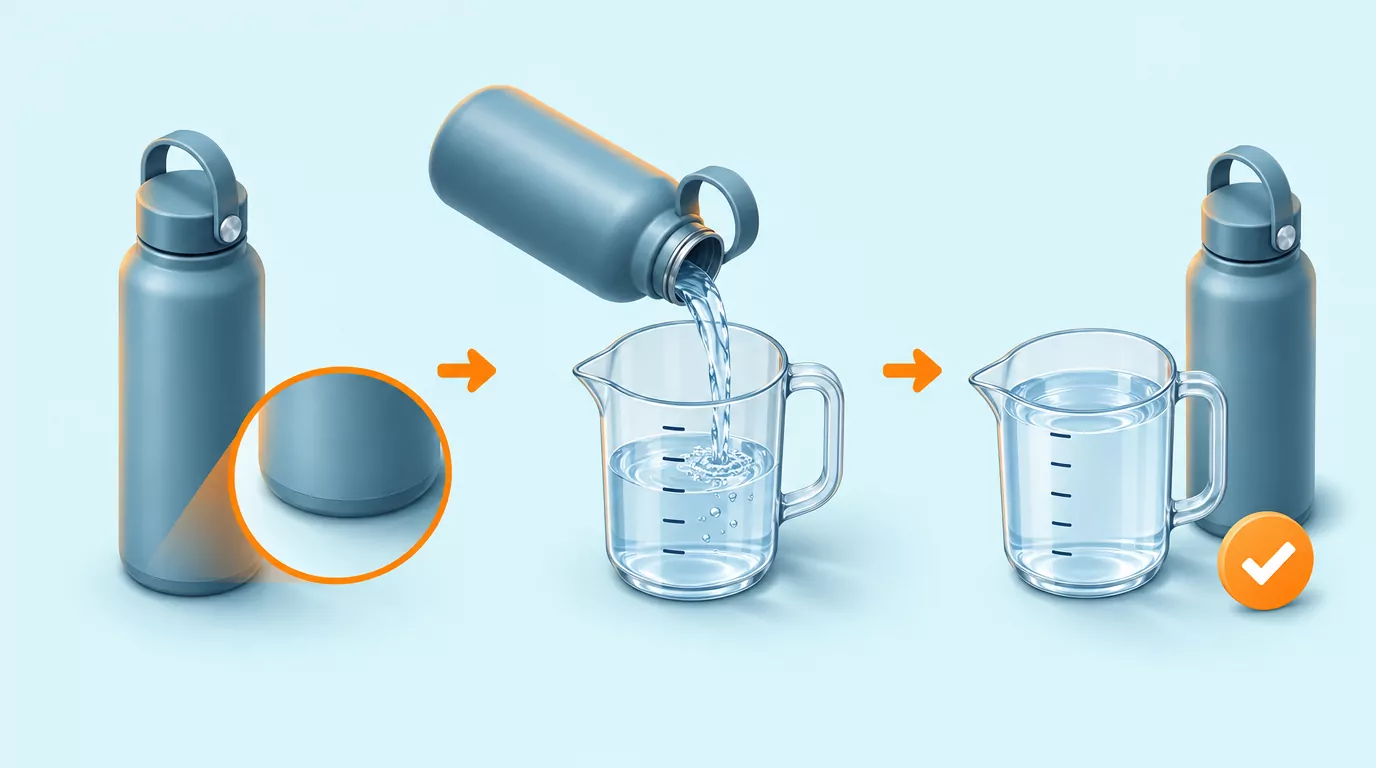
If a reusable bottle has no marking, measure it once. Fill it the way you normally do, pour it into a measuring jug, and note the number in ounces or millilitres. It is the same one-minute job as measuring a glass, which how many oz in a glass of water walks through step by step.
Fill level matters more than people expect. If you always leave room at the top for ice, a 32 oz bottle might really give you closer to 28. Measure the fill you drink, not the capacity printed on the box.
How many water bottles a day for common targets
Once you know your bottle size and your target, the maths is one line. Divide your daily target by your bottle size, with both in ounces or both in millilitres. The answer is how many bottles a day you need.
The table below does it for four common targets and six common bottle sizes. Each cell is rounded to the nearest quarter bottle, because nobody measures a fill to the drop.
| Daily target | 16.9 oz (500 ml) | 20 oz | 24 oz | 32 oz | 1 L (33.8 oz) | 40 oz |
|---|---|---|---|---|---|---|
| 48 oz (about 1.4 L) | 2.75 | 2.5 | 2 | 1.5 | 1.5 | 1.25 |
| 64 oz (about 1.9 L) | 3.75 | 3.25 | 2.75 | 2 | 2 | 1.5 |
| 80 oz (about 2.4 L) | 4.75 | 4 | 3.25 | 2.5 | 2.25 | 2 |
| 100 oz (about 3 L) | 6 | 5 | 4.25 | 3 | 3 | 2.5 |
If your target falls between rows, pick the nearer one or do the one-line division yourself. A target in litres works the same way: a 2.5 litre goal with a 500 ml bottle is five fills.
How much is 64 oz of water?
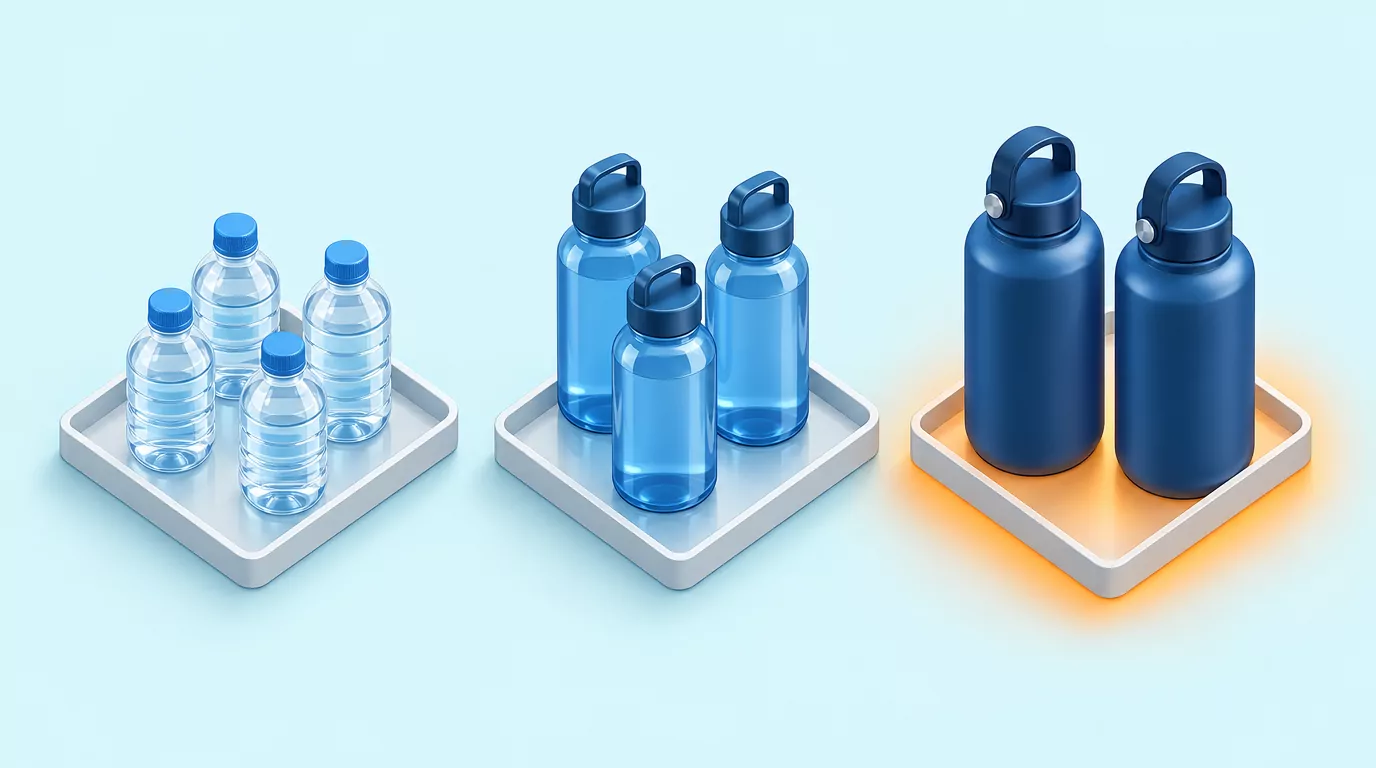
64 oz is eight 8 oz cups, half a US gallon, or about 1.9 litres. In bottles, it is about 3.75 standard 16.9 oz bottles, so just under four, or exactly two 32 oz bottles. That makes the 32 oz bottle a popular choice for this target: one before lunch, one after.
It is a common starting point because it matches the old eight glasses habit, not because anyone prescribed it. The 8 glasses of water a day rule has a shakier history than its fame suggests.
Two worked examples
- A 24 oz bottle and an 80 oz goal. 80 divided by 24 is 3.3, so three full bottles plus a third of one. In practice, three bottles plus a morning coffee and an afternoon tea gets you there, because those drinks count too.
- A 1 litre bottle and a 2 litre goal. Two fills, done. A metric goal paired with a metric bottle is the friendliest maths in this whole article.
Notice that neither example ends with "drink exactly 3.33 bottles". The table gives you a number to aim at. The rest of the day fills the gaps.
Where your own number comes from
This guide counts bottles for a target you already have. It does not try to set that target, because the general figures above are averages, and you are not an average.
For a personal starting point, try the Water Intake Calculator: enter your weight, activity and climate to get a personal hydration target in oz, mL, L, cups and bottles. Then bring that number back to the table above.
Three things move the number most: body size, activity and heat. A long walk on a hot afternoon changes your day more than any rounding in this table, and hydration in hot weather covers what to adjust when it is warm.
Other drinks count toward the bottles
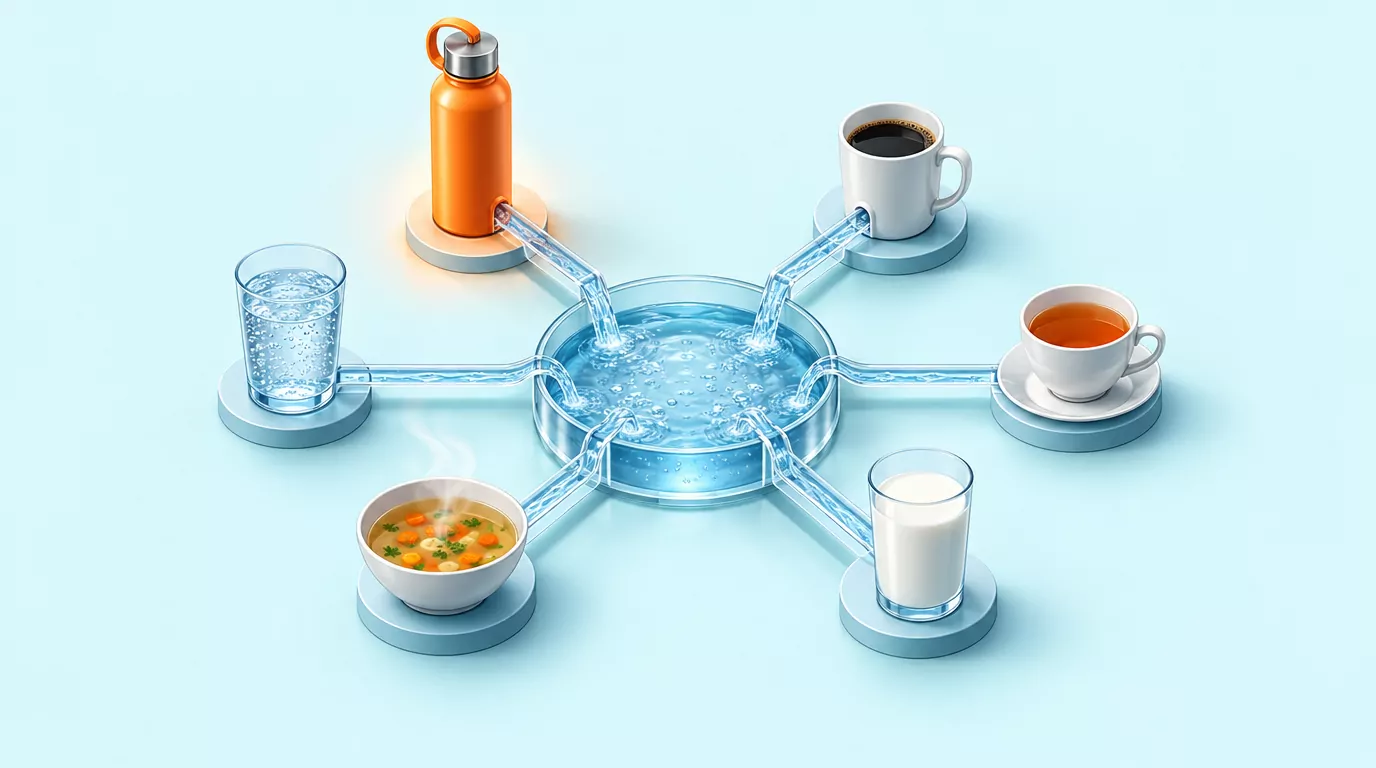
Your bottle does not have to carry the whole day. The NHS guide to water and drinks suggests 6 to 8 cups or glasses of fluid a day. It says water, lower-fat milk and lower-sugar drinks, including tea and coffee, all count.
The National Academies panel reached the same view on caffeine: caffeinated drinks can help meet daily needs just as well as other drinks. So a morning coffee, a cup of tea, a glass of milk, a bowl of soup and a can of sparkling water all chip away at the total. If coffee is the drink you worry about, does coffee count towards water intake clears up the diuretic question.
One thing not to do is subtract food a second time. The drinks figure already sets aside the roughly 20 percent that food provides, so a big salad does not shrink your bottle count again. If you are curious what food really adds, How Much Water Is in Food? USDA Data for 32 Foods lists water content per 100 g and per real serving.
For how other drinks stack up against plain water, see The Most Hydrating Drinks, Ranked: What Beats Water?, which ranks thirteen drinks by how much fluid you keep.
Counting bottles in Water Goose
A table works once. Counting fills in your head every day is where it falls apart, usually around the third bottle and the second meeting.
Water Goose takes the division off your hands:
- Set your goal in ml or fl oz. Onboarding suggests a general wellness starting point from your age, height, weight and gender, or you can pick your own number.
- Save your bottle as a custom amount. Say it holds 24 oz. From then on, logging it means picking the drink, choosing the saved amount and confirming. No mental maths.
- Log the other drinks too. Presets cover coffee, tea, milk, soup and sparkling water, so the whole day adds up in one place.
- Glance at your history. A calendar-like view shows daily totals, goal completion and streaks.
Reminders are optional. If you want them, you choose your active hours and how often, and they are scheduled locally on your device.
Your entries stay on the device too, and no account is needed. For other ways to keep count, how to track water intake compares five methods side by side.
Frequently Asked Questions
Is 2 water bottles a day enough?
It depends on the bottle: two standard 16.9 oz bottles come to 33.8 oz, or 1 litre, while two 32 oz bottles come to 64 oz. That is a big gap for the same "two bottles". Coffee, tea, milk and other drinks add to either total, so compare your whole day with your own target rather than counting bottles alone.
Is 3 water bottles a day enough?
Same logic, bigger numbers: three standard bottles are about 50.7 oz (1.5 litres), and three 24 oz bottles are 72 oz. Whether that is enough depends on your target, your day and the weather. The other drinks you have count toward it as well, so three bottles is rarely the whole story.
How many 32 oz bottles of water a day?
Per the table: two for a 64 oz target, two and a half for 80 oz, and just over three for 100 oz. A 32 oz bottle holds about 946 ml, so two of them come to roughly 1.9 litres. If your target is set in litres, divide it by 0.95 for a quick count.
Can I drink my bottles all at once?
Spreading them out is simply easier. A bottle in the morning, one around lunch and one in the afternoon fits how thirst works across a day, and it avoids the evening catch-up. Very large amounts in a short time are a different matter, which how much water is too much explains calmly.
What if my goal is a gallon a day?
A US gallon is 128 oz, about 3.8 litres, which sits above the general figures in this guide. If that is still your goal, How Many Water Bottles Are in a Gallon? (Every Bottle Size) gives the exact count for any bottle you own.
The bottom line on bottles
Pick a target, measure your bottle once, and divide. For many adults, the general drinks figures work out to roughly four to six standard bottles a day, fewer with a bigger bottle, and every coffee and tea chips in.
This is general wellness information, not medical advice; if a clinician has given you a fluid target or limit, follow theirs.
If you would rather not do the division every day, Water Goose is on the App Store for iPhone and on Google Play for Android. Save your bottle once, log it in three quick steps, and let the history do the counting.