Does Water Expire? No, but the Bottle and Where You Keep It Matter
Water itself does not expire. Sealed bottled water keeps for a long time somewhere cool and dark, and the printed date is mostly about taste and packaging. Storage is what changes things: treat an opened bottle as a today drink, and keep cases out of the heat, which mainly affects taste and the plastic.
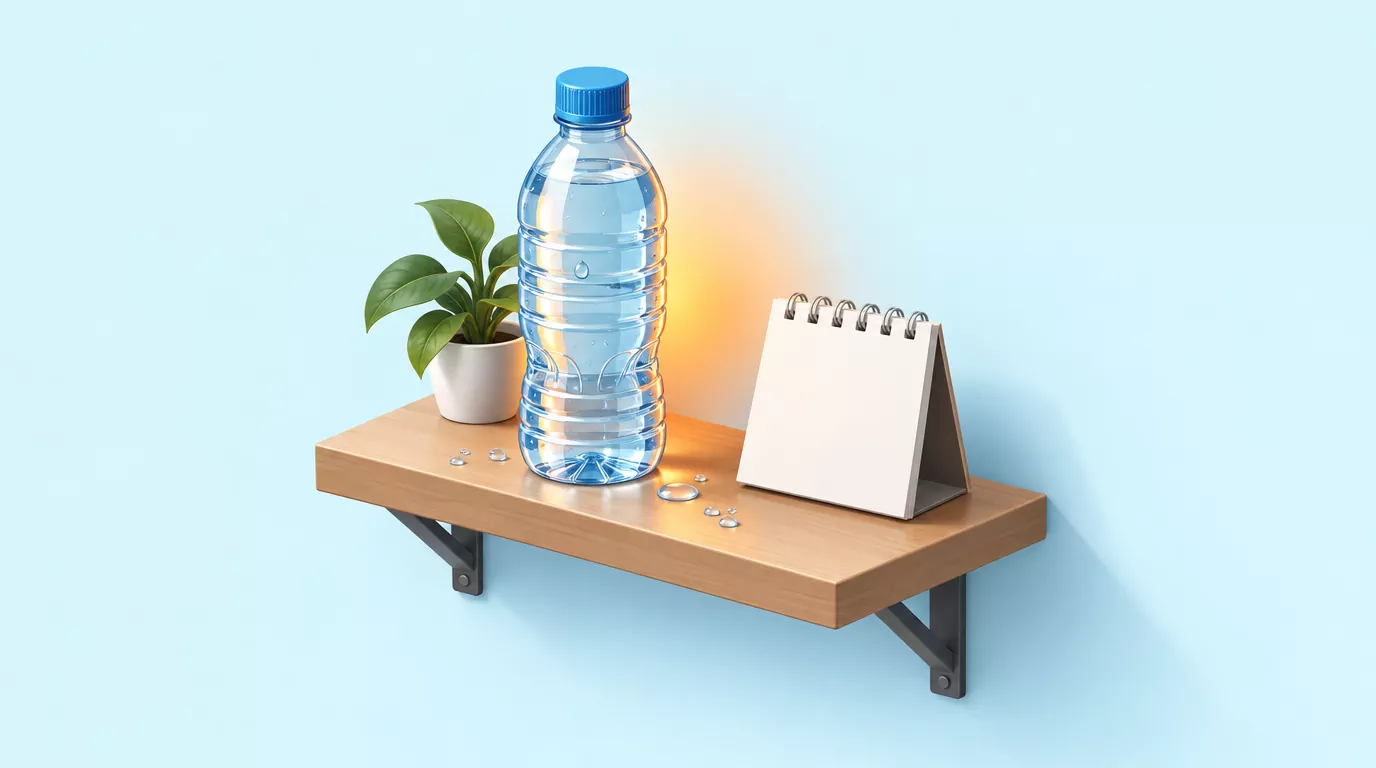
So, does water expire? The question usually comes with a specific bottle attached: yesterday's desk bottle, the one rolling around the car, or the case at the back of a cupboard. Each has a slightly different answer, and none of them call for panic.
Does water expire? Water does not go off, storage does
Water has no ingredients that spoil the way milk or bread does. A sealed bottle of plain water does not sour, ferment or grow mold on its own. What changes over time is everything around it.
Three things do the work. The container can pass tiny amounts of material into the water, and temperature speeds that up. Additions, from your own sips to flavorings and vitamins, give the water something that can change.
The water is rarely the problem. The real question is what happened to the bottle after it was filled.
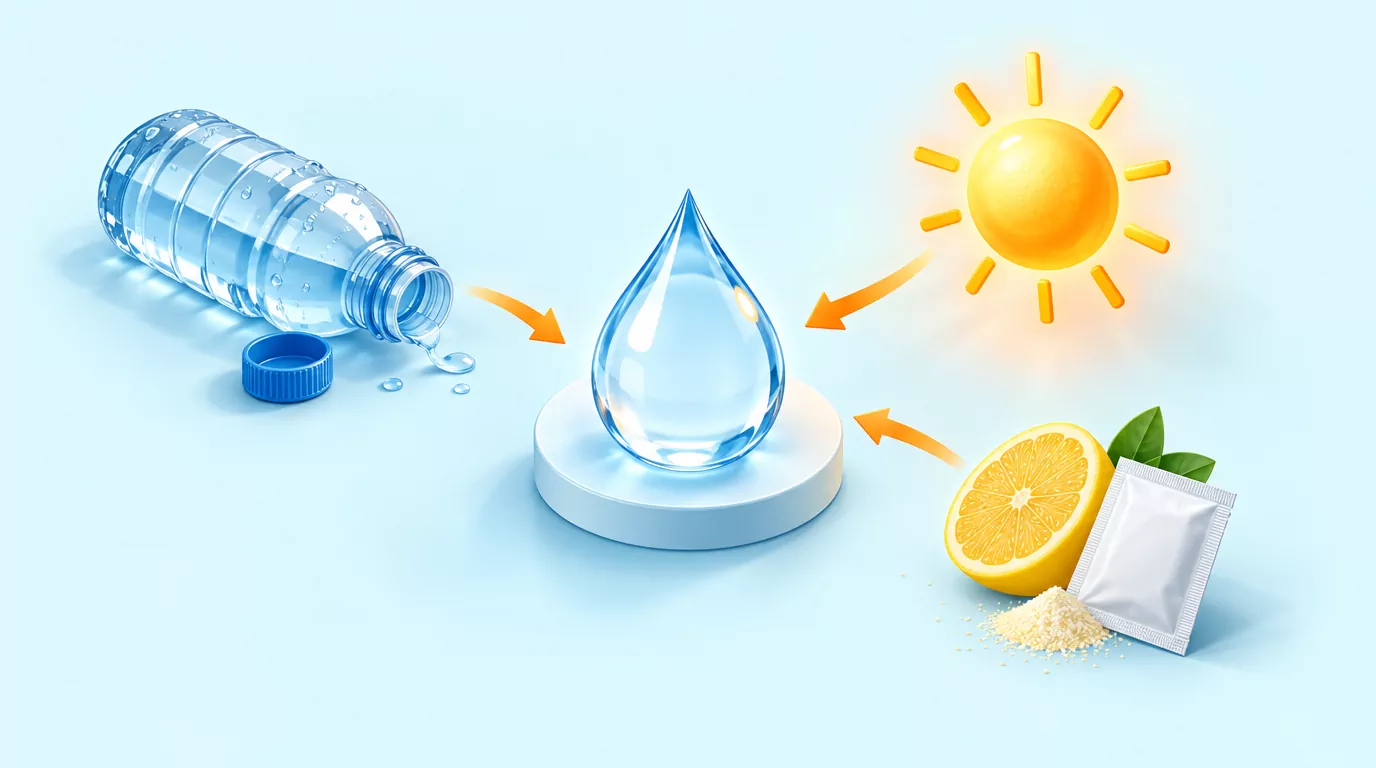
Does bottled water expire? Why sealed bottles carry a date
Most bottled water carries a best-by date. That bottled water expiration date is the bottler's estimate of how long the water will taste the way they intended while the packaging holds up. It is a quality date, not the moment the water turns.
Oregon State University's guide to storing emergency water makes the same point: taste changes over time, so follow the best-by dates on store-bought water.
So how long does bottled water last? Sealed and kept cool, a long time. Ready.gov's advice is to store commercially bottled water sealed in its original container in a cool, dark place, which is the whole recipe for a bottle that ages well.
Is it OK to drink bottled water past its best-by date?
Plain water a little past its date is not milk past its date. If the bottle has stayed sealed somewhere cool, check it the obvious way: it should look clear, smell of nothing and taste like water. If it fails any of those, pour it away.
For a stockpile, give the date more respect. The CDC's emergency guidance says to observe the expiration date for store-bought water. In a cupboard full of cases, the date doubles as a rotation reminder: use the oldest first and replace as you go.
When the printed date matters more
Flavored and vitamin waters are a different product. The FDA notes that some are simply bottled water with flavoring, while others also contain added vitamins, electrolytes and amino acids. Once a bottle holds more than water, it makes sense to follow its date as you would on any soft drink.
Opened bottles and refills
How long can you leave water in a water bottle?
Once the seal breaks, the water is no longer on its own. Every sip leaves a little of your mouth behind, hands touch the rim, and warmth lets whatever got in multiply. It is the same water, now sharing a bottle with you.
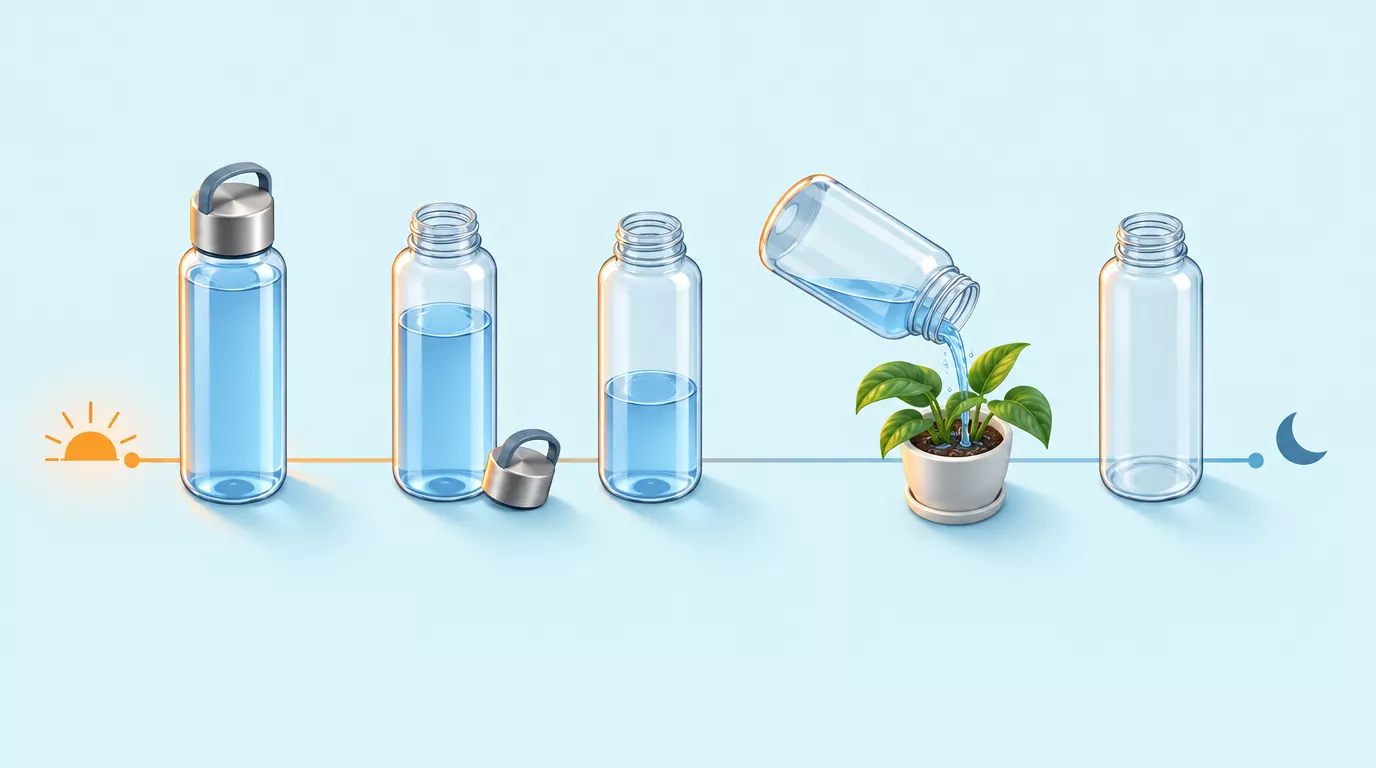
Rather than chase an exact hour count, treat this as a habit, not a safety line. An opened bottle is a today drink: finish it, or tip it out by the end of the day. That is the simplest answer to how long opened bottled water is good for.
The same goes for glasses. If you keep one by the bed for drinking water at night, pour a fresh one each evening rather than topping up the last one.
Topping up versus refilling
Topping up a half-empty bottle feels efficient. It also means the bottom of the bottle never really leaves, so whatever got in on Monday is still there on Thursday. Empty it, wash it and refill it instead.
Heat, sun and hot cars: can bottled water go bad in heat?
Heat and sunlight mostly change two things. Water that has sat warm in a plastic bottle can pick up a taste of the bottle. Heat also speeds up the small amount of material that moves from the plastic into the water.
The best measured example is antimony, which is present in PET, the plastic most single-use water bottles are made from. A 2008 study by Westerhoff and colleagues at Arizona State University tested bottled water sold in Arizona and found antimony well below the EPA's drinking water limit of 6 parts per billion. Over three months at room temperature, the levels did not change in any meaningful way.
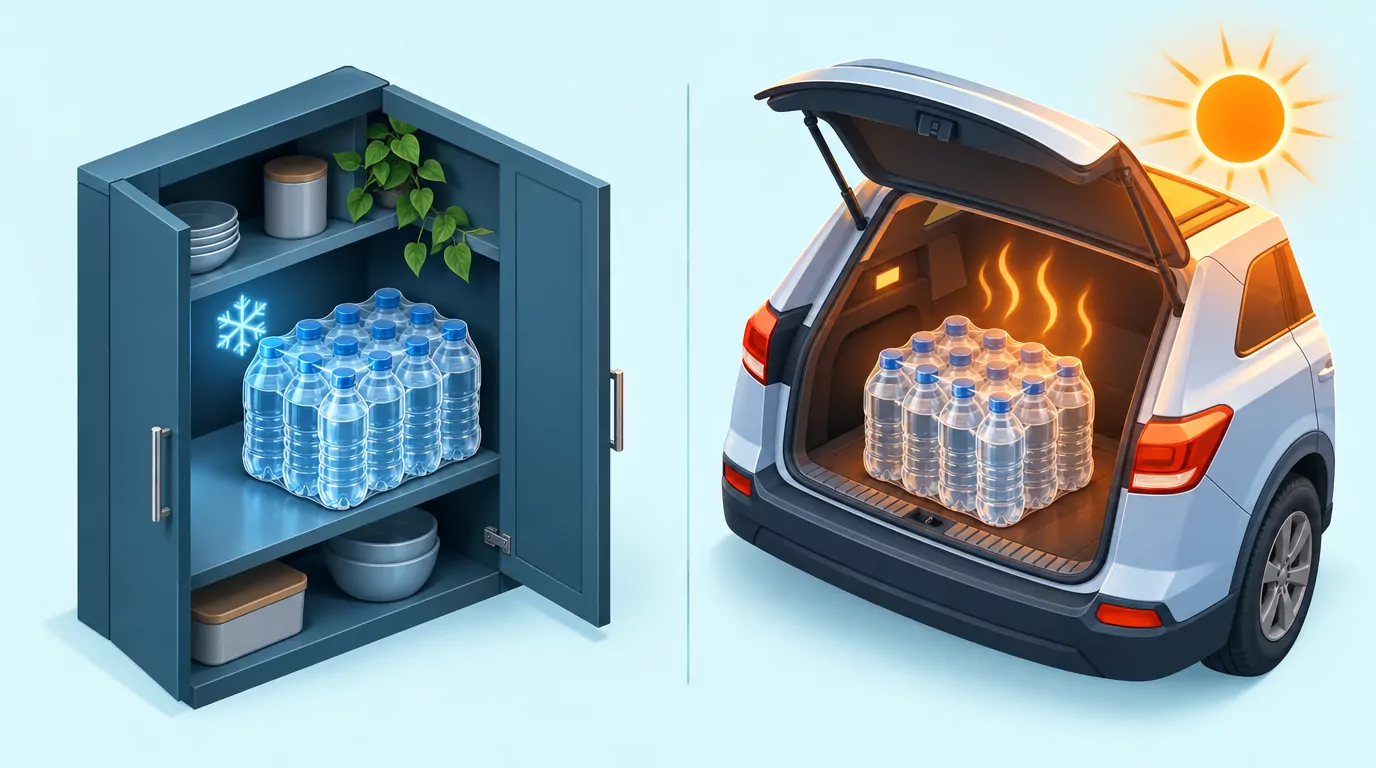
Release only sped up with long spells of high heat. In the study's model, water held at a constant 60°C (140°F) took 176 days to pass the limit, and the authors note that cars and garages in an Arizona summer can get that hot. So a case that spent one hot afternoon in the car is mainly a taste issue, while a case that lives in the trunk all summer should move indoors.
For the wider picture, a peer-reviewed review of research on PET bottles found three substances clearly linked to migration from the bottle into water: antimony, acetaldehyde and formaldehyde. It also found that studies often disagree, largely because they used very different methods and test conditions.
Microplastics get plenty of headlines too. The World Health Organization's 2019 review concluded that, based on the limited information available, microplastics in drinking water do not appear to pose a health risk at current levels, and called for more research.
In a heatwave, the more useful question is usually how much to drink, which the guide to hydration in hot weather covers.
Four everyday bottles, four answers
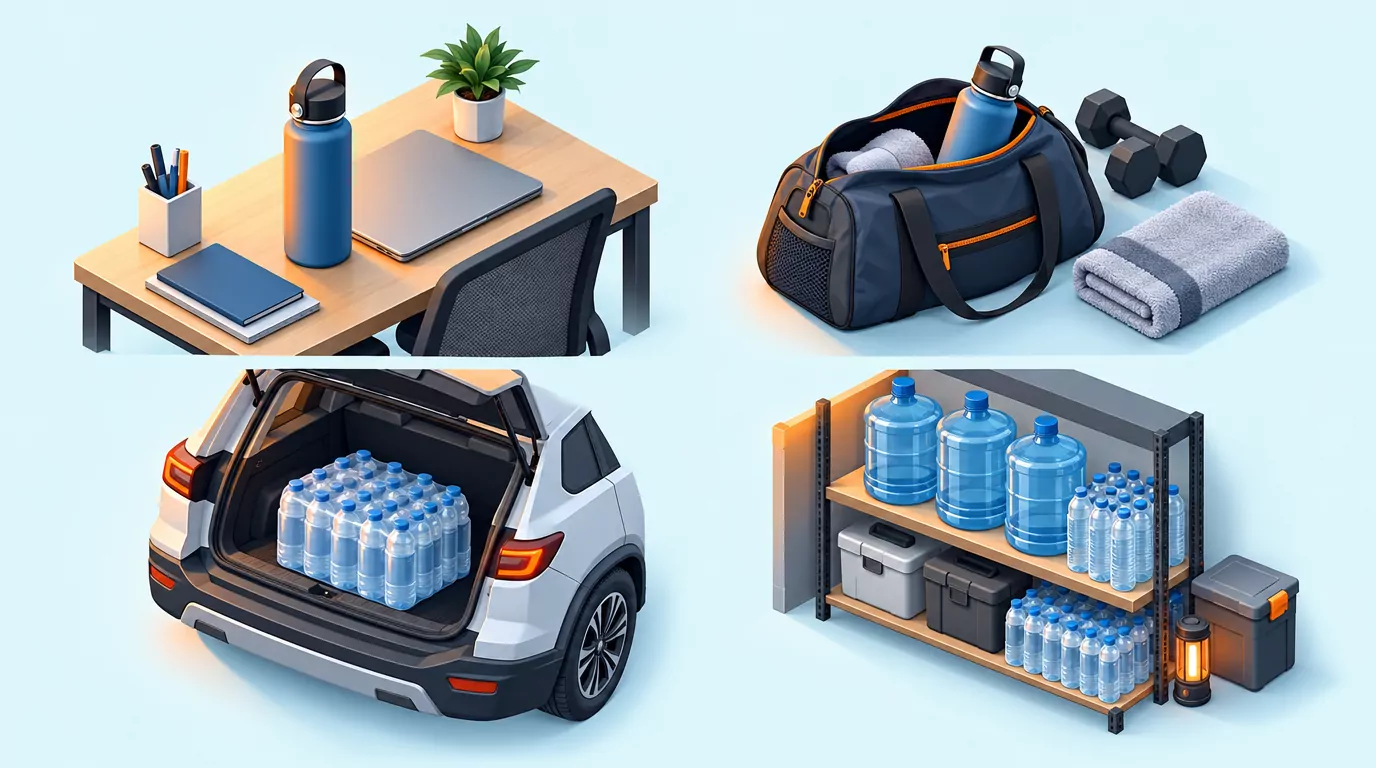
Most questions about stored water come down to one of four bottles.
| Scenario | What has happened | What to do |
|---|---|---|
| Desk bottle left overnight | Opened and sipped from, then left with the lid on at room temperature for a night. | Finish it today, or tip it on a plant and refill. Give it a wash before the next fill. |
| Gym bag bottle | Warm, sipped from, and possibly a few days old after riding around in a closed bag. | Empty it, wash it and refill it. Do not top it up. |
| Case in the car trunk | Still sealed, but heated and cooled again and again. This is the classic water bottle left in a hot car. | Move it somewhere cool. Short warm spells mainly affect taste, while long hot spells speed up what the plastic releases, as the Westerhoff study measured. |
| Emergency supply | Sealed, in a cool, dark cupboard away from chemicals. | Check the dates and use the oldest first. Replace water you bottled yourself every six months. Plan on at least one gallon per person per day. |
The emergency row follows official guidance on emergency water storage. Ready.gov says to store at least one gallon of water per person per day for several days, and to replace water that was not commercially bottled every six months. The CDC suggests at least three days' worth, a two-week supply if possible, and for water you store yourself, a spot at 50 to 70°F, out of direct sunlight and away from toxic substances such as gasoline or pesticides.
To turn gallons into something you can actually buy, the water bottles in a gallon calculator lets you pick any bottle size and volume and get the exact count.
How to tell if stored water is off
Your eyes and nose do most of the work here. Pour stored water into a clear glass and check it before you drink. Tip it out if you notice any of these:
- Cloudiness in water that should be clear.
- Floating bits, or anything settled at the bottom.
- A green tint, especially in bottles kept in the light.
- A musty, plastic or chemical smell.
- A taste that is anything other than plain water.
When in doubt, pour it on a plant and open a fresh bottle.
A refill routine that keeps water fresh
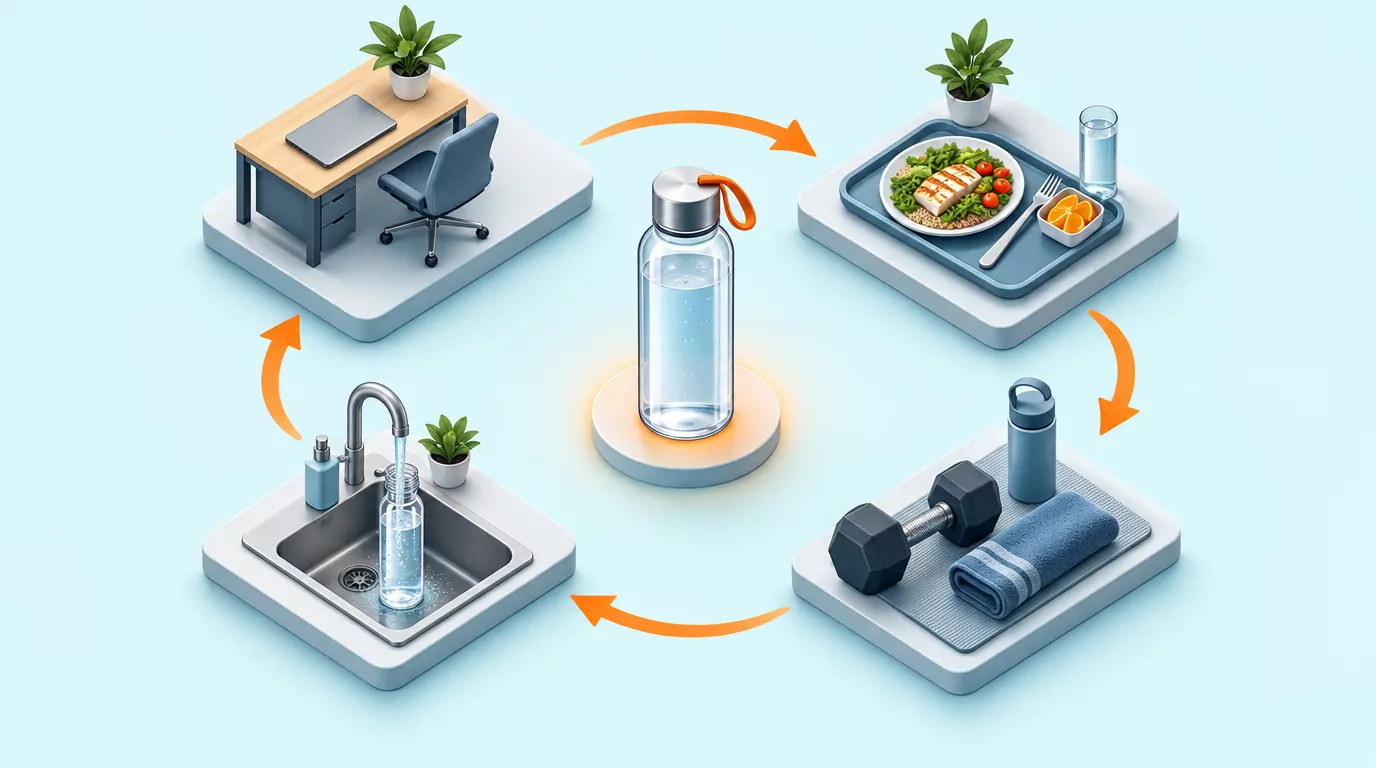
Fresh water is easier when refilling is a routine, not a 4 pm rescue. Pick a few fixed refill points that already exist in your day, like arriving at work, lunch and after the gym. Each one becomes the moment you empty, refill and start fresh.
Fold the washing into something you already do, so the bottle goes in with the day's dishes. If you like structure, a simple drinking water timetable pairs neatly with refill points. The cues in how to remember to drink water work just as well as refill cues.
Then log each bottle when you finish it, not when you fill it. Water you tip out simply never counts, and your total reflects what you actually drank. There is more on keeping it light in how to track water intake.
In Water Goose, save your bottle as a custom amount in ml or fl oz, and logging it takes three steps: pick water, choose the amount, confirm. Optional reminders, set for your chosen active hours and frequency and scheduled locally on your device, can double as a refill cue. Your entries stay on your device, with no account needed.
The app does not track how old your water is. The routine handles that part, and the goose sticks to counting.
Frequently Asked Questions
Can bottled water go bad?
Sealed and stored somewhere cool and dark, not in any way that matters. Once it is opened, what changes is the bottle and what gets into it, not the water.
Why does water taste different the next day?
Water left out overnight warms to room temperature and spends hours open to the air, so it often tastes flat. Flat is not the same as off. Oregon State University's emergency water guide suggests pouring flat-tasting stored water back and forth between two clean containers, and there are more ideas in how to make water taste better.
Does tap water expire?
Straight from the tap, it is as fresh as your supply. Once you fill your own containers to keep, treat them like the emergency row above. Store them cool and dark, and replace the water every six months, as both Ready.gov and the CDC advise.
Does boiled water go bad?
Boiling treats water at the time, but it does not give it a longer shelf life. Once it has cooled, store it covered and cool like any other water. Treat an opened jug the same way you would an opened bottle.
Does filtered or jug water expire?
The water does not, but the jug and the filter need looking after. Follow the jug's own storage and cartridge instructions and keep it covered. Empty and wash it rather than topping it up for days.
Does freezing water make it last longer?
Freezing extends nothing, because water does not expire in the first place. Frozen bottles are still handy as ice packs for a cool bag, or as a backup during a power cut. Leave some room at the top, because water expands as it freezes.
The short version on water and time
Water does not expire. Bottles, heat and time are what change it, and a few habits cover all three: store sealed water cool and dark, finish opened bottles the same day, and refill instead of topping up. This is general wellness information, not medical advice.
If logging each bottle beats remembering, Water Goose is on the App Store for iPhone and on Google Play for Android.