How Long Does It Take to Form a Habit? About Two Months, Not 21 Days
You started a small daily habit in January, or at the start of term, because someone promised it would stick in 21 days. Now it is day 25 and it still takes effort. Like the 8 glasses of water a day rule, 21 days is a tidy number with a thin source.
So how long does it take to form a habit, really? This guide gives the honest timeline from the research, then walks one small drinking habit through it: a glass of water after breakfast.
Most new habits take about two months to feel automatic, not 21 days. In the best-known study, the median was 66 days, and individuals ranged from 18 days to an estimated 254. Simple habits, like a glass of water after breakfast, tend to settle sooner than complex ones, and one missed day did not undo progress.
How long does it take to form a habit? About two months, with a wide range
In the best-known study of habit formation, led by Phillippa Lally at University College London, the median time for a new daily action to feel automatic was 66 days. A 2024 review of the wider research found medians of 59 to 66 days and means of 106 to 154 days. Across individual people, the spread ran from 4 days to 335.
"Formed" has a specific meaning in these studies. Each person rated every day how automatic the action felt, and the researchers fitted a curve to those ratings. In Lally's study, the habit counted as formed when a person's curve reached 95 percent of their own plateau, the point where it stopped climbing in any real way.
So 66 days is not a finish line. A median describes a group: half the people got there sooner and half took longer, and your number could land on either side.
Ben Gardner, Phillippa Lally and Jane Wardle, writing for family doctors in 2012, suggested telling people to expect around 10 weeks. That is the useful takeaway. When you ask how long it takes to build a habit, think in months, not weeks.
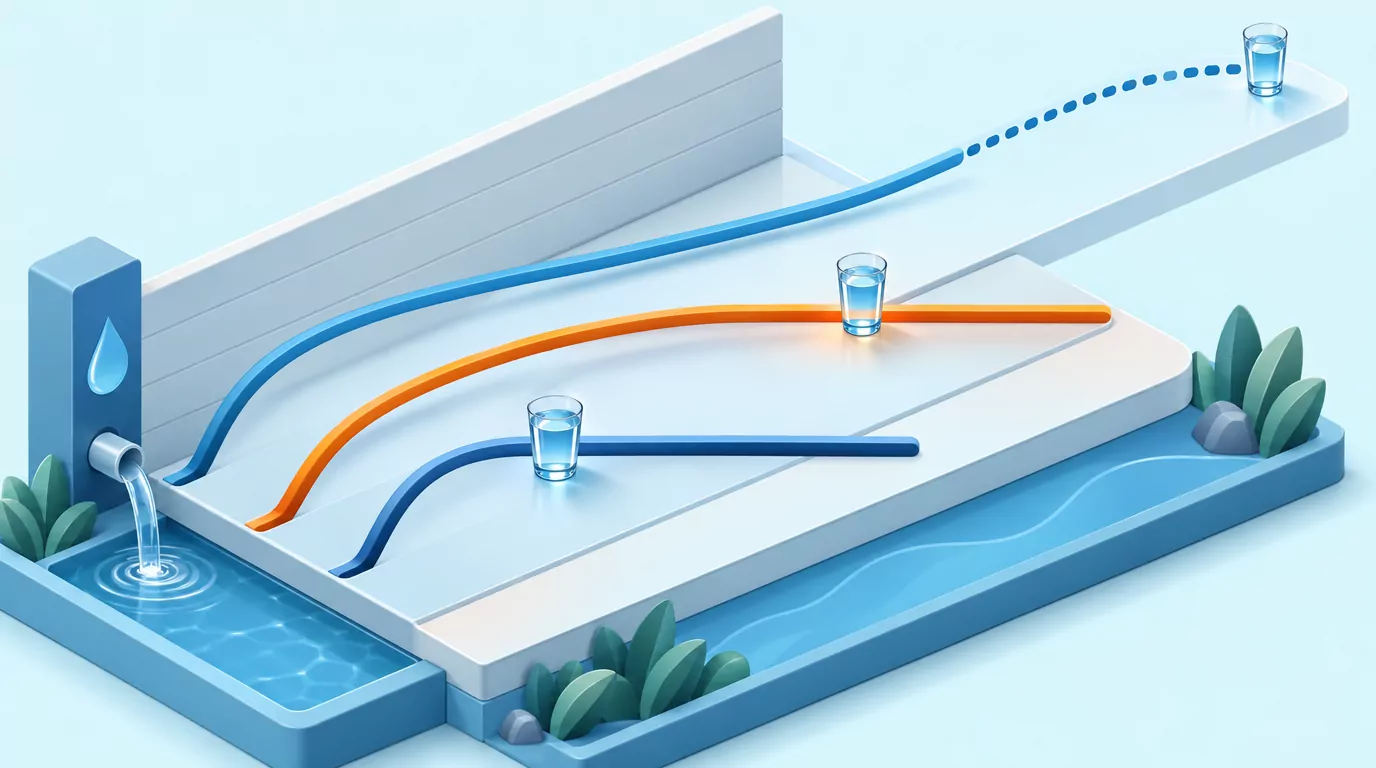
How many days does it take to form a habit? What the studies measured
Two pieces of research carry most of the numbers you see online. Knowing what each one did makes the numbers far easier to read.
Lally's study: 96 people, one daily action, 12 weeks
The study was published online in 2009 and in print in 2010 in the European Journal of Social Psychology, which is why sources date it either way. Ninety-six volunteers each chose one eating, drinking or activity behaviour to do once a day after the same cue, such as after breakfast. Every day for 84 days, they rated how automatic it felt.
Of those, 82 gave enough data to analyse. The curve fitted 62 people, and it fitted well for 39. The fastest person reached their plateau in 18 days.
The 254 days is the number people misread most. It was a forecast for someone who had not levelled off by day 84, not a time anyone actually watched happen.
For most people the shape was the same. The early repetitions brought the biggest gains, and then the curve flattened out.
The limits are worth stating calmly. It was a small sample, the ratings were self-reported, and the clean curves covered well under half of the volunteers. Even so, it is the study nearly every article on this question leans on, this one included.
The 2024 review: 20 studies, 2,601 people
In 2024, Singh and colleagues pulled together 20 studies with 2,601 people in a review in the journal Healthcare. The behaviours included physical activity, healthy eating, flossing, taking vitamins, sitting less and, in two studies, drinking water.
Only four of the studies timed how long a habit took to form. The two medians, 59 and 66 days, came from a healthy eating trial and from Lally's study. The means of 106 and 154 days came from a stretching study, for morning and evening practice.
The widest spread, 4 to 335 days, came from that healthy eating trial. Only 23 percent of its participants reached the habit threshold at all.
The review also rated quality, and 11 of the 20 studies carried a high risk of bias. Its bottom line was careful: habits can start forming within about two months, with large differences between people. For planning, the authors suggest expecting two to five months for most health behaviours.
Why the average is a planning number, not a deadline
The means sit well above the medians because a minority of people take much longer, and they pull the average up. That is normal for this kind of data, and it is why the median is the better guide to a typical person.
Use two months as a planning horizon. Day 66 is not a test you pass or fail, and nothing special happens on that date.
21 days to form a habit: where the number came from
The 21 days habit theory traces back to Maxwell Maltz, a plastic surgeon. In the preface of his 1960 book Psycho-Cybernetics, he noted that patients took about 21 days to get used to a new face. He added that a phantom limb lingered for about 21 days, and that a new house took about three weeks to feel like home.
Maltz wrote of "a minimum of about 21 days". Two things got lost as the line was retold. The word "minimum" fell away, and so did the difference between getting used to something and doing something automatically when a cue appears.
Ben Gardner of UCL, tracing the myth in 2012, suggests this is where the meaning slipped. Habituation is getting used to something, like a new haircut in the mirror. Habit formation is reaching for a glass after breakfast without deciding to.
So why does "it takes 21 days to form a habit" survive? Three weeks fits neatly on a calendar and feels like a promise you could keep. Repeated often enough, it began to sound like research.
No study has found 21 days to be typical. The timed studies put the medians at 59 to 66 days, and individual times ran from 4 to 335 days.
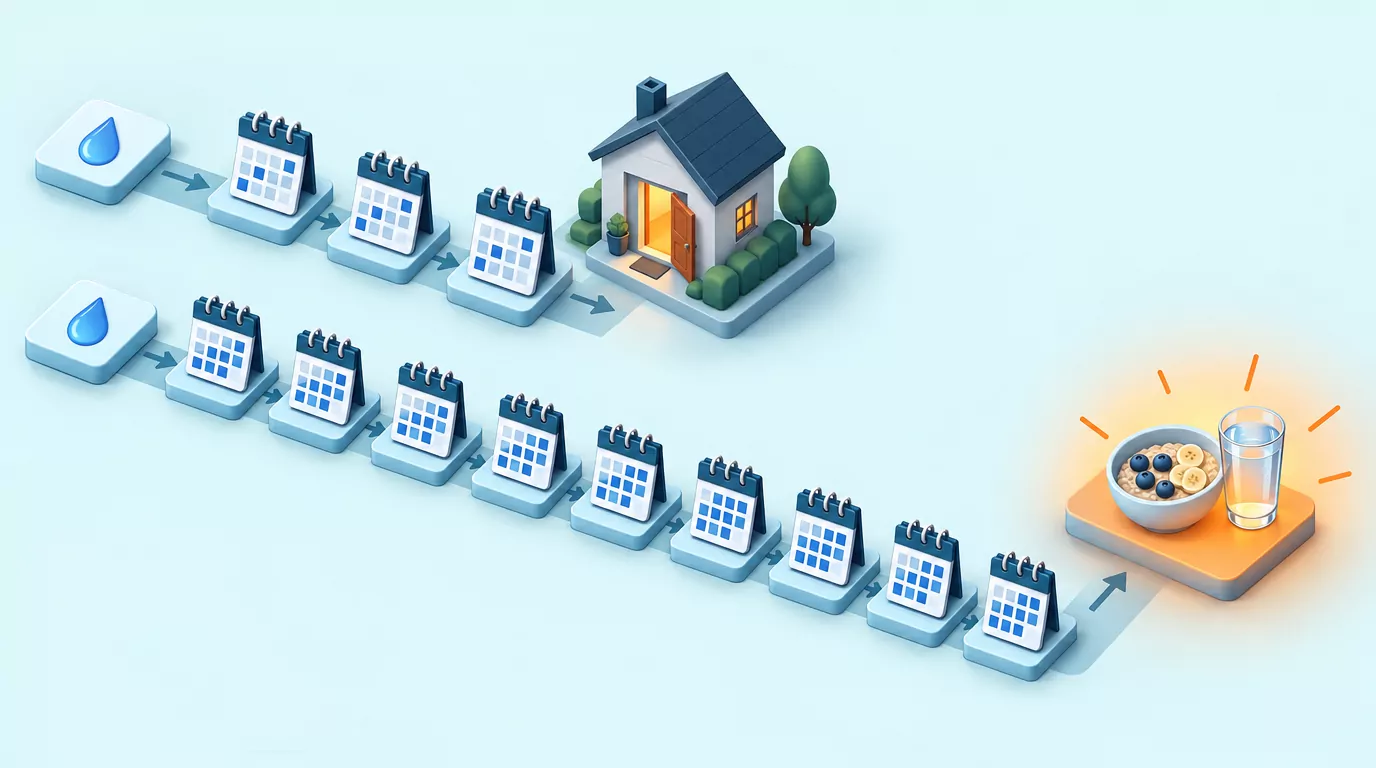
What is the 21/90 rule?
The 21/90 rule is a popular saying: 21 days to build a habit, then 90 days to make it a lifestyle. We found no study behind either number. Ninety days does happen to land inside the two to five months the 2024 review describes, but that is luck, not evidence.
If the rule keeps you going past day 21, fine. Just do not treat day 21 as a verdict on whether you can do this.
Why simple habits, like a glass of water, tend to settle sooner
First, an honest caveat: according to the 2024 review, Lally's study found no significant difference in how long exercise, drinking water and eating fruit took to become automatic. The water habits did end up stronger, though. So treat simple versus complex as a steady pattern, not a law.
It also helps to separate a habit from a goal. "Drink enough water" is a goal. The habit is one specific glass at one specific cue, and a daily total is built from several of those, so pick one cue first.
With that said, the pattern does keep turning up. Gardner, Lally and Wardle reported that automaticity peaked more quickly for simple actions, such as drinking water, than for longer routines, such as 50 sit-ups. The 2024 review saw a similar trend: simple, repeated behaviours with clear cues and quick rewards, such as flossing and drinking water, showed larger habit gains than healthy eating or exercise.
Real-world data points the same way. A 2023 study in PNAS used machine learning on millions of records and found that gym habits typically took months to form, while hospital handwashing took weeks.
Why would simple help? One step, one cue, little effort, and many chances to repeat. A habit that asks very little of you gets repeated on the days when you have very little to give.
There is early evidence on timing as well. The review found that morning practice and self-chosen habits tended to be stronger, and one stretching study found morning practice became automatic sooner than evening practice. A cue you already have in the morning is a reasonable place to start.
If the morning glass appeals, here is what drinking water in the morning does and does not do. If your real struggle is the daily total rather than one glass, start with these realistic tips to drink more water. For the daily total itself, the Water Intake Calculator takes your weight, activity and climate and gives a general starting goal.
Why one missed day did not undo the habit
Lally's team found that missing one opportunity did not materially affect habit formation. Writing for family doctors, Gardner, Lally and Wardle put it plainly: after a single missed day, the gains soon resumed.
The curve explains why. Each repetition adds a little automaticity, and the additions shrink as you go. A missed day costs you one repetition, not the strength you have already built.
What mattered more was overall consistency. In Lally's data, people who did the behaviour more consistently had curves that fitted the expected shape better. In plain terms, steady repetition mattered more than a perfect record.
For what to do the morning after a miss, see this calmer way to keep a hydration streak.
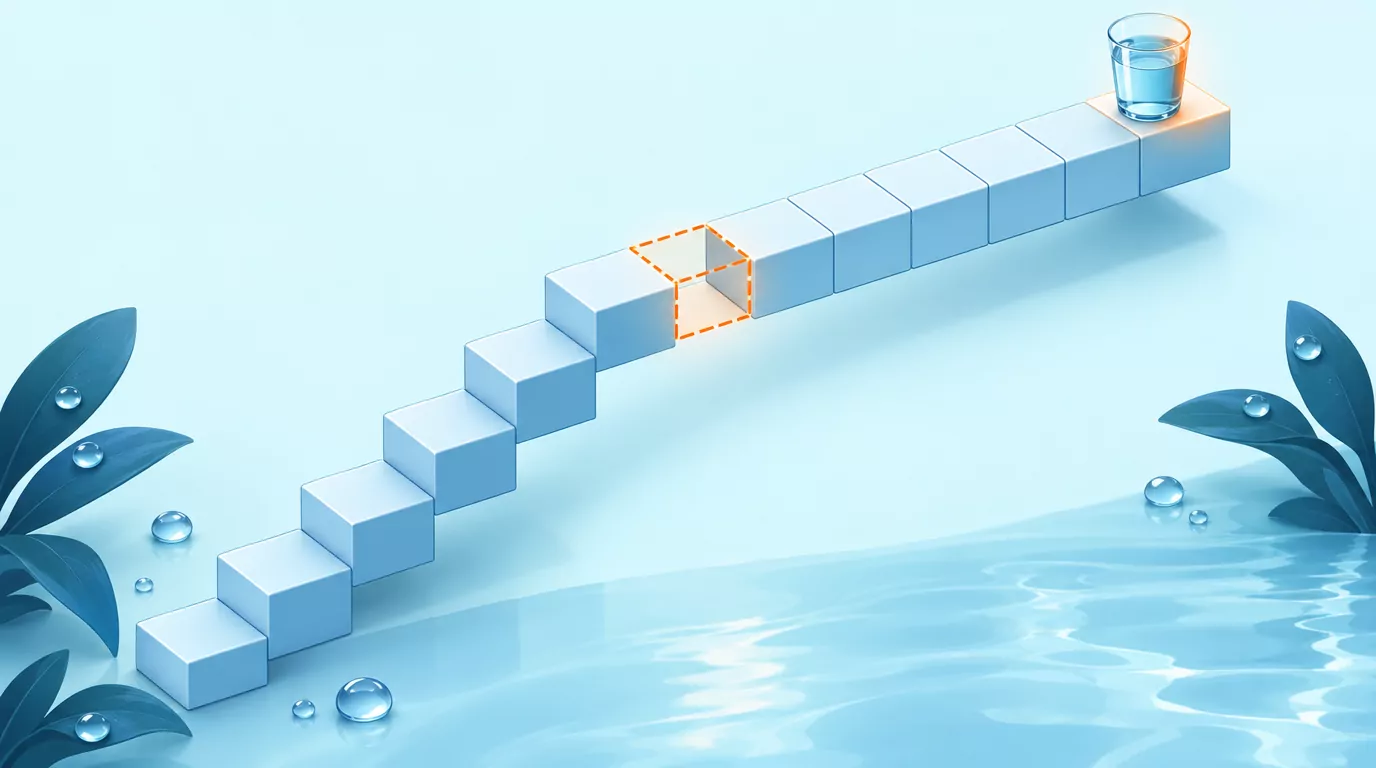
What 66 days can look like for one drinking habit
Here is one habit followed through the weeks: a glass of water after breakfast. The table shows the usual shape of the curve. It is an illustration, not a prediction for you.
| Weeks | What you will probably notice | What helps |
|---|---|---|
| Weeks 1 to 2 | You have to remember, and it feels like a task. The biggest gains of the whole curve are happening anyway, even if it does not feel that way. | Use the same cue every day. Set the glass out next to your breakfast plate or bowl, so it is waiting when you sit down. |
| Weeks 3 to 5 | Some mornings it happens before you think about it. Weekends and late starts are where it slips, because the cue moves. | Decide what "after breakfast" means on a day off before the day off arrives. If busy days are the problem, borrow a few cues from how to remember to drink water when you are deep in work. |
| Weeks 6 to 9 | You are around the median. Skipping the glass starts to feel slightly odd, like leaving the house without your keys. | Keep going and add nothing new yet. This stretch is about letting the cue do more of the work. |
| Week 10 and beyond | For many people it now runs on its own. If it still needs a daily reminder, the cue is the problem, not your character. | Move the cue to a part of the morning that never changes, or make the action smaller, such as half a glass. |
A note for students: term breaks, travel and moving house all remove the usual cue, so expect a wobble when your routine changes. A 2005 study by Wood, Tam and Witt followed students who transferred to a new university. Their habits, such as exercising and reading the paper, survived the move only when parts of the setting stayed the same.
So when the routine changes, pick the cue back up in the new one. If breakfast now happens in a different kitchen or at a different time, the glass moves with it.

How to tell a habit has actually formed
Researchers do not just count days. They ask people how automatic the action feels, using four statements from the Self-Report Behavioural Automaticity Index, developed by Gardner and colleagues in 2012. You can turn them into a plain weekly self-check about your glass after breakfast:
- It happens automatically. You drink it as part of the morning, like brushing your teeth.
- You no longer have to make a point of remembering it. No note, no reminder, no mental checklist.
- You do it without thinking about it. There is no small debate with yourself first.
- You catch yourself already doing it. The glass is half gone before you notice you picked it up.
Check once a week, not every day. Gardner, Lally and Wardle's tick-sheet for patients suggests rating how automatic the action feels at the end of each week, which shows the trend without daily second-guessing.
Mixed answers are normal, especially in weeks 3 to 5. Weekday mornings may feel automatic while weekends still need a nudge, which usually points back to the cue rather than to you. Watch for the week when the weekend answers catch up.
If you prefer paper, the Printable Water Tracker makes daily, weekly or monthly sheets you can print. When most answers are a clear yes, the habit is doing its own work and tracking can get lighter. The guide on how to track water intake covers when to stop.
A record that does not judge: the history calendar
Two months is a long time to judge yourself one morning at a time. A record is more useful than a verdict, because habits form across weeks, not on any single day.
Water Goose, a hydration tracker for iPhone and Android, has a history calendar that shows your daily totals, goal completion, consistency and streaks, without complex charts. The calendar keeps your logged days, so a day below goal sits among the weeks around it instead of standing alone.
Logging takes three steps: choose the drink, swipe to the amount, then tap one clear button. Entries stay on your device, and no account is needed to keep a hydration history.
Reminders are optional: you choose your active hours and how often, then allow notifications. They are scheduled locally, without a push token, Water Goose account or reminder schedule being sent to a Water Goose server. A reminder can prompt the glass in the first weeks, but the cue in your routine is what becomes the habit.
Water Goose is free to download and look around. Saving drinks, editing your history, and changing your goal, units or quick-add amounts need Water Goose Plus, sold as a monthly subscription or a one-time purchase.
Frequently Asked Questions
How long does it take to break a habit?
There is no reliable day count, and breaking a habit works differently from forming one. Gardner, Lally and Wardle note that it takes different and more effortful strategies than making a new habit.
The usual approaches are to weaken or avoid the cue, or to put a new action in the old slot. Quick-fix numbers, like breaking a habit in 3 days, have no study behind them that we could find, any more than 21 days does for forming one.
Does it take 28 or 30 days to form a habit?
The claim that it takes 28 days to form a habit, or 30, belongs to the same family as 21: tidy calendar numbers. A month is a useful first stretch, and a simple habit can be well on its way by then, but the studies put the typical plateau nearer two months. The 30 Day Water Challenge, a free browser tracker where you set a daily goal and tick off each day, works well as a first month, not a finish line.
How many times do you need to repeat something to make it a habit?
There is no fixed number. Repetition in the same context is what builds automaticity. Lally's volunteers aimed for once a day, so the median plateau came after about 66 days of daily chances, and somewhat fewer actual repetitions for anyone who skipped days.
In the PNAS study, behaviours repeated many times a day, like hospital handwashing, settled in weeks rather than months. James Clear, the author of Atomic Habits, makes a similar point: forget the day count and focus on putting in the repetitions.
How long does it take for something to become routine?
To build a routine that runs without much thought, plan on about two months of daily repetition after the same cue. Lally's median was 66 days, with a wide range between people, so some routines settle sooner and some take longer.
The short version
Most new habits take about two months to feel automatic, and the range between people is wide. The 21-day figure came from people getting used to change, not from habit research. Pick one small action, tie it to one cue, and judge it by the weeks, not by any single morning.
This is general wellness information, not medical advice.
If you would like a calm record of those weeks, without a verdict on any one day, a log can keep it for you. Water Goose is on the App Store for iPhone and on Google Play for Android.