Is It Bad to Drink Water While Eating? Usually Not, and Here Is Why
Is it bad to drink water while eating? The rule that you should never drink with a meal gets repeated with great confidence, usually with a warning that water "washes out" your stomach acid. For most healthy people, the evidence does not back it up.
A glass of water at the table is one of the simplest habits there is, and one of the easiest ways to remember to drink water on a busy day. The goose drinks with every meal and remains unreasonably confident about it.
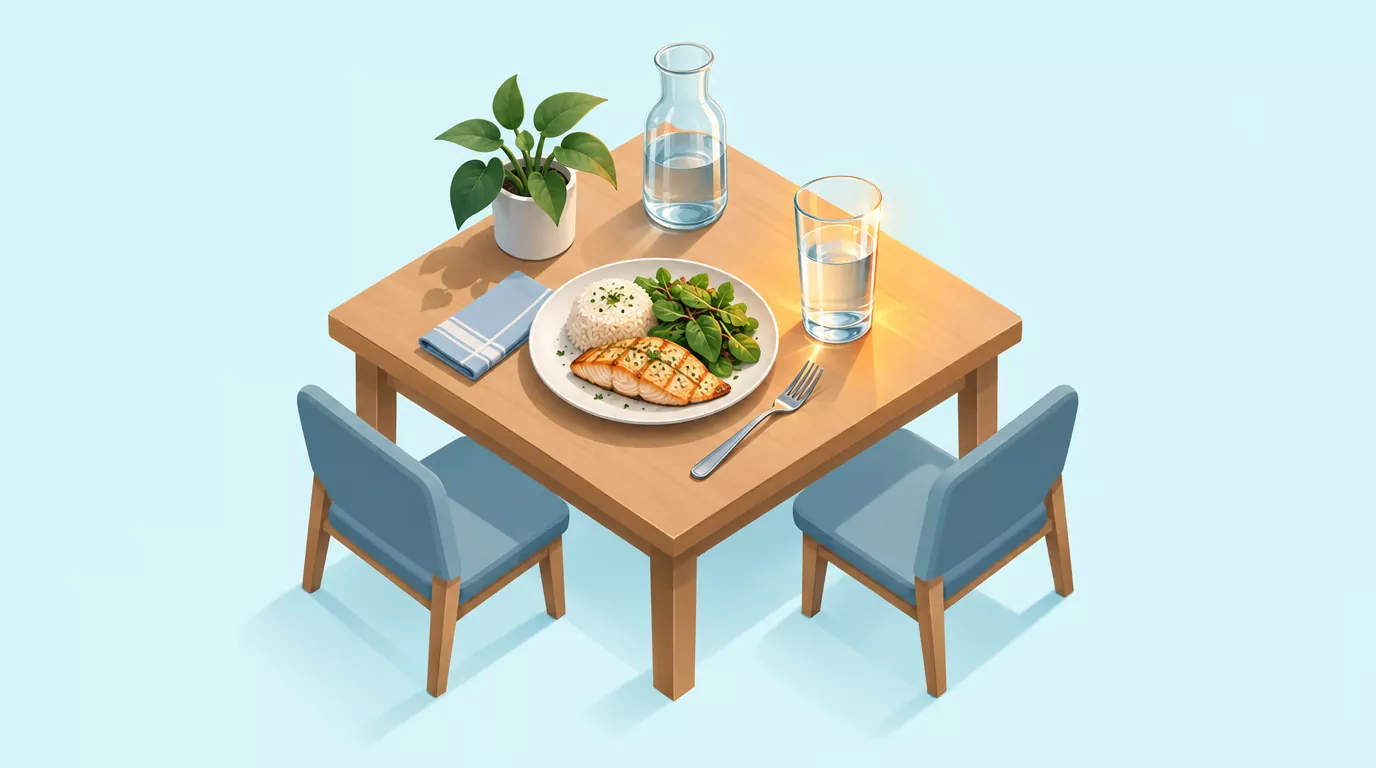
Is it bad to drink water while eating? The short answer
No, for most healthy people, drinking water while eating does not dilute stomach acid enough to hamper digestion. Any dilution is brief, the stomach keeps adjusting its secretions to the meal, and water also softens food and makes swallowing easier. If you have a digestive condition, follow your clinician's advice.
So should you drink water while eating? If you like a drink with your food, go ahead. The rest of this article shows where the opposite rule comes from and what the research actually measured.
Where the no-water-with-meals rule comes from
The rule usually comes with one of three claims:
- Dilution: water thins stomach acid, so food is not broken down properly.
- Pushing: liquid moves food out of the stomach before it is digested.
- Blocking: water gets in the way of absorbing nutrients.
Each claim sounds tidy, which is why it travels well. Short videos repeat it in under a minute, and some older food traditions have their own rules about when to drink. None of that is a reason to roll your eyes at anyone who follows it.
Part of the rule's staying power is personal. Some people are told by their own clinician to keep drinks and meals apart, for reasons that apply to them. When that advice gets passed on to friends and family, it can quietly turn into a rule for everyone.
What happens when you drink with a meal
Your stomach adjusts its secretions to the meal
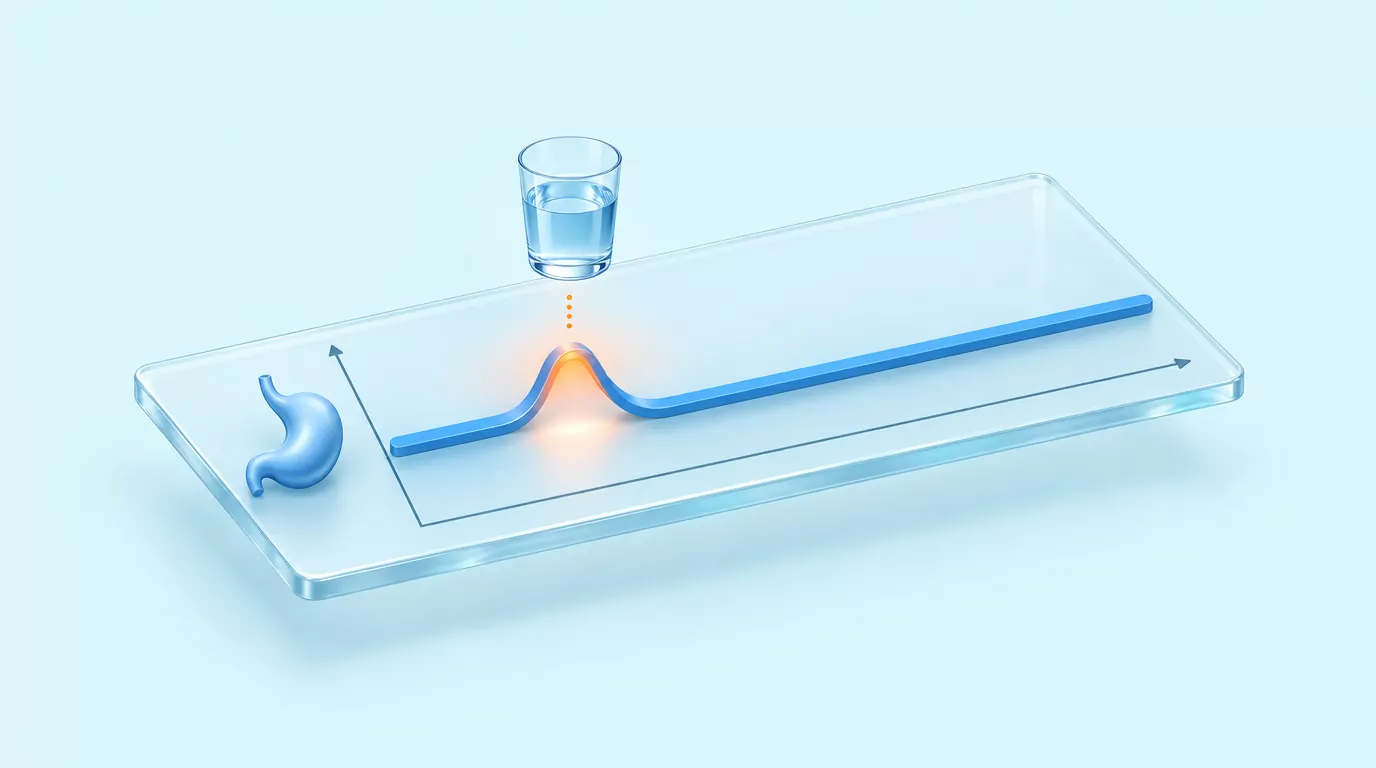
The most direct test of the dilution idea is a small 2008 study of 12 healthy adults. After a 200 ml glass of water (about 7 fl oz), stomach pH rose above 4, meaning less acidic, in 10 of the 12 within a minute. That change lasted only about 3 minutes before pH dropped back below 4 (Karamanolis et al., 2008).
Two caveats keep this honest. The study tested a glass of water on its own, not water with a meal, and it was small. Still, it shows how short the effect of one glass is.
Your body also controls its digestive juices as it goes. Hormones from the stomach and small intestine tell your body when to make them, and the small intestine even moves water into the gut to help break food down (NIDDK). Water is part of digestion, not an intruder.
Liquids leave the stomach sooner, and the food still gets digested
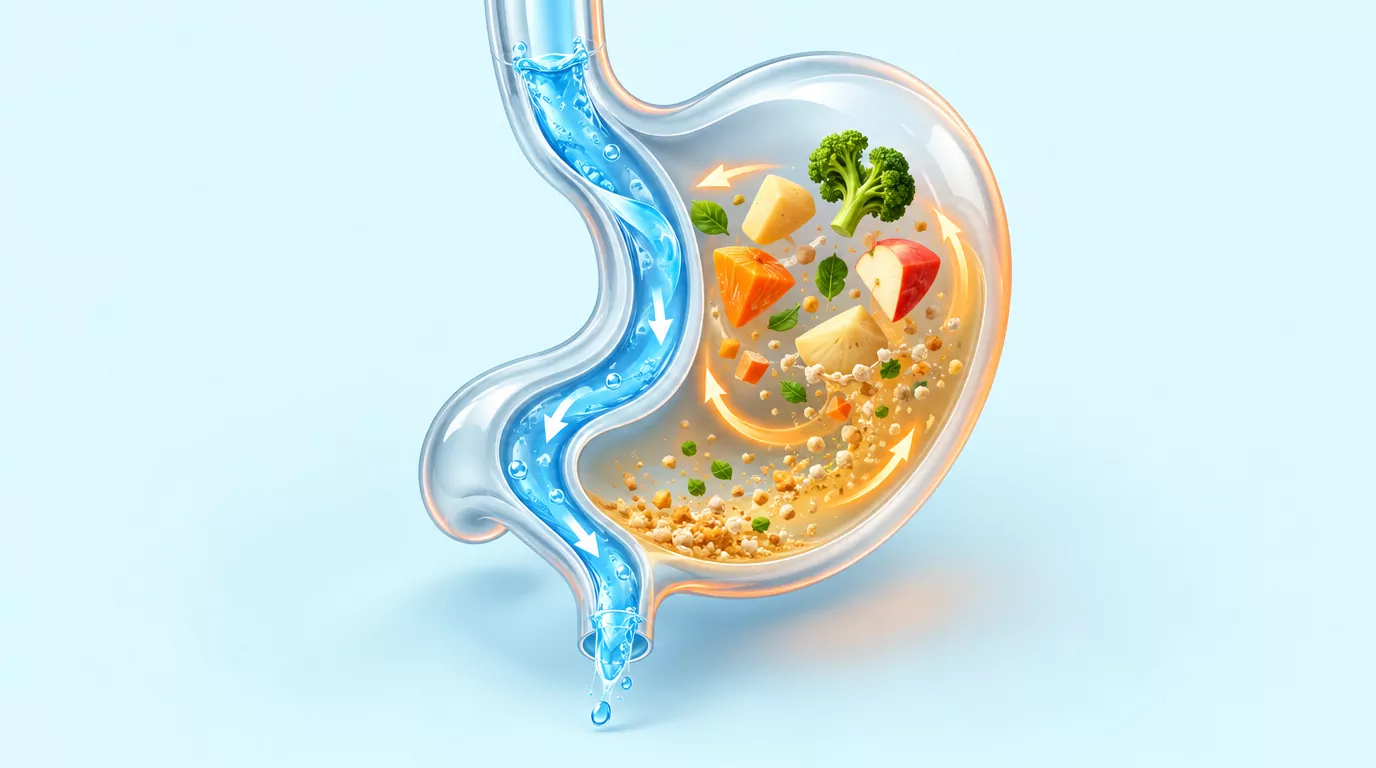
The pushing claim gets one thing right: liquids leave the stomach faster than food. A 2019 review of how the stomach empties describes water leaving promptly, while solid food is held back until it has been ground into particles of about 2 to 3 mm (Goyal, Guo and Mashimo, 2019).
The same review describes a kind of fast lane along one side of the stomach that can let liquids slip past the slower food. So a drink can pass through while your meal stays behind to be broken down. The water does not drag your dinner along with it.
Water makes chewing and swallowing easier
This part is practical rather than clever. A sip helps with dry or crumbly food like bread, rice or crackers, and makes each mouthful easier to swallow. Mayo Clinic's expert answer also notes that water helps break down food so your body can absorb the nutrients.
Myth vs what is known
Here are the four usual claims side by side, each with the source behind the answer.
| The claim | What the evidence says | Source |
|---|---|---|
| Water dilutes stomach acid | A 200 ml glass raised stomach pH for about 3 minutes before it fell back. | Karamanolis et al., 2008 |
| Liquid pushes food out undigested | Liquids leave first, and solid food stays until it is ground down. | Goyal, Guo and Mashimo, 2019 |
| Water blocks nutrient absorption | Most nutrients are absorbed later, in the small intestine. | NIDDK |
| Only drink before or after a meal, never during | Water during or after a meal does not cause problems with digestion. | Mayo Clinic |
For when to drink across the rest of your day, including drinking water before meals, see this drink water time table.
If drinking with meals feels uncomfortable
Some people simply feel too full with a big glass and a full plate. That is a comfort issue, and the fix is easy: take smaller sips, or drink most of your water before and after the meal.
Water can add to that full feeling while you eat. In one small study, eight women who drank two extra glasses of water with breakfast rated their hunger and fullness differently during the meal, but the effect did not last after it (Lappalainen et al., 1993). Treat that as a comfort note, not a diet trick.
If you have a digestive condition, or a clinician has given you a timing rule, follow their advice over any general article, this one included.
Meals as an easy hydration anchor
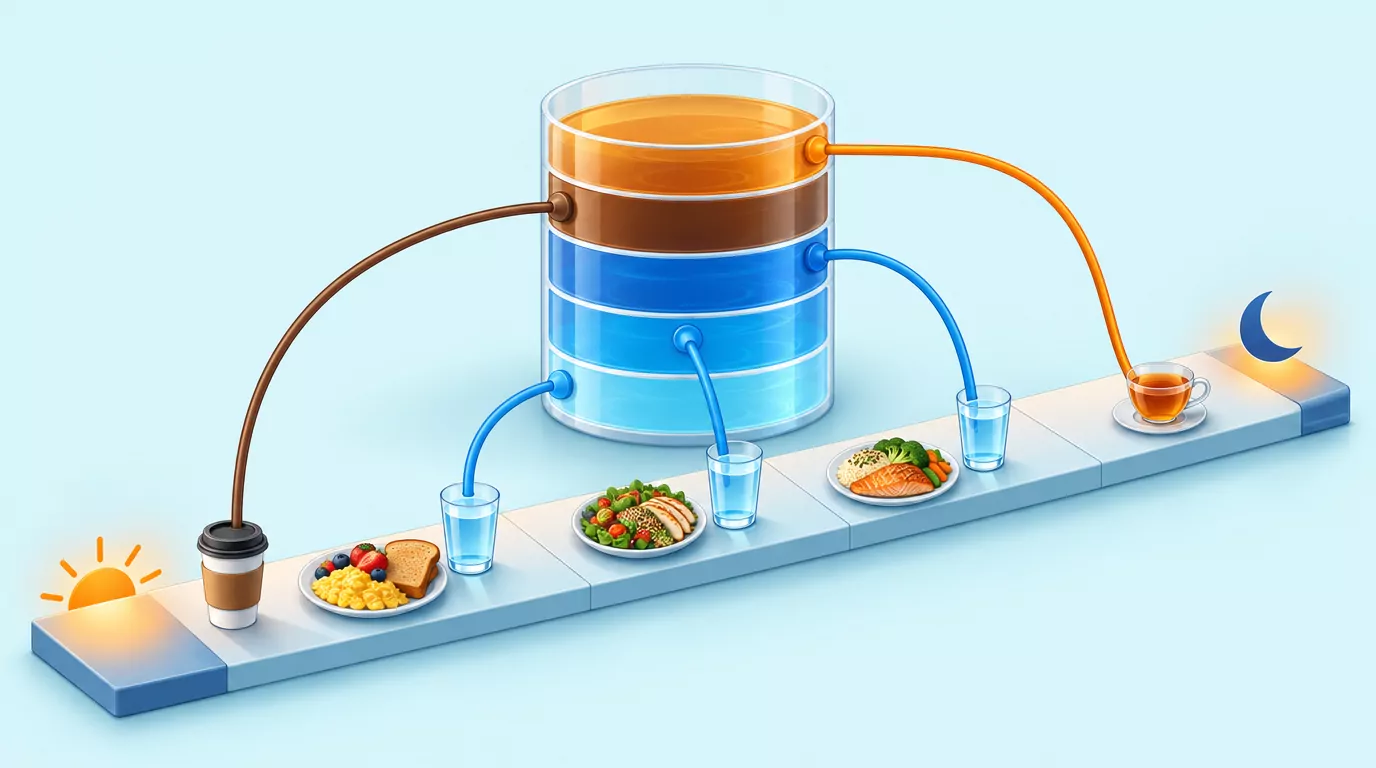
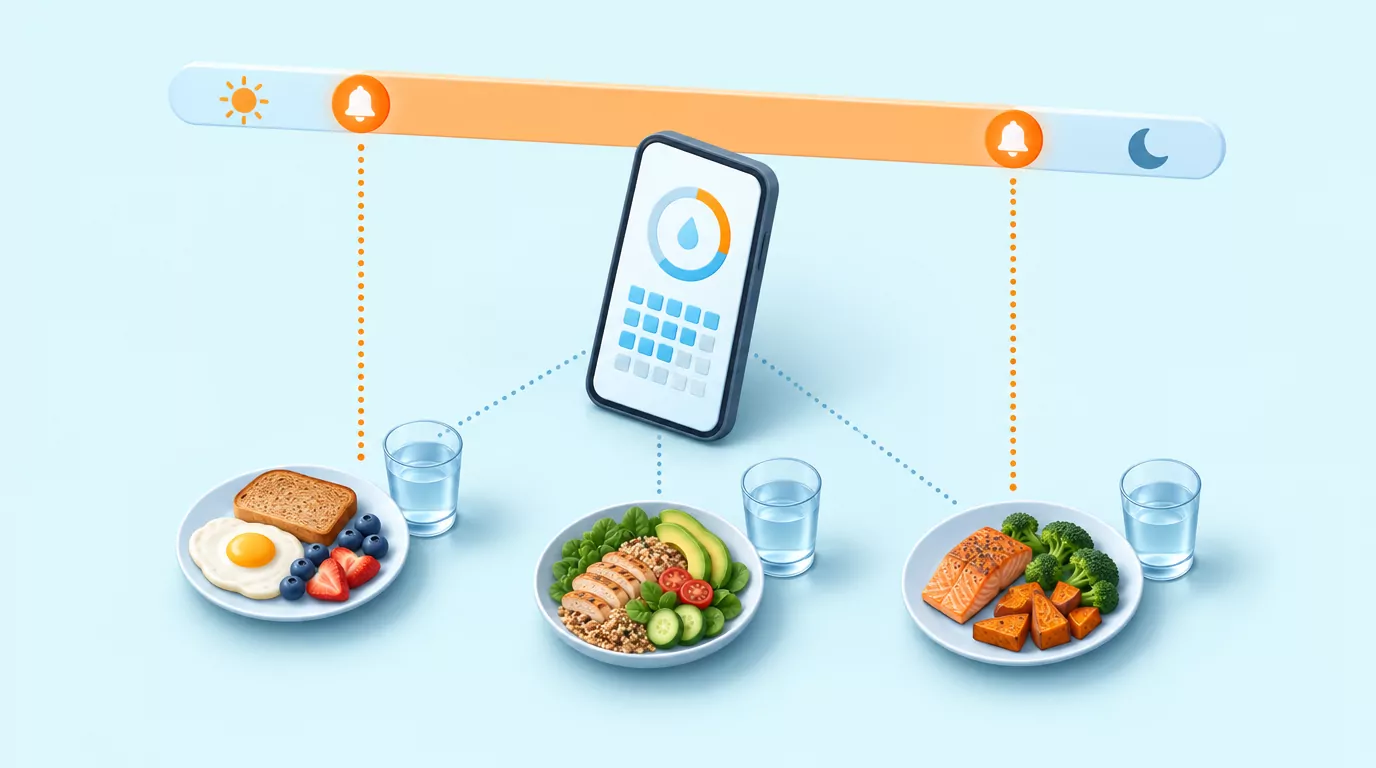
Meals happen at roughly the same times each day, which makes them reliable cues. The CDC's tips for drinking more water include a plain one: "Serve water during meals" (CDC).
Here is how that adds up. One 8 fl oz glass (about 237 ml) at each of three meals comes to 24 fl oz, or about 710 ml, before you count any coffee or tea. Glasses vary a lot, so measure the one you actually use.
A simple way to make the habit stick:
- Pour the glass when you serve the food, so it is already on the table.
- Use the same glass each time, so the amount stays predictable.
- Sip at your own pace, and top it up only if you want more.
- Start with one meal, then add the others once it feels automatic.
To see how that fits your day, the Water Intake Calculator, a free daily water intake calculator, gives you a personal daily target to compare it with.
- Sparkling water counts. If bubbles feel better with food, sparkling water hydrates you and counts toward your total.
- Soup counts. A bowl at lunch adds fluid too, and here is how soup counts as water intake.
- Food adds water. Many foods carry water of their own: How Much Water Is in Food? USDA Data for 32 Foods lists water content for 32 everyday foods from USDA FoodData Central.
- Milk or juice works too. If that is your mealtime drink, The Most Hydrating Drinks, Ranked compares thirteen drinks by how much fluid you keep.
Logging the mealtime glass in Water Goose
In Water Goose, logging a mealtime glass takes three steps: pick water, choose the amount, confirm. Save your usual glass as a custom amount so you do not have to set it each time. If you poured a full glass and drank half, log the half.
Tea, coffee, milk, juice, soup and sparkling water all have presets, and amounts show in ml or fl oz. Reminders are optional: you choose your active hours and how often, and they are scheduled locally on your device. Set the hours from your first meal to your last, and meals become the cue while reminders are the backup.
After a week, the history of daily totals and goal completion shows whether the mealtime glasses are helping. Entries stay on your phone, with no account needed. For other ways to keep count, see this guide on how to track water intake.
Frequently Asked Questions
Is it bad to drink water after eating, or should you wait?
For most healthy people, drinking water after eating is fine, and there is no general waiting period to follow. Mayo Clinic's expert answer on drinking water during or after a meal says it does not cause problems with digestion. If a clinician has told you how long after eating to drink water, follow that advice; for before-meal timing, see the time table linked above.
Is cold water with a meal bad for digestion?
There is no good evidence that cold water with a meal harms digestion in healthy people. Some people prefer room temperature or warm drinks with food, and some like ice water. Drink whichever you enjoy, because the glass you actually finish does more for your day than the one left on the table.
Should you drink water while eating if you are not thirsty?
You do not need to force it. Thirst and comfort are reasonable guides for most healthy adults, and the meal is just a handy moment to have a drink nearby. If you often reach the evening well short of your usual amount, a glass with lunch or dinner is an easy fix that needs no extra planning.
How much water should you drink with a meal?
There is no official amount per meal. The NHS suggests 6 to 8 cups or glasses of fluid across the day, and the CDC suggests water during meals without giving a number. Drink what feels comfortable with food, and let your daily total matter more than any single glass.
This is general wellness information, not medical advice. If you have a health condition, follow the advice of your own clinician.
If a glass with each meal sounds like an easy place to start, Water Goose is on the App Store for iPhone and on Google Play for Android, and keeps the count for you.