How Much Does a Gallon of Water Weigh? 8.34 Pounds, and What That Means for Your Jug
A US gallon of water weighs about 8.34 pounds (3.78 kilograms) at everyday temperatures. An imperial gallon, used in the UK, holds more and weighs about 10 pounds (4.54 kg). Temperature changes the figure by less than an ounce between fridge and counter, so 8.34 is the number to remember.
So how much does a gallon of water weigh once it is a jug in your hand? A little more, because the plastic counts too. This guide covers the math, a chart from a liter to a 5-gallon jug, and how a full jug gets lighter as you drink.
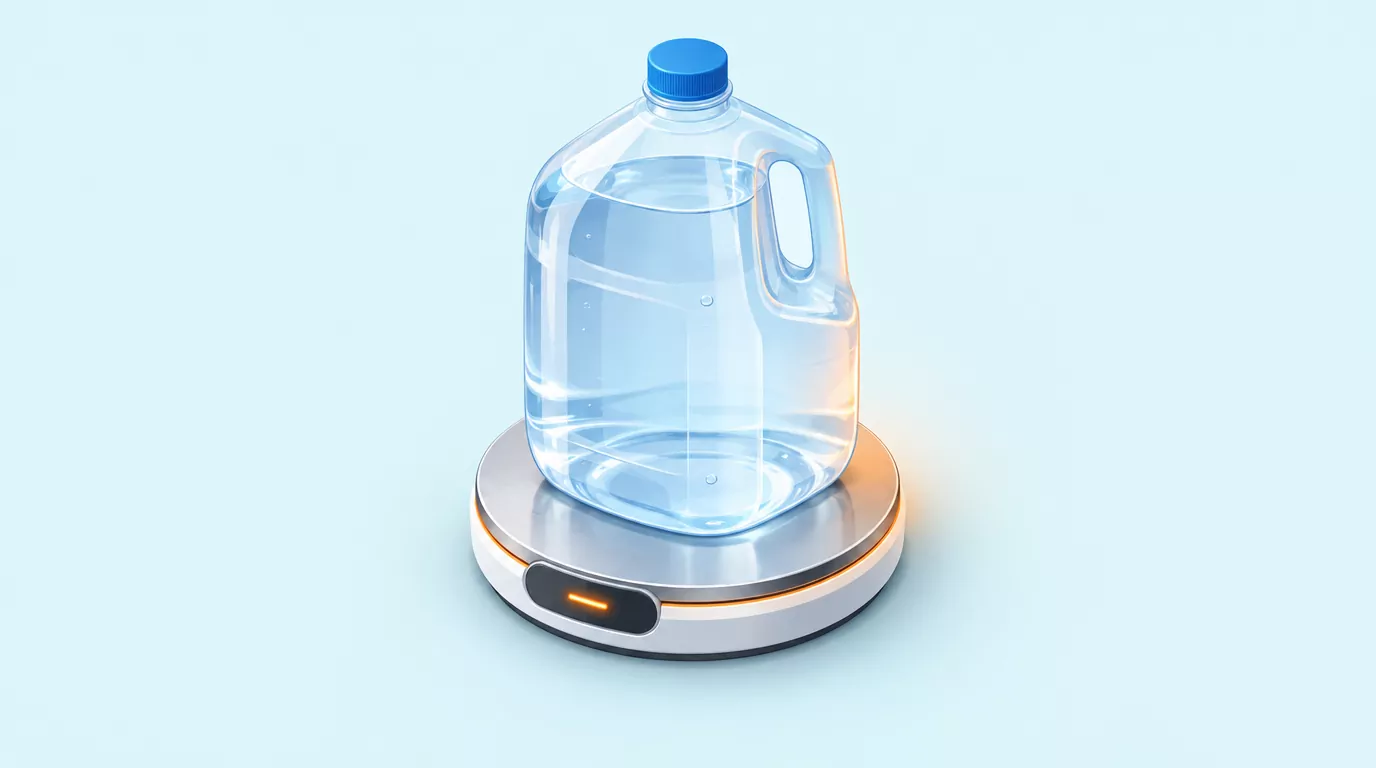
How much does a gallon of water weigh? The math behind 8.34 pounds
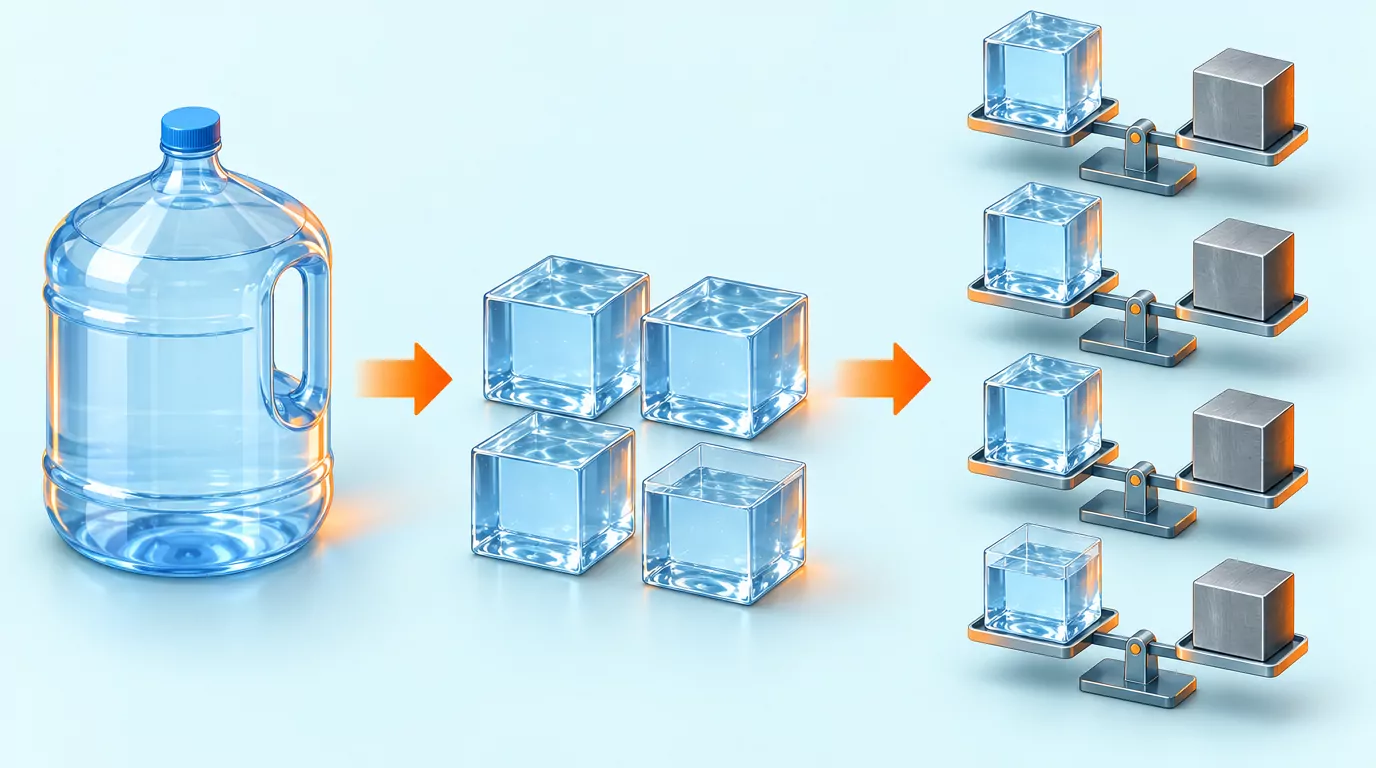
The number is not trivia. It falls out of three facts you can check, and once you know them you can work out any amount in your head.
- A US gallon is 3.785 liters. NIST lists the exact factor as 3.785412 liters in its guide to unit conversions. US labeling rules define the same gallon as 231 cubic inches.
- A liter of water weighs about 1 kilogram. The USGS water density table gives 1.00000 grams per cubic centimeter at 39.2°F and 0.99907 at 60°F.
- So a gallon holds about 3.78 kg of water. One kilogram is 2.2046 pounds, which puts a gallon of cool water at 8.34 lb.
That is the whole answer to how many pounds is a gallon of water: 3.785 liters, times about 1 kilogram per liter, turned into pounds. The same chain works for any container with a volume printed on it.
An old rule of thumb gets you most of the way there: "a pint's a pound." A US pint (16 fl oz) of water weighs about 1.04 lb, and a quart about 2.1 lb, so the saying runs only a little light.
One line on units: a gallon is 128 fluid ounces of space but about 133 ounces of weight. Fluid ounces measure volume and ounces measure weight, the same fluid ounce and weight ounce trap that catches people measuring a glass.
US gallon vs imperial gallon
The UK gallon is bigger. By law it is 4.54609 liters, the same figure NIST lists, so a full one weighs about 10.0 lb (4.54 kg).
That is why recipes, labels and search results from the UK can quote "10 pounds" for the same question. Check which gallon a source means before you compare numbers.
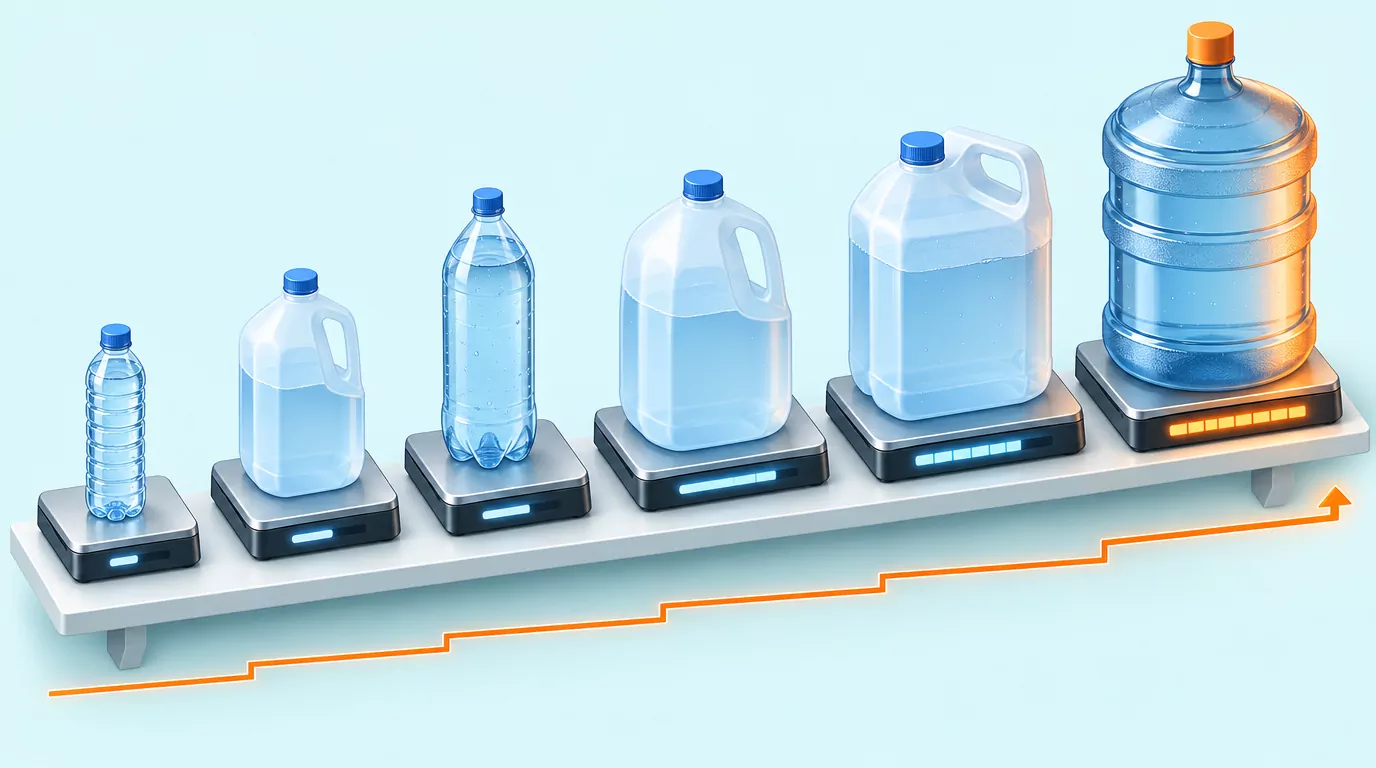
Water weight chart: from a liter to a 5-gallon jug
Here is how heavy common amounts of water are, from a liter bottle up to a water cooler jug. Every row uses 8.34 lb per US gallon.
| Amount | Volume (US fl oz) | Volume (metric) | Water weight (lb) | Water weight (kg) |
|---|---|---|---|---|
| 1 liter | 33.8 | 1,000 ml | 2.2 | 1.0 |
| Half gallon | 64 | 1.89 L | 4.17 | 1.89 |
| 2 liters | 67.6 | 2,000 ml | 4.4 | 2.0 |
| 1 US gallon | 128 | 3.79 L | 8.34 | 3.78 |
| 1 imperial gallon | 153.7 | 4.55 L | 10.0 | 4.54 |
| 5 US gallons | 640 | 18.9 L | 41.7 | 18.9 |
These weights are water only, at cool room temperature, and rounded. Every container adds its own weight, and the 5-gallon jug gets its own answer below.
The kg column runs a hair under the liter column because room-temperature water is slightly less than 1 kg per liter. If you want bottle counts rather than weight, How many water bottles are in a gallon? lets you pick any bottle size, in US or imperial gallons, and gives the exact count.
Does temperature change how much a gallon of water weighs?
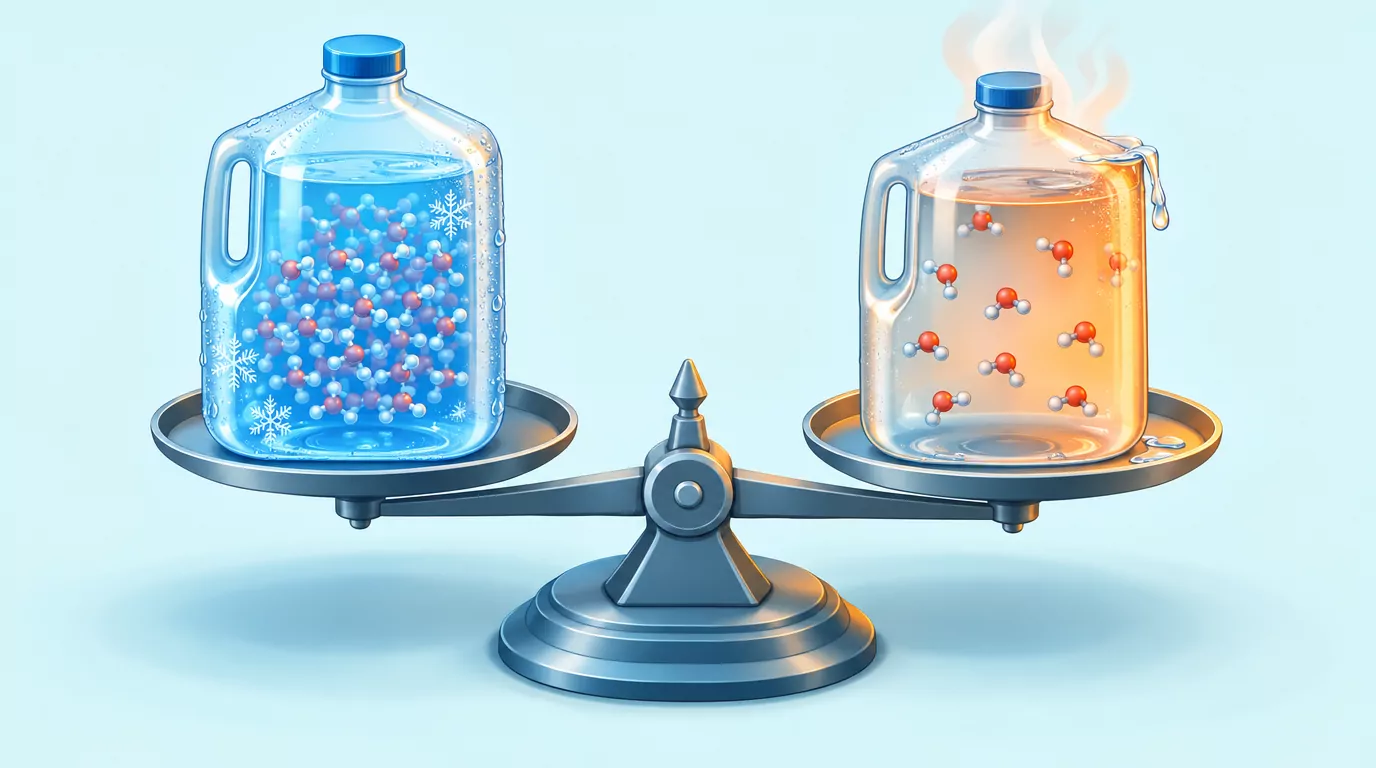
Barely. The USGS table, built on Bureau of Reclamation data, shows water at its densest near 39°F and slowly thinning as it warms. Per US gallon, that works out to:
- 39.2°F, fridge cold: about 8.35 lb
- 60°F, a cool room: about 8.34 lb, the source of the headline number
- 70°F, a warm room: about 8.33 lb
- 212°F, boiling: about 8.00 lb
This is why different sources quote 8.32, 8.33, 8.34 or 8.35 lb. It is the same water at different temperatures. Going from fridge to counter changes a gallon by about a quarter of an ounce (roughly 7 g), which is less than a sip.
One nuance trips people up. Heating water does not make the water itself lighter. Warm water takes up a little more room, so a gallon container holds slightly less of it.
For a drinking jug, 8.34 is close enough every time. What is dissolved in tap or bottled water changes almost nothing, though more dissolved material does make a gallon a little heavier. That is why ocean water is denser than fresh water.
What carrying a gallon jug around all day actually feels like
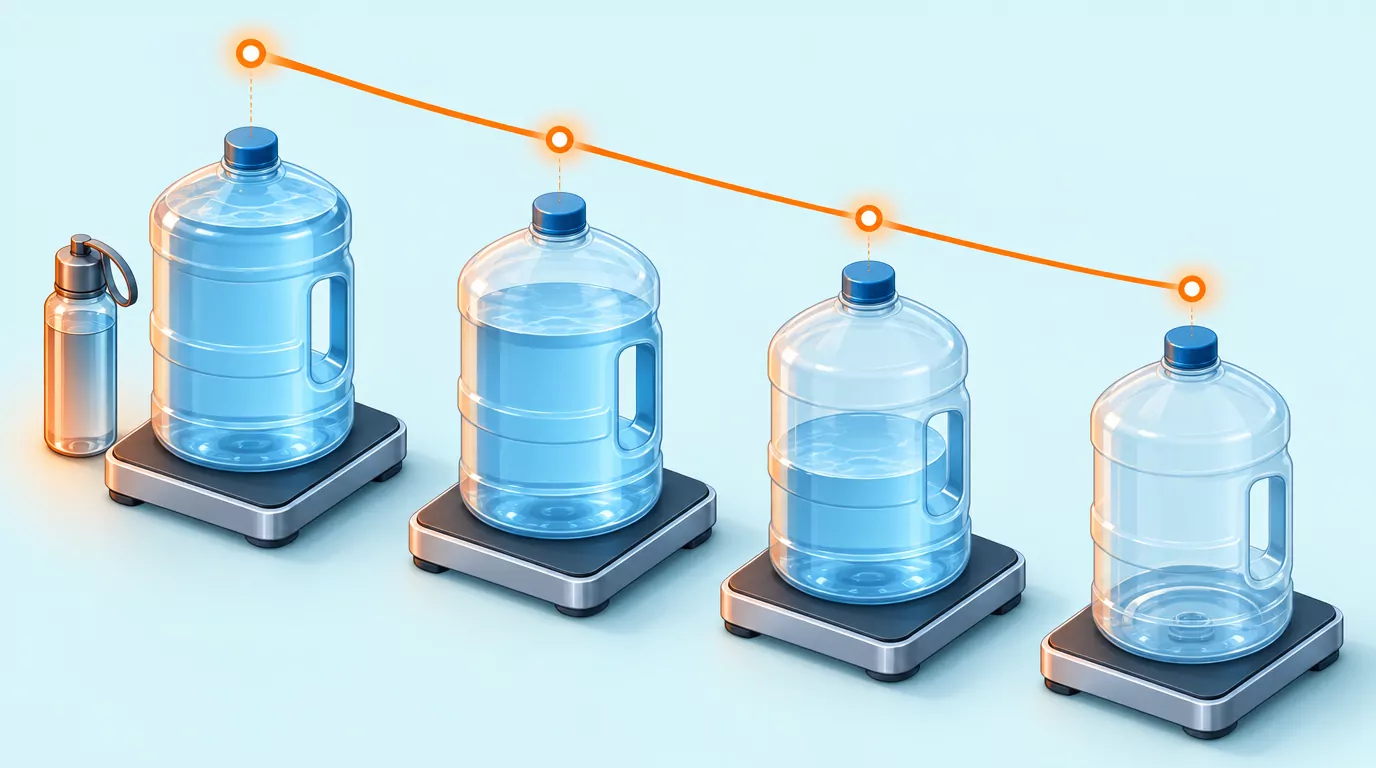
How heavy is a gallon of water once you are the one carrying it? A full 1-gallon jug weighs about 8.5 lb: the water plus a couple of ounces of plastic, since an empty gallon jug is around 60 grams. In one hand, that is a little more than two 4 lb bags of sugar.
Then it gets lighter as you drink. At 8.34 lb per gallon plus about 2 oz of jug:
- Full: about 8.5 lb
- After 32 fl oz: about 6.4 lb
- Halfway (64 fl oz): about 4.3 lb
- Empty: a couple of ounces
"A pint's a pound" is the quick mental version. Every 16 fl oz you drink takes about a pound off the jug.
If 8.5 lb is more than you want to haul around, there are lighter ways to carry the same gallon:
- A half-gallon jug, filled twice: a half gallon of water weighs about 4.2 lb, so each carry is half the load.
- A 32 oz bottle, refilled four times: about 2.1 lb of water per carry.
For any other bottle size, the bottles-in-a-gallon tool from the chart section does the count. If your goal is set in bottles, how many water bottles you should drink a day comes down to the size of the bottle.
Whether a gallon a day is a good idea is a separate question from what it weighs. How much water is too much explains where the upper limit really sits and why a gallon is more than many people need. If you are doing the 75 Hard challenge, the 75 Hard tracker splits its gallon into bottles you tick off.
How much does a 5-gallon jug of water weigh?
5 US gallons of water weigh about 41.7 lb (18.9 kg). The empty bottle adds about 1.5 lb, since one bottle maker lists its 5-gallon PET cooler bottle at 690 grams. So a full cooler jug comes to about 43 lb.
Bottles vary with the plastic and the wall thickness, so yours may run a little heavier. Either way, almost all of what you lift is water.
A full cooler jug is a two-handed lift. If that is more than you would normally carry, get a second pair of hands.
Frequently Asked Questions
How much does a cup of water weigh?
A US cup is 8 fl oz, about 237 ml, and it weighs about 0.52 lb. That is roughly 8.3 ounces on a kitchen scale, a touch more than the 8 on the measuring cup. For how big a real glass is, see how many oz are in a glass of water.
How much does a bottle of water weigh?
A standard 16.9 fl oz (500 ml) water bottle holds about 1.1 lb of water. The thin plastic bottle adds very little: bottled water industry figures put the average at about 10 grams, or a third of an ounce. So a full single-serve bottle in your bag is still about 1.1 lb.
How much does a liter of water weigh?
About 1 kilogram, or 2.2 lb. A milliliter of water weighs about a gram, so 1,000 ml weighs about 1,000 g. At room temperature it is a hair under, but not by enough to matter.
Is a gallon of milk heavier than a gallon of water?
A gallon of whole milk weighs about 8.6 lb, slightly more than water. The extra comes from the protein, milk sugar and minerals dissolved in it, since the fat on its own is lighter than water. The figure is based on USDA FoodData Central data for whole milk with 3.25% milkfat, about 3.9 kg per US gallon.
Whether milk counts toward hydration is a different question, answered on the milk and hydration page.
Is a gallon of ice heavier than a gallon of water?
No. Freezing does not change weight, but ice is about 9 percent less dense than liquid water, so a gallon-sized block of ice weighs about 7.6 lb. That also answers whether a gallon of water weighs more when frozen: the same water weighs the same, it just takes up more room.
If you freeze bottles of water, the guide to whether water expires covers that too.
How do you work out the weight of 55 or 450 gallons of water?
Multiply the gallons by 8.34. A 55-gallon drum holds about 459 lb of water, and 450 gallons comes to about 3,750 lb. For liters, multiply by 2.2 to get pounds.
Log the jug in ml or fl oz, not pounds
Weight is the fun fact, but volume is what you log. A gallon jug is labeled in fluid ounces or liters, not pounds. Water Goose works in milliliters or US fluid ounces and keeps the display consistent throughout, so pick the unit printed on your jug.
Then save the portion you actually log as a quick-add amount. If you log as you pass the markings, that might be a quarter jug (32 fl oz, about 946 ml). If you prefer fewer entries, try half a jug (64 fl oz, about 1,893 ml).
Water Goose is free to download and look around. Saving drinks, editing your history, and changing your goal, units, or quick-add amounts need Water Goose Plus, sold as a monthly subscription or a one-time purchase.
Logging is three steps: choose a drink, swipe to the amount, then tap one clear button. Your entries, goals, unit preference and custom amounts are stored locally on the device, and no account is needed to keep a hydration history.
Reminders are optional: choose your active hours and how often, then allow notifications, and they are scheduled on the device. For other ways to keep count, here is how to track water intake without turning it into a spreadsheet.
This is general wellness information, not medical advice.
If you would rather not do jug arithmetic in your head, Water Goose keeps the running total. It is on the App Store for iPhone and on Google Play for Android.