How Many Ounces in a Cup of Coffee? It Depends Which Cup
It depends on the cup. A coffee maker's cup is usually 5 fl oz (about 150 ml), a US measuring cup is 8 fl oz (about 240 ml), and a mug usually holds 8 to 12 fl oz (about 240 to 355 ml). Café sizes run from 8 to 20 fl oz, or 24 to 30 for large iced drinks.
So the real answer to how many ounces in a cup of coffee is a question back: which cup? This guide lines up all four, then shows how to log the one you actually drink from.
How many ounces in a cup of coffee: four different cups
The word "cup" does four different jobs around coffee. Each one has its own size.
- The coffee-maker cup: the marks on a drip carafe, usually about 5 fl oz each.
- The measuring cup: 8 fl oz, the same unit behind the 8 glasses of water a day rule.
- The mug: whatever your favorite mug holds, most often 8 to 12 fl oz.
- The café cup: named sizes such as tall or grande, from 8 fl oz up to 30 for the largest iced drinks.
Most confusion comes from mixing these up. A 12-cup coffee maker sounds like twelve mugs, and it is not even close.
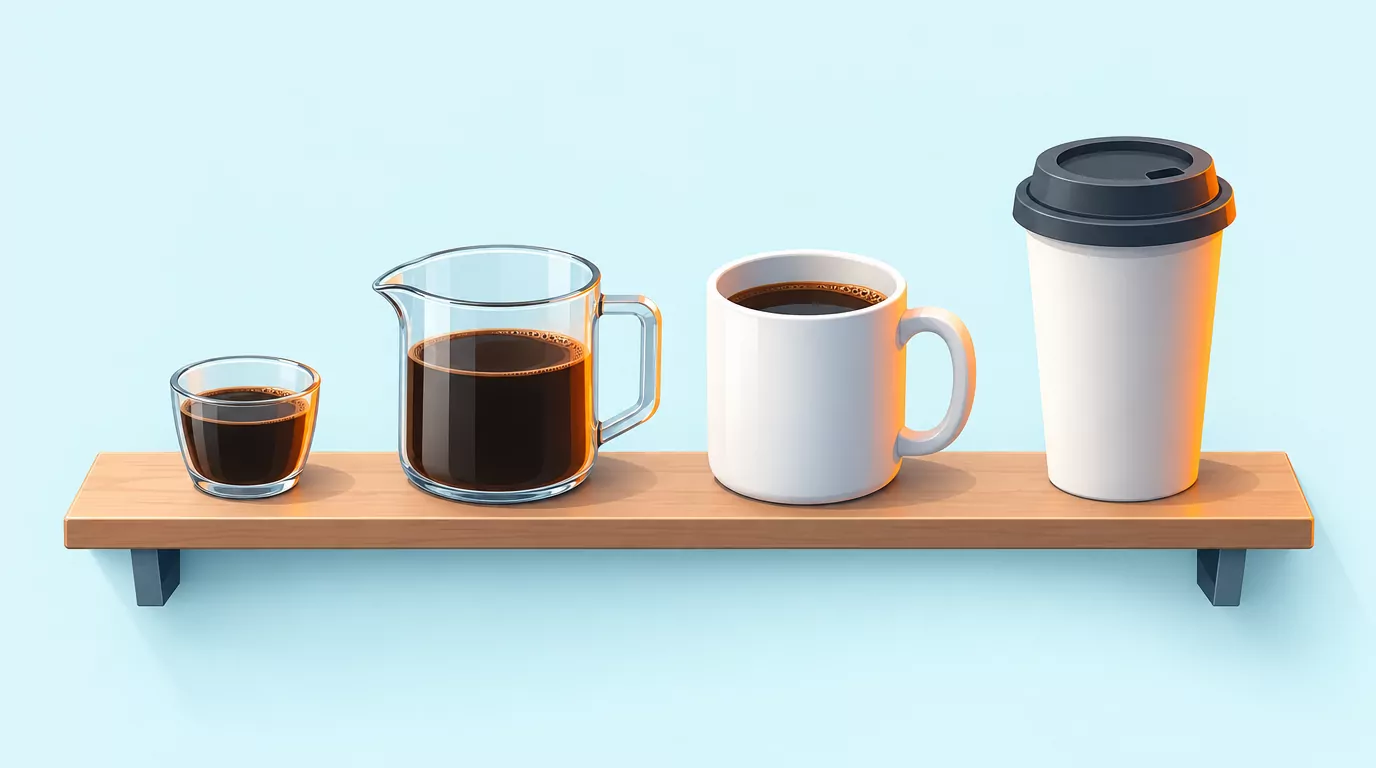
Coffee cup sizes side by side
Here is every common cup in one place, in fluid ounces and milliliters. The ml figures use 29.57 ml per fl oz and are rounded.
| Cup | fl oz | ml | Where you meet it |
|---|---|---|---|
| Coffee-maker cup | 5 (some brands 4) | 148 (some 118) | Carafe marks and "12-cup" labels |
| US measuring cup | 8 | 237 | Recipes and kitchen jugs |
| US nutrition-label cup | about 8.1 | 240 | Nutrition Facts panels |
| Metric cup | about 8.5 | 250 | Canadian and other metric recipes |
| Mug | 8 to 12 | 237 to 355 | Your kitchen cupboard |
| Oversized mug | 15 and up | 444 and up | Big novelty and latte mugs |
| Travel mug | 12 to 20 | 355 to 591 | Commutes and car cup holders |
| Café short | 8 | 237 | Small hot drinks |
| Café tall | 12 | 355 | Hot and iced drinks |
| Café grande | 16 | 473 | Hot and iced drinks |
| Café venti, hot | 20 | 591 | Large hot drinks |
| Café venti, iced | 24 | 710 | Large iced drinks |
| Café trenta, iced | 30 | 887 | Select large iced drinks |
The measuring, label, metric and café rows are fixed sizes. The coffee-maker and mug rows are typical, so your own may sit outside them.
The coffee-maker cup: why a 12-cup pot fills about five mugs
Drip coffee makers do not use the measuring cup. Most count a cup as about 5 fl oz. Makers' own manuals and help pages say so, which is why a full 10-cup pot is often listed as 50 oz.
Some brands count smaller. One popular 10-cup brewer holds 40 fl oz, which works out to 4 fl oz per cup. Your manual, or the ounce marks on the side of the carafe, will tell you which kind you own.
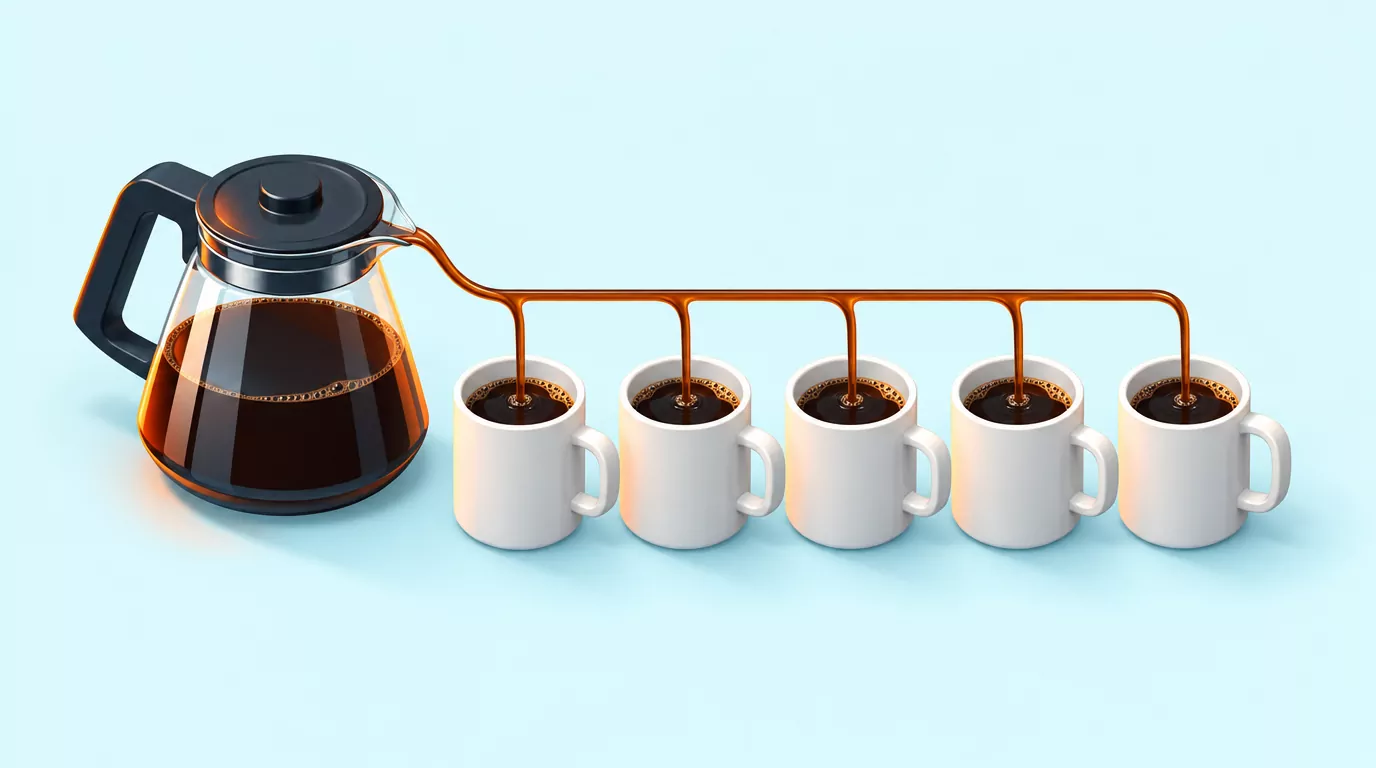
Now the math: a 12-cup maker at 5 fl oz per cup brews 60 fl oz, about 1.8 liters. That fills five 12 oz mugs, or seven and a half measuring cups.
The grounds also keep some of the water, so the pot pours a little less than the tank took in.
If you think in bottles rather than mugs, How Many Water Bottles Are in a Gallon? (Every Bottle Size) turns any volume into a bottle count.
The measuring cup: 8 fluid ounces, rounded to 240 ml
The US customary cup is 8 fl oz. In metric that is 236.6 ml, and most sources round it to 240. The NIGMS guide to measurement lists 1 cup as 8 ounces or 240 ml.
Food labels make the rounding official. The FDA nutrition labeling rule says that for labels, a cup means 240 ml and 1 fl oz means 30 ml. USDA FoodData Central lists brewed coffee by the cup (8 fl oz), with a 6 fl oz serving listed beside it.
One trap is worth a sentence: the ounces on a coffee bag are bean weight, not fluid ounces, so a 12 oz bag has nothing to do with a 12 oz mug.
Your mug: usually 8 to 12 ounces, less in practice
So how many oz in a mug? Most coffee mugs hold 8 to 12 fl oz, and many sit at 10 to 12, with 11 oz one of the most common sizes. Oversized mugs start around 15 oz and go up from there.
Those numbers are brim-full capacity, though. Almost nobody fills a mug to the rim. You leave room so it does not slosh, and more room if you add milk.
So a 12 oz mug often holds less than 12 oz of coffee in real life. That gap is small per cup, but it adds up across a day of refills.
Café sizes: short, tall, grande and venti
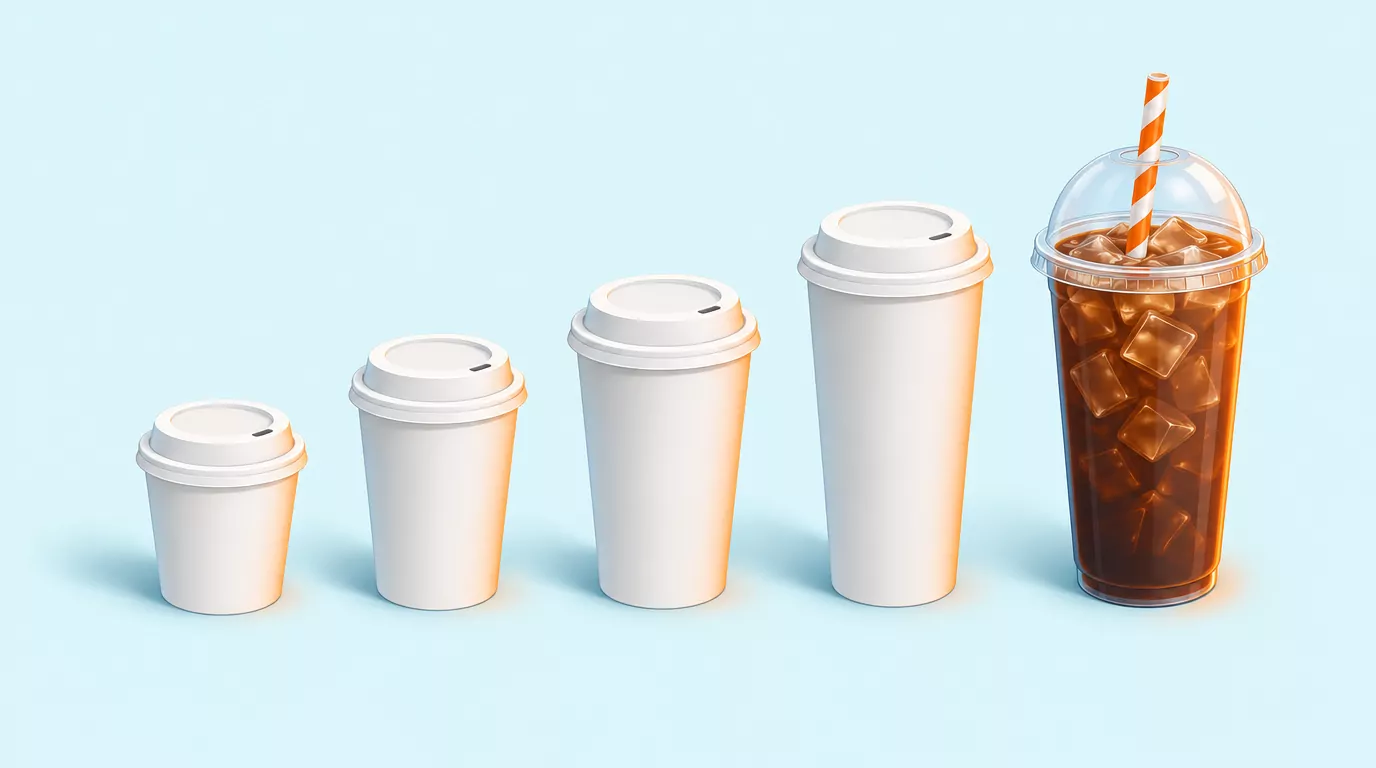
Chain cafés use names instead of numbers. If you have ever wondered how many ounces in a Starbucks grande, it is 16 fl oz, about 473 ml.
The hot sizes are short at 8 fl oz, tall at 12, grande at 16 and venti at 20. Iced drinks skip the short, and the iced venti grows to 24 fl oz. There is also an iced-only trenta at 30 fl oz.
Keep in mind that ice and foam take up part of the cup. A 24 oz iced coffee holds less than 24 oz of liquid, and a foamy cappuccino holds less than its cup size suggests.
Log what is in the mug, not what the carafe says
Carafe marks count 5 oz coffee-maker cups, not your mug. If you log "2 cups" because you poured twice, you might be off in either direction.
The fix is to measure your usual fill once, the same way the guide to how many oz in a glass of water measures a glass. Then log the whole drink, milk included. The guide on whether coffee counts towards water intake explains why both count.
Saving your mug in Water Goose
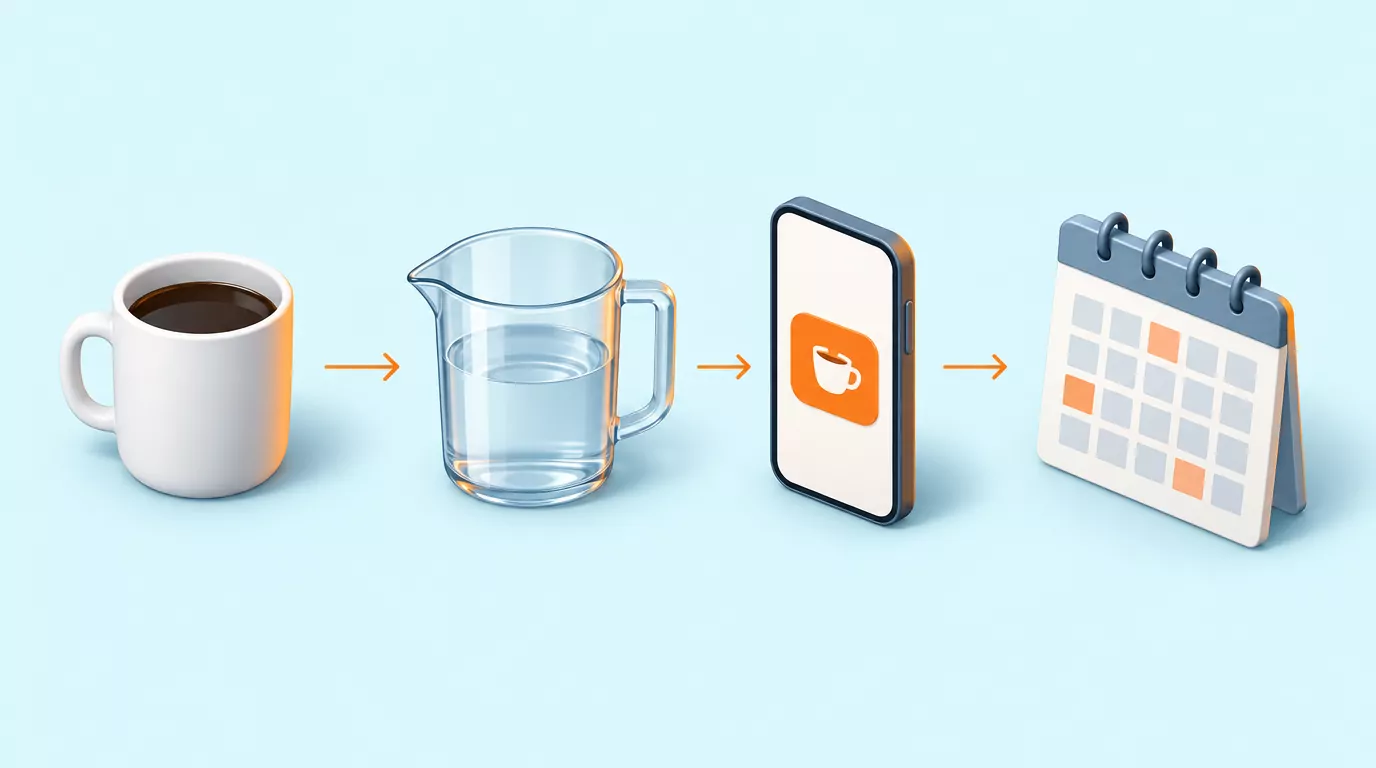
Once you know your number, Water Goose can remember it for you. Here is the setup:
- Choose ml or fl oz. Match the unit you measured in. The app keeps that unit everywhere, so you never convert in your head.
- Pick the Coffee preset. Coffee is one of the built-in drinks, next to water, tea and the rest.
- Save your measured mug as a custom amount. From then on, a coffee is three steps: pick Coffee, choose your saved amount, confirm.
- Let the history do the counting. The calendar-like history shows daily totals, goal completion and hydration streaks, so a 12 oz mug counts as 12, not an assumed 8.
Your entries stay on your device, and no account is needed. If the same mug holds tea in the afternoon, log it with the Tea preset, since tea counts as water intake too.
For the wider routine around this, see the guide on how to track water intake.
Caffeine per cup, briefly
Cup size changes the caffeine too. USDA FoodData Central's figures for brewed coffee work out to about 95 mg in an 8 fl oz cup. The FDA's caffeine guide gives a typical range of 113 to 247 mg for a 12 fl oz cup of regular brewed coffee.
So a 16 oz mug of the same coffee holds about double what an 8 oz cup does. To see how much is still in your system tonight, try the Caffeine Calculator.
Frequently Asked Questions
Is a cup of coffee 6 oz or 8 oz?
Often neither: on most drip coffee makers, one cup is about 5 fl oz, and some brands use 4. A measuring cup is 8 fl oz, and US nutrition labels treat a cup as 240 ml. The 6 oz figure is a common brewing and serving measure; USDA FoodData Central, for example, lists a 6 fl oz serving of brewed coffee next to its 8 fl oz cup. Check your carafe marks to see which one your machine uses.
What is the standard coffee cup size?
There is no single standard coffee cup size. For recipes and labels a cup is 8 fl oz, or about 240 ml, while coffee makers usually count 5 fl oz. Everyday mugs mostly hold 8 to 12 fl oz, and café sizes start at 8 fl oz for a short. If you want one number for your own day, measure the mug you use most.
How many ml are in a cup of coffee?
A measuring cup is 237 ml, and food labels round it to 240 ml. A coffee-maker cup is about 148 ml, since most count 5 fl oz. A typical mug holds about 237 to 355 ml when full, and a metric cup is 250 ml. For logging, the most useful figure is the one you get by pouring your usual fill into a measuring jug once.
How many ounces is a grande?
A grande is 16 fl oz, about 473 ml, for both hot and iced drinks. That is double a measuring cup and a third more than a 12 oz mug. Iced grandes include ice, so the liquid you drink is less than 16 oz. If you log café drinks often, save a grande as its own custom amount so you do not have to remember it.
How many ounces is a travel mug?
Most travel mugs hold 12 to 20 fl oz, about 355 to 591 ml, and some larger tumblers go past that. The size is often printed on the base or the box. As with any mug, the stated size is the brim. If you leave room for the lid and some milk, measure your usual fill once and log that number instead.
A cup of coffee is 5 oz, 8 oz or 16 oz depending on who is counting. Your mug is the only cup that matters for your day, and it is worth measuring once. This article is general wellness information, not medical advice.
If you would like your real mug to be the one you log, save it in Water Goose, which is on the App Store for iPhone and on Google Play for Android. It is a calm hydration tracker that keeps your history on your device.