How Much Is 2 Liters of Water? 67.6 Ounces, in Cups, Glasses and Bottles
2 liters of water is 67.6 US fluid ounces, or 2,000 ml. That is about 8.5 US cups or standard 8 oz glasses, exactly 8 metric cups of 250 ml, four 500 ml (16.9 oz) bottles, and a little more than half a US gallon, which is 64 oz.
Below, you will see what that looks like in your kitchen and how to spread it across a day.
How much is 2 liters of water in ounces, cups and other units?
A liter is a metric unit, so the answer depends on which ounce, cup or gallon you mean. The US and the UK use different fluid ounces and different gallons, and the US even has two cups: one for measuring and one for food labels. So if you are asking how many cups is 2 liters of water, the answer runs from 8 to 8.45, depending on the cup.
The table is worked out from official conversion factors published by NIST. The 240 ml label cup comes from the FDA nutrition labeling rule, which also rounds 1 fl oz to 30 ml. Use the row that matches the labels in your kitchen, since mixing systems is where small errors creep in.
| Unit | 2 liters equals | Good to know |
|---|---|---|
| Milliliters | 2,000 ml | The number most labels outside the US use |
| US fluid ounces | 67.6 fl oz | What US bottle and can labels use |
| UK (imperial) fluid ounces | 70.4 fl oz | A UK fluid ounce is smaller (28.4 ml vs 29.6 ml) |
| US cups (236.6 ml) | 8.45 cups | The measuring-cup cup |
| US nutrition-label cups (240 ml) | 8.33 cups | The cup the FDA uses on Nutrition Facts labels |
| Metric cups (250 ml) | 8 cups | Common in Australia, Canada and recipes |
| US pints | 4.2 pints | A US pint is 16 fl oz |
| US quarts | 2.1 quarts | A US quart is 32 fl oz |
| US gallons | 0.53 gallons | A bit more than half |
| UK gallons | 0.44 gallons | A bit less than half |
One note: a fluid ounce measures volume, not weight, so a kitchen scale set to ounces will not match the number on the bottle.
What 2 liters of water looks like
A number like 67.6 is hard to picture. Objects are easier. Each of these holds about 2 liters:
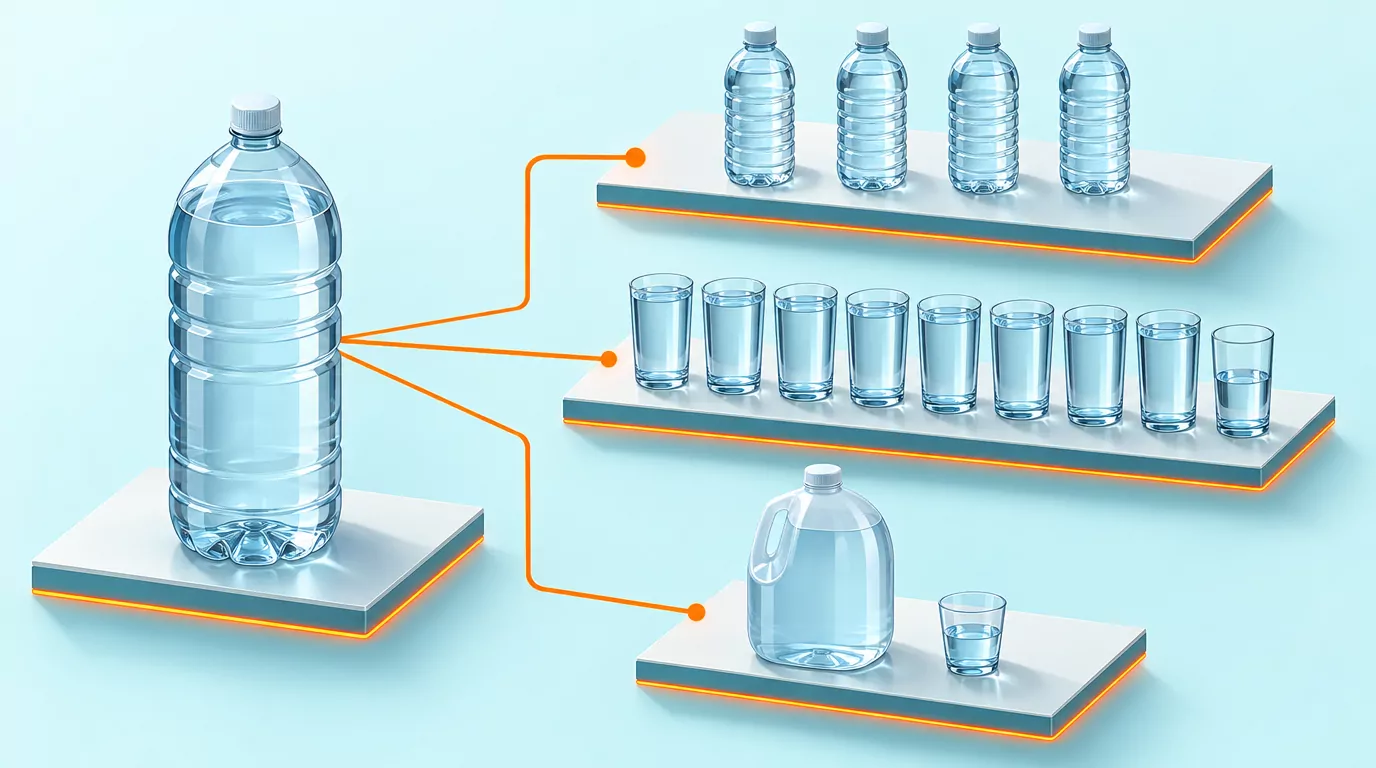
- One 2 liter soda bottle, rinsed and filled with water. It is the most familiar 2 liter object in most US kitchens.
- Four 500 ml (16.9 oz) bottles, the single-use size sold in cases. If you already count your day in bottles, see how many water bottles to drink a day.
- About eight and a half standard 8 oz glasses, or eight glasses of 250 ml.
- A half-gallon milk jug plus a few sips. The extra is about 3.6 oz, roughly half a standard glass.
The round number is easier to hit once it is a picture, not a conversion.
To measure 2 liters at home, fill a container you know holds 2 liters, such as an empty 2 liter bottle, just once. Pour it into the jug or bottles you normally drink from and see how many refills it takes. After that, you will know the shape of the day's water without any math.
How many glasses is 2 liters?
2 liters is about 8.5 standard 8 oz glasses (8.45, to be exact), or exactly 8 glasses of 250 ml, since eight 250 ml glasses add up to 2,000 ml. The 8 oz glass and the US cup are the same size, which is why both come to 8.45. If your usual glass holds 12 oz, it is about 5.6 glasses.
Here is the near miss worth knowing. Eight 8 oz glasses make 64 oz, about 1.89 liters, so "8 glasses" and "2 liters" are close cousins, not the same number. The gap is about 107 ml, or a few sips.
If you have ever wondered where the eight-glasses habit came from, the 8 glasses of water a day rule has its own story. Real glasses are rarely exactly 8 oz, and this guide to how many oz are in a glass of water shows the common sizes and how to measure your own glass once.
How many 16 oz water bottles is 2 liters?
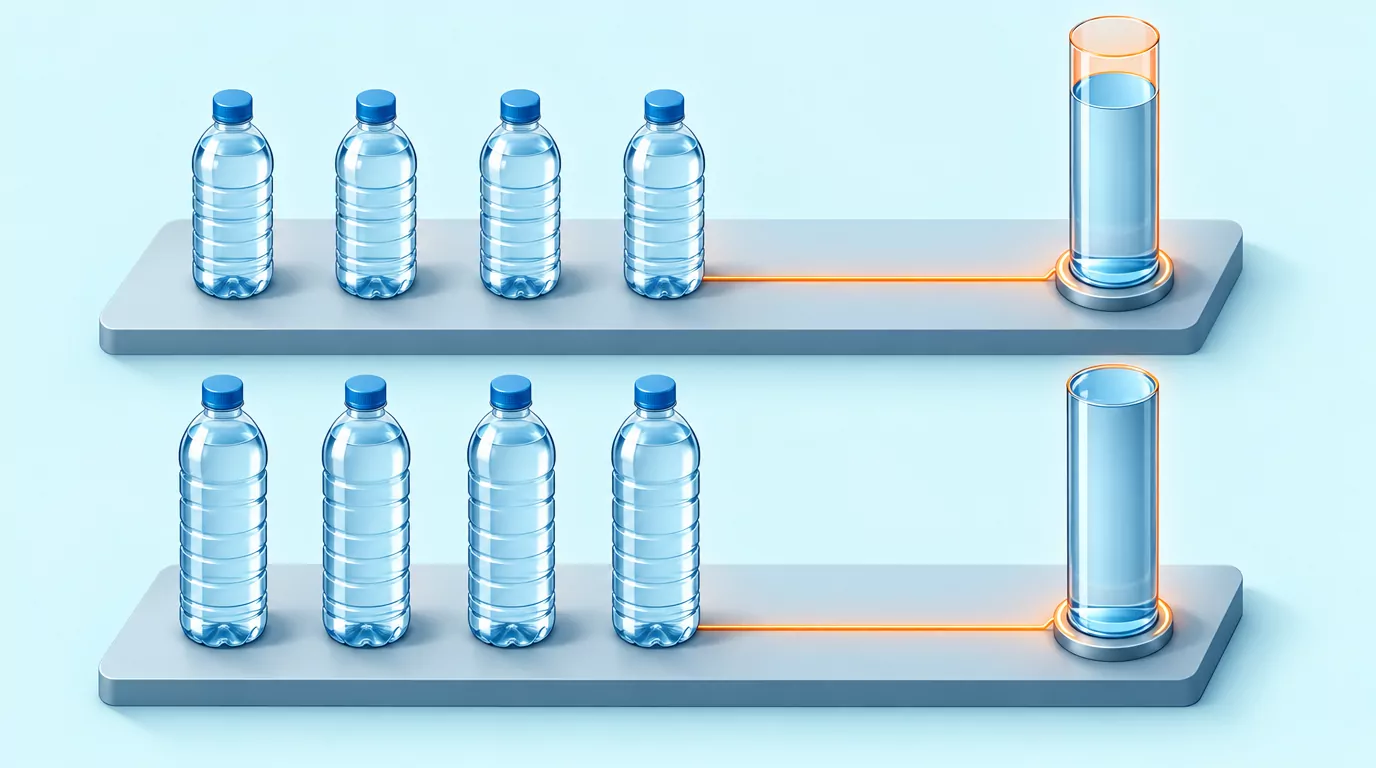
It is about 4.2 bottles if they really hold 16 oz, or exactly four if they are the standard 16.9 oz (500 ml) single-use size. That small difference is easy to get wrong: four 16 oz bottles make 64 oz, about 107 ml (3.6 oz) short of 2 liters, while four 16.9 oz bottles make exactly 2 liters.
So check the label, because 16 and 16.9 look identical on a shelf. For any other bottle size, the Water Bottles in a Gallon tool turns any volume in liters, ounces or cups into a count for your bottle.
Is 2 liters half a gallon?
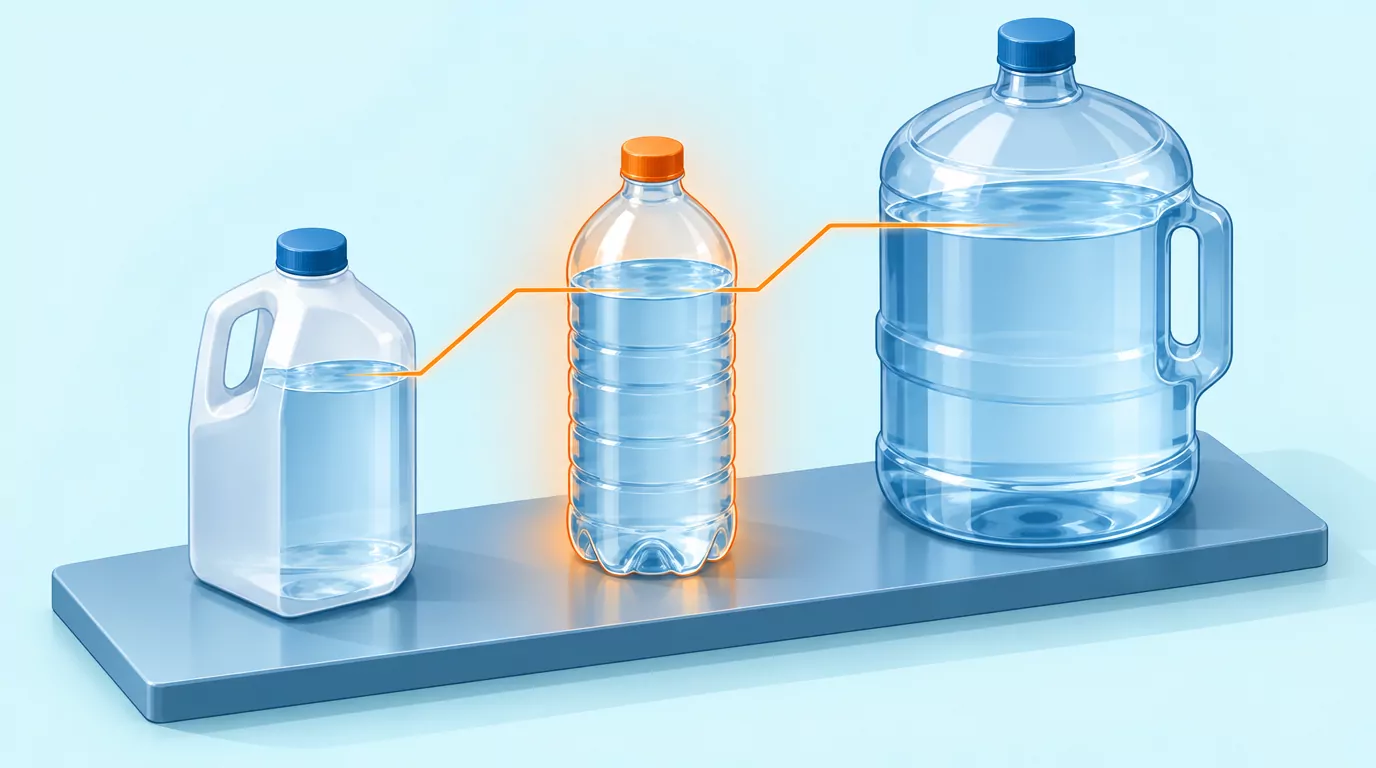
Close, but slightly more. Half a US gallon is 64 fl oz, about 1.89 liters, so 2 liters is about 3.6 oz (107 ml) more than a US half gallon.
There is a twist that most conversion pages skip. A UK (imperial) gallon is larger, at 4.55 liters, because it holds 160 of the smaller UK fluid ounces while a US gallon holds 128 US ones. Half of it is about 2.27 liters, so 2 liters is a little less than a UK half gallon.
So 2 liters sits neatly between the two half gallons. For daily tracking, the 3.6 oz gap is a few sips, so pick the unit your containers use and stop converting.
How to spread 2 liters across your waking hours
Across about 16 waking hours, 2 liters works out to roughly 125 ml (about 4 oz) an hour. Nobody actually drinks hourly, and there is no need to.
An easier picture is four 500 ml bottles, roughly one per quarter of your waking day. Coffee, tea and other drinks count toward the total too, so not every quarter has to be plain water.
If a quarter slips by, that is fine. The next one is just another bottle, not a catch-up session, and there is no need to drink a large amount at once. For a slot-by-slot plan built around a workday, see this drink water time table.
Logging toward a 2 liter goal in Water Goose
Knowing the conversion is useful, but not having to do it every day is better. The trick is to log in the same unit your containers use, so the number on the label is the number you enter. Here is a simple setup in Water Goose:
- Pick the unit your containers speak. If your bottles say 500 ml, track in milliliters toward 2,000 ml, and if they say 16.9 fl oz or 24 oz, choose US units and aim for 67.6 fl oz. Water Goose works in milliliters or fluid ounces and keeps the display consistent throughout, so there is no converting in your head.
- Set the goal. Onboarding suggests a general wellness starting point from your age, gender, height and weight, alongside population reference values. It is not a medical prescription, and you can choose your own number, such as 2 liters, instead.
- Save your usual bottle or glass as a custom quick-add amount, so the size you drink most is already there.
- Log each drink in three steps. Choose the drink, swipe to the amount, then tap the button; water, coffee, tea, soup and the other presets all count toward the total. The ring on the daily view fills as you go, and the calendar history shows daily totals, goal completion and streaks.
Water Goose is free to download and look around. Saving drinks, editing your history, and changing your goal, units or quick-add amounts need Water Goose Plus, sold as a monthly subscription or a one-time purchase.
Reminders are optional. You choose your active hours and how often, then allow notifications on your device. They are scheduled locally, without a push token, account or schedule being sent to a Water Goose server.
Your entries, goal, unit preference and custom amounts are stored locally on your device, and no account is needed to keep a history. If an app is not your style, this guide on how to track water intake covers other ways to keep count.
Frequently Asked Questions
Is 2 liters of water a day enough, or a lot?
2 liters is a common round target, not a universal one, and needs vary with body size, activity, weather and food. For a personal estimate in liters, ounces, cups and bottles, try the Water Intake Calculator.
How much does 2 liters of water weigh?
About 2 kilograms, or 4.4 pounds, because a milliliter of water weighs about a gram, according to the USGS.
How much is 1 liter of water?
1 liter is 33.8 US fl oz, about 4.2 US cups, or two 500 ml bottles: half of everything in the table above. Half a liter is 16.9 oz, which is one standard bottle.
How much is 2 to 3 liters of water in ounces?
2 liters is 67.6 oz, 2.5 liters is 84.5 oz and 3 liters is 101.4 oz. Which amount suits you is a separate question, and the calculator in the first answer is the place to start.
Do coffee and tea count toward 2 liters?
Yes, in general: most drinks, coffee and tea included, add to the day's fluid. The full answer for coffee is in does coffee count towards water intake. Tea gets its own look in does tea count as water intake, and the most hydrating drinks, measured shows how 13 drinks compare with water.
The bottom line on 2 liters
2 liters is 67.6 oz, about eight and a half glasses, four 500 ml bottles, or just over half a US gallon. Pick one unit and let an app keep the count.
The goose has no opinion on ml versus ounces. It only cares that the count is honest.
This is general wellness information, not medical advice.
If you would rather not carry 67.6 around in your head, Water Goose keeps the count. It is on the App Store for iPhone and on Google Play for Android.