Is Vitamin Water Good for You? What the Label Actually Says
Vitamin water is fine as an occasional drink, but it is not a vitamin strategy. A 20 oz bottle of regular Vitaminwater lists 100 calories and 26 to 27 grams of added sugar, about half the daily value. Zero Sugar uses stevia and monk fruit instead. Either way, it counts toward your fluids like other drinks.
So is vitamin water good for you, or is it soda in a nicer bottle? The front of the bottle talks about vitamins and electrolytes. The answer sits on the back, in the Nutrition Facts panel.
This post reads the regular and Zero Sugar labels side by side, using Coca-Cola's own US product pages. Then it sets the vitamins against normal food.
What Is in Vitaminwater, and How It Is Made
Labels list ingredients from most to least by weight, so the list is the best answer to how it is made. On the regular line, it opens with reverse osmosis water, then crystalline fructose, the main sweetener.
Reverse osmosis is one way to make purified water. Distilling is another, as this look at whether distilled water is good for drinking explains.
Next comes the phrase "less than 0.5% of". Each item after it makes up less than half a percent of the drink. On Coca-Cola's US pages, that tail includes:
- Added vitamins, mostly vitamin C and B vitamins
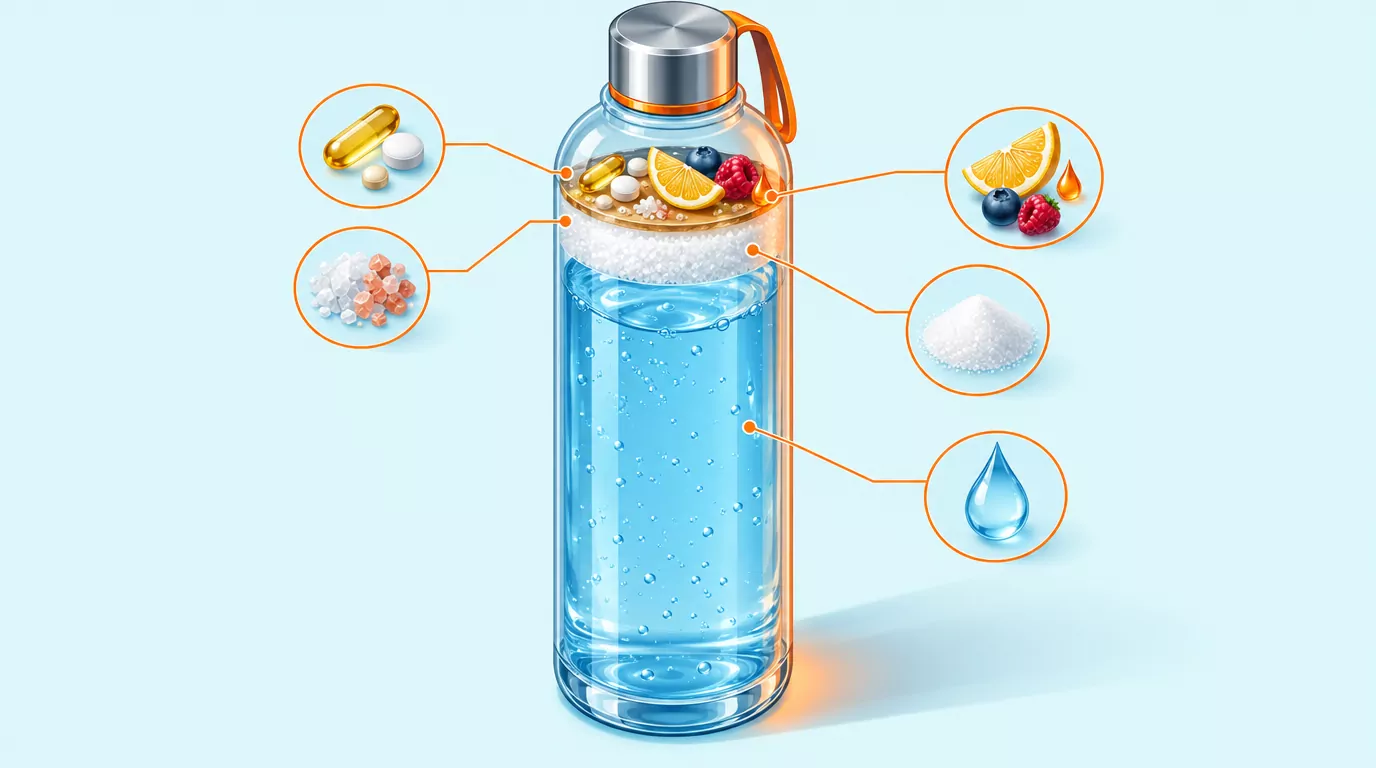
- Electrolyte salts: calcium and magnesium lactates, potassium phosphate, and sodium citrate in some flavors
- Citric acid, natural flavors and cane sugar
- Colors, such as fruit and vegetable juices or beta-carotene
Zero Sugar swaps the fructose and cane sugar for stevia leaf extract and monk fruit extract. Two regular flavors, energy and elevate, also list stevia leaf extract next to the fructose and cane sugar. The mix changes by flavor, so the label in your hand wins.
Regular vs Zero Sugar: The Labels Side by Side
Here is what Coca-Cola lists for eight common bottles on its regular and Zero Sugar product pages.
| Flavor | Bottle | Calories | Added sugar (% Daily Value) | Sodium | Sweetened with | Caffeine |
|---|---|---|---|---|---|---|
| Regular xxx (acai blueberry pomegranate) | 20 fl oz | 100 | 26 g (52%) | 0 mg | Fructose and cane sugar | None |
| Regular power-c dragonfruit | 20 fl oz | 100 | 27 g (54%) | 0 mg | Fructose and cane sugar | None |
| Regular refresh tropical mango | 20 fl oz | 100 | 27 g (54%) | 240 mg | Fructose and cane sugar | None |
| Regular focus kiwi-strawberry | 20 fl oz | 100 | 26 g (52%) | 0 mg | Fructose and cane sugar | 6 mg |
| Regular energy tropical citrus | 20 fl oz | 100 | 27 g (54%) | 0 mg | Fructose, cane sugar and stevia | 60 mg |
| Zero Sugar acai blueberry pomegranate | 20 fl oz | 0 | 0 g | 0 mg | Stevia and monk fruit | None |
| Zero Sugar power-c dragonfruit | 20 fl oz | 0 | 0 g | 0 mg | Stevia and monk fruit | None |
| Zero Sugar re-hydrate pineapple passionfruit | 16.9 fl oz | 5 | 0 g | 210 mg | Stevia and monk fruit | None |
Figures come from Coca-Cola's US product pages, checked in October 2026. Recipes change, so check your bottle.
How Much Sugar Is in Vitaminwater?
Each regular flavor in the table lists 26 to 27 g of added sugar per 20 fl oz bottle. That is 52 to 54% of the FDA's Daily Value of 50 g for added sugars. The 16.9 fl oz elevate blue raspberry limeade lists 22 g (44%), and it also lists stevia leaf extract.
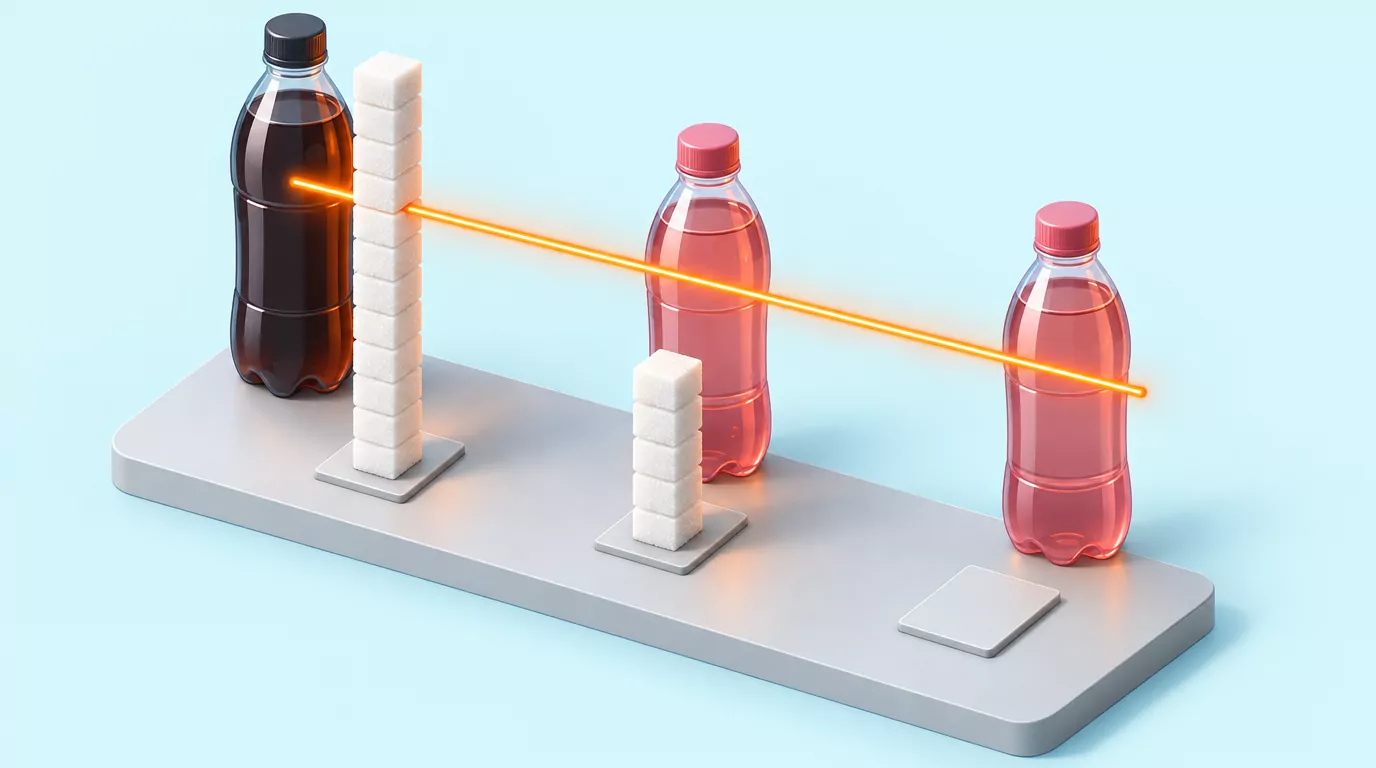
For context, a 20 fl oz Coca-Cola Original lists 240 calories and 65 g of added sugar, or 130% of the Daily Value. Regular Vitaminwater has about 40% of that sugar. Less, but each gram still sits on the added sugars line.
The FDA gives a plain reason for that line: too much added sugar can make it "difficult to meet nutrient needs while staying within calorie limits."
Does Vitamin Water Have Caffeine?
Most flavors list none. Focus kiwi-strawberry lists 6 mg per bottle, and energy tropical citrus lists 60 mg. The FDA cites 400 mg a day as an amount not generally linked to bad effects for most adults, and the caffeine calculator adds up the rest of your day.
Did Vitaminwater Change Its Recipe?
The label did change. Older bottles listed 120 calories per 20 oz on the front. The current US labels list 100 calories and 26 to 27 g of added sugar, and the brand page says "100 calories per 20oz".
Many older articles still quote the old numbers, so a 120 calorie figure most likely comes from an old bottle.
What Sweetens Vitaminwater Zero Sugar?
Each Zero Sugar flavor on Coca-Cola's US page lists stevia leaf extract and monk fruit extract, though its FAQ says the blend may vary by flavor. None of the current US lists name erythritol or sucralose, which some older articles mention.
Both come from plants and are far sweeter than sugar, so very little is needed. The FDA's sweeteners page says it reviewed safety notices for purified stevia and for monk fruit extract and did not question them.
The FAQ also says Zero Sugar keeps the same added vitamins as regular, just without the sugar. Acai blueberry pomegranate, for one, lists the same numbers in both versions. Taste is the trade-off most people notice.
The Vitamins It Adds, and What Food Already Supplies
Most flavors add vitamin C and several B vitamins at 100% of the Daily Value or more per bottle. Acai blueberry pomegranate lists 200% for vitamin C, and focus lists 300% for B5, B6 and B12. Some flavors add vitamin A, vitamin E, zinc, selenium, chromium or manganese.
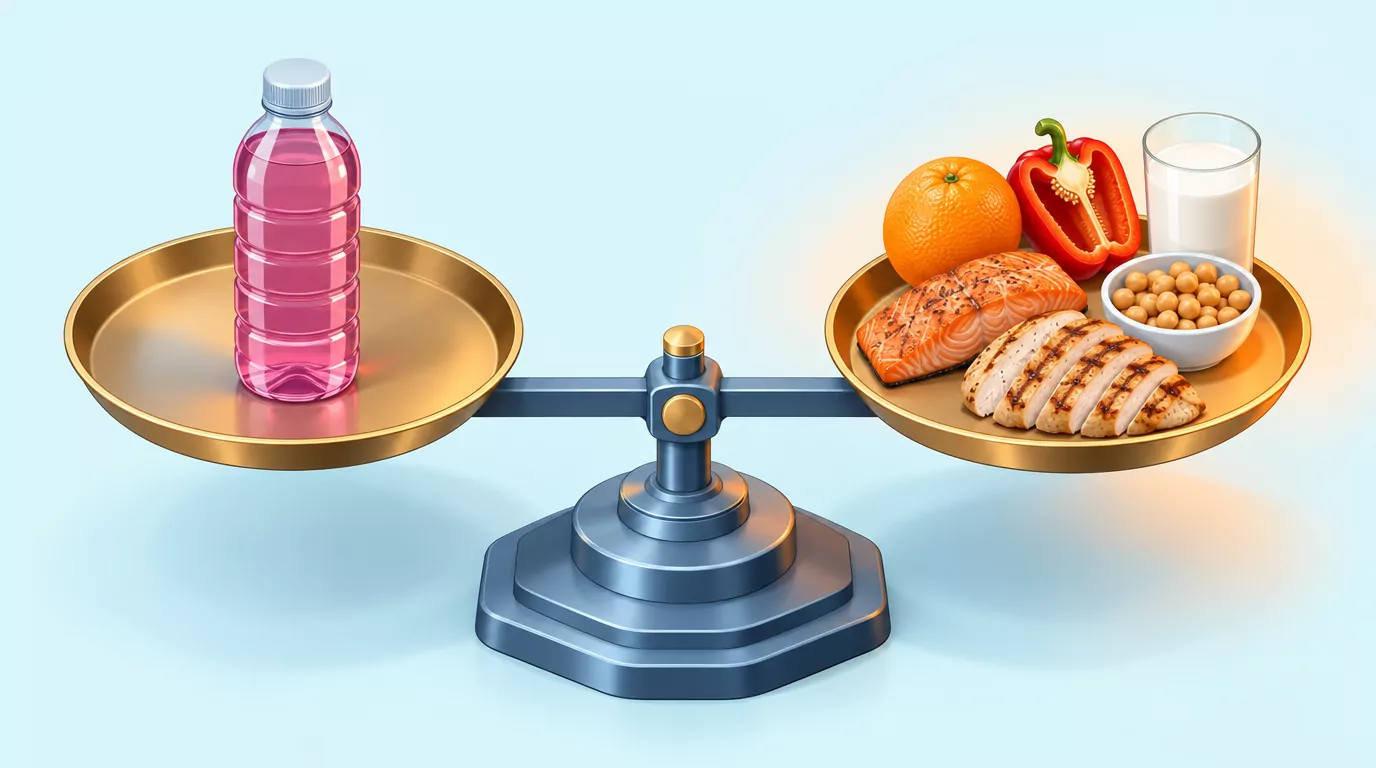
Here is one bottle of acai blueberry pomegranate next to food. Daily Values are the FDA's, and the food figures come from USDA FoodData Central.
| Nutrient | Daily Value | One bottle of acai blueberry pomegranate | Food with a similar amount |
|---|---|---|---|
| Vitamin C | 90 mg | 200% | One medium orange: 70 mg. Half a cup of raw red pepper: 95 mg. |
| Vitamin B12 | 2.4 mcg | 100% | One cup of 2% milk: 1.3 mcg. 3 oz of cooked salmon: 2.6 mcg. |
| Vitamin B6 | 1.7 mg | 100% | One cup of canned chickpeas: 1.1 mg. |
| Niacin | 16 mg | 100% | 3 oz of roasted chicken breast: about 11.6 mg. |
Now the bigger point. Most people in the US already get enough vitamin C, B6, B12 and niacin from what they eat and drink, says the NIH Office of Dietary Supplements.
Vitamin C and the B vitamins are water-soluble. MedlinePlus explains that the body does not store these, and leftover amounts leave through the urine. Vitamin B12 is the exception, since the liver can store it for many years.
In the regular line, the vitamins arrive with sugar and none of the fiber or other nutrients a piece of fruit brings. If you want a little vitamin C with almost no calories, lemon water does that.
Does Vitaminwater Have Electrolytes?
Yes, on the ingredient list. Mostly not in amounts that show up on the Nutrition Facts panel. Most flavors list 0 mg of sodium and mark potassium as not a significant source.
A few flavors are the exception:
- Refresh tropical mango: 240 mg of sodium and 60 mg of potassium per 20 fl oz.
- Essential orange-orange: 220 mg of potassium and 110 mg of calcium.
- Re-hydrate zero sugar: 210 mg of sodium and 50 mg of potassium per 16.9 fl oz.
- Rise orange zero sugar: 190 mg of potassium.
For scale, a medium banana has about 422 mg of potassium in USDA data, and the Daily Value is 4,700 mg. Sports drinks and rehydration drinks are built around sodium. If that is what you want, the electrolyte drink comparison lines up LMNT, Liquid I.V., Gatorade and more per litre, from their makers' labels.
Is Vitaminwater Good for Hydration?
It is mostly water, so it counts toward your daily fluids like other drinks. The National Academies count total water from drinking water, other drinks and food.
Vitaminwater was not in the beverage hydration index trial. Sweetened drinks that were, such as cola and a sports drink, were statistically indistinguishable from still water. The most hydrating drinks, ranked covers all 13 drinks from that trial.
So the trade-off is the sugar, not the hydration. Every drink adds up, which is the idea behind staying hydrated without drinking much plain water.
So, Is Vitamin Water Good for You?
It is fine as an occasional drink. It is not a vitamin plan. Regular Vitaminwater is a sweetened drink with a vitamin label, and plain water stays the daily default.
If you like the taste, have one. If you buy it for the vitamins, food already covers most people.
Is Vitaminwater Zero Sugar Good for You?
Zero Sugar has no sugar and the same vitamins, sweetened with stevia and monk fruit. It is a fair swap if you like the taste. It is still not a vitamin plan.
Which Vitamin Water Is Healthiest?
Go by the label. Zero Sugar flavors list 0 g of added sugar, while regular ones barely differ at 26 to 27 g per 20 fl oz. Check the caffeine line too, since two regular flavors fill it, and the bottle size, since 16.9 and 20 fl oz bottles sit side by side.
Then pick the one you like with the least added sugar. Check sodium only if electrolytes are why you buy it.
Frequently Asked Questions
Why Was Vitamin Water Sued?
In 2009, the Center for Science in the Public Interest (CSPI) and co-counsel filed a class action for California and New York buyers over label claims such as "vitamins + water = all you need". The case settled with final court approval in 2016. Coca-Cola agreed to drop those health-style claims and to show "with sweeteners" and the calories on the front label, per CSPI's case page.
Is Vitaminwater Better Than Soda?
Per 20 fl oz, Coca-Cola Original lists 240 calories and 65 g of added sugar. Regular Vitaminwater lists 100 calories and 26 to 27 g: less sugar, not none. For how the soda counts as fluid, see does Coke hydrate you.
What's Healthier, Gatorade or Vitamin Water?
They do different jobs: a sports drink is built around sodium and carbs for long, sweaty exercise, while most Vitaminwater flavors list 0 mg of sodium and add vitamins. Neither is a daily water swap. For the sports drink side, see does Gatorade hydrate you and the electrolyte drink comparison.
How Many Vitamin Waters Can You Drink a Day?
There is no official number. Two regular 20 fl oz bottles add up to 52 to 54 g of added sugar, just over the 50 g Daily Value. Zero Sugar removes the sugar math, but each bottle already carries 100% or more of the Daily Value for several vitamins, so a second bottle adds taste, not much else.
What Are Some Healthier Alternatives to Vitamin Water?
Plain or sparkling water, water with a slice of fruit or a few herbs, unsweetened tea, and food for the vitamins. If plain water bores you, try these ways to make water taste better. If you like bubbles, sparkling water hydrates you too.
Logging Vitaminwater as One Drink Among Many
Water Goose has no Vitaminwater preset, so log a bottle, regular or Zero Sugar, under sports drinks. It is a sweetened bottled drink rather than water with a splash of flavor. Coca-Cola describes it as sitting between plain water and sports drinks.
Logging takes three steps: choose a drink, swipe to the amount (20 fl oz, about 591 ml, for the common bottle), then tap one clear button. Units are metric or US. Water Goose counts the fluid; the sugar, vitamins and caffeine stay on the label.
Water Goose is free to download and look around. Saving drinks, editing your history, and changing your goal, units, or quick-add amounts need Water Goose Plus, sold as a monthly subscription or a one-time purchase. Entries are stored locally on the device, and no account is needed.
For the wider habit, here is how to track water intake without a spreadsheet. This is general wellness information, not medical advice.
If you would rather not keep the running total in your head, the goose is happy to. Water Goose is on the App Store for iPhone and on Google Play for Android.