How to Stay Hydrated Without Drinking Water (Much)
Not a fan of plain water? That is fine, and you are in good company. If you are working out how to stay hydrated without drinking water all day, start here: your body keeps track of the fluid, not the glass it came in.
This guide is a set of swaps, not a case for giving up water, and a little plain water still earns a spot. If you would rather warm up to water itself, how to drink more water covers that side. Nobody is grading the glass.
How to stay hydrated without drinking water: the short answer
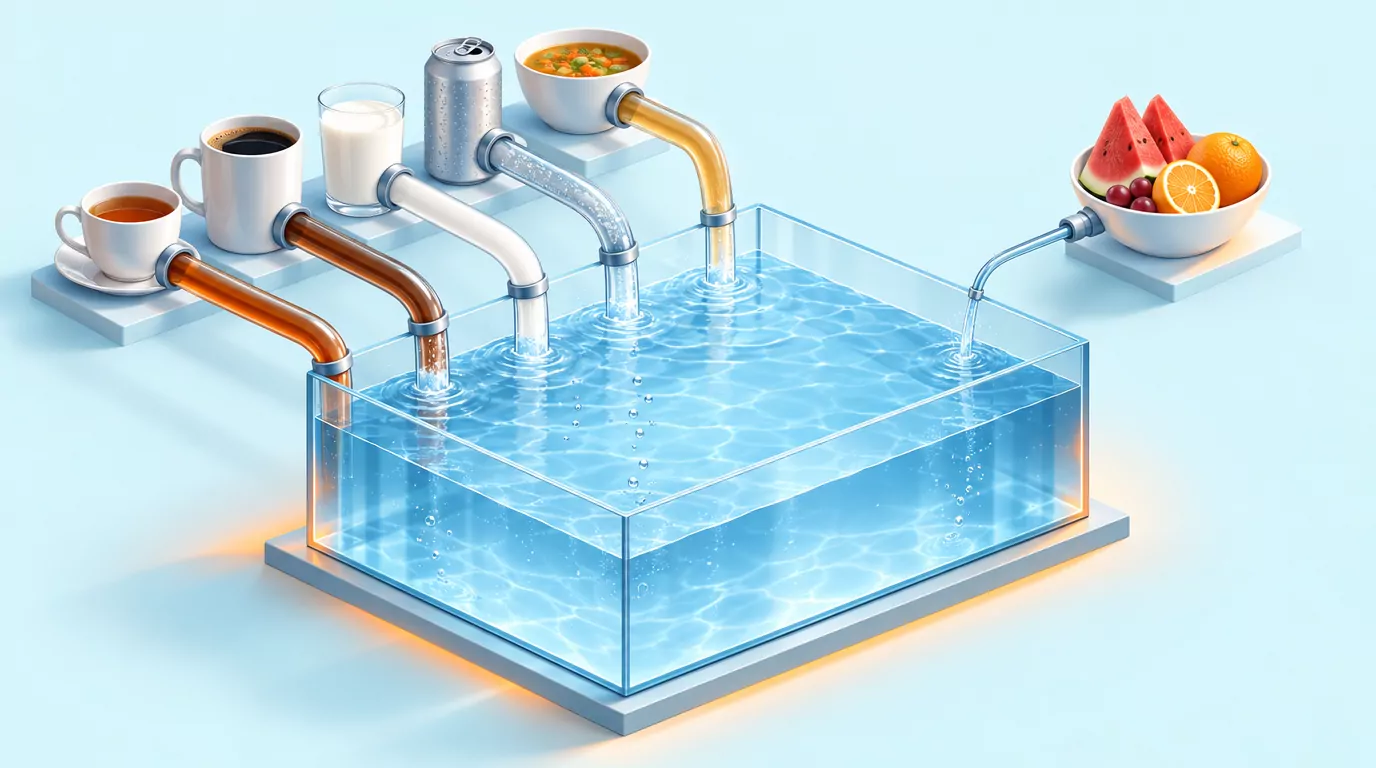
You can stay hydrated without drinking much plain water, because almost every non-alcoholic drink counts toward your daily fluid. Tea, coffee in moderation, milk, sparkling water and soup all add to the total, and water-rich fruit and vegetables add more. Keep sugary drinks occasional and a little plain water in the mix.
Official guidance already works this way. The European Food Safety Authority sets its reference values for total water, which covers drinking water, drinks of every kind and the moisture in food. Mayo Clinic adds that about 20% of daily fluid usually comes from food, with the rest from drinks.
So what counts toward daily fluid intake is much broader than the water bottle. The useful question is not whether other drinks count. It is which ones fit into your day.
Swaps that count toward your day
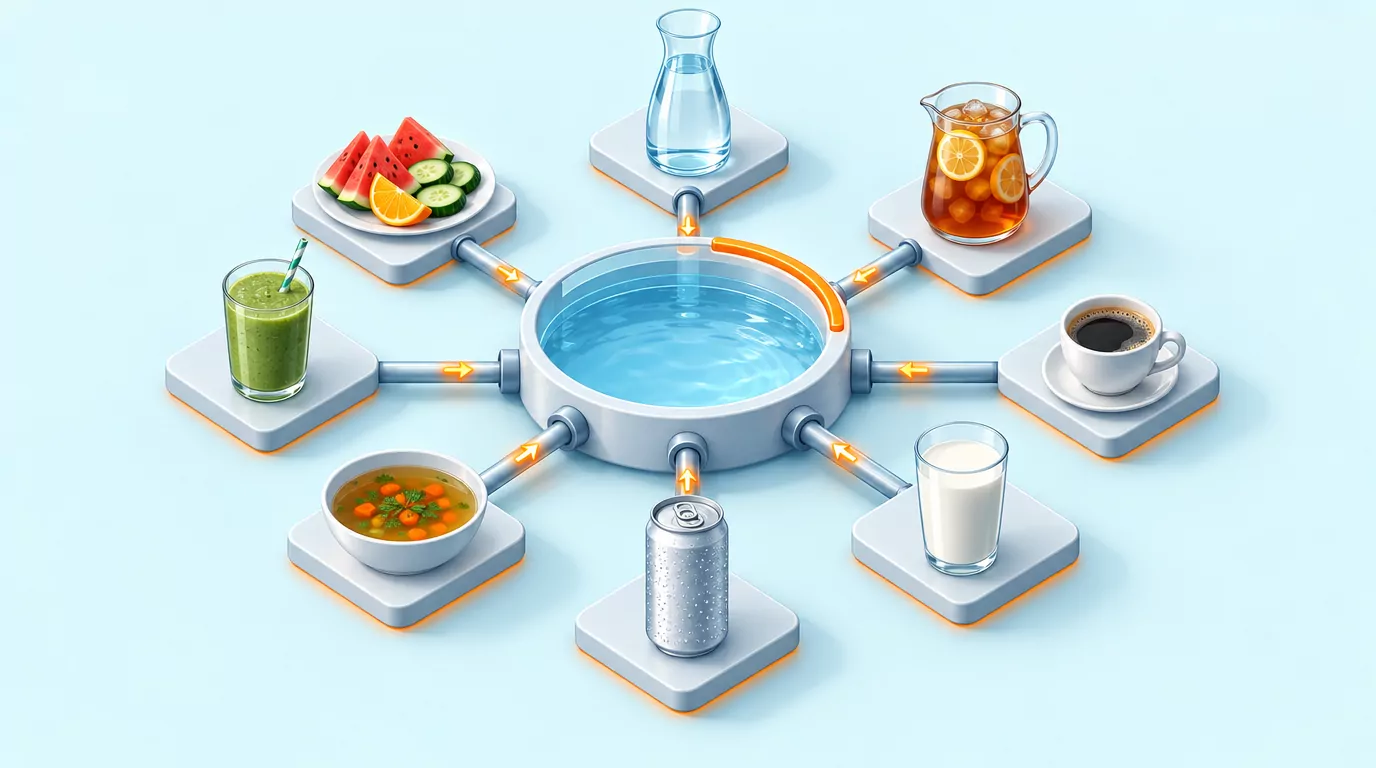
If you want measured comparisons, the most hydrating drinks, ranked lines everyday drinks up against water. The swaps below are about habits instead: what to drink if you don't like water, and where each one fits.
Tea, hot or iced
Brew a jug of iced tea in the evening and keep it in the fridge, so the first cold drink you reach for is already made. Herbal and fruit teas make good evening picks, since most have no caffeine. Here is how tea counts as water intake in more detail.
Coffee, in moderation
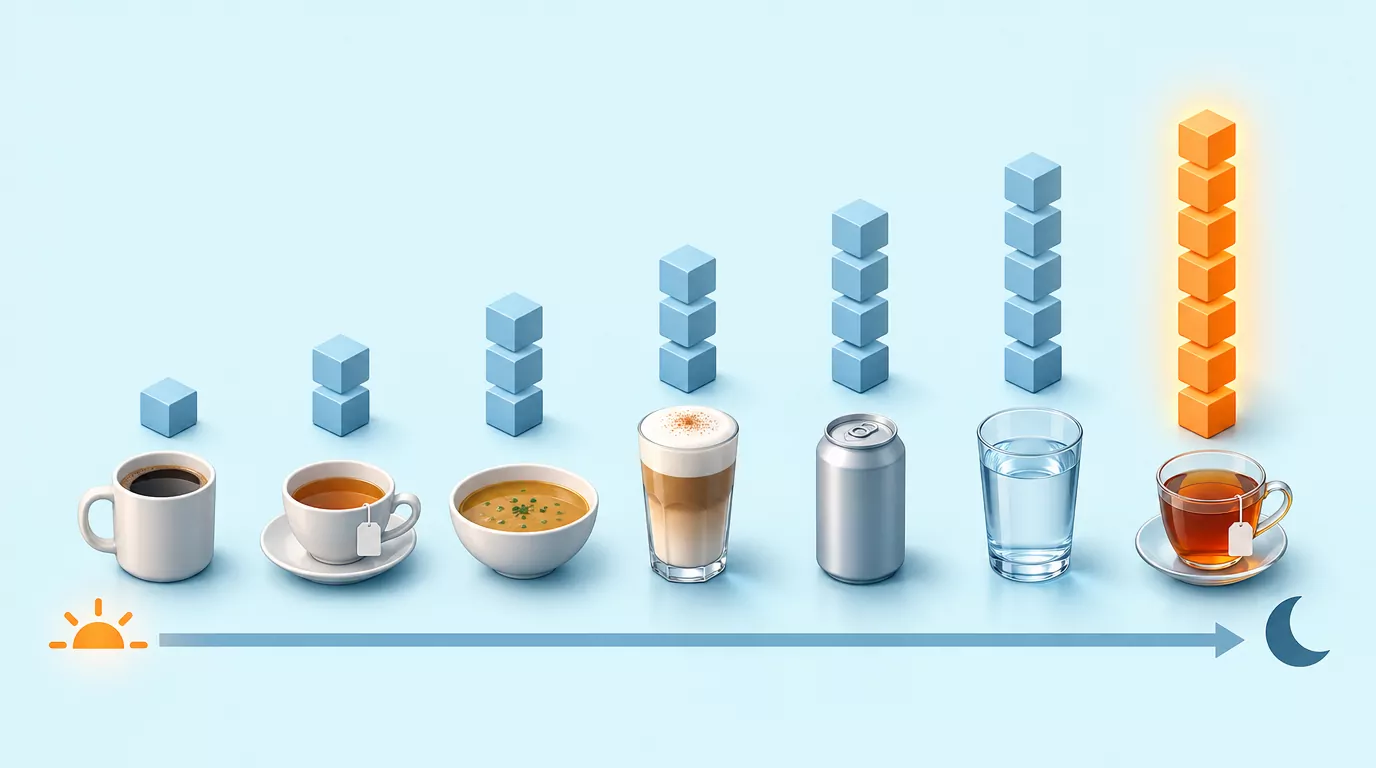
Cup size matters more than the drink itself. An iced coffee or a milky latte carries far more liquid than a quick espresso. The coffee and water intake guide has the details, and the caffeine calculator shows how much will still be in your system at bedtime.
Milk and milk alternatives
A glass of milk with breakfast is an easy add, and unsweetened soy or oat drinks fill the same slot if dairy is not your thing. For the measured version, see Does Milk Hydrate You Better Than Water?
Sparkling water
Keep a cold can of sparkling water in your bag or desk drawer. The fizz makes it feel like a small treat, and unsweetened cans skip the sugar. Here is whether sparkling water hydrates you, in full.
Soup and broth
Start dinner with a cup of broth or a small bowl of soup, or sip broth from a mug on a cold afternoon. It is a warm, savory option for anyone who finds cold drinks a chore. The full story is in does soup count as water intake.
Smoothies and juice
A small glass with breakfast is the sweet spot. The NHS suggests keeping fruit juice and smoothies to one small glass (150 ml, about 5 fl oz) a day, with a meal, because they are high in sugar. Orange juice, apple juice and lemonade are covered in Does Orange Juice Hydrate You?
Water-rich fruit and vegetables
This is the simplest way to get water without drinking water. Keep fruit as a snack and add a side salad to lunch, since cucumber, watermelon, oranges and lettuce are all mostly water. For the numbers, see the USDA data on water-rich foods, covering 32 everyday foods.
A mostly non-water day, added up
Here is what a day can look like when plain water plays a small part. The sizes are ordinary ones: an 8 fl oz cup is about 237 ml, and a 12 fl oz can or latte is about 355 ml.
| When | Drink | fl oz | ml |
|---|---|---|---|
| Breakfast | Coffee | 8 | 237 |
| Mid-morning | Tea | 8 | 237 |
| Lunch | Soup (1 cup) | 8 | 237 |
| Afternoon | Latte | 12 | 355 |
| Afternoon | Sparkling water (1 can) | 12 | 355 |
| Dinner | Glass of water | 8 | 237 |
| Evening | Herbal tea | 8 | 237 |
| Total | 64 | About 1,895 |
That is 64 fl oz, or about 1.9 liters, and only one glass of it was plain water. It also happens to match the old 8 glasses a day figure, with seven of those glasses swapped for something else.
Notice that each drink rides on something already in the day: the morning coffee, the lunch soup, the can in your bag. Nothing here needs a new routine. Swap any row for your own, such as milk instead of the evening tea or a smoothie instead of the latte, and the math works the same way.
To build your own version, write down what you drank yesterday with a rough size next to each drink. You may find a few cups you never counted, like the tea at a meeting or the broth with dinner. Then pick one or two moments where a bigger cup or a second refill would be easy.
Treat this as an illustration, not a target. Your own needs depend on your size, your activity and the weather. The food on your plate adds more fluid on top of the table, too.
Where the caveats sit
A few drinks come with trade-offs. None of them is a reason to panic, but they are worth knowing before you build a day around them.
Sugar
Sweet drinks still count toward your fluid. The trade-off is added sugar, and the CDC names sugar-sweetened drinks among the leading sources of added sugar in the American diet.
If a sweet drink is already part of your day, you do not have to drop it. A smaller size, or a juice topped up with sparkling water, keeps the habit and trims the sugar. One look at the label is usually enough to know where a drink sits.
Unsweetened tea, black coffee and plain sparkling water are the easy defaults. An occasional sweet drink is a choice you get to make, not a failure.
Alcohol
Alcohol is left out of the swaps on purpose. If you want the measured data, Does Beer Dehydrate You? covers beer, wine and non-alcoholic beer side by side.
Electrolyte and sports drinks
You will not find an electrolyte or sports drink recommendation here. For label data only, the electrolyte drinks comparison lines up sodium, sugar and cost per litre, and the drinks ranking covers sports drinks against water.
Why plain water still earns a spot
Plain water has no sugar and no caffeine, and it costs next to nothing at the tap. That makes it the one drink you can have more of without thinking about any trade-off at all. It is also the drink most likely to be within reach, from the tap at work to the fountain at the gym.
You do not need to love it. A glass with dinner or a bottle on your desk keeps it in the mix without turning it into a chore. If the taste is what puts you off, here is how to make water taste better without much effort.
Counting every drink in Water Goose
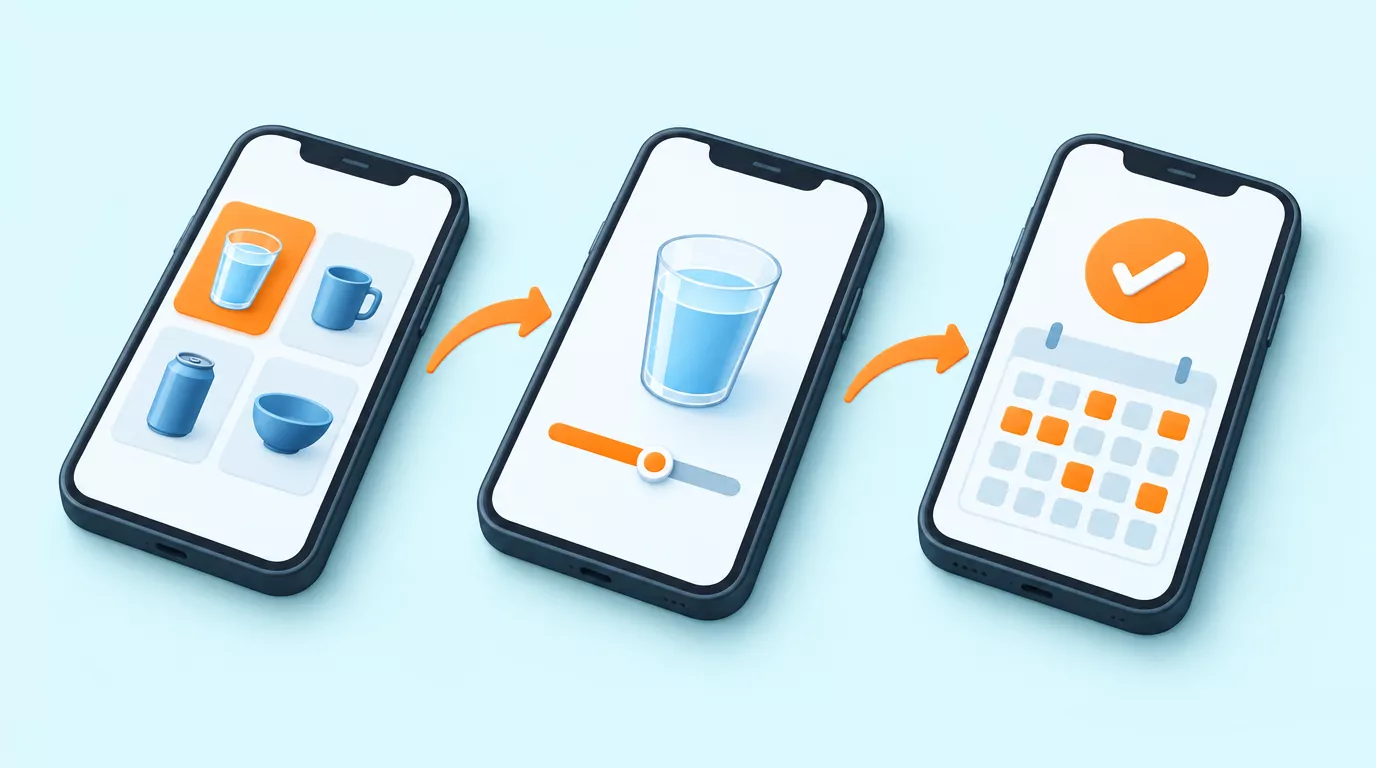
Water Goose logs every drink the same way: pick the drink, choose the amount, confirm. Presets include coffee, tea, milk, juice, smoothies, soup and sparkling water, so a tea-and-soup day shows up in your daily total like any other. You can save a custom amount for your usual mug and choose ml or fl oz.
The history shows daily totals, goal completion and streaks in a calendar-like view. Entries stay on your phone, and there is no account to set up. The app logs drinks only, so the water in your food is not part of the count.
Frequently Asked Questions
What can I drink instead of water without much sugar?
Unsweetened tea (hot or iced), black coffee, plain sparkling water, milk and broth all add fluid with little or no added sugar. Unsweetened soy or oat drinks work too. Pick the ones you will actually reach for, because there is no need to rank them.
Does hot chocolate count toward fluid intake?
Yes. Hot chocolate is mostly milk or water, so a mug adds fluid much like the liquid it was made with. The sugar caveat applies, so it fits better as a treat than as your main drink of the day.
Do ice pops and frozen fruit count?
Ice pops are frozen drinks, so each one is a small top-up of fluid. Frozen fruit counts the same way fresh fruit does, since freezing does not take the water out. Think of both as small bonuses rather than something to measure.
Do protein shakes count toward fluid intake?
The milk or water you mix a shake with counts as fluid, the same as it would in a glass. Check the label for sugar, since some ready-made shakes carry a fair amount. This guide only looks at the fluid, not at protein.
The bottom line
If you are trying to stay hydrated without plain water, lean on the drinks you already like and the food you already eat. Keep sweet drinks occasional and let a glass of water ride along with a meal.
This is general wellness information, not medical advice. If a clinician has given you a fluid target or limit, follow that instead.
If you want to watch a tea-and-soup day add up, Water Goose is on the App Store for iPhone and on Google Play for Android, with presets for the drinks you already have.