Habit Stacking: How to Attach a New Habit to One You Already Have
Habit stacking means attaching a new habit to one you already do every day, using the formula "After I [current habit], I will [new habit]." The old habit becomes the cue, so you rely less on memory or motivation. BJ Fogg developed the method in his Tiny Habits program, and James Clear popularised it in Atomic Habits.

What is habit stacking?
The meaning of habit stacking is in the name: you stack a new habit on top of one that already runs. A routine you never skip hands off to the new habit. The whole method fits on one line.
After I [current habit], I will [new habit].
Clear's own version allows "after" or "before". "After" suits most stacks, because the end of an action is a clear signal, while "before" suits a moment you already pause for. Two examples:
- After I put my headphones on to study, I will write the one question this session must answer.
- Before I open my messages in the morning, I will write the one thing that must happen today.
The new habit can be almost anything small: a line in a notebook, a page of a book, or a glass of water if you want to drink more water. What matters is the hand-off.
Who came up with habit stacking?
Three people share the credit, for three different things.
- BJ Fogg created the method. Fogg directs the Behavior Design Lab at Stanford and built the idea into his Tiny Habits program. He calls the existing routine an anchor and the plan a recipe, written "After I [anchor], I will [tiny behavior]" and followed by a small celebration. His book, Tiny Habits, came out in 2019.
- S.J. Scott wrote the book with the name. His 2014 book is called Habit Stacking: 97 Small Life Changes That Take Five Minutes or Less. James Clear thanks Scott for inspiring his use of the phrase.
- James Clear made it famous. He put the idea in Atomic Habits (2018), and his habit stacking article credits Fogg for the method, noting that Fogg calls it anchoring. Clear describes habit stacking as a special form of an implementation intention.
So the habit stacking book has two fair answers: Scott's carries the name, and Atomic Habits is where most people met the idea.
Why an anchor beats "I will try to remember"
In psychology, a habit is an action that a cue sets off on its own, because the two have been paired again and again. A 2012 paper in the British Journal of General Practice by Gardner, Lally and Wardle says a cue inside an existing daily routine is a handy, stable place to start. A stack borrows a cue you already meet every day, so memory has less to do.
A stack is also an if-then plan, which researchers call an implementation intention. A 2006 review of 94 tests by Peter Gollwitzer and Paschal Sheeran found that if-then plans had a medium to large effect on reaching goals. One honest limit: this evidence covers cues and if-then plans in general, not trials of "habit stacking" by name.
How to pick a reliable anchor
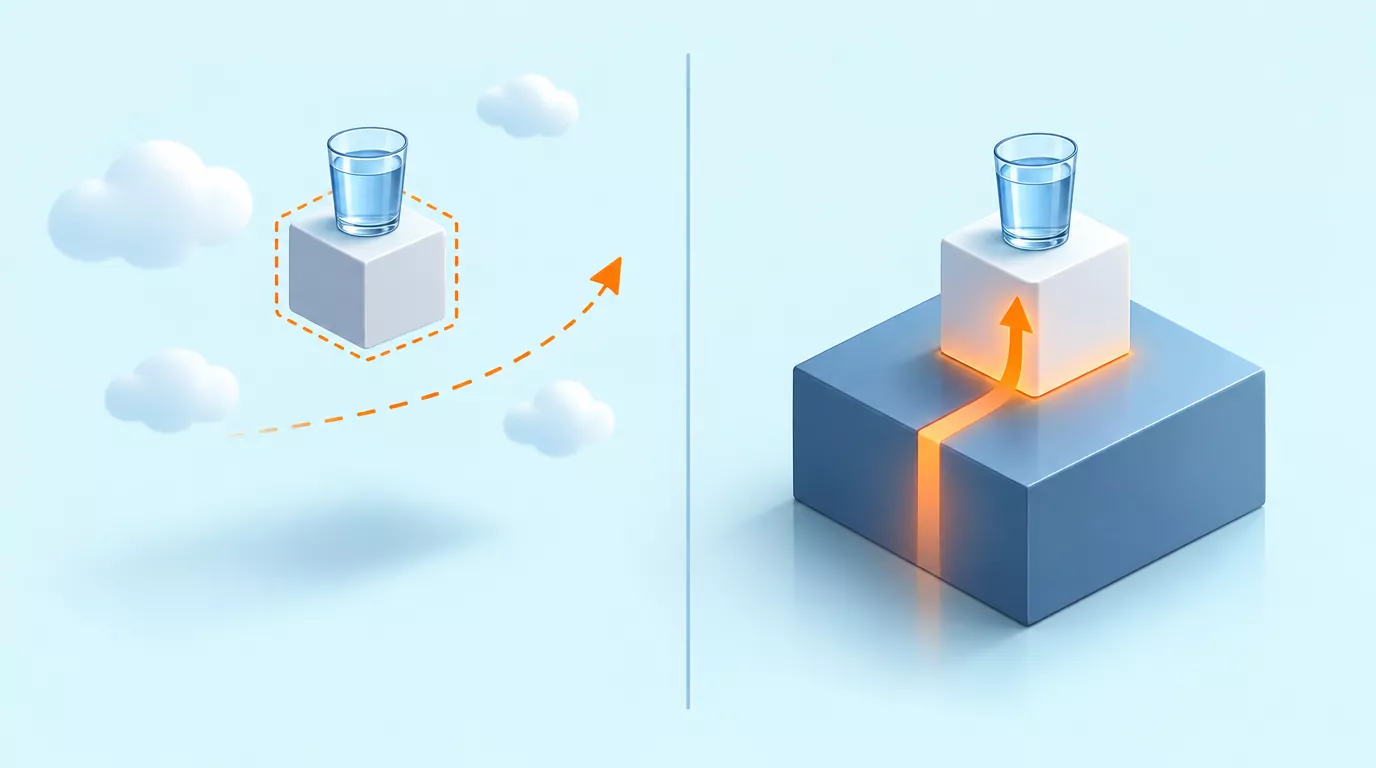
The anchor does most of the work, so choose it with care. A good one passes five tests.
- It happens every day you want the new habit. Clear's rule is that the cue should have the same frequency as the habit. Gym days cannot anchor a daily habit, so give rest days a recipe of their own.
- It has a single, physical moment. "After I lock my screen" is a moment. "After work" or "at lunch" is a stretch of time.
- It happens where the new habit can be done. The pen is already on the desk, and the bottle is already in the bag.
- It comes with 30 spare seconds. The rush out of the door is already full, so leave it alone.
- It happens whether or not you feel like it. You still put your bag down when you get in late, tired or busy.
Here is the difference in practice:
| Vague anchor | Reliable anchor |
|---|---|
| In the morning | After I switch off my alarm |
| When I study | After I find a seat in the library |
| After work | After I put my work badge or lanyard in my bag |
| Before bed | After I set tomorrow's alarm |
| When I get home, drink some water | After I put my bag down at home, I will fill tomorrow's bottle |

Make the new habit tiny
Fogg's rule of thumb, as a Stanford Medicine handout on Tiny Habits sums it up: a tiny habit takes less than 30 seconds, needs little effort and happens at least once a day. One page, one line, one glass.
Tiny is the starting size, not the final one. The habit can grow once it runs on its own.
Write the recipe down where the anchor happens
Gardner and colleagues give patients a simple planning tool with the same shape as a stack: a goal, then a plan such as "after I have lunch at home I will have a piece of fruit." Write your recipe on a sticky note and put it where the anchor happens: the desk, the hook by the door, the bedside table. The note does the remembering until the habit can.
Why habit stacks fail
A habit stack rarely fails for lack of willpower. It fails for a few plain reasons, each with a symptom and a fix.
The anchor does not happen every day
Shifts, timetables, weekends and holidays all move the routine you built on. The symptom is a habit that holds on weekdays and vanishes on Saturdays. Fix it with a second recipe for off days, or pick a more universal anchor: you change into pyjamas on Saturdays too.
For days with no fixed routine at all, these tips for drinking more water when you have no routine show how to find a cue anyway.
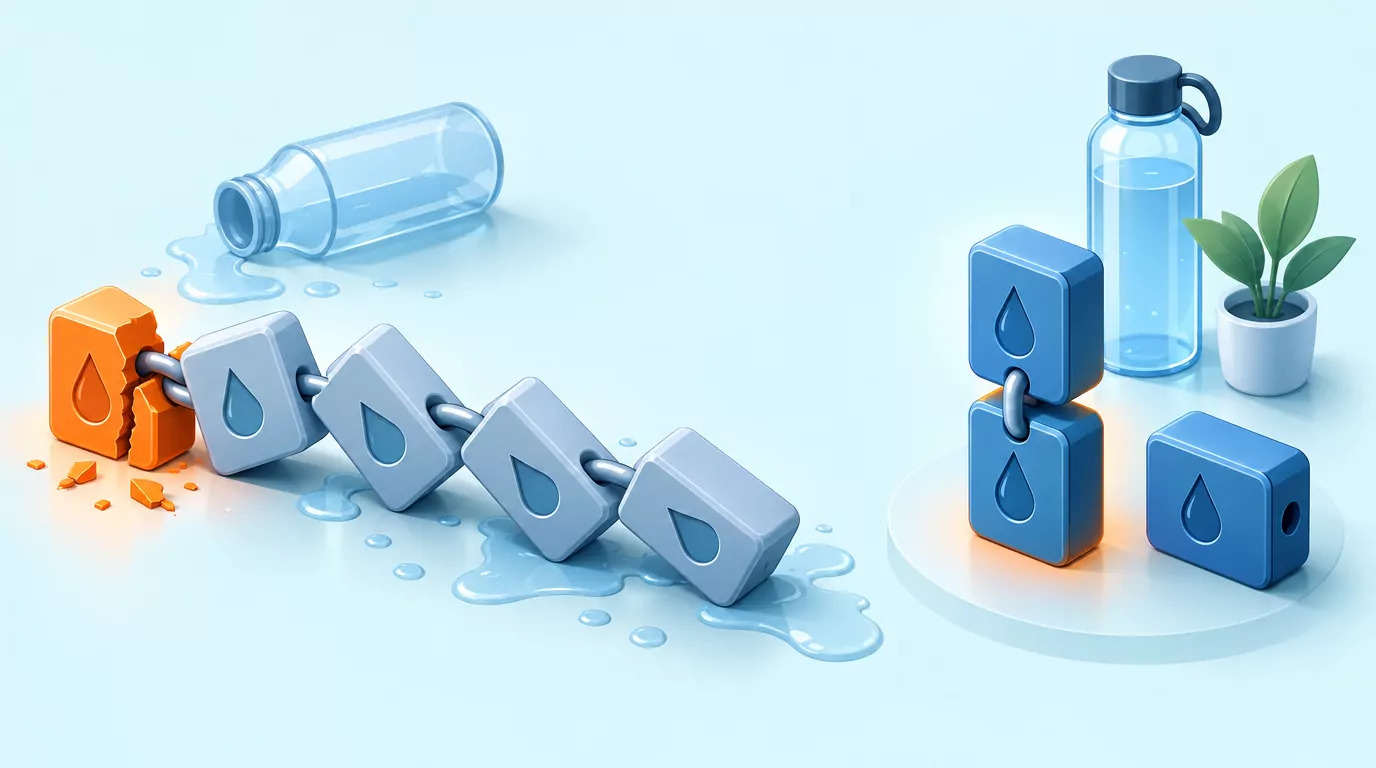
Too many links at once
A five-link chain built in one week collapses the first time link one breaks. Add one link at a time, and only once the last one feels automatic. How long that takes varies from person to person and habit to habit.
You can also slot a new link into the middle of a routine that already runs.
The anchor is already crowded
Getting out of the door, the first minutes of a shift or a busy family morning leave no spare attention. The new habit gets skipped because your mind is elsewhere. Pick a quieter moment, even if it comes later in the day.
Nobody checks whether it held
Most stacks fail quietly. You notice weeks later that the habit stopped, and you cannot say when. The fix is a record made right after the stack, covered in the logging section below.
The anchor is vague
"After lunch" is a 45-minute window, not a moment. Name the physical event instead: tray back, screen locked, door shut.
The new habit is too big, or in the wrong place
"After I put my bag down at home, I will go for a 5 km run" asks the anchor for motivation it cannot supply, so shrink the habit. Sometimes the size is fine, but the anchor is in the hallway and the thing you need is in another room. Move the thing.
Habit stacking examples
Here are twelve recipes built around a student or early-career day. Use them as written, or swap in your own anchor.
Morning habit stacks
- After I switch off my alarm, I will open the curtains before I open my phone.
- After I put my breakfast bowl in the sink, I will take out anything that needs defrosting for dinner.
- After I zip my bag shut, I will put my keys, card and earbuds in the same pocket.
Each anchor is one action you do every morning, and each new habit takes seconds.
Habit stacks for study sessions
- After I find a seat in the library, I will put my phone in my bag before I open my laptop.
- After my study timer rings, I will refill my bottle and log it.
- After I finish a study block, I will write the next step at the top of the page, so tomorrow's session starts in a minute.
Finding a seat and hearing the timer happen every session, wherever you study. A lecture makes a poor anchor for a daily habit, because lectures do not happen every day.
Habit stacks for desk work
- After I accept a calendar invite, I will add one line on what I need to prepare.
- After I lock my screen to leave my desk, I will leave my notebook open at the line where I stopped.
- After I send the last message of the day in work chat, I will close every tab except the one I need first tomorrow.
Each anchor is a click or keystroke you make anyway, so the cue stays precise even on a messy day.
Evening habit stacks
- After I put my bag down when I get home, I will fill tomorrow's bottle and stand it by the door.
- After I change into pyjamas, I will check what time tomorrow starts.
- After I set tomorrow's alarm, I will read two pages of a paper book.
Evening anchors hold well because they happen at home, where the bottle, the book and the bag already live.
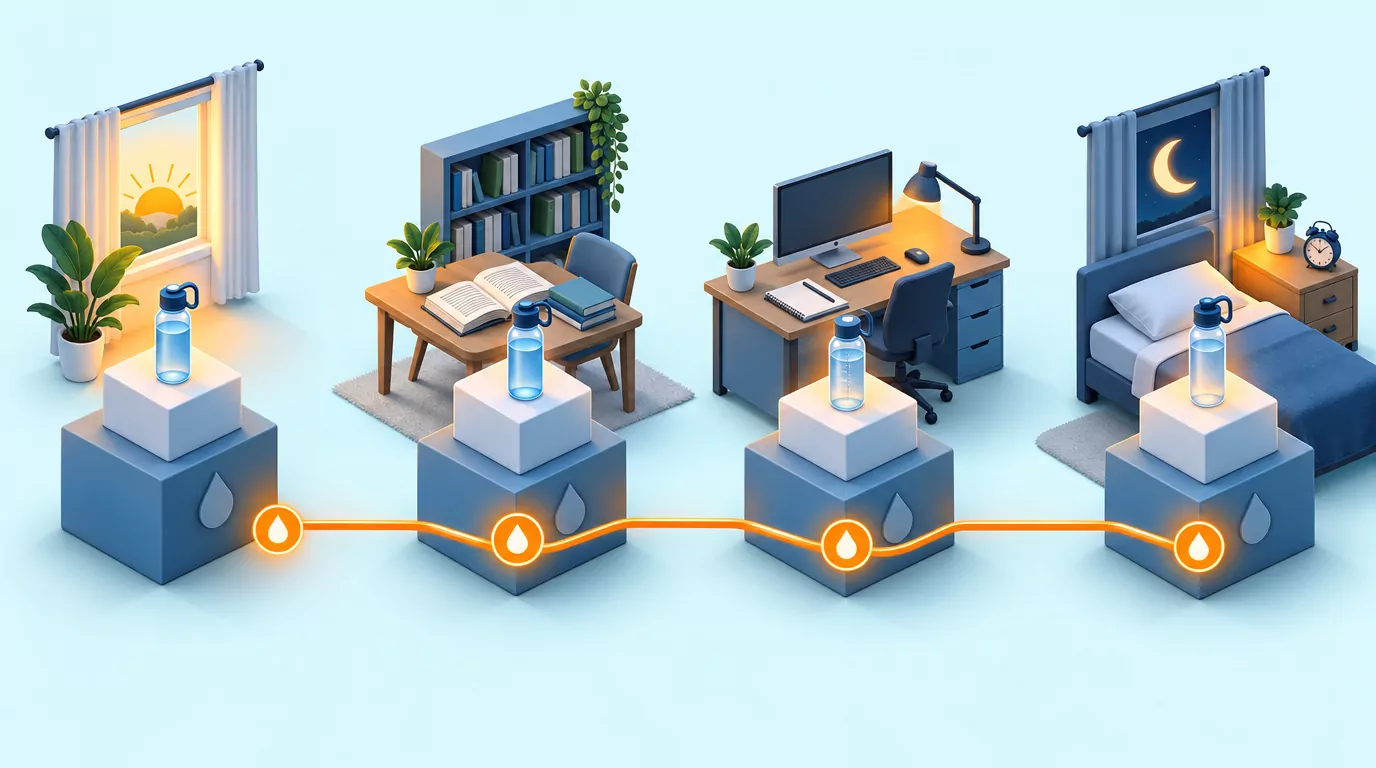
If water is the habit you are stacking, these cues for remembering to drink water are built for a working day, and this guide to drinking water in the morning covers the first glass.
Log right after the stack, then read the calendar
Make the record the last link of the stack: log right after the new habit, while you are still at the anchor, not at night. For a habit that is not a drink, a paper tick sheet does the job (see the habit checklist answer below).
For a water stack, the log is the drink itself. In Water Goose that takes three steps: choose a drink, swipe to the amount, then tap one clear button. A bottle size saved as a custom quick-add amount is ready to pick.
Water Goose is free to download and look around. Saving drinks, editing your history and changing your goal, units or quick-add amounts need Water Goose Plus, sold as a monthly subscription or a one-time purchase. Entries stay on your device, and no account is needed.
After two or three weeks, the history calendar's daily totals and goal completion show which days came up short. Those are usually the days the stack slipped. It is a fair hint, not proof: the calendar records drinks, not habits, so a day can meet the goal without the stacked drink.
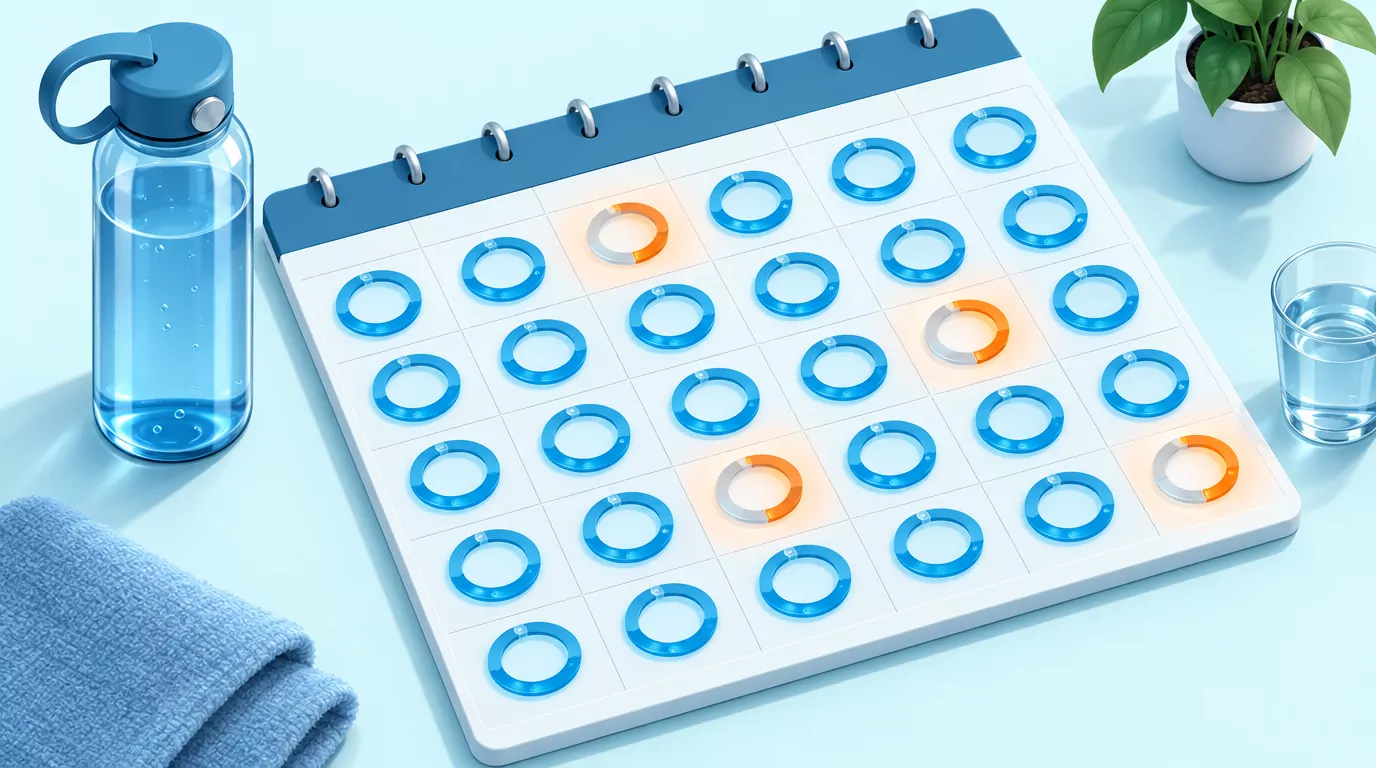
Then look for a pattern. Say the short days are the days after you stayed in, with no bag to put down and so no bottle filled. Those days need their own anchor, the off-day recipe from the failure section.
Reminders are an optional backup, never the anchor. You choose active hours and frequency, then allow notifications on your device, and they are scheduled locally, without a push token, Water Goose account or reminder schedule being sent to a Water Goose server. If you use them, keep your notifications few so this one still gets noticed.
If a streak breaks, a calmer take on keeping a streak explains what a broken chain does and does not mean. For other ways to keep a record, see how to track water intake.
Frequently Asked Questions
What is the 3-3-3 rule for habits?
There is no single 3-3-3 rule. Versions online range from a viral routine of three healthy actions before noon to a work plan of three hours of focused work, three shorter tasks and three upkeep tasks. None comes from habit research or from habit stacking, but any of them can be the new habit in a stack.
Is there a habit stacking template or worksheet?
The template is one line: "After I ____, I will ____." The first blank is the anchor's physical moment, and the second is something that takes under 30 seconds. No special worksheet is needed; a sticky note at the anchor does the job.
How do you make a habit checklist?
Write each recipe as one line down the left side, then add a column for each day. Keep the sheet at the anchor and tick right after the stack, not at night. For a water stack, the printable water tracker is a ready-made paper version.
Do you need an app for habit stacking?
No. The recipe at the anchor and a checklist are enough. A tracker earns its place only for a habit it actually measures, the way a drink log measures water.
What is the difference between habit stacking and temptation bundling?
Habit stacking uses an existing routine as the cue. Temptation bundling, a term from Katy Milkman's research, pairs something you want with something you should do, such as saving a favourite series for the ironing. The two combine well: the routine says when, and the treat makes it easier to start.
Can habit stacking help you break a bad habit?
Gardner and colleagues note that you cannot form a habit of not doing something. So stack a replacement on the moment the old habit starts, such as "After I hang up my coat after class, I will put my phone in the desk drawer before I sit down."
The short version
Pick a daily anchor with one clear moment, and attach something tiny to it. Add one link at a time, and log right after the stack so the calendar can show which days came up short. This is general wellness information, not medical advice.
If water is one of the habits you are stacking, Water Goose keeps the count. It is on the App Store for iPhone and on Google Play for Android.