Homemade Electrolyte Drink: A Simple Recipe, and When Plain Water Is Enough
A simple homemade electrolyte drink is 1 litre of water, 1/4 teaspoon of fine table salt, the juice of one lemon and, if you like, a tablespoon of honey. That gives about 580 mg of sodium per litre, a little more than a standard Gatorade, with about a third of the sugar. On most days, plain water is enough.
Recipes for a DIY electrolyte drink disagree on how much salt to use. This guide gives the numbers per litre, so you can set homemade electrolytes beside store drinks. It also says when to skip them, which is more often than the sports drink aisle suggests.
The Basic Homemade Electrolyte Drink Recipe
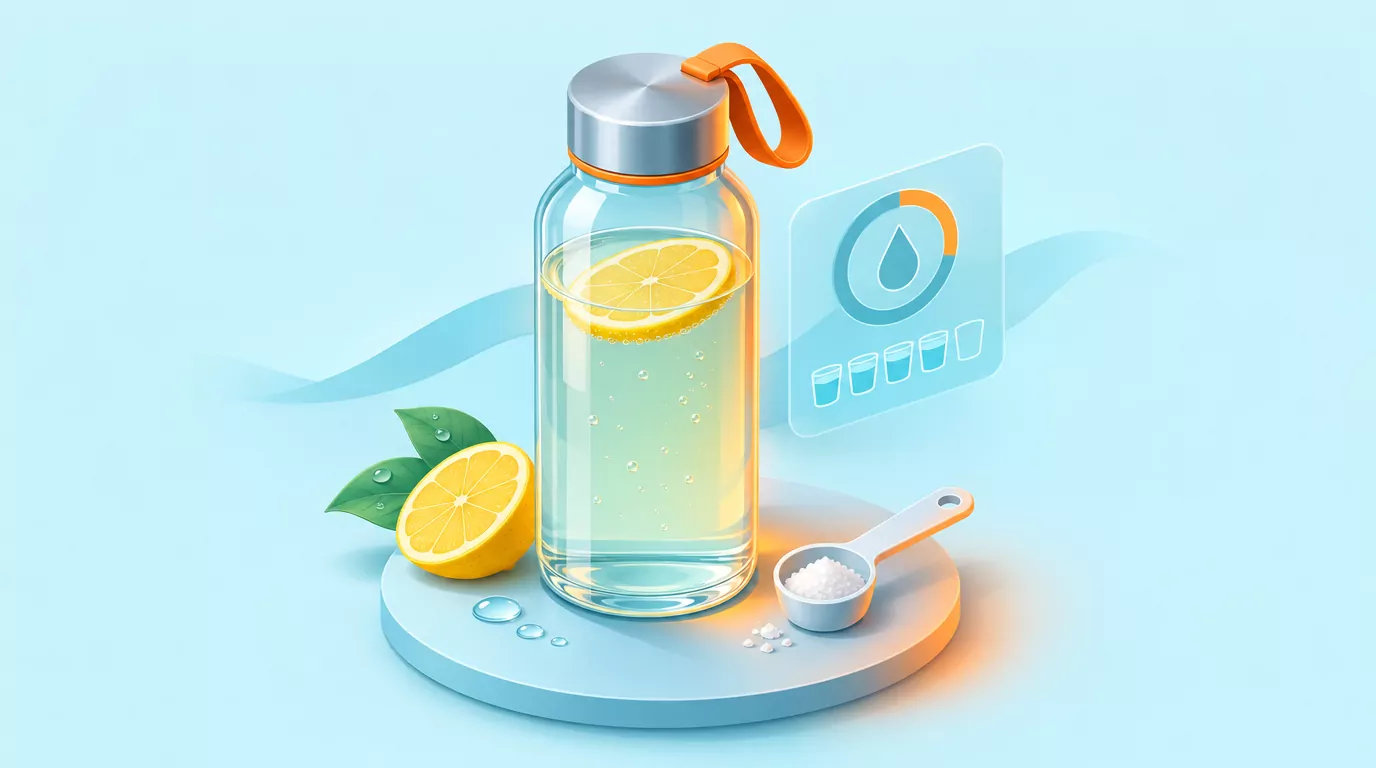
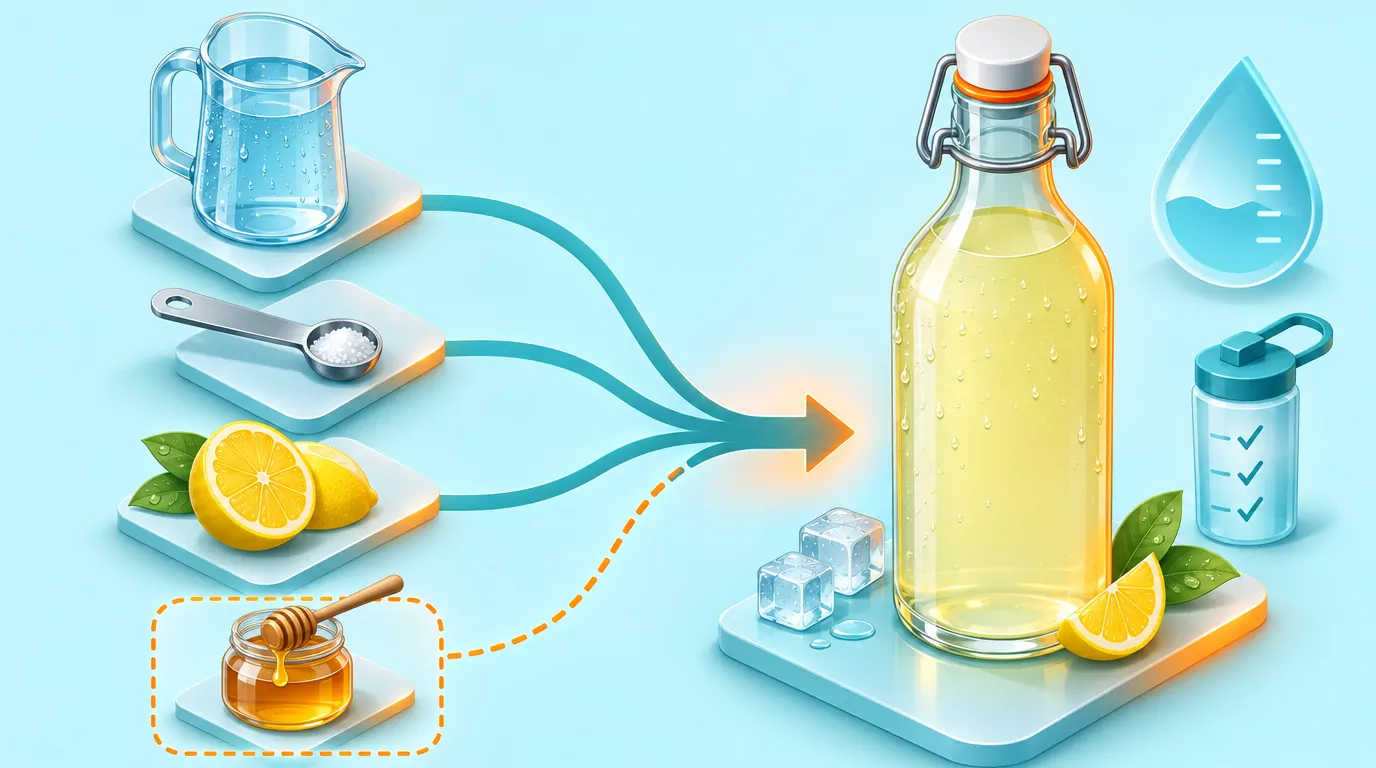
This makes about 1 litre (34 fl oz) and is the simplest answer to how to make electrolyte water at home. Four US cups (1 quart) take the same amounts. For a 500 mL (16.9 fl oz) bottle or 2 cups, halve everything, salt included (1/8 teaspoon).
Ingredients
- 1 litre cold water
- 1/4 teaspoon fine table salt
- Juice of 1 lemon (about 3 tablespoons) or 2 limes
- Optional: 1 tablespoon honey or sugar
The lemon is there for flavour, not magic. Lemon water benefits covers the rest.
Method
- Stir the salt and honey into a splash of warm water until they dissolve. Both dissolve slowly in cold water.
- Add the citrus juice and the rest of the water, then stir.
- Taste it. It should taste only faintly salty. If it tastes like seawater, start again with less salt.
- Keep it in the fridge and finish it within a day, as you would fresh juice.
What Is in One Litre
Here is the electrolyte drink recipe beside the best known store bottle, per litre.
| Drink | Sodium per litre | Potassium per litre | Sugar per litre |
|---|---|---|---|
| Base recipe with honey | About 580 mg (about 25 mmol/L) | About 60 mg | About 18 g |
| Base recipe without honey | About 580 mg (about 25 mmol/L) | About 50 mg | About 1 g |
| Gatorade Thirst Quencher | About 457 mg (about 20 mmol/L) | About 135 mg | About 57 g |
The Gatorade figures come from the 20 fl oz label on the sports drinks page, scaled to a litre. The base recipe sits in the low to middle part of the typical sweat range, which the sweat rate calculator puts at about 10 to 70 mmol/L.
It is low in potassium, and that matters little here. Sweat is mostly sodium and chloride, and it carries only about 2 to 8 mmol/L of potassium.
To compare it with LMNT, Liquid I.V., Pedialyte and other store drinks, open the electrolyte drink comparison, set it to Per litre and read this recipe against its brand rows. Labels can mislead: most Vitaminwater flavours list electrolytes but 0 mg of sodium (see is vitamin water good for you).
How Much Salt per Litre (and Why "a Pinch" Is Not a Measure)
Recipes online run from "a pinch" to a full teaspoon or more. Here is what each amount does in a litre of water. For a 500 mL bottle, halve the spoon.
| Salt per litre | Sodium | mmol/L | When it fits |
|---|---|---|---|
| A dash (0.4 g) | About 155 mg | About 7 | Flavour only |
| 1/8 teaspoon | About 290 mg | About 13 | A light version for a warm day, if you want one at all |
| 1/4 teaspoon | About 580 mg | About 25 | The base recipe, sports drink territory |
| 1/2 teaspoon | About 1,160 mg | About 51 | Long and very sweaty sessions; tastes clearly salty |
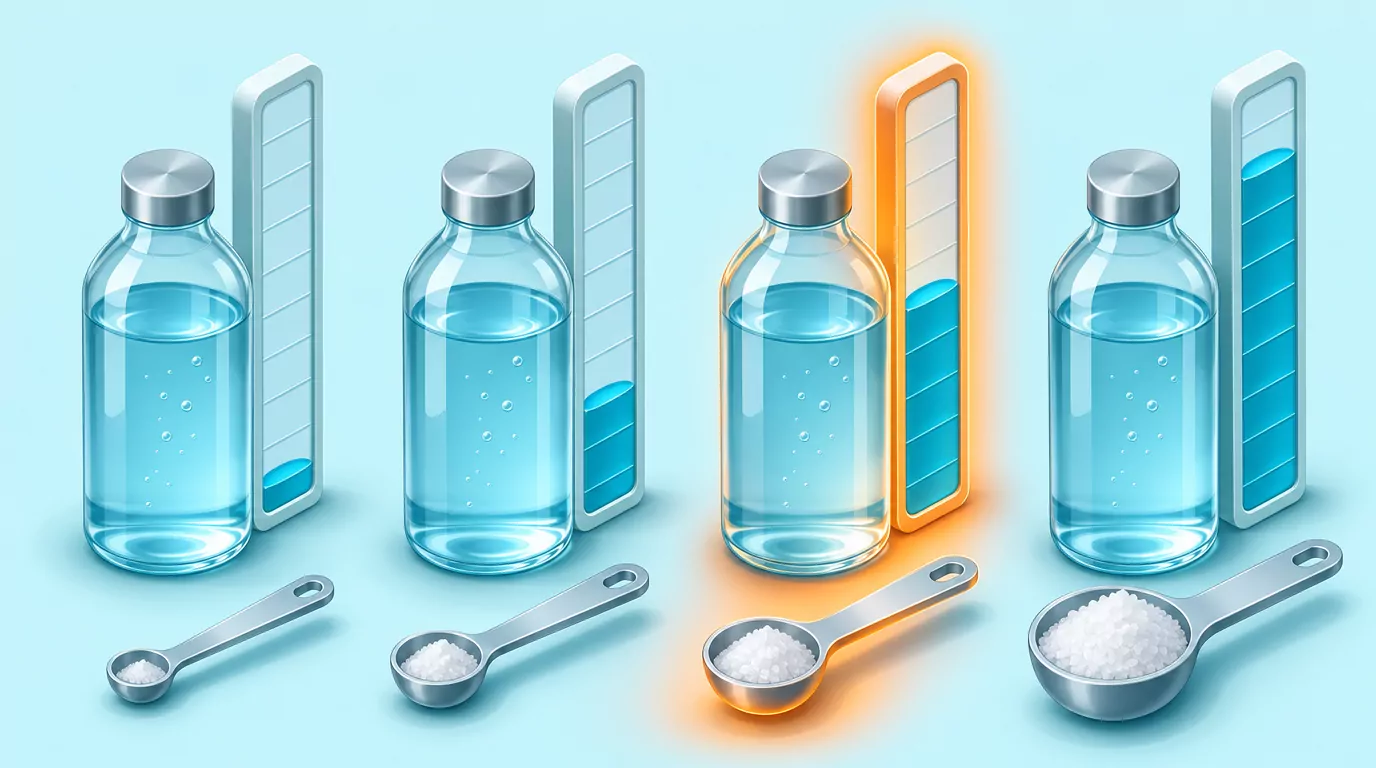
This post stops at 1/2 teaspoon per litre, about 51 mmol/L, already in the upper half of the typical 10 to 70 mmol/L sweat range. For context only, the WHO oral rehydration formula carries 75 mmol/L of sodium (per the same sports drinks page), with exact amounts of glucose and potassium. It is a medical product for diarrhoeal illness, not a stronger version of this recipe.
Does the Type of Salt Matter?
Not much. Sea salt and table salt contain comparable amounts of sodium by weight, according to Mayo Clinic. Pink salt, like sea salt, is sold on a trace-mineral pitch, and those minerals are too small to matter in a litre of this.
Grain size matters more. Coarse and flaky kosher salts fit less salt into a spoon, so check the sodium per 1/4 teaspoon on the box and adjust.
How Much Sodium It Adds to Your Day
The FDA Daily Value for sodium is less than 2,300 mg, about one teaspoon of table salt. Americans already average about 3,400 mg a day. One litre of the base recipe adds about 580 mg, roughly a quarter of the Daily Value.
Two Flavour Variations
Both variations keep the base recipe's 1/4 teaspoon of salt per litre, so the sodium stays put. What changes is the potassium, the sugar and the taste.
Orange and Lime (More Potassium)
- 750 mL water
- 1 cup (250 mL) orange juice
- Juice of 1 lime
- 1/4 teaspoon fine salt
No honey needed: the juice brings the sugar. Per litre, this lands at about 585 mg of sodium (about 25 mmol/L), about 550 mg of potassium and about 22 g of sugar. For orange juice as a drink on its own, see the orange juice page.
Coconut Water and Ginger
- 500 mL unsweetened packaged coconut water
- 500 mL water
- Juice of 1 lime
- 1/4 teaspoon fine salt
- A few thin slices of fresh ginger, left to steep in the fridge for 10 minutes
With the two coconut water brands in the comparison tool, you get about 610 to 665 mg sodium (about 27 to 29 mmol/L), about 1,030 to 1,190 mg potassium and about 21 to 30 g sugar per litre. The salt supplies the sodium; coconut water adds potassium. Brands vary, so read the carton.
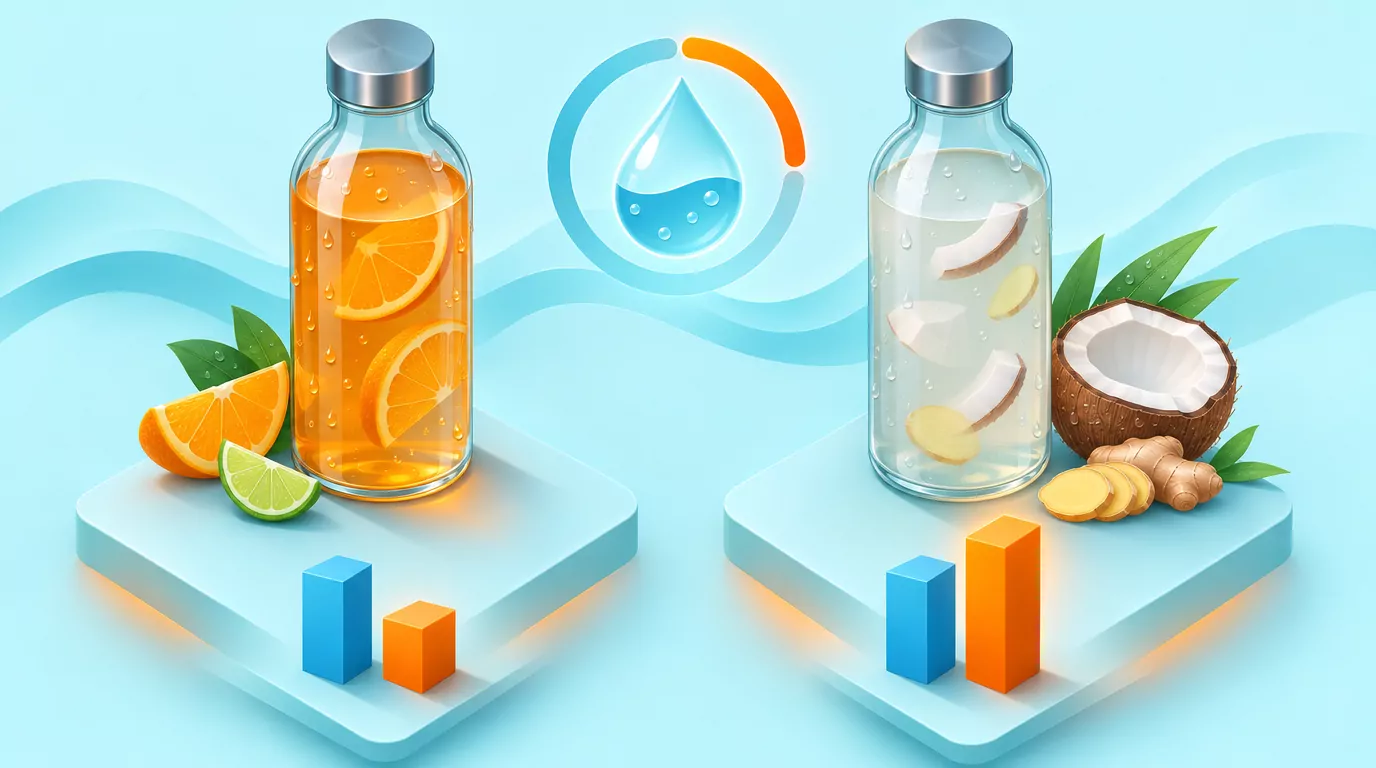
The hydration drinks page compares coconut water and other drinks with plain water. Other citrus, mint or cucumber slices change the flavour without changing the salt maths, and how to make water taste better has more ideas.
When Plain Water Is Enough
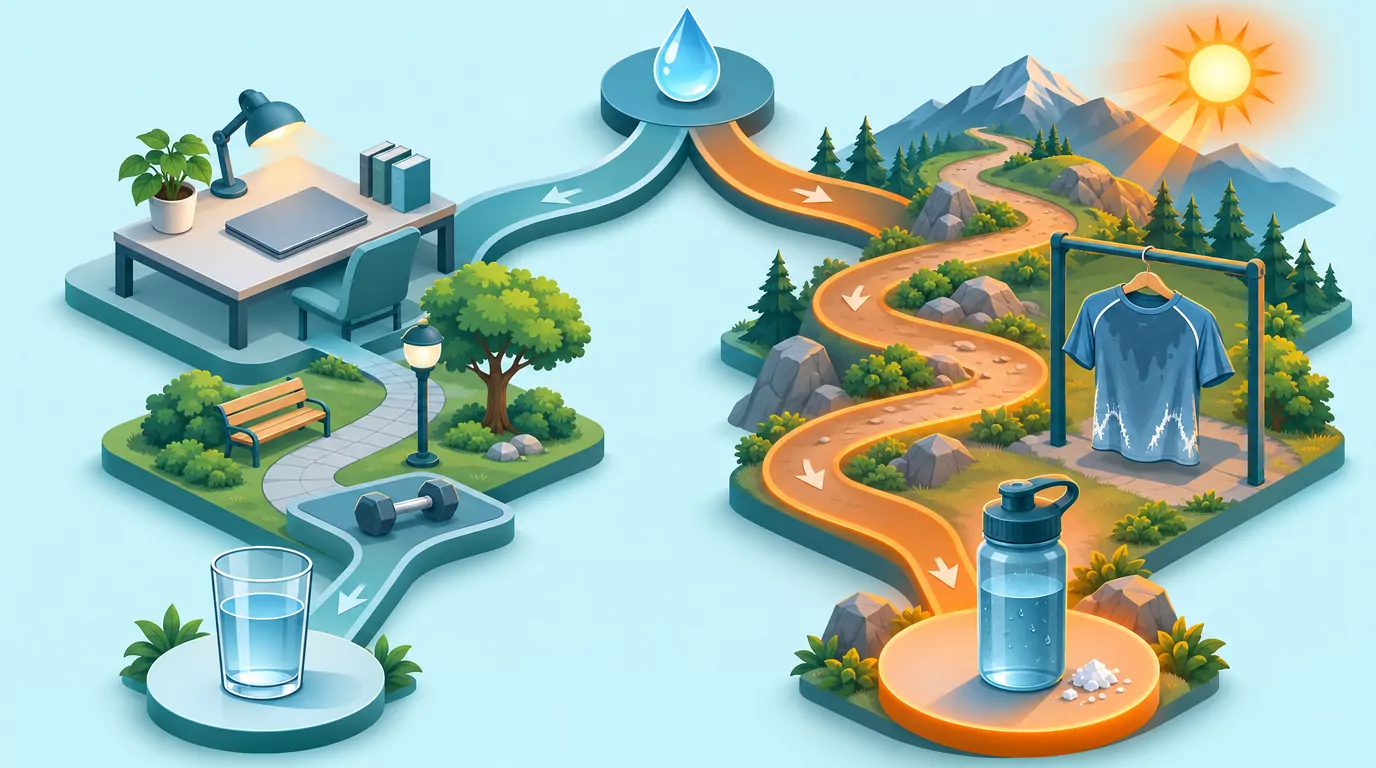
A desk day, a workout of about an hour or less, a warm commute: water and normal meals cover it. Everyday food already brings plenty of sodium (see the FDA average above). For what electrolytes actually do in the body, see how to hydrate faster.
On a hot day, the first job is drinking more water. Hydration in hot weather covers when that changes.
When a Salty Drink Makes Sense
A homemade electrolyte drink is worth mixing for:
- Long, sweaty sessions of more than two or three hours
- Hot-weather work or hiking
- Heavy sweaters who find white salt marks on their clothes
For a session in between, such as a 90-minute run, weigh yourself before and after to see how much you lose. The sweat rate calculator does that arithmetic and explains who needs salt in the bottle.
The American College of Sports Medicine position stand says that during exercise, drinks containing electrolytes and carbohydrates "can provide benefits over water alone under certain circumstances".
On sugar: for long sessions, one or two tablespoons of honey per litre add fuel and taste. For a desk day, leave it out.
More is not better. Drink to replace what you lose, not past it, salty drinks included. How much water is too much covers the upper end.
When to Skip the Homemade Version
- Vomiting, diarrhoea or any illness: ask a pharmacist or clinician. The NHS says a pharmacist can recommend an oral rehydration solution, a powder you mix with water. Kitchen recipes, including "homemade Pedialyte" ones, are not a substitute.
- A child who is unwell: ask a pharmacist or clinician.
- Told to limit salt or fluids: ask your clinician before using this.
This is general wellness information, not medical advice.
Frequently Asked Questions
Can I just put salt in water for electrolytes?
Yes. Salt water for electrolytes works: 1/4 teaspoon of fine salt in a litre of water gives about 580 mg of sodium and the chloride that comes with it. Citrus and a little honey are there for taste, because plain salt water tastes flat.
How do I know if I need electrolytes?
Look for the signs you can see: long sweaty sessions, heat, and white salt marks on your clothes. The sweat rate calculator puts a number on what you lose. Without those signs, water and meals are enough, as how to hydrate faster explains.
Can you make a homemade Gatorade with coconut water?
Yes, with the coconut water and ginger variation above: the salt does the sodium work, since coconut water brings mostly potassium. Per litre it carries about 21 to 30 g of sugar, against about 57 g in Gatorade. On sodium alone, the base recipe is the nearer match (about 580 against about 457 mg per litre).
What are the best natural sources of electrolytes?
Ordinary food covers most of it: salt in everyday meals, soup and broth (see does soup count as water intake), milk and yogurt, potatoes, beans, bananas and leafy greens. A medium banana has about 422 mg of potassium in USDA FoodData Central. MedlinePlus explains what electrolytes are.
Is it bad to drink electrolytes every day?
On most days you do not need them: water and meals are enough. A daily litre of the base recipe adds about a quarter of the FDA sodium Daily Value, and the average American diet is already above it. Keep it for long, sweaty or hot days rather than as an all-day refill.
Counting It Toward Your Day
A homemade electrolyte drink is mostly water, so it counts toward your daily fluids like any other drink. In Water Goose you choose a drink, swipe to the amount and tap one clear button. The presets include water, lemonade and sports drinks, and all of them count.
Amounts show in millilitres or fluid ounces, and entries are stored locally on your device, no account needed. The water intake calculator gives a daily starting target.
The salt is your call. The running total is easier to leave to the goose.
Water Goose is on the App Store for iPhone and on Google Play for Android.