Fluid Ounces vs Ounces: Why Your Bottle and Your Scale Disagree
Fluid ounces (fl oz) measure volume, the space a drink takes up. Ounces (oz) measure weight: one ounce is 28.35 grams. For water they nearly match, since 1 US fluid ounce of water weighs about 1.04 ounces. Honey weighs about 1.5 ounces per fluid ounce. By default, US labels use fl oz for drinks and net wt for honey.
That is the fluid ounces vs ounces story in five sentences. Below: why bottles and scales disagree, why labels pick one unit, how UK and US fluid ounces differ, and which unit to log in.
Is a fluid ounce the same as an ounce? Space versus weight
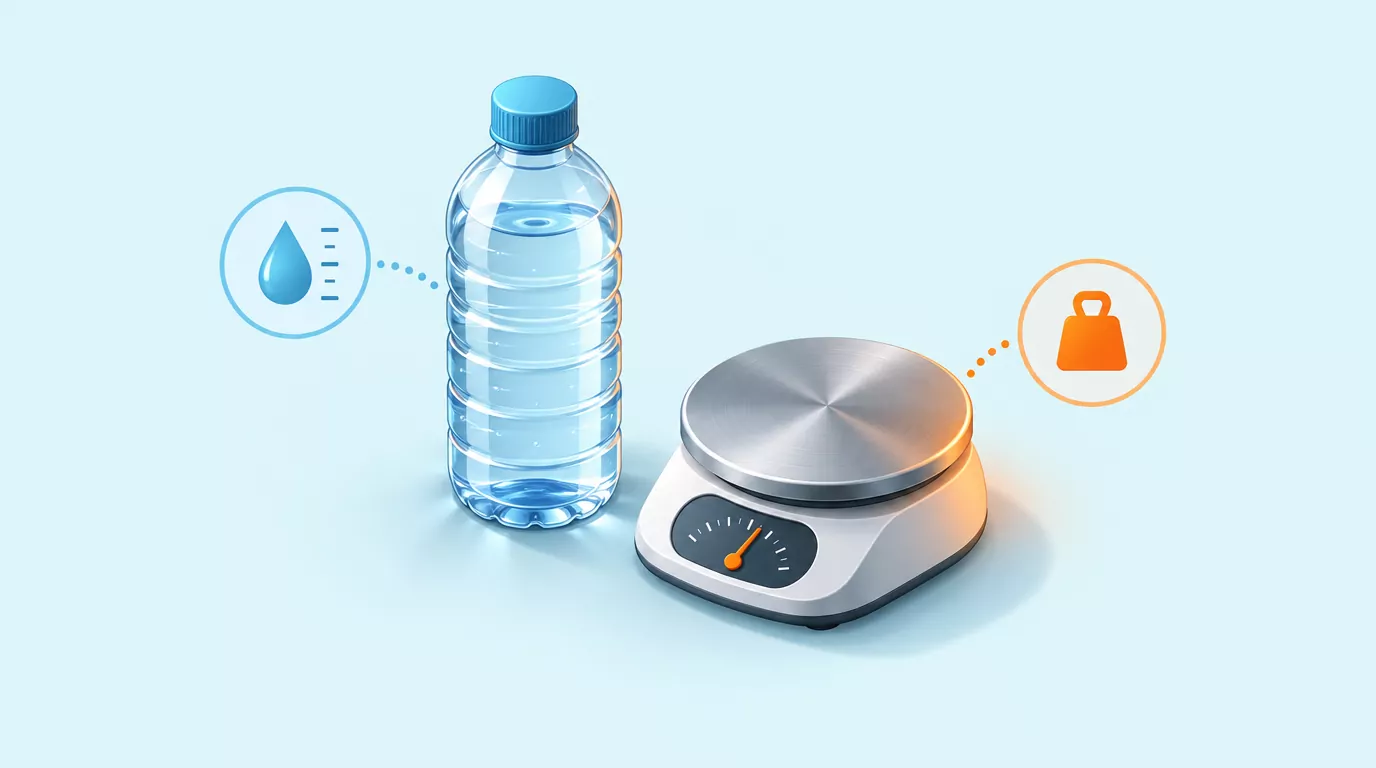
No. A US fluid ounce is a unit of volume: 1/128 of a US gallon, or 29.57 mL. NIST's conversion table puts it at 29.57353 mL. An ounce is a unit of weight: 1/16 of a pound, or 28.35 grams (28.34952 g, per the same table). They share a name for historical reasons, not because one converts into the other.
"Fl oz" always means volume. "Oz" on its own usually means weight, as in "net wt 12 oz" on a jar. Drinks are the big exception: cups and bottles often drop the "fl", so a "20 oz" cup holds 20 fl oz. For everyday glasses, mugs and bottles in oz and ml, see how many oz are in a glass of water.
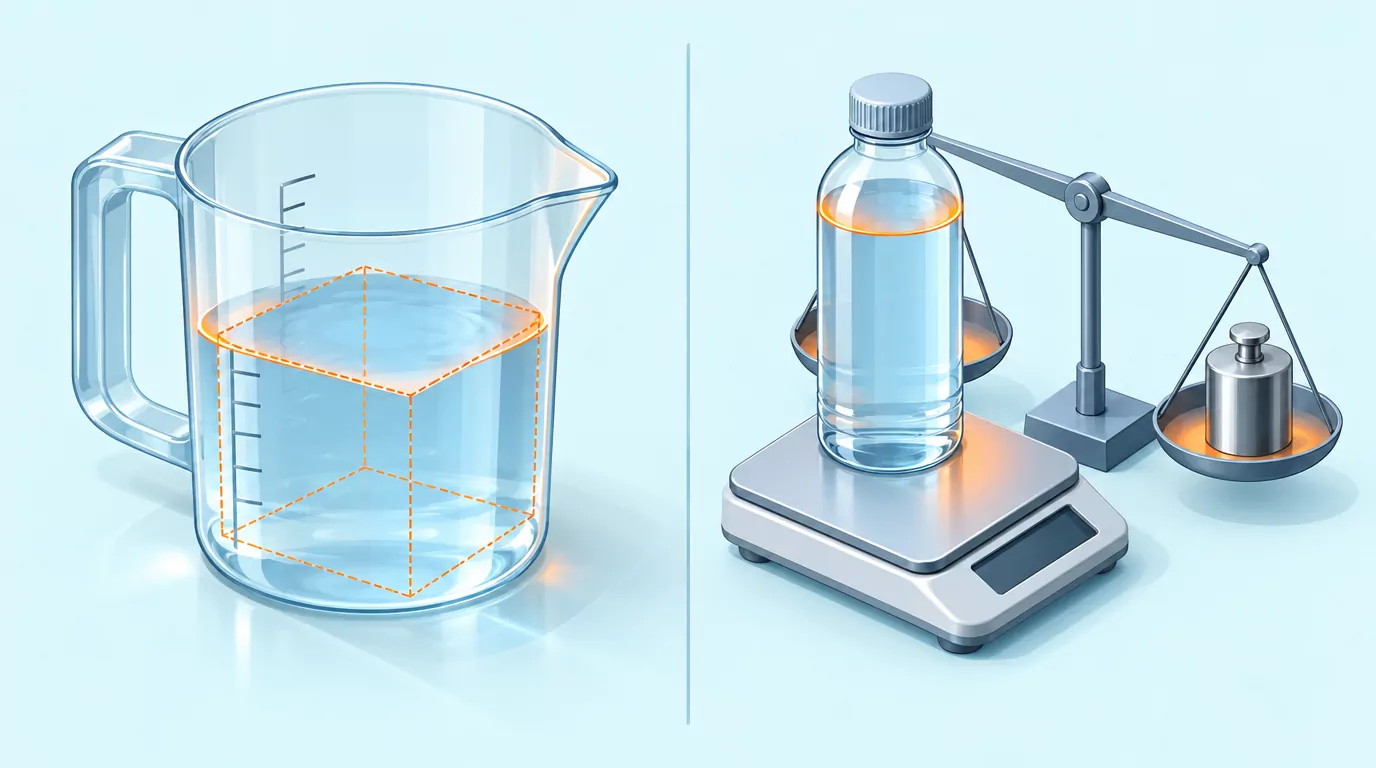
Why your bottle and your scale disagree
A 1 liter bottle of water says 33.8 fl oz on the label. Put it on a kitchen scale and the water alone weighs about 35.2 oz, before you count the bottle. At room temperature, a liter of water weighs about 998 grams, and that is 35.2 oz.
Both numbers are right. The label measured space and the scale measured weight. The gap comes from water itself: 1 US fl oz of water weighs about 1.04 oz, based on the bottled water entry (FDC ID 174158) in USDA FoodData Central.
That 4 percent is nothing per sip and only adds up over big volumes: a US gallon of water weighs about 8.34 pounds, not the 8 pounds that 128 "ounces" would suggest.
Some kitchen scales have a ml or fl oz mode. A scale can only weigh, so that mode turns grams into volume using the density of water. That is fine for water and well off for honey.
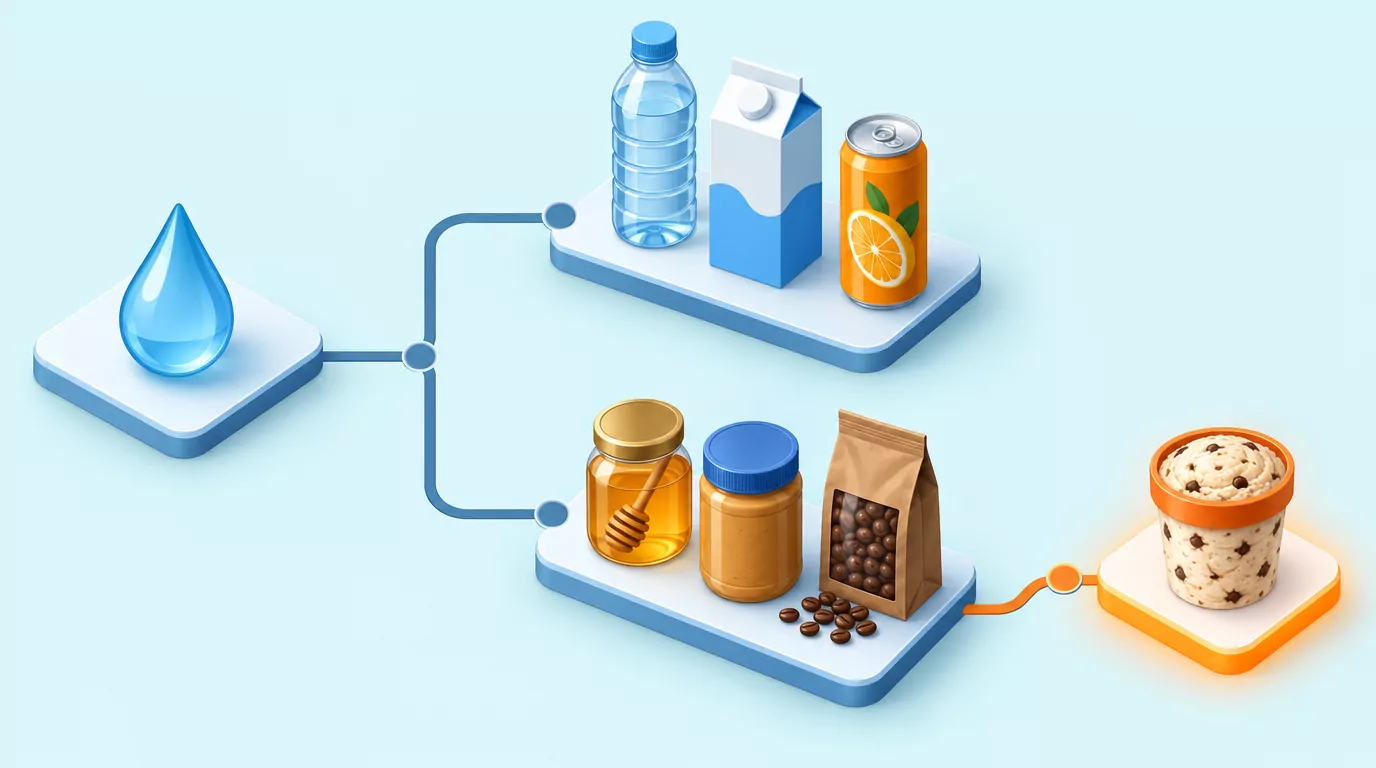
Why drink labels say fl oz and honey jars say oz
By default, US food labels state the amount of a liquid in fluid measure. A solid, semisolid or viscous food, or a mix of solid and liquid, goes by weight. That is 21 CFR 101.7(a), and the same section says fluid measure means the US gallon of 231 cubic inches and its quarts, pints and fluid ounces.
So bottles, cartons and cans say fl oz. Honey is viscous, so its jar says net wt oz. So do peanut butter and coffee beans.
One exception: where a firmly established consumer usage and trade custom exists, sellers may follow it. That is why traditional ice cream, a frozen semisolid, is still sold by the pint and quart, as a California weights and measures notice explains.
That is also why a 12 oz coffee bag is bean weight, unrelated to a 12 oz mug, as covered in how many ounces are in a cup of coffee. Nutrition panels round further, treating 1 fl oz as 30 mL, so a serving can read 240 mL against an exact 237.
US vs imperial fluid ounces: why UK and US labels differ
A US fluid ounce is 29.57 mL. An imperial (UK) fluid ounce is smaller, at 28.41 mL. UK law defines it as 1/20 of an imperial pint, and fixes the imperial gallon at 4.54609 liters.
The pints differ even more. A US pint is 16 US fl oz (473 mL), while an imperial pint is 20 imperial fl oz (568 mL). Order a pint in London and you get about a fifth more than a pint in Boston.
In practice, UK labels are mostly metric. GOV.UK guidance says goods in England, Scotland and Wales must be sold in metric units. The pint survives only for draught beer and cider and for milk in returnable containers.
The neat twist: an imperial fluid ounce of water weighs almost exactly one ounce. In 1824, Britain set the new imperial gallon to hold 10 pounds of water at 62 F, as a University of Nottingham guide to old measures explains. A gallon holds 160 imperial fl oz, and 10 pounds is 160 ounces, so each fluid ounce of water weighs about an ounce.
The US fluid ounce is about 4 percent bigger, which is where the 1.04 comes from. If you are counting bottles against a gallon, the water bottles in a gallon tool covers both US and imperial gallons.
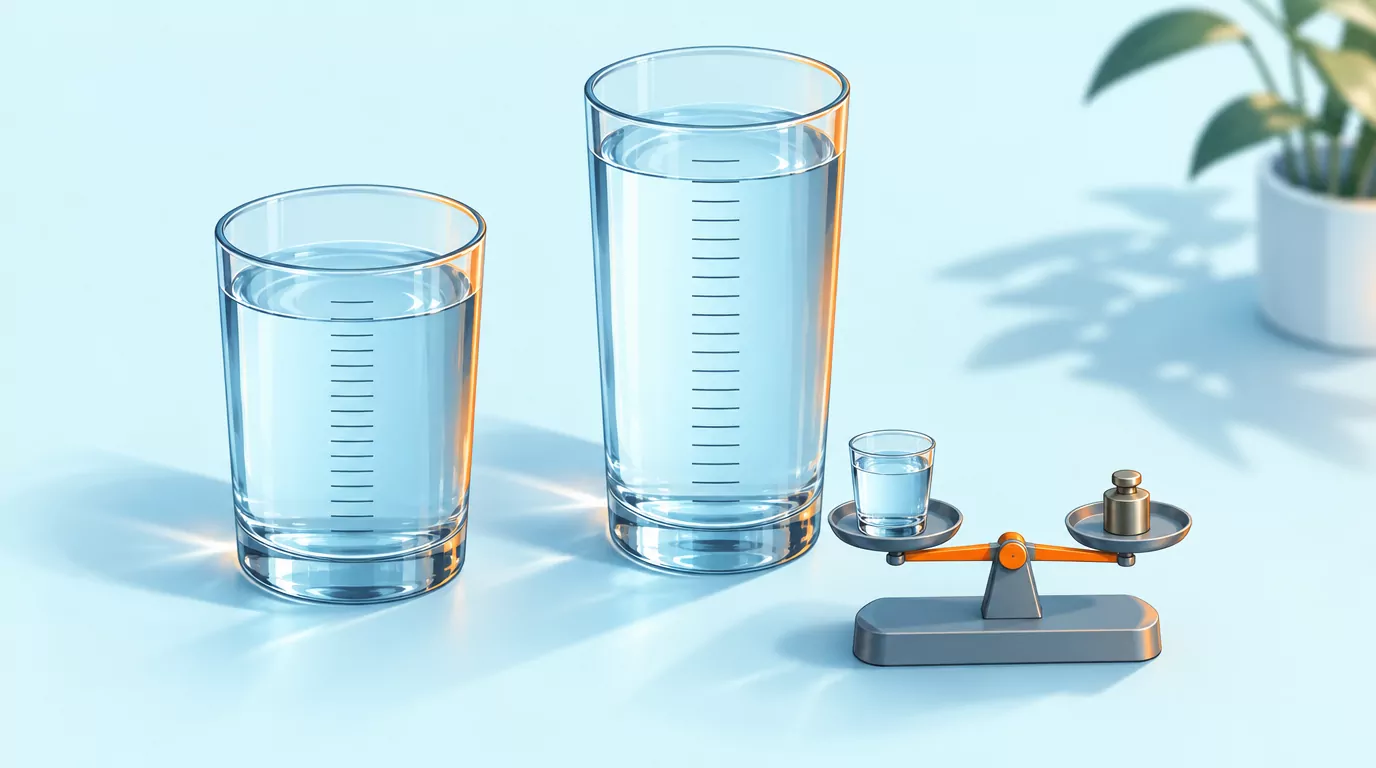
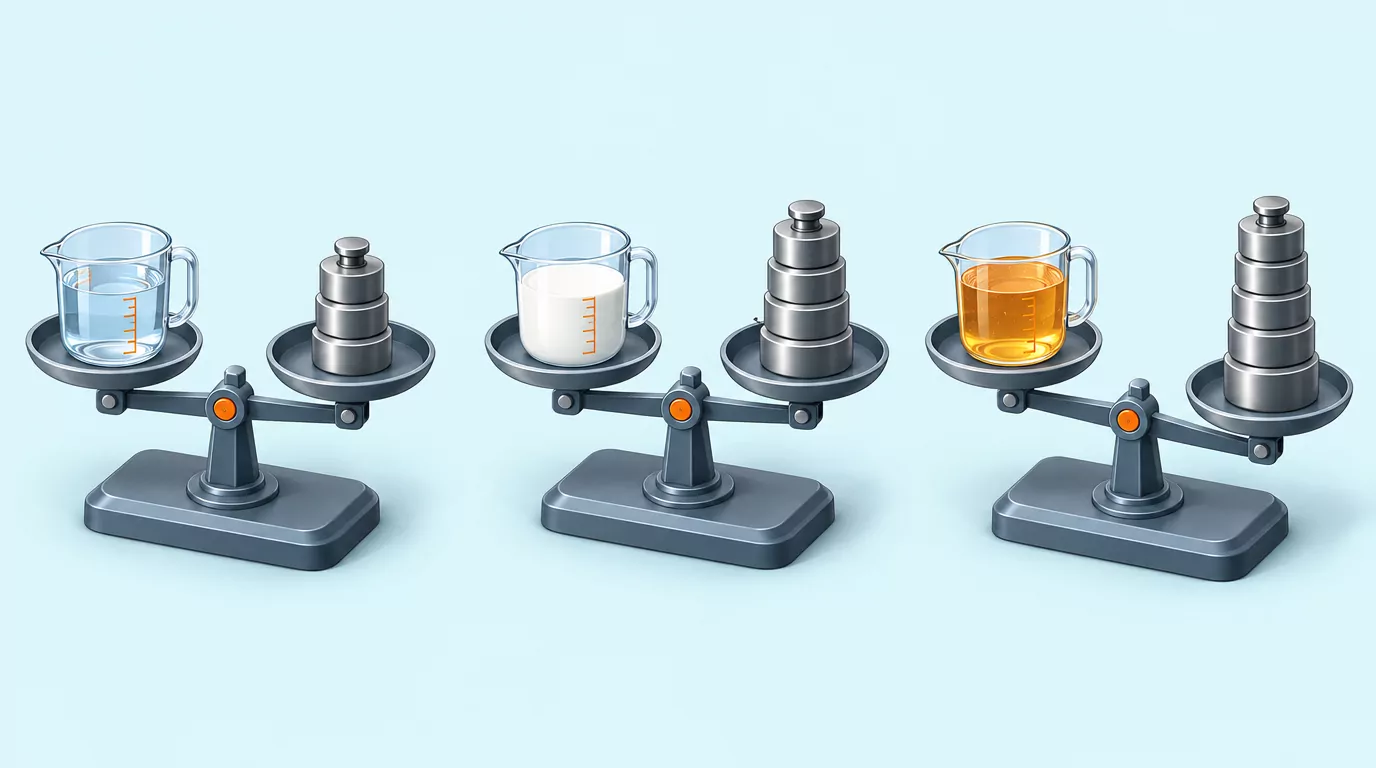
Honey, milk and ice: three worked examples
Honey: a 12 oz jar holds about one cup
USDA lists 1 cup of honey at 339 grams, which is about 12 oz. So 1 fl oz of honey weighs about 1.5 oz, and the common 12 oz honey bear holds roughly one cup, or 8 fl oz.
It is labeled by weight because it is viscous, which is the 101.7(a) rule at work. A teaspoon in your tea barely changes its volume.
Milk: a little heavier than water
USDA's whole milk figures work out to about 1.08 oz per fl oz, against 1.04 oz for water. Milk is sold by volume, in fl oz, quarts and gallons, and a tracker logs it by volume like any drink.
For how milk compares with water for hydration, see the milk hydration page.
Ice: same weight, more room
Ice takes up more room than the water it came from, because ice is less dense than liquid water. Melting does not change its weight, though: a pound (16 oz) of ice melts into just over 15 fl oz of water. That is why bags of ice, a solid, are sold by weight.
A glass of cubes is partly air, so it melts into less water than the glass holds. For logging, count the drink you poured; meltwater is a rounding error. Frozen bottles make handy ice packs, as the post on whether water expires notes.
How to convert ounces to fluid ounces
To convert, you need the liquid's density in grams per mL. Weight in oz = fl oz × 1.043 × density. Going the other way, fl oz = oz ÷ (1.043 × density). The 1.043 comes from 29.57 mL per fl oz divided by 28.35 grams per oz.
For water, just multiply or divide by about 1.04.
| Liquid | Density (g per mL) | 1 fl oz weighs | 1 oz by weight is about |
|---|---|---|---|
| Water | 1.00 | 1.04 oz | 0.96 fl oz |
| Whole milk | 1.03 | 1.08 oz | 0.93 fl oz |
| Honey | 1.43 | 1.5 oz | 0.67 fl oz |
Rows are worked out from the USDA portions for bottled water, whole milk and honey.
Ml or fl oz in Water Goose: pick one unit and stop converting
Drink trackers count volume, never weight, so log the number on the label or the one you measured, never a scale reading. Water Goose lets you choose metric or US units, millilitres or fluid ounces, and keeps the display consistent throughout the app.
A practical rule: pick the unit printed on the bottles you actually drink from. In the UK or anywhere metric, ml avoids the imperial mismatch entirely. In the US either works, since most drink labels show both fl oz and ml.
Logging takes three steps: choose a drink, swipe to the amount, then tap one clear button. Milk, tea and coffee log by volume, just like water. If your usual bottle is a fixed size, you can save it as a custom quick-add amount.
Water Goose is free to download and look around. Saving drinks, editing your history, and changing your goal, units, or quick-add amounts need Water Goose Plus, sold as a monthly subscription or a one-time purchase. Your unit preference, entries and goals are stored locally on your device, and no account is needed.
For more on logging, see how to track water intake. If your daily goal came from the water intake calculator in oz, those are fluid ounces.
Frequently Asked Questions
How many grams are in a fluid ounce?
It depends on the liquid, because grams measure weight and a fluid ounce is a volume. USDA puts 1 fl oz of water at about 29.6 grams and whole milk at about 30.5 grams. Honey works out to about 42 grams, since USDA lists 21 grams per tablespoon and 2 tablespoons make a fluid ounce. For water, 30 grams is a fine quick estimate.
Is 8 oz dry the same as 8 oz liquid?
No. 8 oz dry is a weight on a scale, while 8 fl oz liquid is one US cup of space. 8 oz of water by weight fills about 7.7 fl oz, and a cup of all-purpose flour weighs only about 4.4 oz (125 grams, per USDA). Dry and liquid measuring cups hold the same volume; only the filling differs.
How big is 5 fluid ounces?
Five fluid ounces is about 148 mL, a little more than half a US cup. In a tracker, log 5 fl oz or 148 mL.
Is 20 oz the same as 20 fl oz?
On a drink, yes. "Oz" on a bottle or cup is shorthand for fluid ounces, and even the federal labeling rule's own example writes "16 oz bottles" next to "96 fl oz". 20 fl oz is 591 mL. On a kitchen scale, though, 20 oz is a weight, and 20 oz of water fills only about 19.2 fl oz.
Why are water bottles 16.9 oz?
They are 500 mL bottles. US consumer packages must state their contents in both US customary and metric units under the Fair Packaging and Labeling Act, and 500 mL converts to 16.9 US fl oz. So the label reads 16.9 FL OZ (500 mL). If you count your day in bottles, see how many water bottles to drink a day.
Fluid ounces vs ounces: the short version
Fluid ounces measure space, and ounces measure weight. For water the two sit about 4 percent apart, and for honey about 50 percent. Read the label for drinks, use a scale for honey and flour, and log in whichever unit your bottles use.
This is general wellness information, not medical advice.
If you would rather log fl oz or ml and let the goose keep the total, Water Goose is on the App Store for iPhone and on Google Play for Android.