Hot Drinks Without Caffeine: Warm Options for Cold Evenings That Still Count
Hot drinks without caffeine include herbal teas like chamomile, peppermint and ginger, rooibos, warm water with lemon, broth, steamed or golden milk, hot apple cider and carob drinks. Decaf coffee and hot chocolate are low in caffeine, not free of it, and green tea, chai and matcha contain caffeine. All of them count toward your daily fluid.
Warm drinks are easy to find in winter. Truly caffeine-free ones take a label check. So this list comes in three honest groups: none at all, low but not zero, and the ones that only sound caffeine-free.
Hot drinks without caffeine at all
Caffeine occurs naturally in more than 60 plants, including coffee beans, tea leaves, kola nuts and the cacao pods used for chocolate, according to MedlinePlus. Every drink in this section is made without any of them.
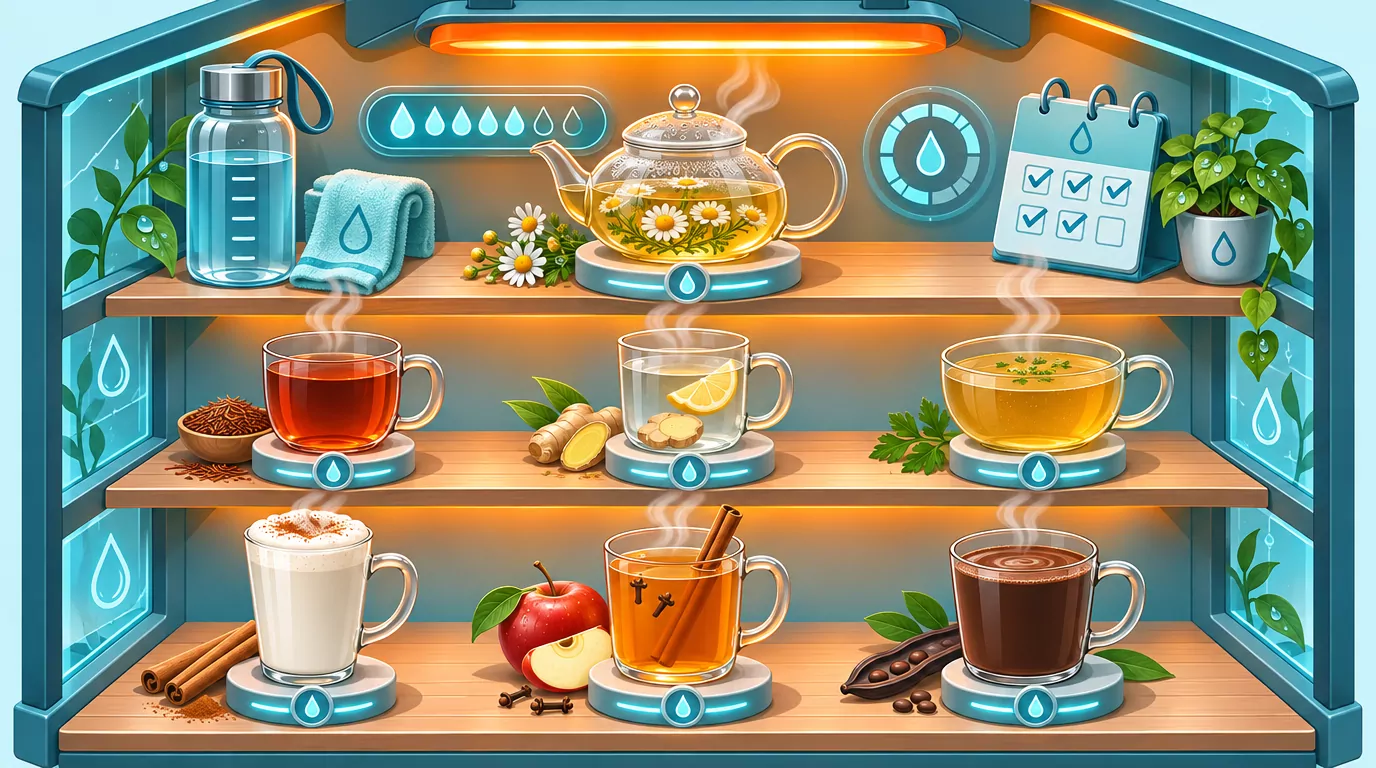
Chamomile, peppermint and other herbal teas
Herbal teas are infusions of flowers, leaves or roots rather than the tea plant, and the Harvard Nutrition Source says herbal tea contains no caffeine. Chamomile is soft and faintly like apples, peppermint is cool and clean, lemon balm and lemongrass are gently lemony, and hibiscus is tart and ruby red. Steep a bag in just-boiled water for about five minutes.
One label check: some "herbal" or "wellness" blends add green or black tea leaves, so read the ingredients. A plain herbal tea also counts as fluid, as the guide to whether tea counts as water intake explains.
Rooibos and honeybush
Rooibos has no caffeine. Rooibos and honeybush are South African herbal infusions, not the tea plant, so the same "herbal tea contains none" rule covers them. Rooibos is earthy and slightly sweet, honeybush tastes faintly of honey, and both steep for about five minutes.
Rooibos takes milk the way black tea does, which makes it the easiest swap for a milky black tea habit. Rooibos chai is the swap for chai. Check the label, though: a rooibos chai blend should list no black tea.
Fresh ginger or lemon in hot water
Slice a thumb of fresh ginger, simmer it in a mug of water for five to ten minutes, then strain. For lemon, squeeze half a lemon into hot water, with honey if you like.
Both are simply warm water with a flavour. For more, see the posts on lemon water benefits and drinking warm water.
Broth
Broth is the savoury option for evenings when sweet drinks do not appeal. Warm a mug of stock, or stir a stock cube or a spoonful of miso paste into hot water. All three can be salty, and the guide to whether soup counts as water intake covers broth and salt.
Steamed milk, warm milk and golden milk
A steamer is milk heated until it steams but does not boil, with about 1/4 teaspoon of vanilla extract or a pinch of cinnamon per 250 ml mug, sweetened if you like.
Warm milk on its own is the plainest version. For golden milk, whisk about 1/2 teaspoon of ground turmeric and a pinch each of ground ginger and cinnamon into each mug as it warms.
Oat, soy and almond milks work for all three. For how milk compares with water, see the Milk hydration page.
Hot apple cider
In the US, apple cider is unfiltered apple juice, the non-alcoholic kind rather than hard cider. Simmer 1 litre gently with 2 cinnamon sticks and 4 to 6 cloves for about 10 minutes, then strain. The kitchen will smell like apple pie.
Plain cider and mulling spices have no tea, coffee or cocoa in them, so there is no caffeine. It is still juice, though, and the NHS suggests keeping fruit juice and smoothies to one small 150 ml glass a day because of the sugar. The Juice hydration page shows how juice compares with water.
Carob drinks
About 1 tablespoon of carob powder per 250 ml mug of hot milk looks and drinks like hot chocolate. It is sweeter and slightly nutty, so taste before adding sugar. Unlike cacao, carob powder contains no caffeine, according to MedicineNet.
Roasted barley, chicory and dandelion root drinks are sold as coffee alternatives, but some chicory blends include real coffee. Check the ingredients and look for a caffeine-free label.
Low in caffeine, not caffeine-free: decaf and hot chocolate
These two are the usual mix-ups. Both hold small amounts, fine for many people, but neither is zero.
Does decaf coffee have caffeine?
Yes, a little. The FDA is blunt about it: "decaffeinated" does not mean caffeine-free, and decaf coffee typically has 2 to 15 mg in an 8 fl oz cup. That compares with about 95 mg in an 8 oz cup of brewed coffee, while decaf tea has about 2 mg a cup, according to Harvard.
Decaf is an easy middle ground for an evening cup, but not for anyone avoiding caffeine completely. It still counts as fluid, as the post on whether coffee counts towards water intake explains.
Does hot chocolate have caffeine?
Yes, a small amount, because caffeine occurs naturally in cacao. How much a mug holds depends on how much cocoa or chocolate goes in: more chocolate, and darker chocolate, means more caffeine.
Harvard gives about 24 mg in an ounce of dark chocolate and about a quarter of that in milk chocolate, against about 95 mg in a cup of brewed coffee. For a truly caffeine-free mug, the carob drink above is the swap.
Drinks that sound caffeine-free but are not, and easy swaps
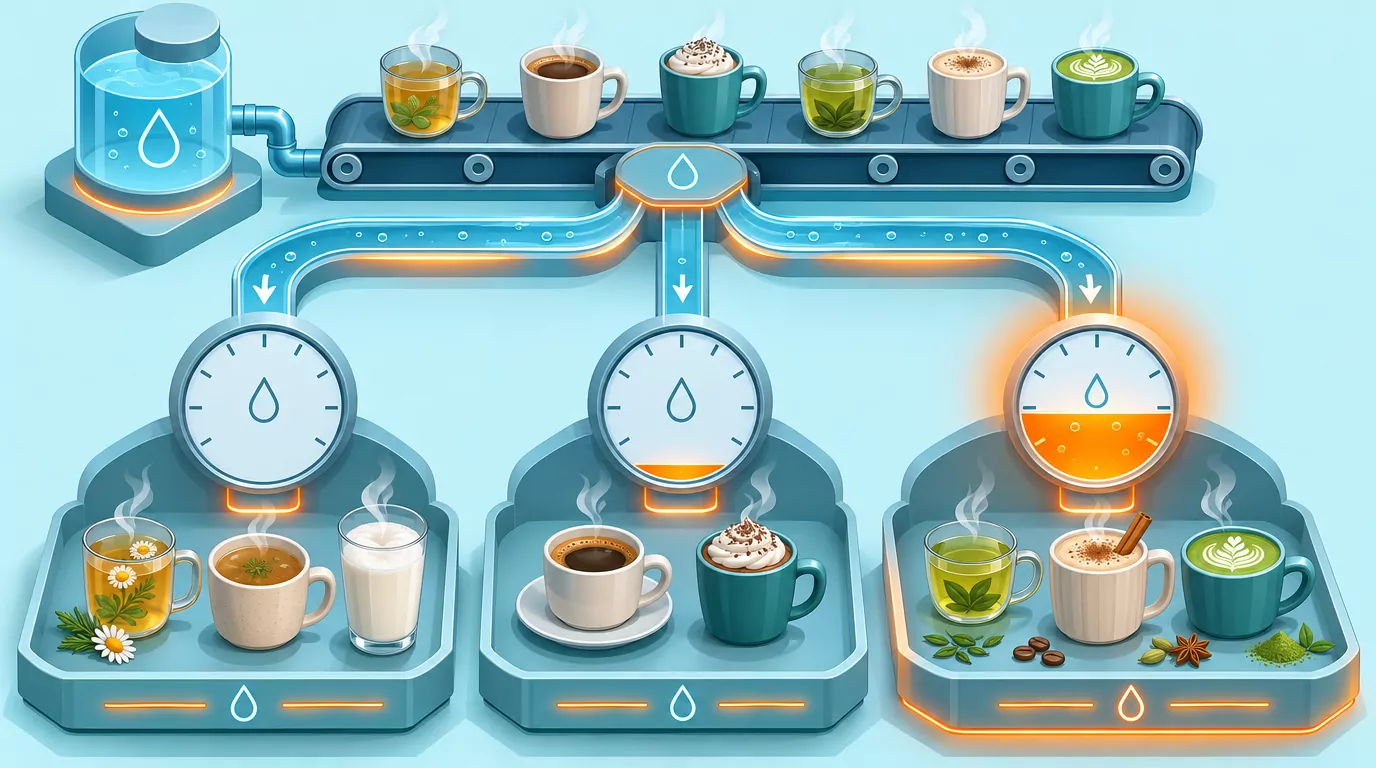
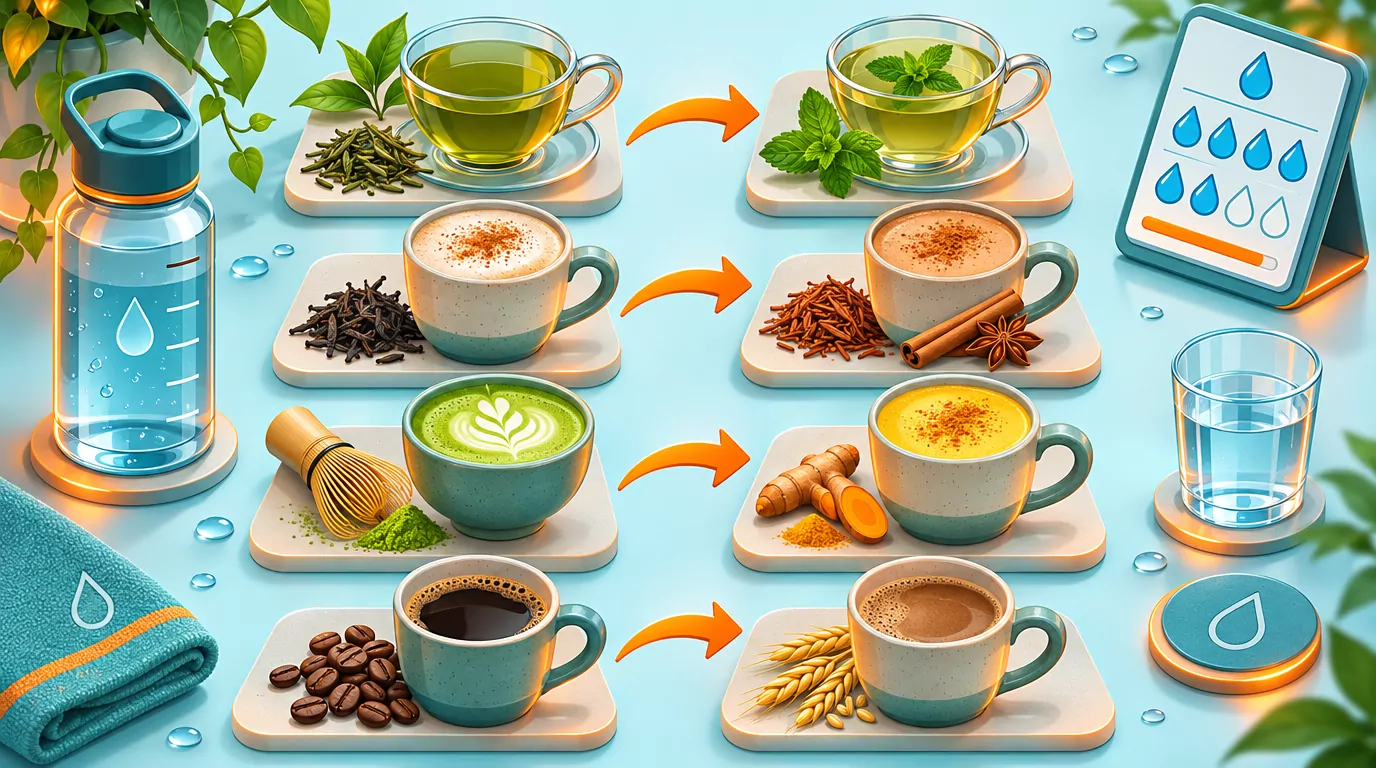
The surprises are green and white tea, chai, London Fog, matcha and brewed cacao. The last two rows give swaps for hot chocolate and coffee.
| If you usually drink | Why it has caffeine | Caffeine-free swap |
|---|---|---|
| Green or white tea | Made from the tea plant | Peppermint, lemon and ginger, or rooibos |
| Chai latte | Spiced black tea | Rooibos chai, or a steamer with chai spices |
| London Fog | Earl Grey is a black tea | Vanilla steamer, or rooibos with milk |
| Matcha latte | Powdered green tea leaf, whisked in | Golden milk |
| Brewed cacao | Made from cacao beans, which contain caffeine | Carob drink |
| Hot chocolate | A little caffeine from cocoa (see above) | Carob drink, or accept a small amount |
| Coffee | Coffee beans | A grain or chicory drink labelled caffeine-free, or decaf if a trace is fine |
What to drink before bed
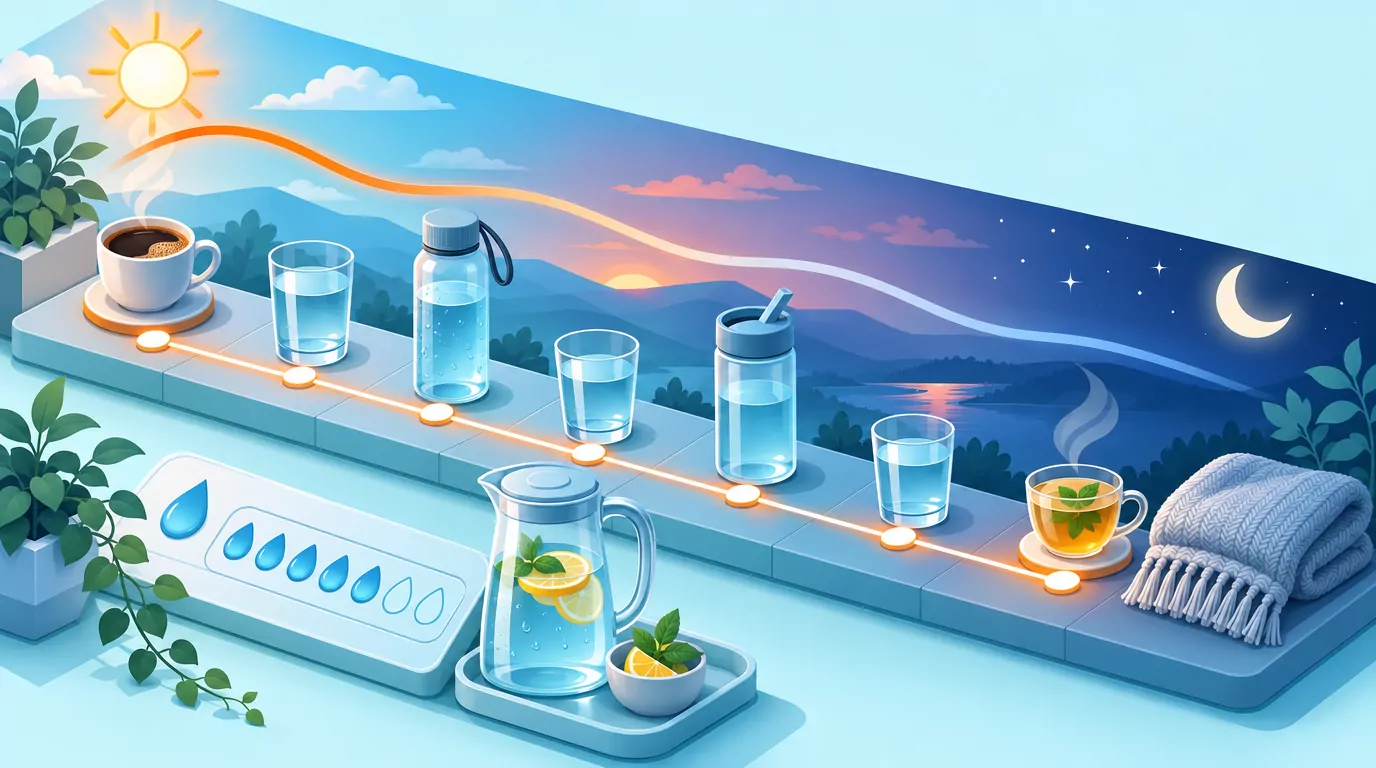
Anything from the caffeine-free list works, and a small mug is kinder to the night than a pint. Treat it as a wind-down ritual, not a remedy, and warm milk before bed fits the same way.
Caffeine takes hours to clear, so the afternoon coffee matters more than the 8pm herbal tea. The Caffeine Calculator shows how much is still in your system at your bedtime. For timing and late-evening amounts, see the guide to drinking water at night.
Do caffeine-free hot drinks count toward your water intake?
Yes. The NHS says water, lower-fat milk and lower-sugar drinks, including tea and coffee, all count toward your daily fluid. Herbal teas, broth and steamed milk are mostly water, and sugar is the caveat for cider and hot chocolate, not hydration.
For winter drinking, see hydration in cold weather, and for how common drinks rank against water, see the Hydration: Drinks page.
Logging warm drinks in Water Goose
Water Goose has 13 illustrated drink presets, and most mugs in this post map onto one of them:
- Tea: herbal tea, rooibos and honeybush.
- Coffee: decaf.
- Milk: steamed milk, golden milk, and hot chocolate or carob made with milk.
- Soup: broth.
- Juice: hot apple cider.
- Water: warm water with lemon or ginger.
There is no hot chocolate, cider or golden milk preset, so pick the closest one. Logging takes three steps: choose the drink, swipe to the amount, and tap one clear button. Entries are stored locally on your device, and no account is needed.
Water Goose is free to download and look around. Saving drinks, editing your history, and changing your goal, units, or quick-add amounts need Water Goose Plus, sold as a monthly subscription or a one-time purchase.
Frequently Asked Questions
Is there a caffeine-free hot tea?
Yes: herbal teas such as chamomile, peppermint and rooibos have no caffeine. Harvard's Nutrition Source says herbal tea contains none. Decaf tea is different: it still has a little, as the decaf section shows.
What hot drinks have caffeine?
Coffee does, and so do black, green, white and oolong tea, along with chai, matcha, Earl Grey and brewed cacao. Hot chocolate and decaf have smaller amounts. The Caffeine Calculator lists typical amounts for common drinks.
Does chai tea have caffeine?
Yes: chai is spiced black tea, so a chai latte has caffeine too. Chai concentrates and chai latte powders usually contain black tea as well, unless the label says rooibos or caffeine-free. For black tea's typical caffeine range, see the table in the guide to whether tea counts as water intake.
Does apple cider have caffeine?
No: plain cider and mulling spices have no caffeine. In the UK and Ireland, "cider" usually means the alcoholic drink, so the warm caffeine-free version there is hot apple juice. Some spiced apple teas use black tea, so check the ingredients, and see the cider section for sugar.
What hot drinks can I order at a coffee shop with no caffeine?
Herbal tea, a steamer or plain steamed milk, and hot apple cider where it is sold are the safe bets. Skip anything with chai, matcha, espresso or mocha in the name. The FDA notes that restaurants and other food retailers are not required to say how much caffeine a drink has, so ask when in doubt.
A warm mug without the buzz
A winter starter shelf needs three things: rooibos for a milky-tea habit, one plain herbal tea you enjoy, and carob powder for a cocoa habit.
This is general wellness information, not medical advice; if you are pregnant, breastfeeding or take regular medication, check caffeine and herbal teas with a pharmacist or doctor.
Rooibos counts, broth counts, and the steamer is invited too. Water Goose keeps the running total.
Water Goose is on the App Store for iPhone and on Google Play for Android.